One surge at a time
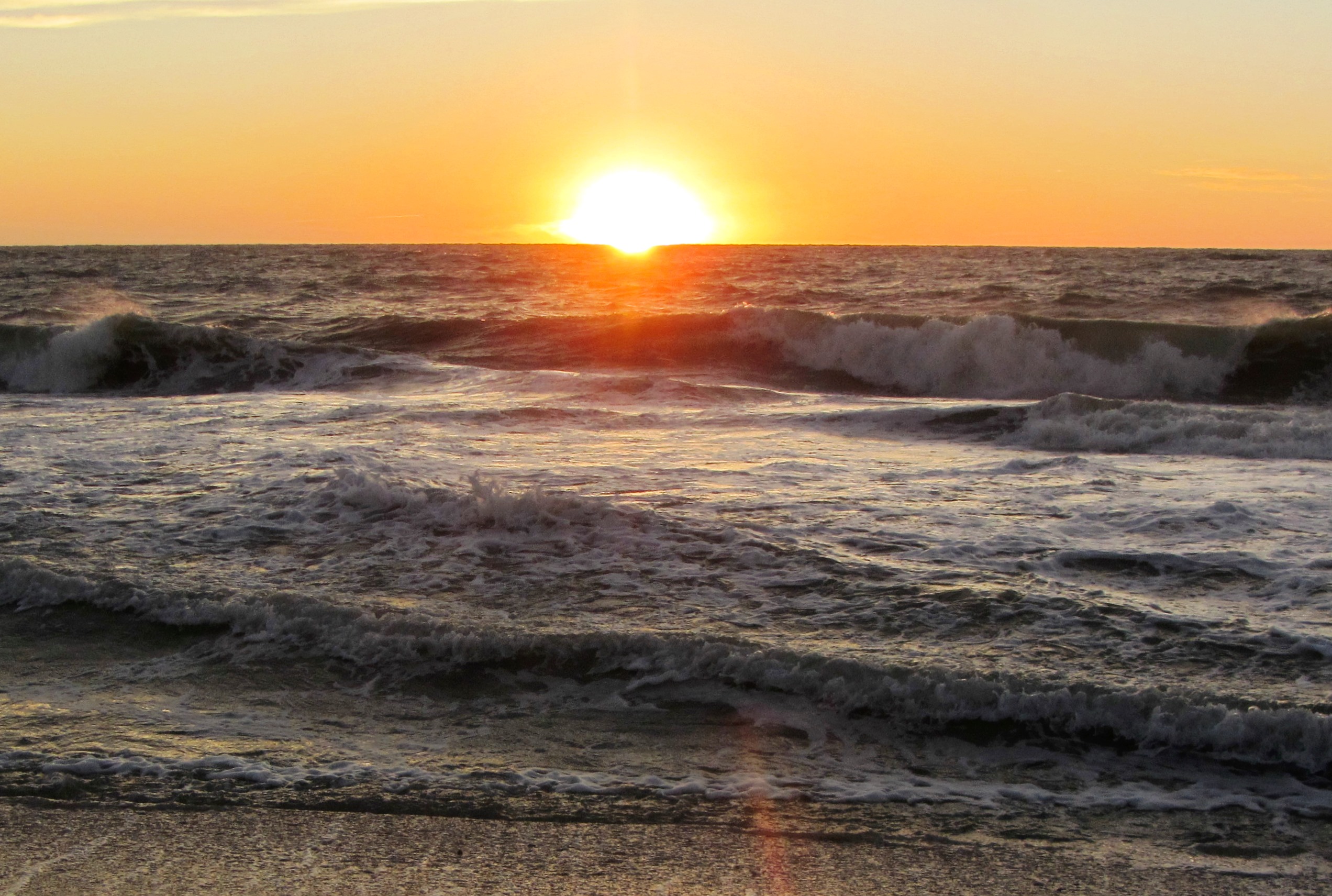
“The waves rolling in from the Atlantic today were high and white and threatening. Then, later in the day, the ocean was suddenly very quiet again, very much itself and at peace with the world. I couldn’t help thinking what a life lesson there is in that kind of undulation, in that kind of natural upset…peace is not a state of lifelessness…Peace is what comes to us after we negotiate the roiling, pounding waves of life lived one surge at a time.” — Joan Chittister
When the stormy times hit, one of the best emotional survival strategies I’ve learned over the years is to focus on a mental picture of riding the waves as they rise and fall, concentrating on keeping my head above water and avoiding over-reaction or panic.
It’s a sensation I experienced during my college years when I foolishly agreed to try body surfing with friends at Jones Beach, New York, the morning after a hurricane. I have no idea why a lousy swimmer such as I would go into rough waters. I suppose I felt safer because two of our group were lifeguards who were off duty. Good thing, too; it took me no time at all to get into trouble out there.
When the guys noticed I was floundering, they swam alongside me, one on each side, and held my upper arms, coaching me through every wave until we got back to shore. I was freaking out at first, but they would warn me as a wave approached, and reassure me as they held fast to me, lifting me up and and helping me stay with it while it passed. By the time I was safely on dry land I had learned a few things, one of which was a healthy respect for the power of high waves.
I don’t think I’d ever intentionally put myself in that position again, but I have thought of that day many times as an analogy for the psychological aspects of the most harrowing moments of my life. When such moments come, I try to focus on staying as calm as I can while I wait for the worst of it to pass, as it inevitably will.
Yes, usually there will be more waves to deal with, “high and white and threatening,” but Sister Joan wisely reminds us that we can– and must– negotiate those waves one surge at a time. And often, we will find the saving grace of support from friends who will ride the waves with us, showing us how to survive the storms.
Today, if you are in one of those blissful states of calm between waves, enjoy it! Relish the lack of pressure and the refreshing sound of silence. But if you are riding a huge and frightening wave, take heart; it will pass. I wish you the life-saving presence of many who care: folks who will lift your spirits with warm words, kind deeds and fervent prayers. Remember you’re not alone out here.
This post was first published seven years ago today. Reading back over it, I can’t help but reflect how those waves just keep coming in all the years since I wrote these words. It sometimes feels relentless, but so far, I’m keeping my head above water.
The original post, comments and photo are linked, along with two other related posts, below. These links to related posts, and their thumbnail photos, do not appear in the blog feed; they are only visible when viewing the individual posts by clicking on each one. I have no idea why, nor do I know how they choose the related posts. That’s just the way WordPress does things.
- Posted in: Uncategorized
- Tagged: calm, compassion, cycles, danger, friends, lifesavers, ocean, panic, storm, support, surf, surges, threats, waves


 Defeat Despair
Good morning, Julia!
I think it would be terrifying to be in such pounding surf, for someone who doesn’t swim much.
I may have mentioned that we joined a new health club. This one has a pool with a deep end. On Tuesday evening I went for a swim. There were few outdoor around, and I realized that, just possibly, it might be OK to actually dive into the pool at the deep end. I looked for “no diving” signs (so many pools have them now, even pools with a “deep end.” Wow! I couldn’t see any signs telling me not to, so I enjoyed a long-missed pleasure of diving into a pool!
Then, after about 15 minutes of swimming laps, I noticed how very deep that end looks…..
I had to remind myself that I can swim! I kept telling myself that there nothing to worry about, I can certainly swim well enough to avoid sinking to the bottom. Still, I decided to get out of the pool after the next lap.
Good grief. Now I understand how easily a person could panic, even one that can swim.
But back to your life analogy.
I’m scheduled for rotator cuff reconstructing surgery on Tuesday. They will have to use grafts to replace my supraspinatus and infraspinatus tendons. Usually I’m pretty confident in my surgeons’ abilities, but this time, I’m more worried, thinking about your horrible experience with grafts.
As my pool experience shows, worrying is not super helpful.
I hope you are doing better by now, and they’ve been able to make successful repairs?
Hi Susan, I hope your rotator cuff surgery went well! I’m still far from the end of my own particular facial reconstruction. The massive amount of maxillary bone loss is proving to be a big challenge. I had my most recent surgery in late February, and another is scheduled for next week.
Re: the pool, and “NO diving” signs– way back in the late 1960’s, when my parents were in the process of contracting to put a pool into our very large back yard, I can remember the pool dealer advising them not to get a diving board. He cautioned them that a HUGE percentage of horrible injuries in swimming pools happened on or around diving boards. But my parents put one in anyway, and it proved to be the most popular thing about the pool. But I seldom used it myself. I preferred to lounge poolside with a book, or in a floating lounge on the water, getting a tan. Which ironically, may have been even more dangerous, since my brother ended up with melanoma!