Like the sun
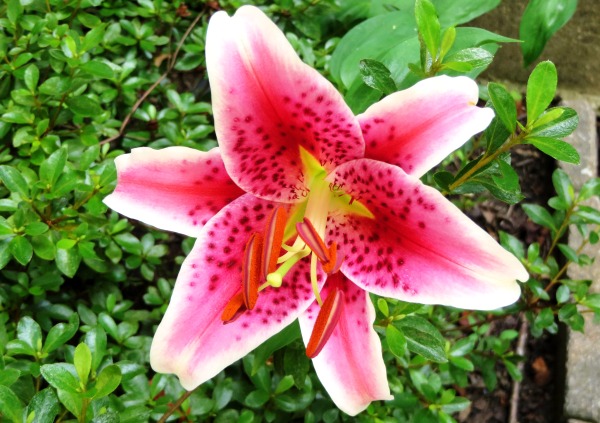
Here’s what happens when a flower reaches for the sun. July 2016
“They can be like the sun, words. They can do for the heart what light can for a field.”
― San Juan de la Cruz (St. John of the Cross)
Two years ago I planted a couple of Asiatic lilies in front of our Alexandria porch. I read that they could tolerate partial shade, so I thought the dappled afternoon exposure would be perfect for them. But they clearly have other ideas.
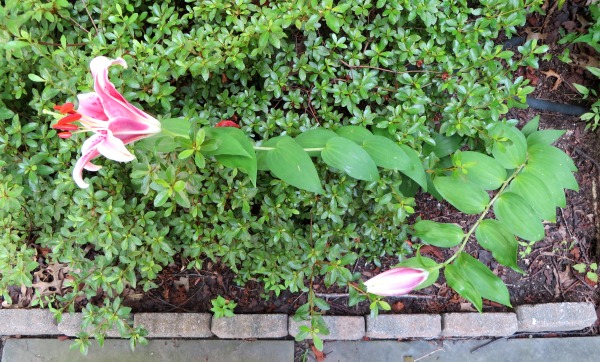
See how they lean in toward the brightest area of sunlight? I wondered whether this might be caused at least partly by the weight of the huge flower at the end of the slender stem, but a bulb from the same lot that I planted in bright sunshine at our York home has no such tendencies. It stands straight and tall. These flowers simply long for the sun, and grow accordingly.
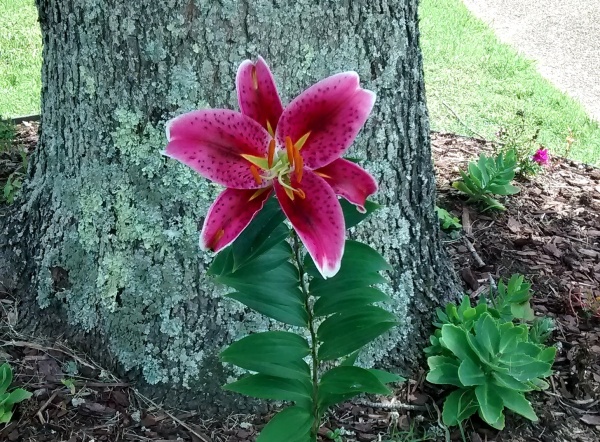
I thought of that when I read San Juan’s thoughts about the power of words. Language is a powerful thing, and how carelessly we use it! Yet what beautiful things we might accomplish with words, if we understood their lingering ability to infiltrate the heart and soul. Words can crush, damage, hurt, anger, ruin. But they also can heal, bless and shine like the sun into the darkness of sorrow and loneliness.
Here’s a video I love, in which Dr. Maya Angelou eloquently reminds us that words are things, and have lasting and profound influence, not only on those who hear them, but perhaps more so on those who say them. I especially like what she says at the close of this clip. I invite you to watch this brief gem of wisdom, and join me in resolving anew to be mindful of the formidable power of our words.
This post was first published seven years ago today. The original post, comments and photo are linked, along with two other related posts, below. These links to related posts, and their thumbnail photos, do not appear in the blog feed; they are only visible when viewing the individual posts by clicking on each one. I have no idea why, nor do I know how they choose the related posts. That’s just the way WordPress does things.
More important

Grady proudly displays his home-grown vegetables, June 2016.
“It’s bizarre that the produce manager is more important to my children’s health than the pediatrician.” — Meryl Streep
“Eat your vegetables. They’re good for you.” — almost every mother who ever lived
Pediatricians are important in fighting children’s diseases, to be sure, but it might be even more bizarre that we somehow generalize their crucial responsibility to the far more complex business of nurturing health in our kids. Wellness is much bigger than being free from illness. To rear happy, hardy youngsters, it really does take a village, and the produce managers are among a large cast of players– but parents usually have the all-important roles of directors.
That said, kudos to Streep for promoting organic gardening long before it was as widespread as it is today. For children lucky enough to take part in growing at least a bit of what they eat, it’s a wonderful experience on many levels, as Grady can tell you. I imagine that particular squash and that cucumber tasted better to him than they would have if he didn’t watch them grow and then participate in the joy of picking them off the vines.
Of course, those healthy eating habits may not last (I’m told I used to love freshly-caught fish when I was a toddler and we lived in Hialeah, Florida) but surely kids are more likely to keep eating what they learn to enjoy at a very young age. And it’s never to late for us to acquire a taste for nutritious food. Or so I tell myself every time I munch on raw cauliflower.
Do you like vegetables? Which ones are your favorites? If you have any secrets for healthy seasonings, please share them for those of us who are still working on loving veggies. And even if you’re past the stage of spending time with the pediatrician, it might be wise to make friends with your local produce manager. It couldn’t hurt.
This post was first published seven years ago today. The original post, comments and photo are linked, along with two other related posts, below. These links to related posts, and their thumbnail photos, do not appear in the blog feed; they are only visible when viewing the individual posts by clicking on each one. I have no idea why, nor do I know how they choose the related posts. That’s just the way WordPress does things.
Webbed and sustained

The flag flies at a home in Yorktown, Virginia, May 2013.
“Liberty is as relevant to modern Americans as it was to the men and women of 1776. We live in a world webbed and sustained by the liberties they won at terrific cost in an agonizing eight-year ordeal. The freedom to speak our minds, to worship in the churches of our faith, to vote for the political leaders of our choice, to pursue our careers, to manage our individual lives in a hundred different ways, depends on American liberty as it was enunciated and defined in the crisis years of the Revolution.” — Thomas Fleming
Happy 240th Birthday to the United States of America! May our great collective experiment in democracy continue to endure amid the crises and changes of an unpredictable world. I invite you to join millions of Americans who will be celebrating today, looking back with gratitude and forward with hope.
This post was first published seven years ago today. Happy 247th birthday to the USA! The original post, comments and photo are linked, along with two other related posts, below. These links to related posts, and their thumbnail photos, do not appear in the blog feed; they are only visible when viewing the individual posts by clicking on each one. I have no idea why, nor do I know how they choose the related posts. That’s just the way WordPress does things.
A fountain of gladness

I enjoyed this fountain on my walks at Regent University, Virginia Beach, June 2016.
“A kind heart is a fountain of gladness, making everything in its vicinity freshen into smiles.” — Washington Irving
During my days on campus this past month, there were some long hot lunchtime walks between the communications building (where I had classes) and the library. Fortunately the campus is gorgeous and well shaded with countless trees, but on sunny days I still got a bit warm, especially if I was carrying an armful of books.
Halfway down the walkway between those two buildings, there’s a beautiful fountain. Usually I did not take the time to venture up to enjoy it at close range, though it was tempting to do so. But even from a distance, it was refreshing to see. Such spots of beauty set into lovely park-like surroundings really do lift the spirit and relax an overwhelmed mind.
I think Irving picked a perfect analogy in likening a kind heart to a fountain. Have you ever noticed that someone’s kindness can make a moment or hour sparkle with refreshing joy? Like water on a wilting plant, kindness can fortify and calm us with a renewed sense of worth and strength. A kind heart radiates support and welcome to all who come near.
Today, I wish you many encounters with kindness, whether as the source, or the recipient, or both. The world needs more gladness; let’s get out there and make a splash!
This post was first published seven years ago today. The original post, comments and photo are linked, along with two other related posts, below. These links to related posts, and their thumbnail photos, do not appear in the blog feed; they are only visible when viewing the individual posts by clicking on each one. I have no idea why, nor do I know how they choose the related posts. That’s just the way WordPress does things.
Something worth more
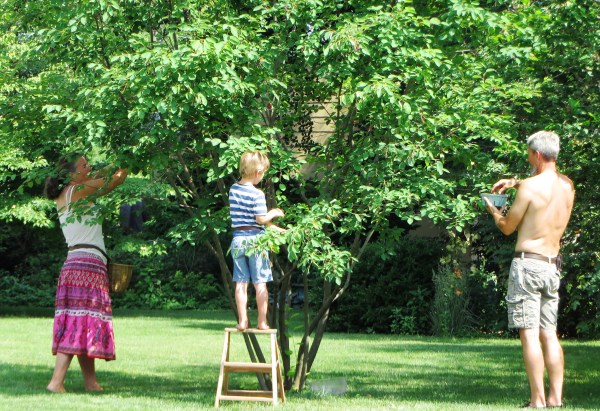
Backyard fruit pickers in Lancaster County, Pennsylvania, June 2015
“I work hard in the orchard, not for the money anymore, but for something I can’t explain. Something worth more than money.”― Steven Herrick
I have only faint childhood memories of occasionally picking fruit. I recall muscadines and plums, and the blackberries that grew in the wild bushes surrounding the pond behind our home. One year my mother planted strawberries, but we didn’t grow enough of them to keep up with my appetite. I had fantasies about growing watermelons.
I read stories in children’s novels about people who picked all sorts of tasty fruits– apples and cherries and peaches and citrus. My parents talked of our home in the Texas border town where I had been born, and how they could pick grapefruit right off the tree. I wondered with envy what it must be like to have such bounty close at hand, free for the taking.
It would be more than forty years before I found out. In northern California our next door neighbor had nearly a dozen fruit trees, including pomegranates, mandarins, and Sorrento lemons. He told us to pick all we wanted, because he did not eat any of the fruit. The more we picked them, the more they grew.
We had fresh lemonade about ten months of the year every year, because Jeff liked making it and got very good at adding just enough sugar to take the edge of the tart flavor. It was a couple of years before I realized I had experienced the first winters in my memory without catching a single cold. Of all the things I miss about California, I think those sunny fresh lemons are near the top of my list.
Do you have fruit trees nearby, or orchards where you love to go and pick fresh fruit? If so, send us some delicious details so we can enjoy a virtual treat. It might even inspire us to visit the grocery store for a less-tasty substitute. For those of you who are able to pick fresh fruits and berries, enjoy them! I agree with Herrick; they are worth more than money.
This post was first published seven years ago today. The original post, comments and photo are linked, along with two other related posts, below. These links to related posts, and their thumbnail photos, do not appear in the blog feed; they are only visible when viewing the individual posts by clicking on each one. I have no idea why, nor do I know how they choose the related posts. That’s just the way WordPress does things.
Cares seem small
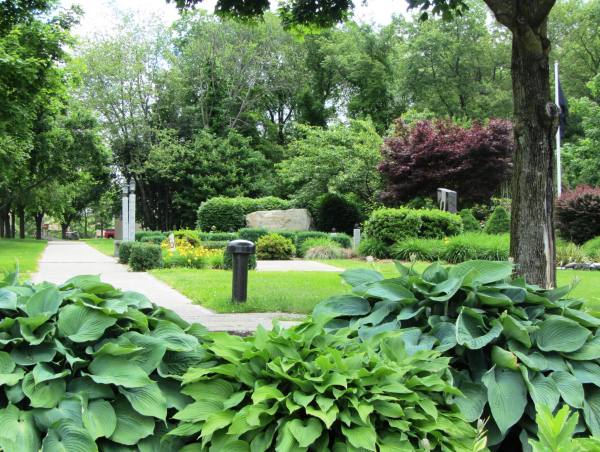
Summer splendor near Concord, Massachusetts, June 2012
…what though we suffer? Sun and skies
And green trees’ beauty make our cares seem small;
Boon that no Esau sells, or Crœsus buys,
The golden summer-time, is over all.
— Percy Reeve
It has been a tough summer already, but not without happiness. There’s a joy in the season that can’t be totally quenched even when the afternoon is dreary with rain.
One thing I so love about Jeff, something we have always shared, is his ability to take great delight in nature. We’ve had less time to enjoy the outdoors together than I had hoped we would have this year. But what little time we’ve had has been sweet, looking out the glass doors early in the day, watching the mourning dove hopping around our back porch, watering the flowering shrubs, and enjoying the cardinals who lately seem determined to take over the longtime dominance of robins in our back yard.
The days are at their longest this week. Already we are starting the slow slide into autumn. Why not take an early morning stroll or twilight walk? Take along a camera, or save memories simply by looking a bit longer than usual at whatever seasonal sight most captures your imagination.
I hope you will find time to savor every moment of sunlight, basking in the vibrant green trees and blue skies that make our cares seem suddenly lighter.
This post was first published seven years ago today. The original post, comments and photo are linked, along with two other related posts, below. These links to related posts, and their thumbnail photos, do not appear in the blog feed; they are only visible when viewing the individual posts by clicking on each one. I have no idea why, nor do I know how they choose the related posts. That’s just the way WordPress does things.
Where there is joy

Owen Ramon Denton, one of our latest and greatest joys. Four days old, May 2016
“Find a place where there is joy, and the joy will burn out the pain.” — Joseph Campbell
What brings you joy? For most of us, there are many answers to that question, and some of us are fortunate enough to discover new joys daily. Perhaps the surest way to survive despair is to grasp these joys and hold them close no matter what else is going on.
Wherever you are today, and whatever you have planned, your day might contain any number of blessings that will bring happiness if you stop to reflect on them. A flower, a song, an expansive sky or sheltering tree; a baby, a child, a friend, a new acquaintance with a warm smile and winsome personality; a savory snack or relaxing cup of your favorite tea or coffee; all these things, and many more, are out in the world awaiting us, countless gifts with our names lovingly inscribed on them in invisible strokes.
Today, I wish you joy to burn out the pain.

Owen, wearing the same outfit Grady wore in his 4-month photo. June, 2016
This post was first published seven years ago today. The original post, comments and photo are linked, along with two other related posts, below. These links to related posts, and their thumbnail photos, do not appear in the blog feed; they are only visible when viewing the individual posts by clicking on each one. I have no idea why, nor do I know how they choose the related posts. That’s just the way WordPress does things.
Our old home life

Bar Harbor, Maine, June 2012
“I was never before so eager to cling to every bit of our old home life and to see you…Come and see me, I am homesick…” — C. S. Lewis
Today is my 900th regular post, so I hope you will bear with me as I try something a little bit different. I’m bringing you a snippet of fiction, but first I will lead in with a quote as usual. The quote above is from a letter to his father that Lewis wrote as he was in a London hospital recovering from a battle injury during World War I. Though his relationship with his father was difficult at best (and his mother had died when he was young) there was still a deeply felt bond that tugged at him during his recovery from the horrors of a war that took the life of every one of his classmates who served alongside him.
As with Lewis, most of us have mixed memories of our early homes. Yet even if we do not remember our childhood days as consistently happy, there is still a strong foundation that we rest on, often without knowing it. I thought of that again recently as I was listening to Maeve Brennan’s beautiful story “Christmas Eve” which is one of several she wrote about the Bagot family of Ireland. I listened to the story via the New Yorker podcast as I was driving to school through the thick traffic that always gathers at the approach to the Hampton Roads Bridge Tunnel, and what might have been a stressful time was instead a pleasant journey, brightened by flawless storytelling.
The passage below was so lovely that I decided to share it with you, without further comment. I hope it will evoke a warm sense of connection for you, as it did for me.
The hall was quite narrow, and was covered with linoleum, and it served its purpose very well, both as an entrance to the house and as a vantage point from which the house could be viewed and seen for what it was – a small, plain, family place that had a compartmented look now in winter because of all the doors being closed to keep whatever heat there was inside the rooms. In the hall there was a rack with hooks on it for coats, and there was an umbrella stand, and a chair nobody ever sat on. Nobody ever sat on the chair and nobody ever stood long in the hall. It was a passageway – not to fame and not to fortune but only to the common practices of family life, those practices, habits, and ordinary customs that are the only true realities most of us ever know, and that in some of us form a memory strong enough to give us something to hold onto to the end of our days. It is a matter of love, and whether the love finds daily, hourly expression in warm embraces, and in the instinctive kind of attentiveness animals give to their young, or whether it is largely unexpressed, as it was among the Bagots, does not really matter very much in the very long run. It is the solid existence of love that gives life and strength to memory, and if in some cases childhood memories lack the soft and tender colors given by demonstrativeness, the child grown old and in the dark knows only that what is under his hand is a rock that will never give way.
This post was first published seven years ago today. The original post, comments and photo are linked, along with two other related posts, below. These links to related posts, and their thumbnail photos, do not appear in the blog feed; they are only visible when viewing the individual posts by clicking on each one. I have no idea why, nor do I know how they choose the related posts. That’s just the way WordPress does things.
On foot

Point Reyes National Seashore, California, May 2003.
“Sickness comes on horseback, but goes away on foot.” — William Carew Hazlitt
Seemingly out of nowhere, it hits– the devastating diagnosis, or the catastrophic accident, or the debilitating chronic pain– shattering the life of a loved one, or self. Life changes– sometimes forever. We feel blindsided, helpless, resentful, afraid. But somehow, we keep going.
The horse that arrived so suddenly may have been heading for us quite some time, although we did not know it. A sudden reversal of health carries with it the shock of surprise, but in most cases, it was building gradually to a tipping point where it became too obvious to ignore. Occasionally we can send it away with almost as much speed as it arrived; the quick, successful surgery or “miracle” drug that carries a swift cure. But even then, complete healing will take time.
Likely, the recovery will seem even slower than it is, because when we travel on foot, we notice almost everything. This may seem a curse at first, but in reality it’s also a blessing. Gradually we come to realize that the tiny details that fill our newly-slower days are the true substance of the life we crave. We recognize the value of this altered life, and resolve not to take for granted a single minute of enjoyment, laughter, or freedom from pain.
Even if we have never been sidelined with illness, our wellness has always traveled on foot. It cannot be rushed or wished into existence. It is made of clear, cool water, sipped serenely on a warm day; of morning breezes that visit us carrying birdsong; of real, unadulterated food eaten with joyful gratitude, of quiet moments spent reading or praying or meditating; of comforting words or companionable silence with someone we enjoy.
If the illness comes back, we will bear it patiently, knowing that we will return to our walk toward health again. Perhaps the pace will be slower, with longer breaks that must be taken more frequently, but we walk in the direction of well-being, whether mental, physical, or both, and we are surrounded with the solace of fellow travelers who know the way, and understand. It’s a lovely road, and the weather is often breathtakingly beautiful. If you should happen to meet us along the path, let’s walk awhile together.
This post was first published seven years ago today. It reads like something I could have written yesterday to describe the past month (yes, it has been almost a month since our current nightmare began) in the most optimistic terms possible. “But somehow, we keep going.”
The original post, comments and photo are linked, along with two other related posts, below. These links to related posts, and their thumbnail photos, do not appear in the blog feed; they are only visible when viewing the individual posts by clicking on each one. I have no idea why, nor do I know how they choose the related posts. That’s just the way WordPress does things.
Slowing down
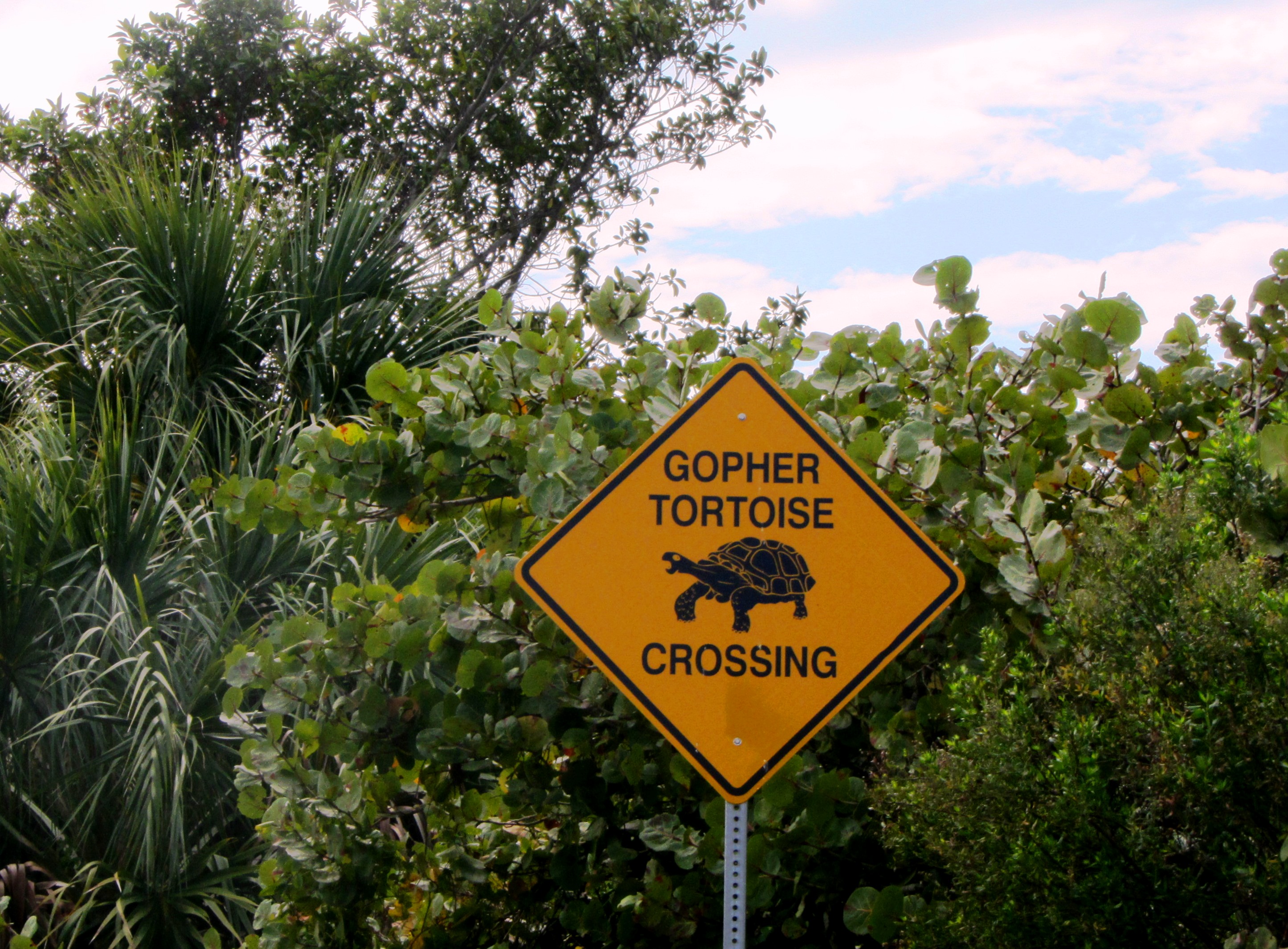
Take a lesson from the Captiva tortoise, who lives on island time. January 2013
“…in a day when doing something as soon as possible is the standard response to perceived problems, slowing down may be the best way to move ahead.” — Mark A. Noll
Sometimes, action is urgently needed and haste is imperative. However, I suspect that most of the urgency we feel about everyday stresses and conflicts is unnecessary, even unwise.
There was a time, not so long ago, when few people other than physicians on emergency call wore beepers. And just a couple of decades before that, even physicians were not available at the touch of a few buttons. Now everybody is on call, all the time, to whomever has their cell phone number. How did life become so frantic?
In his illuminating book Traffic, Tom Vanderbilt speculates that the few minutes saved by chronic lane-changers will most likely take more time than that off the end of the hectic, rushed life. The same could be said about many other forms of rushing around. At some point, perhaps we should stop to ask what we are gaining by putting so much pressure on ourselves.
I’m not saying that deadlines don’t matter (in fact, I’m dealing with several big ones related to school, as I take a few minutes to write this). I’m only admitting that I almost never help myself when I try to go too quickly. Maybe it’s because the weather has finally turned hot, or maybe it’s age or exhaustion. But more and more, I find myself simply unable to speed through life.
That’s a good thing, I think. I like to take my time and enjoy the view. How about you? Take a few minutes to send me a description of some everyday sight you might not notice if you were hurrying to somewhere else. I’ll keep the tea warm for us to share. On second thought, maybe iced would be better about now?
This post was first published seven years ago today. The original post, comments and photo are linked, along with two other related posts, below. These links to related posts, and their thumbnail photos, do not appear in the blog feed; they are only visible when viewing the individual posts by clicking on each one. I have no idea why, nor do I know how they choose the related posts. That’s just the way WordPress does things.
Great acceptances
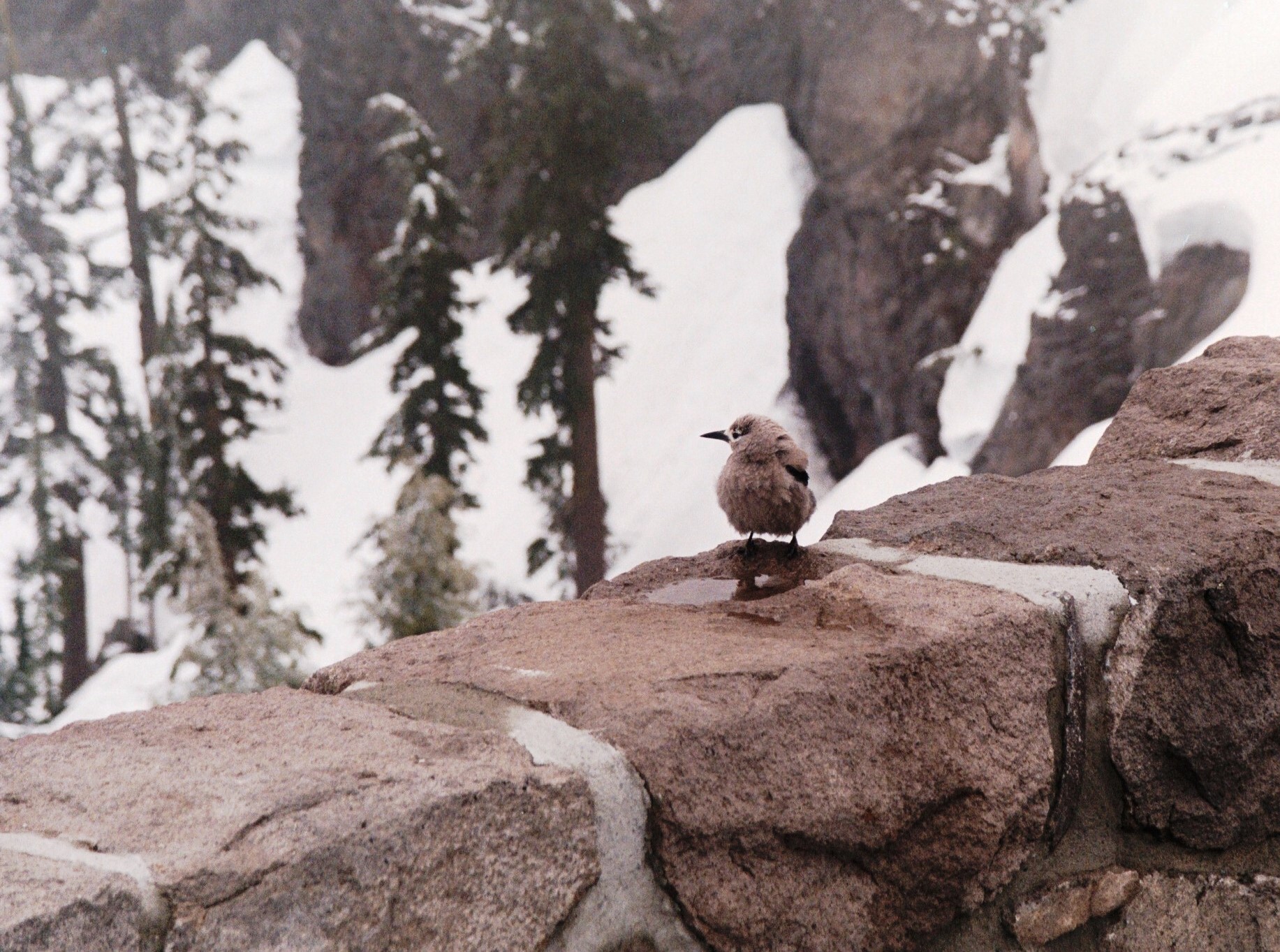
We don’t need to be big or strong or colorful to be beautiful.
I photographed this pretty little bird at Crater Lake, Oregon, June 2000.
“Contentment, and indeed usefulness, comes as the infallible result of great acceptances, great humilities—of not trying to make ourselves this or that, but of surrendering ourselves to the fullness of life—of letting life flow through us.”
— David Grayson
I couldn’t help but find some comic relief in what I learned when I looked up the author of this quote; I kept coming up with articles on some guy named Ray Stannard Baker. It took me a couple of false starts before I read on enough to find that David Grayson was a pen name. My first thought was “Hey, what happened to what you said about not trying to make ourselves this or that?” Okay, so I’ve always been a bit of a smart alec. Regardless, I like what he says here.
The word “great” isn’t usually paired with the word “acceptance,” but I do find the concept intriguing. The fullness of life includes a lot of things for which we might not have wished or planned– otherwise life wouldn’t truly be full– but once we get over the bumps, acceptance can indeed be a blessing. If we are to keep life flowing through us, that means being open to the new while not hanging on too tightly to the familiar and comfortable.
What are the great acceptances of your life? Whatever that phrase might bring to your mind, I hope you are happy and content to be who you are, and where you are. I know I’m happy you are here! As my hero Fred Rogers was so fond of saying, “There’s only one person in the world exactly like you, and people can like you just the way you are.”
This post was first published seven years ago today. The original post, comments and photo are linked, along with two other related posts, below. These links to related posts, and their thumbnail photos, do not appear in the blog feed; they are only visible when viewing the individual posts by clicking on each one. I have no idea why, nor do I know how they choose the related posts. That’s just the way WordPress does things.
The house shelters
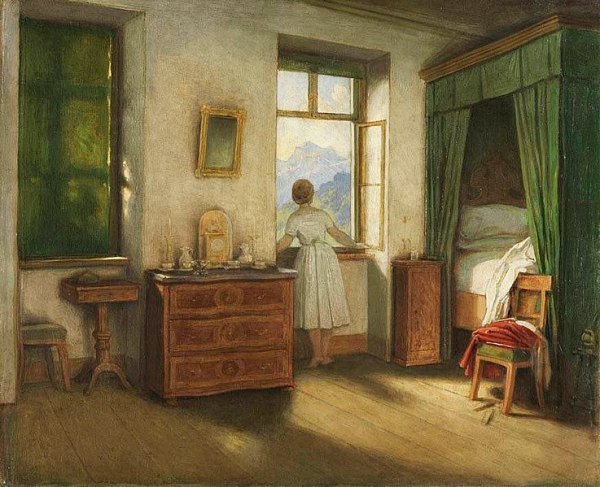
Early Morning by Moritz von Schwind (1858)
Public domain via Wikimedia Commons
“If I were asked to name the chief benefit of the house, I should say: the house shelters day-dreaming…the house allows one to dream in peace.” — Gaston Bachelard
I saw this quote from Bachelard on a Celestial Seasonings box of Sleepytime tea. I found it charming, and at first I agreed with it. Then I thought “Tell that to a busy mother…a house that allows one to dream in peace? Only if the kids are away at school!” Even if everyone is gone, our homes may continue to shout or nag at us, pointing out the paper piles, the dusty surfaces, the streaked windows.
But that doesn’t mean Bachelard is wrong about houses. The house can shelter daydreaming, if we allow it to do so. For some of us, this will mean putting the outward appearance to order with at least a bit of tidying up. For others of us, it will mean looking beyond the undone chores to see the beauty that always lies beneath, even if hidden.
And really, even the clutter can evoke reverie. The craft supplies and half-finished projects bring thoughts of anticipation at sharing our creativity with others. The dusty trinkets may bring back memories of an enchanting trip or a charming phase in a child’s life. Piles of old letters and photographs noiselessly sound the delightful din of loving voices surrounding our hearts with joy.
Most all of us agree there’s no place like home. When singing the praises of our dwelling places, we typically cite the solace of familiarity, the comfort of one’s own bed or sofa, and the pleasant busyness of self-chosen, self-directed projects in process. But perhaps Bachelard, in his wonder-filled wisdom, has seen something we may have missed. Maybe the sense of security that engulfs us when we return home is based, at least partly, on its being the haven for our daydreams; a safe cocoon where our hearts can bask in beautiful realities that are too fragile for the world outside.
Today, I hope you will take a few minutes to allow your home to be a sheltered place for daydreams.
This post was first published seven years ago today. The original post, comments and photo are linked, along with two other related posts, below. These links to related posts, and their thumbnail photos, do not appear in the blog feed; they are only visible when viewing the individual posts by clicking on each one. I have no idea why, nor do I know how they choose the related posts. That’s just the way WordPress does things.
Free and undivided
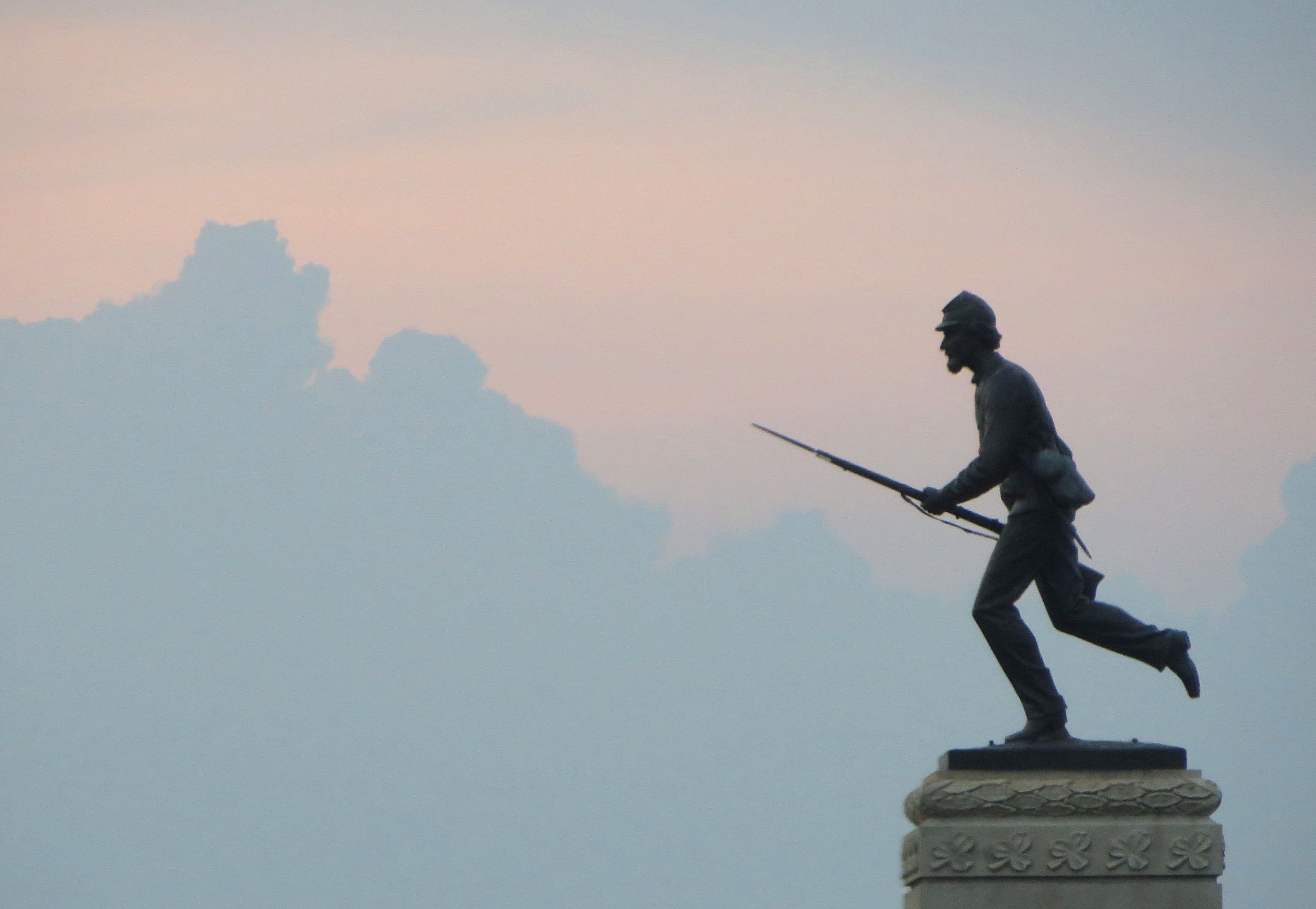
This Gettysburg monument honors the 262 troops of the 1st Minnesota Infantry,
who charged a force of 1600, buying time with an unprecedented 82% casualty rate.
“Let no vandalism of avarice or neglect, no ravages of time, testify to the present or to the coming generations, that we have forgotten, as a people, the cost of a free and undivided Republic.” — John A. Logan
Union General Logan was an important leader in the movement to recognize Memorial Day (then known as Decoration Day) as a national holiday. No doubt he carried a heavy burden of devastating memories, having seen first hand the tragedy of Americans taking up arms against each other.
Logan probably was not thinking of picnics and ball games and long weekends when he pushed for an official day of remembrance. But when I hear the words “Memorial Day,” those are the things I think of, along with hot dogs and warm weather and the resulting traffic nightmares as so many people hit the road to have fun.
Have we forgotten the cost that was (and is) paid to buy us our freedom? Sometimes it seems we have, and never more so than when our political discourse spirals downward into vulgar, often petty personal attacks. Are these sorts of controversies really worth squandering the unity that people died to save? Would our ancestors be ashamed of us?
Even today, it’s not hard to imagine that people who are facing genocide, epidemic disease, starvation and political oppression might see us as ignorant, or worse, decadent. Are we too distracted by diversions to care?
I’m not trying to rain on anyone’s holiday parade, but I hope that we will take a few moments today to reflect on the sacrifices of men and women whose lives were without the health, hope and happiness that we take for granted. Let’s honor them by remembering.
This post was first published seven years ago on Memorial Day. The re-posting of it has been changed by one day, so that it will appear on the holiday this year. The original post, comments and photo are linked, along with two other related posts, below. These links to related posts, and their thumbnail photos, do not appear in the blog feed; they are only visible when viewing the individual posts by clicking on each one. I have no idea why, nor do I know how they choose the related posts. That’s just the way WordPress does things.
Quietly thrilling
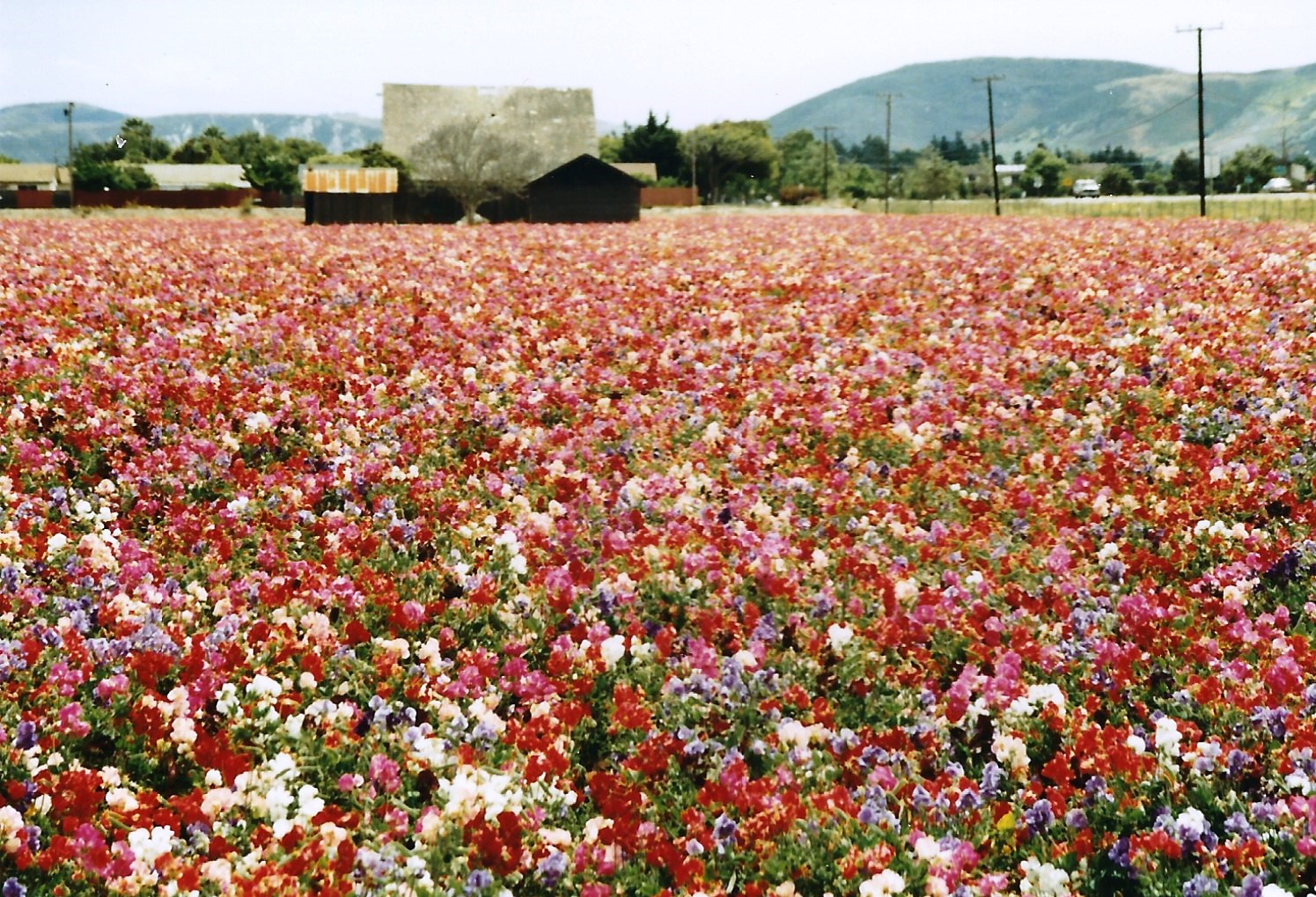
The flower seed companies created beauty as well as jobs. Lompoc, California, 1992
“It is always quietly thrilling to find yourself looking at a world you know well but have never seen from such an angle before.” ― Bill Bryson
When I read these words from Bryson, I realized why I love photography so much. Through the lens of my camera, I look at things from all sorts of angles, and see what I otherwise might have missed. And he’s right, it is a quiet kind of thrill, but a thrill no less. It inspires wonder and gratitude. It wakes the mind up.
The great thing about photography is that you can experience that quiet thrill again years later when you look through old pictures you haven’t seen in awhile. That’s how I felt recently when I saw the photo posted here. I know, of course, that my memories of our time on the central coast of California are among my happiest; that our years there had a magical quality about them. But I had forgotten the almost unreal beauty of those gorgeous flower fields, until I saw this photo again while I was putting together Jeff’s retirement scrapbook.
Wherever you are right now, whatever you’re doing, I hope you’ll make the time to experience as many quietly thrilling moments as you can. The loud thrills may get all the press coverage, but it’s the quiet ones that add up to a lifetime of happiness.
This post was first published seven years ago today. The original post, comments and photo are linked, along with two other related posts, below. These links to related posts, and their thumbnail photos, do not appear in the blog feed; they are only visible when viewing the individual posts by clicking on each one. I have no idea why, nor do I know how they choose the related posts. That’s just the way WordPress does things.
A magnifying glass

“You can think of a moment of crisis as an anomaly because it’s going to pass, and that’s true in one sense, but sometimes it can also be a magnifying glass that reveals to you what was going on underneath the surface all along.” — Anonymous in Becoming Duchess Goldblatt
“Most of the time, I think, the effects of my accumulated losses didn’t show. Or maybe they did; a lot of people ran away from me as fast as they could, so I guess the cracks in the façade showed in ways I couldn’t see…People didn’t want me around, and I understood why, sort of. The more I kept losing, the more I kept losing, and nobody wants to catch that disease.” — Anonymous in Becoming Duchess Goldblatt
“…she was…an untouchable. Not from scorn or fear, but from the obscenity of the loss.” — Bill Clegg
Some of you know that I’m writing a new post because I’m sitting around a hospital again, as I have been for a week now, with no end in sight except a horrible tragic one that doesn’t bear thinking about. I remind myself that I spent as much as three weeks at a time in the hospital with Jeff, but Matthew’s current situation is a crucible unlike any other thus far.
There is nothing more to say, other than letting the quotes speak for themselves.
Opening the gates
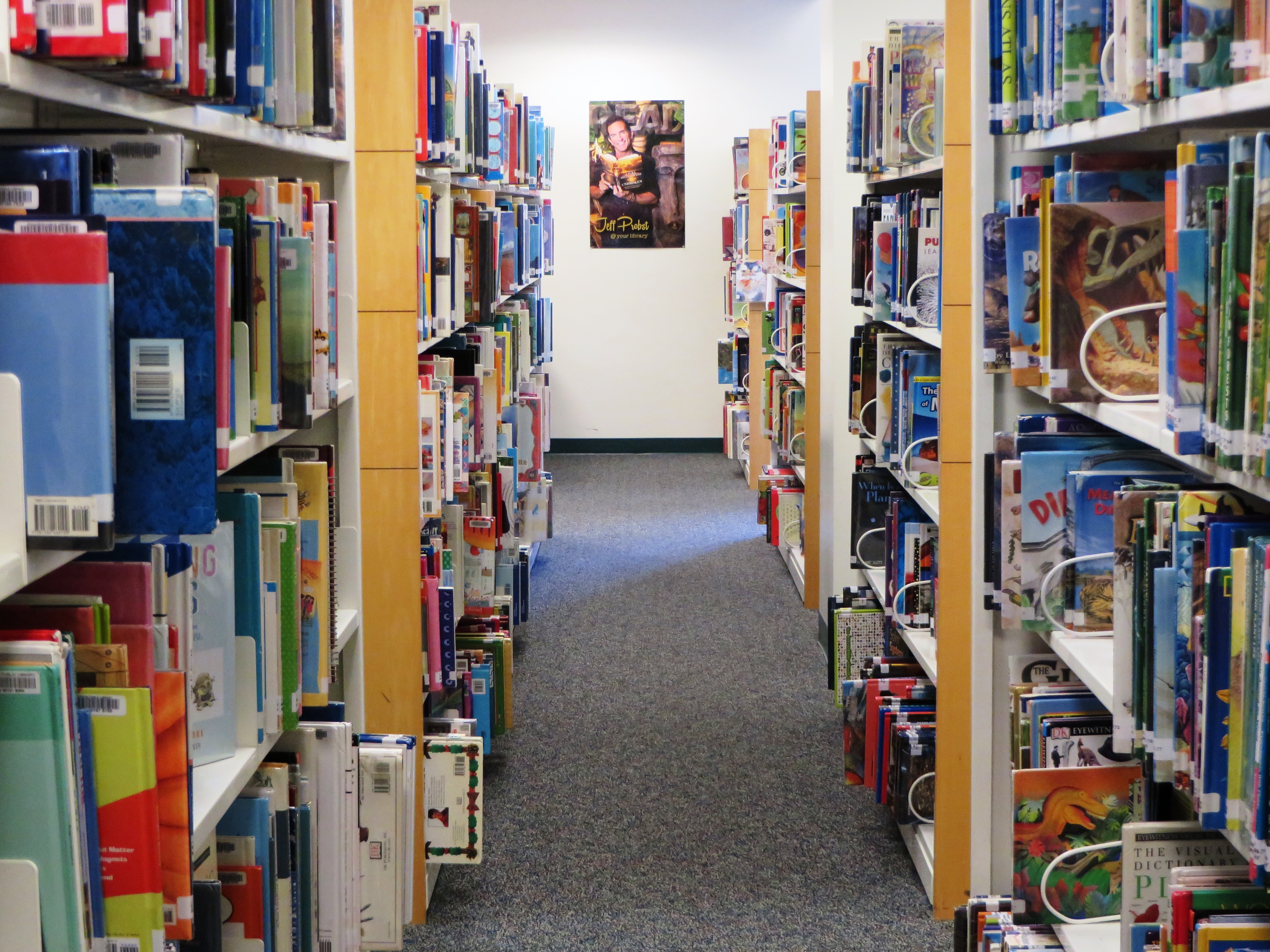
Step through the gates to exploration and discovery!
Poquoson Public Library, Virginia, March 2014
“Books. They are lined up on shelves or stacked on a table. There they are wrapped up in their jackets, lines of neat print on nicely bound pages. They look like such orderly, static things. Then you, the reader come along. You open the book jacket, and it can be like opening the gates to an unknown city, or opening the lid of a treasure chest. You read the first word and you’re off on a journey of exploration and discovery.”
— David Almond
Appearances can be misleading, can’t they? The static, orderly appearance of well-stocked libraries or neat home bookshelves give no hint of the endless adventures awaiting anyone who opens the gates to the wealth contained therein.
The joys of reading have withstood the tumultuous changes of century after century, binding us to each other across continents and eras. No matter our current circumstances, we can tap into this joy at little to no expense. What a perfect way to defeat despair!
Some of my favorite adventures have taken place entirely within my own mind, traveling as an invited guest to a front-row seat in worlds far removed from my own. And some of the most memorable characters I’ve ever had the pleasure to know are fictional; people whose virtues and faults are so familiar that they seem as true to life as any “real” person.
Today I invite you to step through those magical gates to discover people and places new to your life. Who knows what you might see along the way? Feel free to send us a few virtual post cards in the comments below.
This post was first published seven years ago today. The original post, comments and photo are linked, along with two other related posts, below. These links to related posts, and their thumbnail photos, do not appear in the blog feed; they are only visible when viewing the individual posts by clicking on each one. I have no idea why, nor do I know how they choose the related posts. That’s just the way WordPress does things.
The opposite of availability
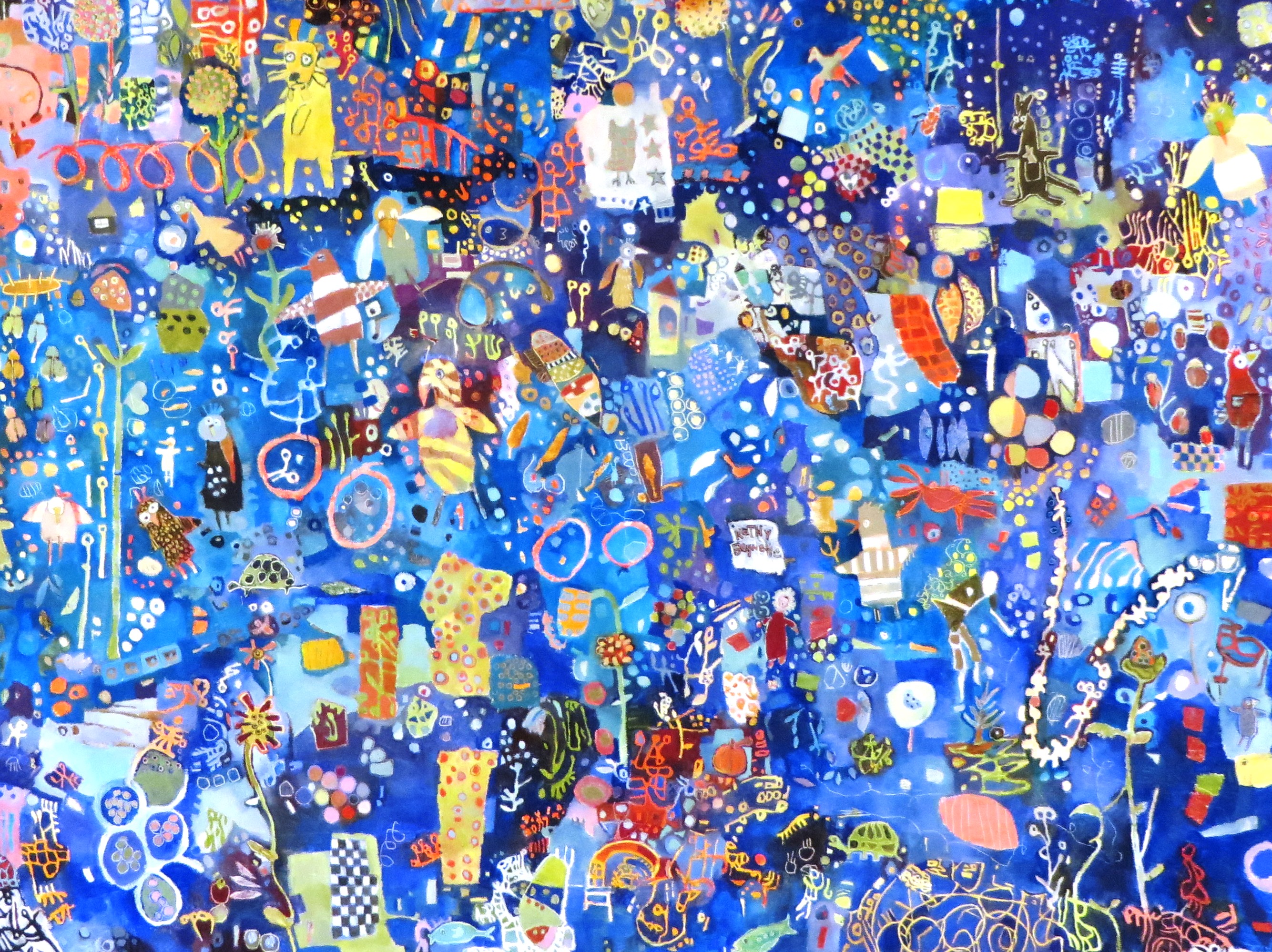
So many things compete for our attention!
Detail from artwork at Children’s National Medical Center,Washington, DC, March 2014
“The opposite of availability is not unavailability, but an overcrowded heart.”
— Sue Monk Kidd
Did any of you wince inwardly on reading these words? I know I did. It’s the sort of observation we know to be true even as we wish it wasn’t. So many of us have a hard time saying “no” to new opportunities, potential friendships, or additional experiences even though our lives are already filled to the brim with good things.
Choosing between good, better and best is no easy task. But on reflection, perhaps I don’t have to start there. Maybe there are a few not-so-great things taking up real estate in my overwhelmed brain. Is there any junk I can clear out of my home, heart and schedule? I must admit, there certainly is.
I don’t know what anyone else’s list might look like, but I can start with eliminating negative thoughts and worry, fretting over minor irritations, and berating myself (aloud or silently) for simple mistakes. The cumulative effects of these mental habits use up more energy than I might realize.
Moving on to more concrete items, I can easily live without glossy, attractive advertising for items I don’t need, or gossipy online “news” stories of dubious credibility. I can turn the telephone off for a few hours (or even days!) and check my phone messages once daily, or re-direct them to email, so as not to be sidetracked. I can take steps to minimize junk mail, junk TV, junk calls and texts, and junk food and drinks. These distractions consume countless small increments of time that add up to hours of life.
Once I eliminate all the things I will never miss, it might be easier to find time for what is really important to me. Sometimes this will mean decreasing the time allocated for certain activities, at least temporarily. Or it may mean learning to be comfortable with being totally unavailable for awhile, knowing that periodic unavailability for one opportunity opens doors to others.
Do you struggle with the conflicted emotions that go with having an overcrowded heart? What are some of your secrets for being available for the people and projects that matter most?
This post was first published seven years ago today. The original post, comments and photo are linked, along with two other related posts, below. These links to related posts, and their thumbnail photos, do not appear in the blog feed; they are only visible when viewing the individual posts by clicking on each one. I have no idea why, nor do I know how they choose the related posts. That’s just the way WordPress does things.
At this time and this place
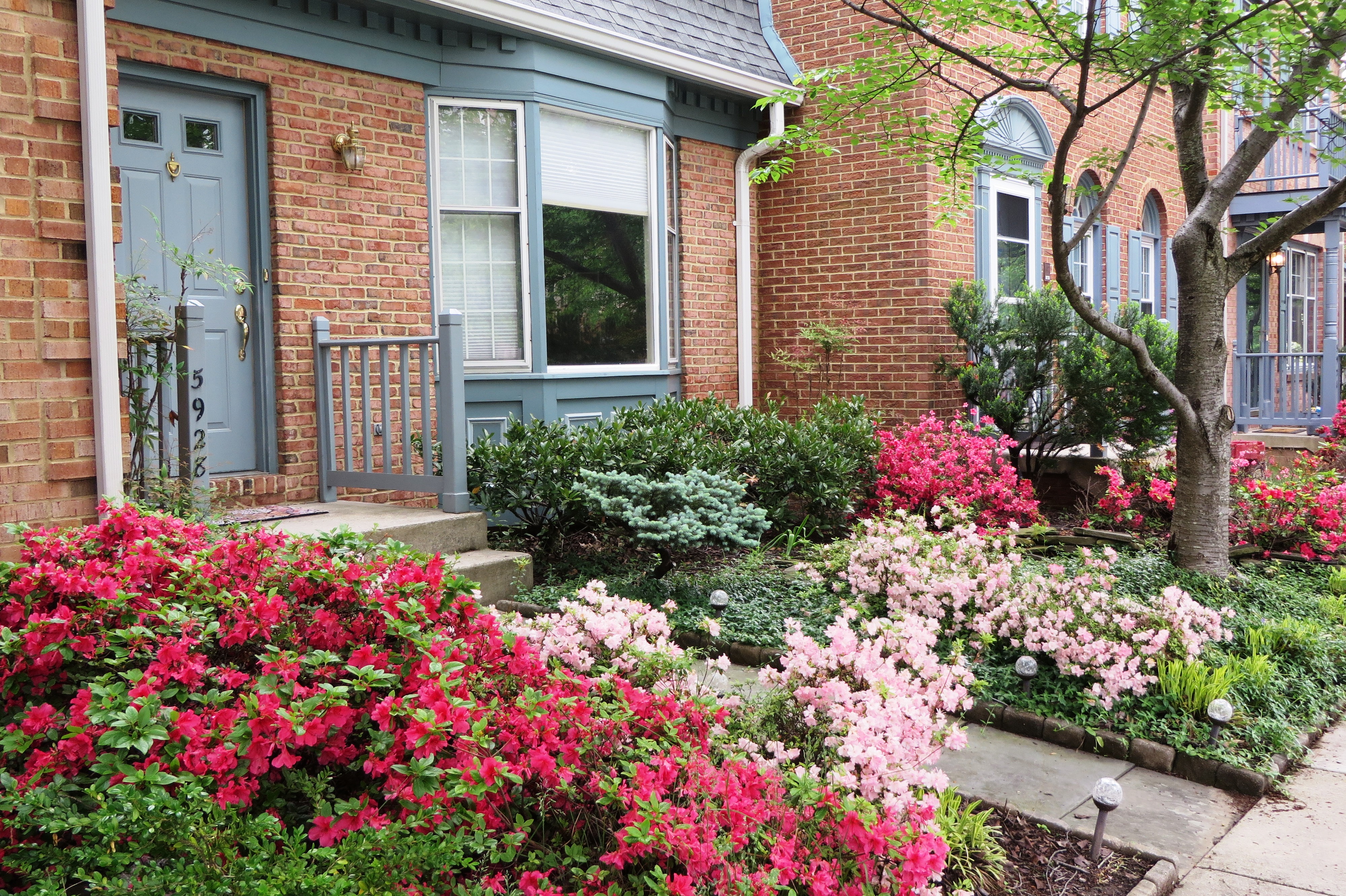
Late spring is lovely here, as the cherry blossoms give way to azaleas. May 2016
“You get a strange feeling when you’re about to leave a place. Like you’ll not only miss the people you love but you’ll miss the person you are now at this time and this place, because you’ll never be this way ever again.” —Azar Nafisi
Now that Jeff is retired, we can sell our Alexandria townhome and take up a less peripatetic existence in York County. That’s what we plan to do, gradually, but letting go of our part-time home here is more difficult than we imagined it might be.
Strange, really. One could argue that we should be eager to leave. We’ve had the most difficult years of our lives here; one heartbreak after another, devastating news followed by medical trauma followed by losses of loved ones and shattered illusions of permanence and security.
Yet there has been so much beauty too, and even joy. Our two grandsons came to life during this time, as did this blog. We’ve somehow survived more than we dreamed was in store for us, and managed to salvage countless moments of light happiness and laughter tucked in between the dreary days, glowing like tiny lighthouses, showing us that there really was shelter in the storm.
We’ve been so grateful for our kind and considerate neighbors here, and their delightful children and precious dogs and cats, and the lovely cherry blossoms and blooming gardens that somehow flourish in the crowded residential areas so close to a huge city. We’re thankful, too, for the friendships that have blossomed amid the chaos, and the ties that have been formed or renewed as people who care about us have enclosed us in a cocoon of compassion, prayers, and warm expressions of support.
Just as one can never step in the same river twice, no person or place can stay the same. Change is inevitable. The best we can hope for is accompanying growth, fond memories and bright new opportunities. Whenever we look back on our time here, I know we might wonder how on earth we managed to endure much of what the years brought. But we’ll smile, too, thinking of all the blessings. Thanks to each of you for being among them!
Even when we are not planning an upcoming move from one location to another, all of us are continually leaving behind the past and moving into new phases of life. What will you miss about this time and place? What will you hold close in heart today, as you savor each moment?
This post was first published seven years ago today. I ended up selling the Alexandria home in late 2018, and in 2021 I sold the York home that we once thought would be our permanent retirement home. Both homes I enjoyed to the fullest while I had them, and in each case, I knew the time was right to sell and close that chapter of my life. Because of this, I can say honestly that I have not missed either home, feeling only a deep gratitude for having had the blessing of these two lovely places for as long as we had them, and happy that I sold them when I did.
The original post, comments and photo are linked, along with two other related posts, below. These links to related posts, and their thumbnail photos, do not appear in the blog feed; they are only visible when viewing the individual posts by clicking on each one. I have no idea why, nor do I know how they choose the related posts. That’s just the way WordPress does things.
Like my own heart
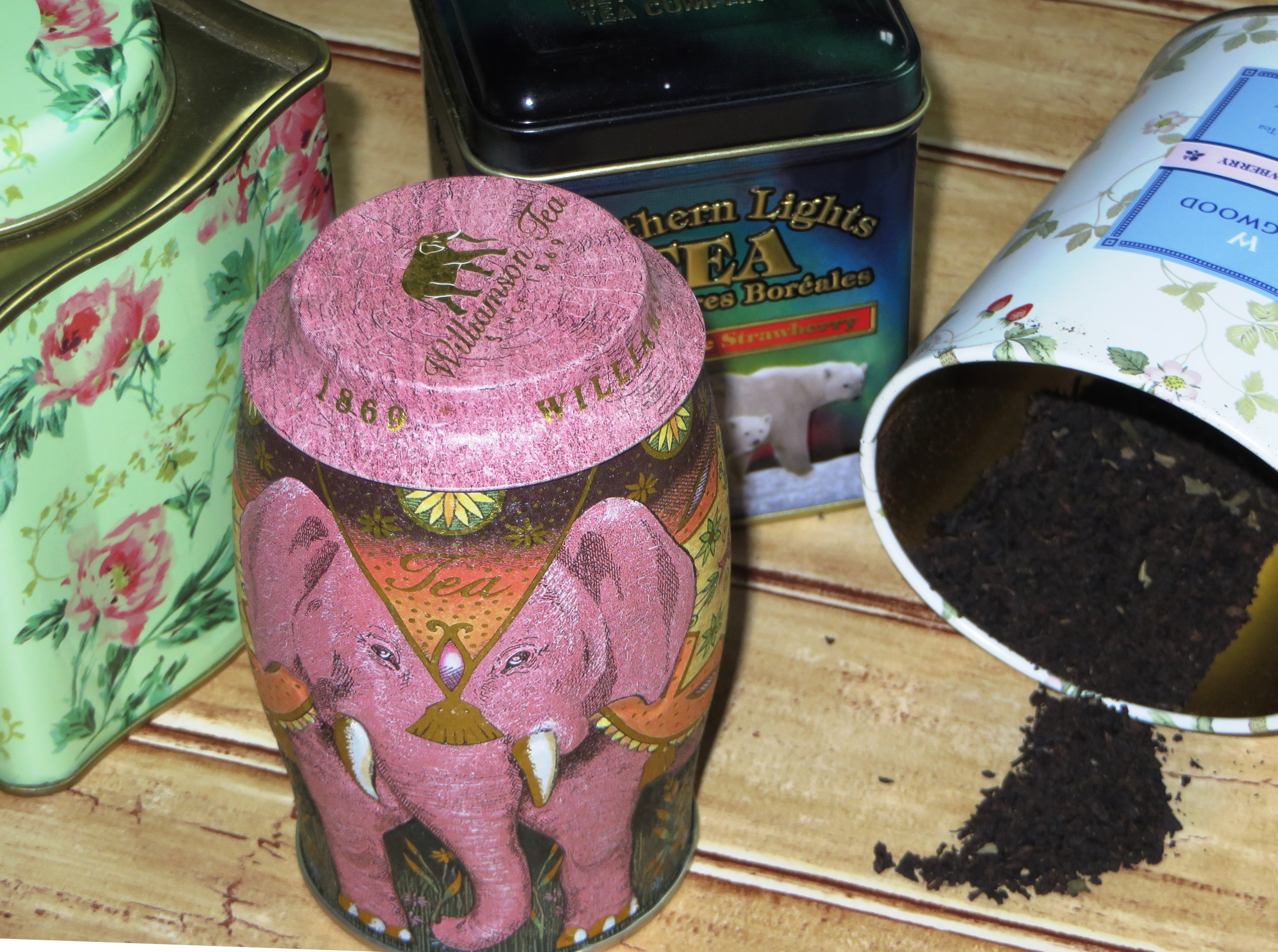
Fancy or plain, tin or paper, my tea boxes are full of treasure. May 2016
…box of tea,
like my
own heart
you arrived bearing
stories,
thrills,
eyes
that had held
fabulous petals in their gaze
and also, yes,
that
lost scent
of tea, of jasmine and of dreams,
that scent of wandering spring.
Ah, no wonder I love tea so much! Once again, the poet distills deep wells of emotion into a few well-chosen words. As we sip our tea (or coffee) today, let’s imagine the miles those leaves and beans traveled to reach us, and silently give thanks for the hands that harvested the bounty that brightens our mornings. Let’s savor the scents that linger, redolent of faraway lands and adventures we only dream of in our daily lives. I raise my cup with you in a virtual toast to refreshing moments that indulge the imagination as well as the senses. Santé!
This post was first published seven years ago today. The original post, comments and photo are linked, along with two other related posts, below. These links to related posts, and their thumbnail photos, do not appear in the blog feed; they are only visible when viewing the individual posts by clicking on each one. I have no idea why, nor do I know how they choose the related posts. That’s just the way WordPress does things.
How beautifully difficult
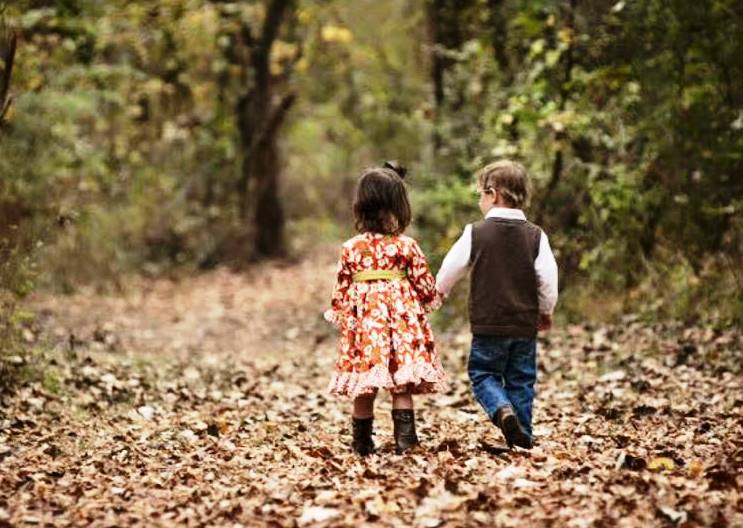
Twins Bailey and Braxton take a stroll together.
Photo courtesy of their parents.
“A child is a guest in the house, to be loved and respected– never possessed, since he belongs to God. How wonderful, how sane, how beautifully difficult, and therefore true.”
– J. D. Salinger
As I think about it, “beautifully difficult” is an excellent way to describe what it’s like to have children around. I don’t know any parent who would describe that role as being an easy one.
Caring for anyone or anything on an intimate and daily basis can inspire the sort of possessive attitude Salinger warns against. The line between responsible care-giving and inappropriate control can become perilously thin, and most of us will err on one side or the other at least a few times in our lives. Fortunately, most humans are resilient, and this trait apparently begins at birth.
When I read this passage, I was struck by the juxtaposition of the words “wonderful,” “sane,” “difficult,” and “true.” I seldom see these concepts associated in such close proximity, but on consideration, they are practically interdependent.
Whether or not you are a parent, you are almost certainly called to one or more roles that could be described by all four of these adjectives. With that realization, I wish you a day of wonderful sanity; of difficult truths that bless your life with the joys, laughter and sober understanding that go with having a child in the house.
This post was first published seven years ago today. The original post, comments and photo are linked, along with two other related posts, below. These links to related posts, and their thumbnail photos, do not appear in the blog feed; they are only visible when viewing the individual posts by clicking on each one. I have no idea why, nor do I know how they choose the related posts. That’s just the way WordPress does things.
A very astonishing place
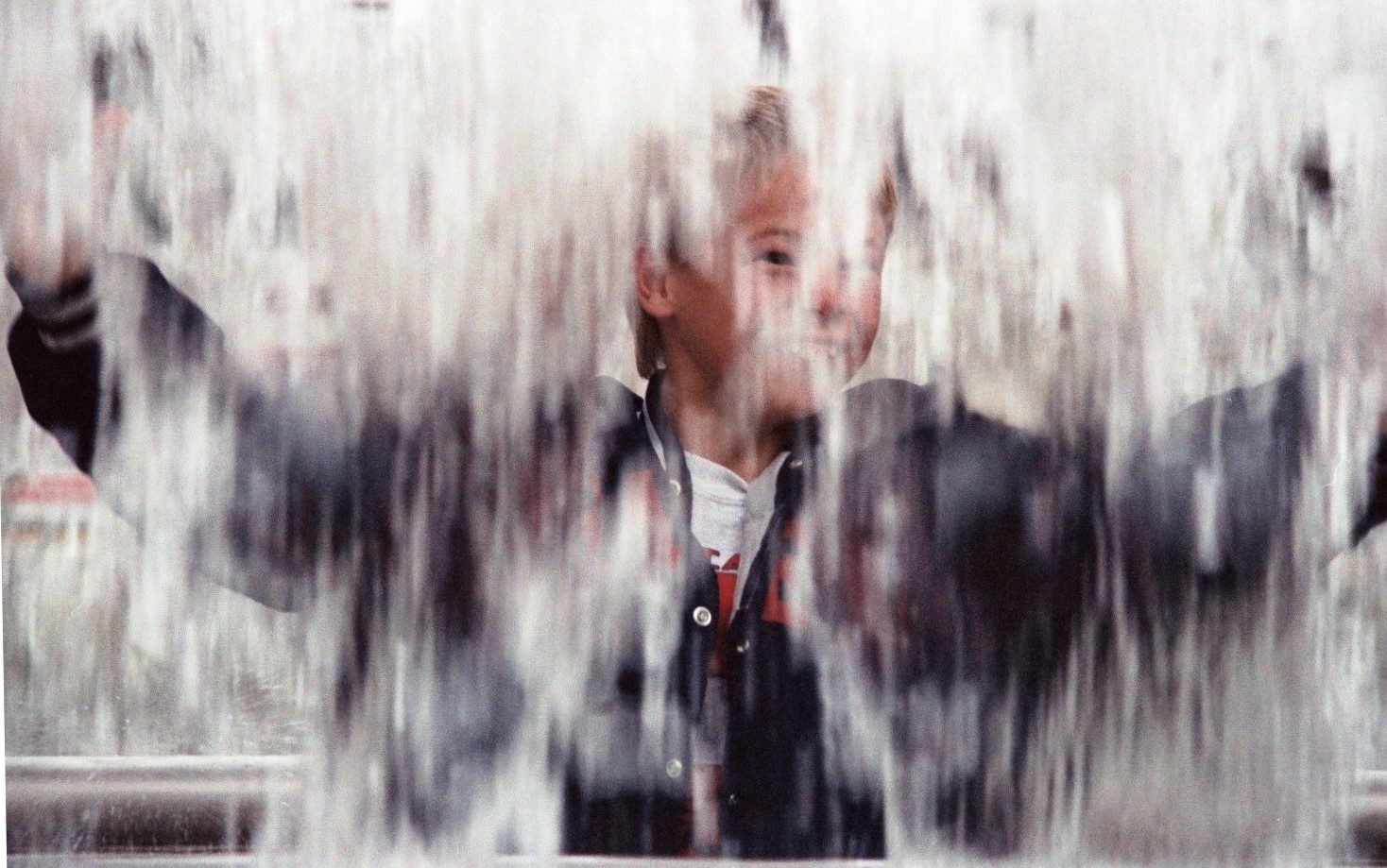
Drew was thrilled to look at the world from behind a waterfall.
Westlake Park Fountain, near Pike Place Market, Seattle, 1993
“If you can sustain your interest in what you’re doing, you’re an extremely fortunate person. What you see very frequently in people’s professional lives, and perhaps in their emotional life as well, is that they lose interest in the third act. You sort of get tired, and indifferent, and, sometimes, defensive. And you kind of lose your capacity for astonishment — and that’s a great loss, because the world is a very astonishing place…What I feel fortunate about is that I’m still astonished, that things still amaze me.”
— Milton Glaser
As enthusiastic as I’ve always been, I have to admit that Glaser’s words are relevant to my own life. Often– especially lately– I find myself tired, indifferent, defensive, or all three, even throwing in grouchy and pessimistic as bonus categories. I agree with Glaser that it’s a great loss to allow this to happen.
Over the years I’ve been teased on more than one occasion for being too easily impressed, too eager, too excited about things other people find ordinary. I’ve never minded this; I’ve taken it as a compliment. I think the capacity for astonishment is a sign of intelligence rather than its opposite. In my opinion, anyone who is constantly too busy to be astonished is not all that bright in any of the ways that really count.
Even the most upbeat among us do get exhausted, and disheartened, and sad. These states are normal, but I think we must be vigilant to keep them in the passenger’s seat and not the driver’s seat. Sometimes, we need to let other people drive while we reflect, refresh and recharge. And we need to cultivate a working knowledge of what shakes us out of our low moods, and prioritize this crucial form of self-care. The means of rediscovering our enchantment with life will be different from person to person, but we can learn a lot from each other by sharing our spontaneous moments of joy and pointing to the rays of sun that break through on even the worst days.
Right now, I’m noticing the beauty of green in the trees and grass, and how it never fails to calm me. I’m hearing the sweet chirping of the birds. I’m savoring the last few sips of my second mug of tea this morning as I plan to make a third– what flavor will I choose this time? I’m glancing around at the many tokens of love and affection that have been strategically placed where I can see them every day. These things, and many others, sustain my interest in this astonishing life.
How about you? Are you still astonished at life? When your enthusiasm flags, do you have any reliable ways to generate fresh energy?
This post was first published seven years ago today. The original post, comments and photo are linked, along with two other related posts, below. These links to related posts, and their thumbnail photos, do not appear in the blog feed; they are only visible when viewing the individual posts by clicking on each one. I have no idea why, nor do I know how they choose the related posts. That’s just the way WordPress does things.
In the noise and whip
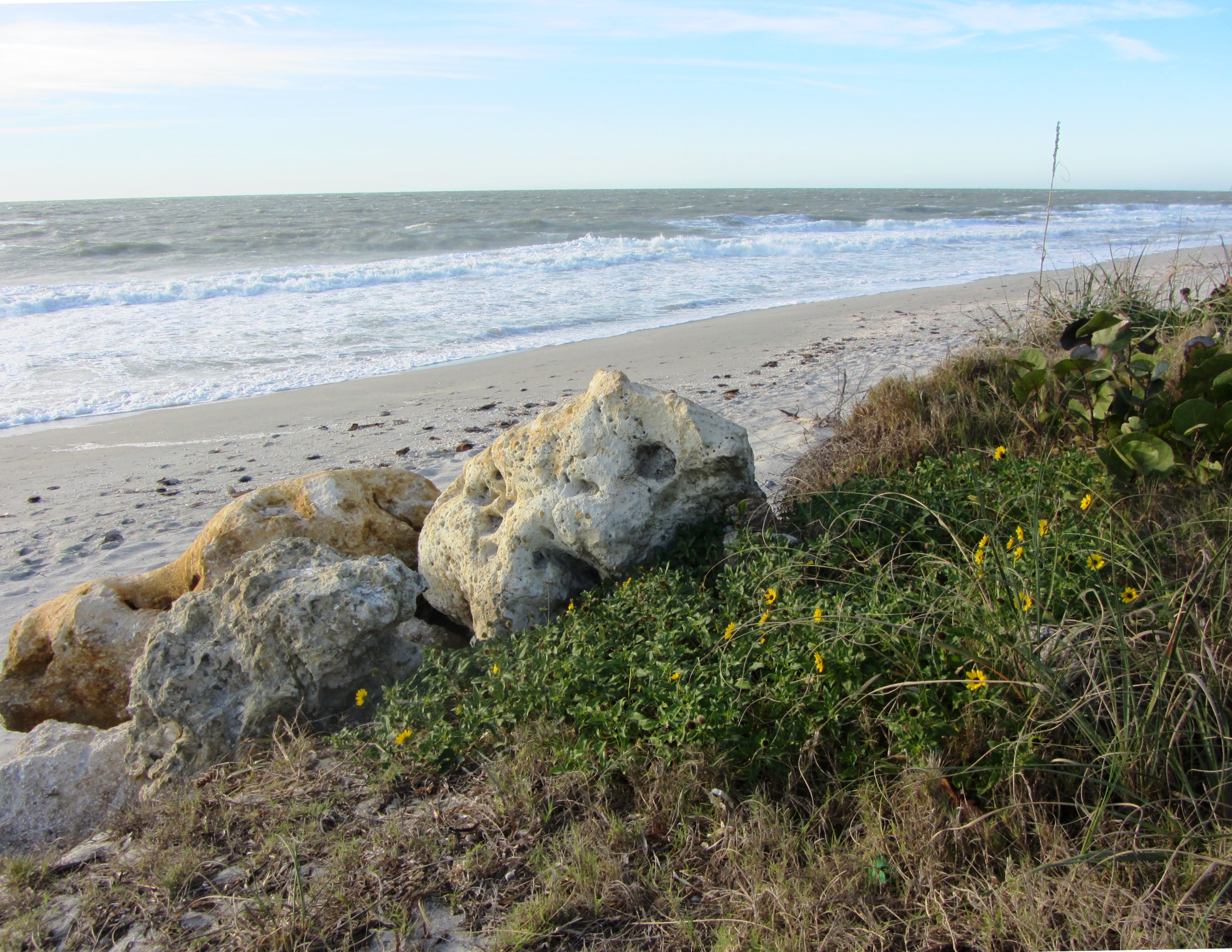
Amid chill winds, wildflowers bloom on the rocky shore of Captiva Island, January 2013.
…It is lonesome, yes. For we are the last of the loud.
Nevertheless, live.
Conduct your blooming in the noise and whip of the whirlwind.
This post is for anyone who has ever felt alone in a crowd.
It’s for anyone who speaks in a voice trembling with grief or rage, while hearing silent reproaches screaming inside the mind: What is it with you, anyway? Why can’t you just get over it– chill out– get used to it? Why don’t you just sit down and shut up?
It’s for anyone who has ever longed for a quiet hour, a normal day, a boring week, an uneventful month, a healthy, prosperous, consistently happy year.
It’s for anyone who endlessly waters other people’s gardens while wondering when her own life will have a chance to take root and bloom. The answer is: it already has.
Brooks hit the nail on the head. For some of us, it’s never going to be “So now, live happily ever after!” It won’t ever be “At last! A real life!”
For some of us– I suspect, possibly even for most of us– our earthly task is summed up in her two powerful words: “Nevertheless, live.”
A lot of people won’t get this post at all. That’s OK.
For those who do get it, remember: we have poetic and historic and literary and spiritual proof that it’s possible to bloom even in the most ferocious storm. You’re actually part of quite a magnificent garden. When you feel lonesome, remember that.
This post was first published seven years ago today. The original post, comments and photo are linked, along with two other related posts, below. These links to related posts, and their thumbnail photos, do not appear in the blog feed; they are only visible when viewing the individual posts by clicking on each one. I have no idea why, nor do I know how they choose the related posts. That’s just the way WordPress does things.
Only one thing to do

The Little Biplane that Could: obsolete or not, it changed history.
Fairey Swordfish by By Tony Hisgett, Birmingham, UK. CC BY 2.0 via Wikimedia Commons
“We are so outnumbered there’s only one thing to do. We must attack.”
— Sir Andrew Browne Cunningham
Admiral Cunningham spoke these words before the Battle of Taranto, in which a small number of obsolete planes (the Fairey Swordfish biplanes) conquered a mighty fleet of ships and ushered in the ascendancy of naval aviation. I loved this quote the first time I ever saw it, but in recent weeks, it has become especially meaningful to me.
History has shown that underdogs can overcome extraordinary odds, and it happens in many endeavors other than warfare. One of my favorite authors, Malcolm Gladwell, often writes about well-known events and people as seen through a different lens than typical journalism offers. In his book David and Goliath: Underdogs, Misfits, and the Art of Battling Giants, he discusses how courage, ingenuity and determination can win the day against all reasonable expectation.
The first week of this month Jeff and I were preparing to go on a transatlantic cruise I had reserved almost a year ago as a celebration of his retirement after 30 years in the Air Force. We knew at the time that he might never be able to go, but we looked forward to it in hope, and as the time drew nearer, it seemed as if the dream was going to come true. We were excited, but nervous; would Matt be OK while we were gone? Would Jeff and I relax enough to enjoy it?
We were never to find out. On April 6, Jeff was diagnosed with a large brain tumor that was affecting his balance and vision so dramatically he could hardly walk. Our dream of celebration had become a nightmare in the form of an exceedingly rare metastasis (Jeff’s type of cancer, we had been told, almost never goes to the brain, but his had). I asked the doctors why they had told us in the beginning that there was no need for brain scans because the cancer would not go to the brain. They answered, “People with his diagnosis and situation rarely live this long. So we don’t really know what might happen at this stage.” After facing the grim prognosis of colorectal cancer that spread to the liver and lungs, Jeff now has yet another battlefront in the long fight for his life.
Fortunately, the doctors at Walter Reed have come to know him well enough to be confident he might be able to beat the odds yet again. Though patients are seldom offered neurosurgery in such situations, there was immediate consensus among the oncologists and neurosurgeons that surgical removal of the tumor was an appropriate course.
Jeff had an hours-long craniotomy on a Monday, and left the ICU on Tuesday afternoon. The post-op MRI and scans confirmed the neurosurgeons’ opinion that the tumor was completely removed. It astonished me that they released him to go home on Wednesday, less than 48 hours after the surgery. By Saturday morning he was cooking breakfast and doing laundry (despite my having done three loads myself the day before), determined to live as normal a life as he can, for as long as he is able.
Jeff is up against very daunting odds, but in the final analysis, we all are. Each of us, in some way, is called upon to make the best of less than optimal circumstances, and for some of us, we’ll be called to do that again and again. The next time you feel outnumbered and hopeless, remember that improbable victories can only happen when underdogs refuse to surrender.
This post was first published seven years ago today. As it turns out, it’s one of those posts that seems to be re-appearing at a time when I most need it, as I face my own uphill battle in surgery next week. (By the time this publishes, my surgery will be behind me, for better or worse.) Fortunately, my life is not at stake, as Jeff’s was when he made the remarkable recovery that I’m now glad I captured here. But long odds are still daunting even when life is not directly threatened, and most of us will have many times when we face long odds before the final, life-ending battle comes, as it will for all of us. In the coming days, every time I feel nervous or pessimistic, I’ll think of the Fairey Swordfish. I’ll think of Matthew. And I’ll think of Jeff.
The original post, comments and photo are linked, along with two other related posts, below. These links to related posts, and their thumbnail photos, do not appear in the blog feed; they are only visible when viewing the individual posts by clicking on each one. I have no idea why, nor do I know how they choose the related posts. That’s just the way WordPress does things.
The trick is growing

Ever seen a pinwheel bouquet? If not — now you have!
My day was made considerably brighter by this colorful surprise, April 2016
“The trick is growing up without growing old.”— Casey Stengel
Let’s just say it had not been an easy day for me. I know I say that a lot, but if you have followed this blog for very long, you probably know why. Then– when I least expected it– I got an instant sip from the Fountain of Youth.
There was a mysteriously lightweight package at my doorstep, addressed to me. Hmmm, what could it be? I enjoyed the suspense as I saved it for later. That evening, after Jeff and Matt were in bed, I tore open the lid and have never been more surprised and delighted by what I found inside. Yep, it was a whole BOX full of glittery mylar pinwheels! Be still my heart!!!
There was this little note inside, by way of explanation:

Ever since childhood, I always loved pinwheels, but somehow managed to own pitifully few of them. In fact, the eight pinwheels I got in that box were probably four times what I’ve had in my whole life. I think I must have laughed aloud even though nobody was awake to hear me. Then the next day, I took about a zillion photos of them from every angle before putting them on display in a bouquet that brought smiles even from Jeff (whose skull had been cut open to remove a brain tumor less than four days earlier). Our kitchen now has bling!
The generosity, creativity and originality of people who read this blog never cease to amaze me. Every time I think about how much fun it was to get this fabulous treat, I am more impressed. What a totally unexpected joy. Between the rainbows shooting all around the room from Pauline’s handcrafted light catcher, and the glitterfest of these pinwheels, I have mood-lifting color to greet me every single day!
Today, I wish for you a wonderful, jack-in-the-box moment that reveals you have grown up without growing old.
This post was first published seven years ago today. In the years since then, I have shared three of those pinwheels (as Susan suggested in her message– and yes, this is the same Susan you often see in the comments section) but I still have five of them in a bouquet in my craft room, and they are as pretty as ever. I’m sad to reflect that Pauline, also mentioned above, has left this life– but I still have her light catcher too, and think of her every time I see it.
The original post, comments and photo are linked, along with two other related posts, below. These links to related posts, and their thumbnail photos, do not appear in the blog feed; they are only visible when viewing the individual posts by clicking on each one. I have no idea why, nor do I know how they choose the related posts. That’s just the way WordPress does things.
Water always goes

A goose goes with the flow of the Potomac River, Washington DC, March 2016.
“Water does not resist. Water flows. When you plunge your hand into it, all you feel is a caress. Water is not a solid wall, it will not stop you. But water always goes where it wants to go, and nothing in the end can stand against it…If you can’t go through an obstacle, go around it. Water does.” — Margaret Atwood
Deceptively powerful and endlessly mesmerizing, water permeates almost every aspect of our lives. It can be dangerous, even lethal, and many people have an instinctive fear of it. Yet its sights and sounds calm our souls, lulling us into deep reverie or lighthearted playfulness.
If you are feeling overwhelmed with too many tasks, or agitated by worry, try a bit of water therapy. Sit and gaze at a flowing river or placid lake. Take a nice warm bath and enjoy a bit of splashing about as a child does. Or simply indulge in a few quiet minutes listening to the sounds of rain, a gurgling stream or fountain, or a kettle simmering with water for tea or coffee.
Whether your visit with water happens literally, virtually or in your imagination, think about Atwood’s description of its gentle tenacity. Water offers us many lessons. If things get tough today, I’ll try shifting to a calming mental picture of its steady rippling beauty. I’ll try flowing on, not resisting, but finding new pathways when I come to obstacles. I invite you to join me in tapping into the fluid power and grace of this everyday element by taking a few minutes to focus on its agile strength.
This post was first published seven years ago today. The original post, comments and photo are linked, along with two other related posts, below. These links to related posts, and their thumbnail photos, do not appear in the blog feed; they are only visible when viewing the individual posts by clicking on each one. I have no idea why, nor do I know how they choose the related posts. That’s just the way WordPress does things.


 Defeat Despair