Our gardens — our wills

The well-tended flowers of Boston Public Garden on a lovely September day in 2007
“Our bodies are our gardens – our wills are our gardeners.” – William Shakespeare
The more I think about this analogy, the more it holds up on several different levels. Gardening is not easy; it involves no small amount of dirt, sweat and failure. But the rewards, which go beyond the final results each year, are well worth the effort. And the effort itself is often a pleasure, especially as experience teaches us the most efficient and successful methods.
Discipline and regularity in weeding, feeding and pest control are crucial in maintaining a garden. In a similar way, discipline and regularity are required for us to give our bodies the food, rest, and exercise they need, while guarding against toxins, exhaustion, and excessive or unwanted weight gain or other stressors.
As with gardening, this may sound like a recipe for NO FUN, but I’ve found it surprisingly easy to train my tastes away from harmful treats and toward more nourishing ones. And I’ve found, as have countless others, that making a habit of exercise will eventually create a valued place for it in my day, one that I give up only when absolutely necessary, and resume as quickly as possible.
If you are a gardener, you may connect with what I’m saying. But even if you aren’t, you probably know some tips and tricks you’ve learned to maintain your physical health, and thus increase your ability to brighten the world with your own unique flowers or fruits. What are some of the most effective “weed control” methods we can use to stay fit? How can we stay replenished and refreshed year after year?
This post was first published seven years ago today. The original post, comments and photo are linked, along with two other related posts, below. These links to related posts, and their thumbnail photos, do not appear in the blog feed; they are only visible when viewing the individual posts by clicking on each one. I have no idea why, nor do I know how they choose the related posts. That’s just the way WordPress does things.
We must discover

Jeff and Matt in Washington, DC, April 2005
“We don’t receive wisdom; we must discover it for ourselves after a journey that no one can take for us or spare us.” — Marcel Proust
As several readers have pointed out recently, we have many sources from which to seek wisdom. For people of faith, holy scriptures are primary; for all of us, other writings, exemplary lives, history and literature offer additional guidance. But help and guidance from other sources, however trustworthy, are only part of the process.
In library school, we studied the processes by which data becomes information (through meaningful organization of that data) and information becomes knowledge (through meaningful interpretation of that information). Getting from knowledge to wisdom is the hardest part, though. It requires ongoing and diligent application of knowledge, in the context of real-life experience, and it doesn’t happen quickly or by proxy.
Most of us, especially if we are parents, have a hard time standing by and watching others make mistakes that we feel we can warn them against. Sometimes our words are heeded, but often we suffer the painful helplessness of seeing people we care about, messing up their lives in big or small ways we feel they could easily avoid — and sometimes we overstep our boundaries, trying to protect them from the fallout of their errors. (Can you say “co-dependent?”) Of course, others have endured watching us stumble through similar lessons in the school of hard experience.
This doesn’t mean that we shouldn’t do our best to teach and learn; to spare others the difficult consequences of poor choices or unwise decisions. In the end, though, each of us bears responsibility, on whatever level we are able, for the paths we choose, and the destinations we reach. It takes great faith, hope, endurance and patience — the same traits we want others to show us — to help each other along.
We may be unable to spare others the journey, or take it in their place. But we can do our best to see that they don’t travel all alone. I can’t say it enough: thanks for being with us on this long, uncertain road. We are often discouraged, sometimes afraid, but we know we are never alone!
This post was first published seven years ago today. The original post, comments and photo are linked, along with two other related posts, below. These links to related posts, and their thumbnail photos, do not appear in the blog feed; they are only visible when viewing the individual posts by clicking on each one. I have no idea why, nor do I know how they choose the related posts. That’s just the way WordPress does things.
If I do nothing else
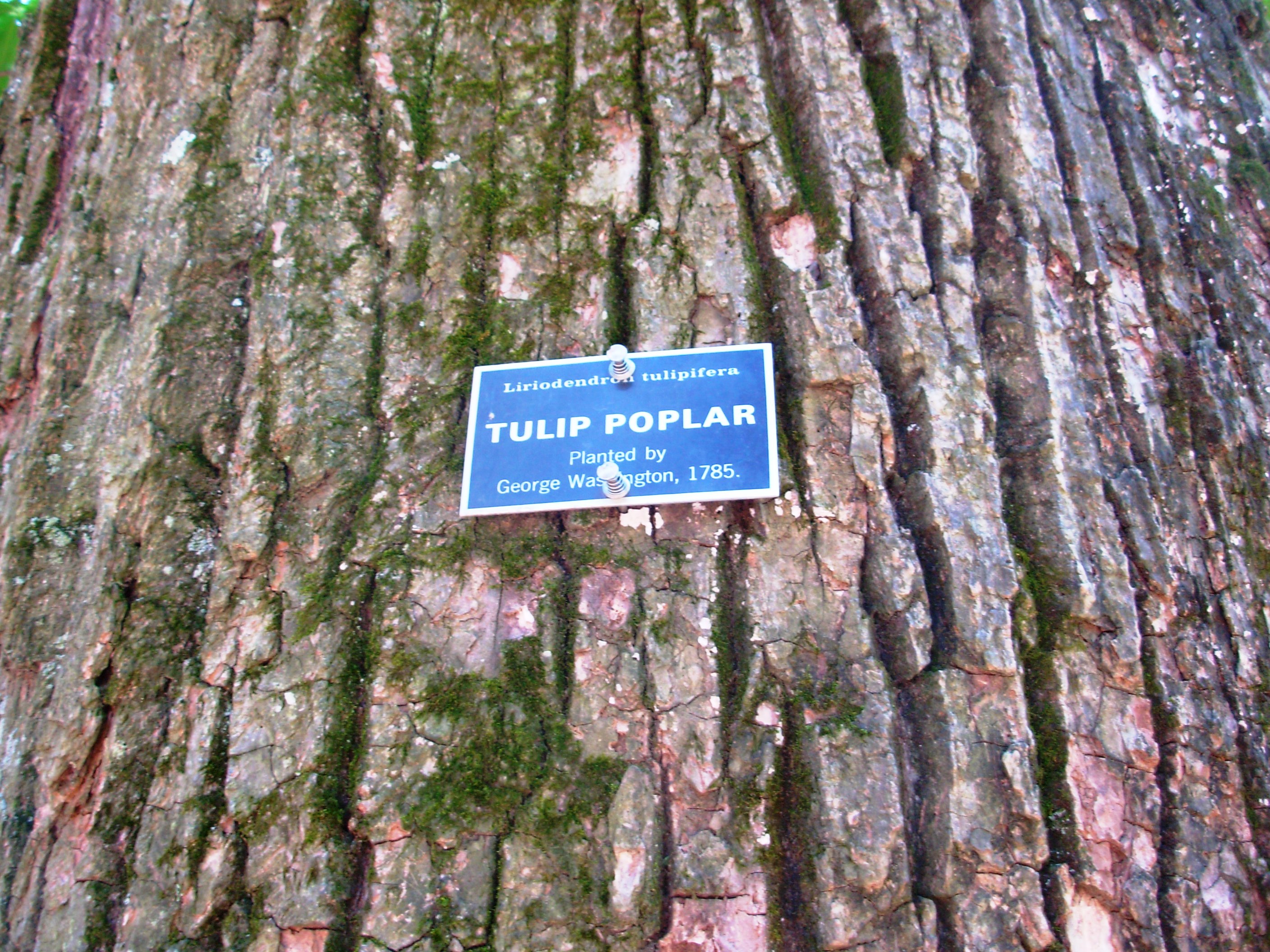
This tree is now immense, a fitting symbol of the country Washington helped to grow.
I took this photo at Mount Vernon in April, 2010.
“If I do nothing else in my lifetime but leave the world a good tree, I’ve done something.” — Ray Bracken
George Washington did far more than leave the world a good tree. He left an entire estate of trees, shrubs, flowers and innovative building techniques that can be seen to this day at Mount Vernon, Virginia. I photographed the modestly labeled Tulip Poplar there, though it was scarcely noticed by the tourists captivated by other attractions at Washington’s home. The Tulip Poplar is the state tree of Tennessee, where I once worked for the Division of Forestry, but the tree in the photograph above is perhaps the largest Tulip Poplar I have ever seen (too large to capture in a single photograph), and it grows in Virginia.
Of course, Washington did numerous other noteworthy things, about which you have likely heard or read. And Bracken, who is quoted above, did more than just plant a tree. He developed new cultivars of the lovely Magnolia, and anyone who has ever enjoyed the sumptuous beauty of these giants will agree that he accomplished more than enough.
I liked Bracken’s quote because it underscores the importance of keeping a focus on realistic goals. Most of us have more ambition than we have time to fulfill. Whether our goal is to save lives, save souls, feed the hungry, provide homes for those without them, or rescue wildlife or domestic animals, or maybe all of the above, sooner or later we are bound to bump up against the disappointing reality of our own limitations. At such times, we need to remind ourselves that, if we do what we can, that will be enough, and sometimes even more than enough.
Most of us will never accomplish the kinds of things that George Washington (or even Ray Bracken) accomplished. But that’s OK. It’s likely that there are things we can do, every day, that nobody else could or would. If we focus on the something(s) we can do, we’ll ultimately do more, because we will not be burdened with regrets about the things that now seem to be beyond our reach.
What kind of “good tree” do you most hope to leave for the world? What can you do today, to work toward that goal?
This post was first published seven years ago today. The original post, comments and photo are linked, along with two other related posts, below. These links to related posts, and their thumbnail photos, do not appear in the blog feed; they are only visible when viewing the individual posts by clicking on each one. I have no idea why, nor do I know how they choose the related posts. That’s just the way WordPress does things.
The world’s best teachers
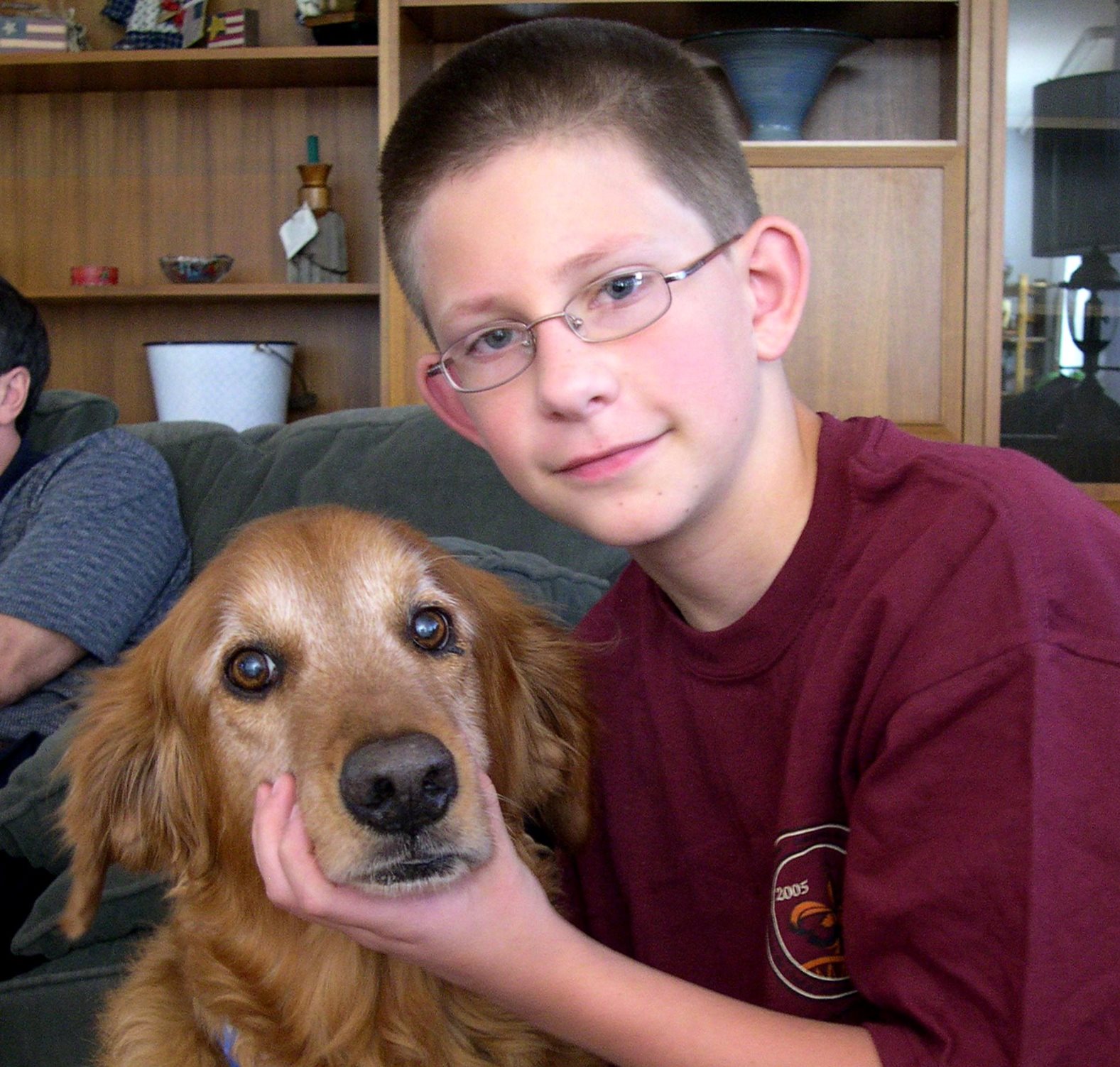
The dog has now passed on, and the boy is now all grown, but Eagle Scout Aaron still has much to teach about courtesy, respect and achievement. Winnweiler, Germany, August 2005
“Children and animals are the world’s best teachers– but very few adults really want to be educated.” — Ashleigh Brilliant
Educators have long known that learning is optimal when the lessons are engaging and fun. What better teachers, then, than animals and children? I hope there are more adults wanting this sort of education than Ashleigh thinks there are, but if not, maybe some of us will catch on when the stress becomes unbearable and we think “there must be a better way to live.”
The only thing more fun than watching animals or children at play, is watching them at play with each other. This has been one of the nicest gifts of the online world – we can now watch and share hilarious clips of kids and animals doing what they do best, and teaching us, among other things, how important it is to laugh as often as possible.
Blog readers have shared some real gems in the comments over the past year. If you missed the link to the cat on the Roomba, or the sledding crow, try a Google search for those clips (or try the terms “guilty dog” or “parrot talking in Chinese” or just “funny animal videos”). But what about kids and animals together? Does anybody have some good links to funny clips of children interacting with animals? If so, please post them in the comments below. We could all use a fun lesson today.
This post was first published seven years ago today. The original post, comments and photo are linked, along with two other related posts, below. These links to related posts, and their thumbnail photos, do not appear in the blog feed; they are only visible when viewing the individual posts by clicking on each one. I have no idea why, nor do I know how they choose the related posts. That’s just the way WordPress does things.
What the world gives you

This photo was taken just down the street from our York home during autumn, 2008.
“Use what you have, use what the world gives you. Use the first day of fall: bright flame before winter’s deadness; harvest; orange, gold, amber; cool nights and the smell of fire. Our tree-lined streets are set ablaze, our kitchens filled with the smells of nostalgia: apples bubbling into sauce, roasting squash, cinnamon, nutmeg, cider, warmth itself.”
— Shauna Niequist
Today is officially the first day of fall, a season that brings abundant gifts. All too often, it’s also a season of stress, as we adjust to new school schedules, plan for a host of holiday activities, and fight the psychological dread of another long, cold winter approaching.
At the start of this new season, I am coaching myself to make full use of these September gifts, no matter what other unpleasant or anxious situations may await me in the weeks to come. As I intentionally savor the small delights that can easily slip by unnoticed, I am calmed and strengthened, able to keep getting up one more time after the disappointments and sorrows that sometimes seem to come one right after another.
You may look forward to the same magical moments Niequist describes in the quote, or you may have other autumnal treats in store. Whatever good things the world gives you, I hope you will make use of every joy that comes your way. I hope the sights, scents and sounds of fall will bless you with a cozy comfort that wraps you in its blissful warmth and reassures your soul that no matter what happens, all will be well.
This post was first published seven years ago today. The original post, comments and photo are linked, along with two other related posts, below. These links to related posts, and their thumbnail photos, do not appear in the blog feed; they are only visible when viewing the individual posts by clicking on each one. I have no idea why, nor do I know how they choose the related posts. That’s just the way WordPress does things.
Such a beautiful day
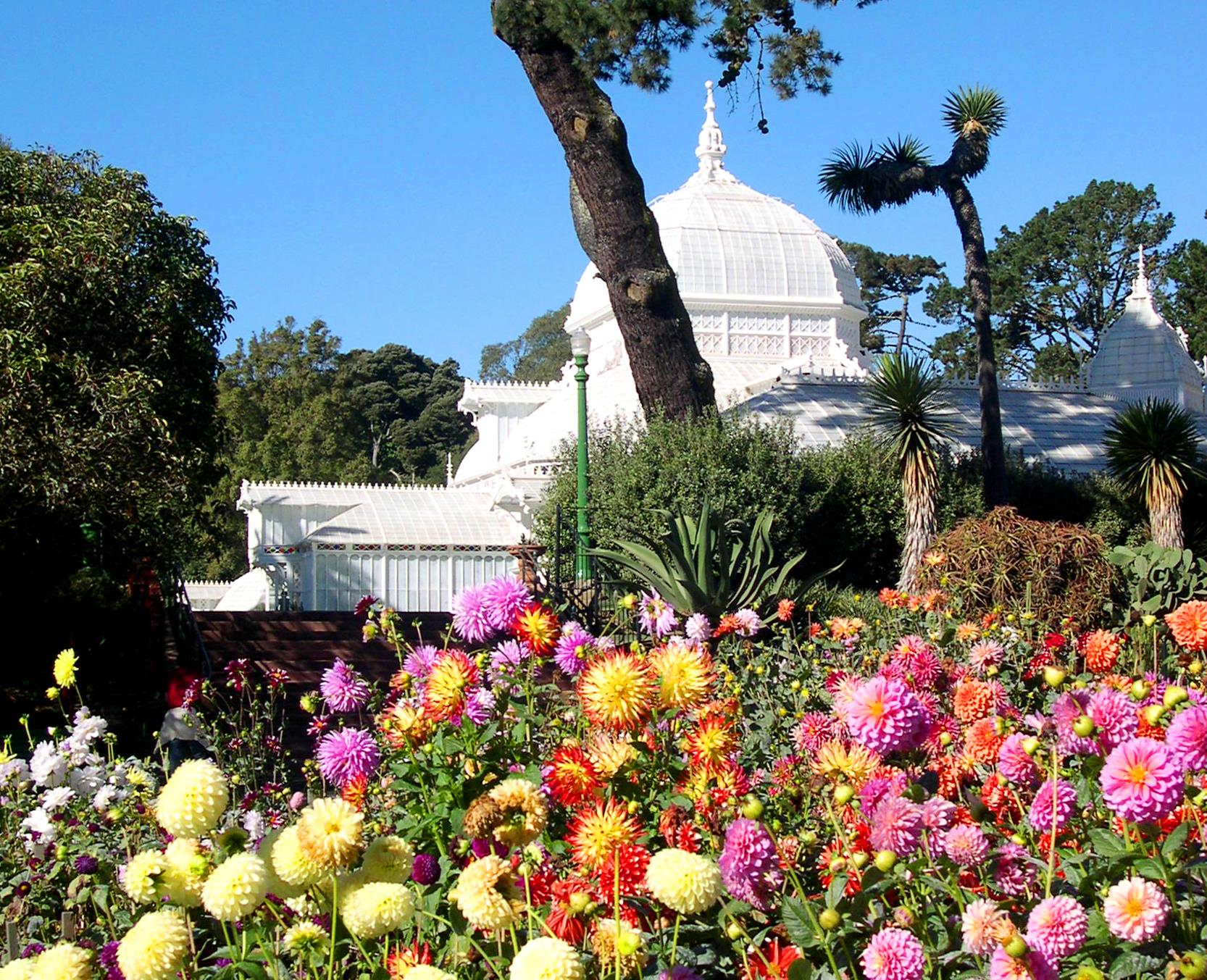
Just another glorious fall day at Golden Gate Park, San Francisco, October 2003
“I cried at first…..and then, it was such a beautiful day, that I forgot to be unhappy.” — Frances Noyes Hart
Have you ever walked outside in a gloomy mood, and been overtaken by the sheer beauty of the day? It’s happened to me many times, and the feeling of relief and joy that floods over me is no less than when a physical pain is eased. Most often it happens on one of those gloriously sunny days when the temperature is comfortable and there is the faintest breeze to keep me cool as I walk. But sometimes it’s a winter day when the sun is reflected blindingly bright from the snow, or even a rainy day when the drizzle makes a soothing sound that complements the thirsty earth’s refreshment.
Perhaps no season is as full of such days as autumn. During our years in California, on both the central coast and the northern bay area, October was the warmest time of year, sunny every single day. Here on the east coast, autumn is even more glorious, with vivid fall foliage that takes my breath away no matter how often I see it.
If you are beset with sorrow or gloom right now, I hope you will soon enjoy some of those glorious fall days that help you forget to be unhappy. I’m looking forward to them; the kind of days when simply walking outdoors is like getting a big divine hug that says “Everything is going to be alright in the end.”
This post was first published seven years ago today. The original post, comments and photo are linked, along with two other related posts, below. These links to related posts, and their thumbnail photos, do not appear in the blog feed; they are only visible when viewing the individual posts by clicking on each one. I have no idea why, nor do I know how they choose the related posts. That’s just the way WordPress does things.
A combination

Four members of Jeff’s family joined mine in Atlanta to encourage us
on the night before Matt’s second open heart surgery at Emory, July 1994.
“Home is a combination of human will and divine grace.” — Alexandra Stoddard
Whether we live alone or with family, whether we open our doors to traveling friends and adopted animals, or prefer a more solitary life, it takes substantial effort to create and maintain a home. Despite what we sometimes refer to as modern conveniences, the challenge has never been greater than it is in today’s world.
Because so many aspects of life converge there, a residence serves as the hub for diverse and often conflicting demands. It is roughly equal parts functional work station, entertainment center and quiet retreat. Cell phones and computers have only increased the demands on the home in all three roles, and often the lines blur confusingly. It takes planning, organization and vigilant management to keep a balance that will enhance rather than burden our lives.
But our best efforts often fall short of perfection — and thank goodness it is not needed. Because homes also are places of divine grace, where our busy, sometimes frantic activities are augmented by something intangible that pulls everything together into harmony surprisingly often. Not always, but more often than our harried hurry might suggest.
The beauty of freshly cut flowers in a simple glass vase; the unique ambience of soothing music or lively conversation; the cozy hour spent with a cup of tea and a good book, or a quiet period of shared reflection with someone we love — all these things and countless others adorn our living spaces with a grace that does not come from human hands or laborious endeavors.
Perhaps we would do well to recognize and amplify these unexpected gifts — what one reader recently described as “pockets of joy” — and focus our efforts on those activities which seem most likely to create time and space for them. Today, I hope you will find a renewed awareness of all the many ways you are happy and blessed in your home. What actions seem to create synergy between our achievements and our blessings? How can we provide an environment where we are tuned in and ready to welcome these gifts of grace whenever they come?
Happy Birthday today to my mother, Sybil,
who created a home for us filled with human will and divine grace!
This post was first published seven years ago today. Mama, the blonde seated directly in front of Jeff, was (almost to the day) exactly the same age in this1994 photo as I am today, on the day this post appears again. It’s a tribute to her that she continued to play such an important role in the lives of all four of her children, who had come from four different states to be together that night. When I snapped this picture, she and Daddy had just cooked a hearty meal for everyone pictured, and it was somehow a festive evening despite the grim and frightening days that lay ahead of us.
The original post, comments and photo are linked, along with two other related posts, below. These links to related posts, and their thumbnail photos, do not appear in the blog feed; they are only visible when viewing the individual posts by clicking on each one. I have no idea why, nor do I know how they choose the related posts. That’s just the way WordPress does things.
Things that look used
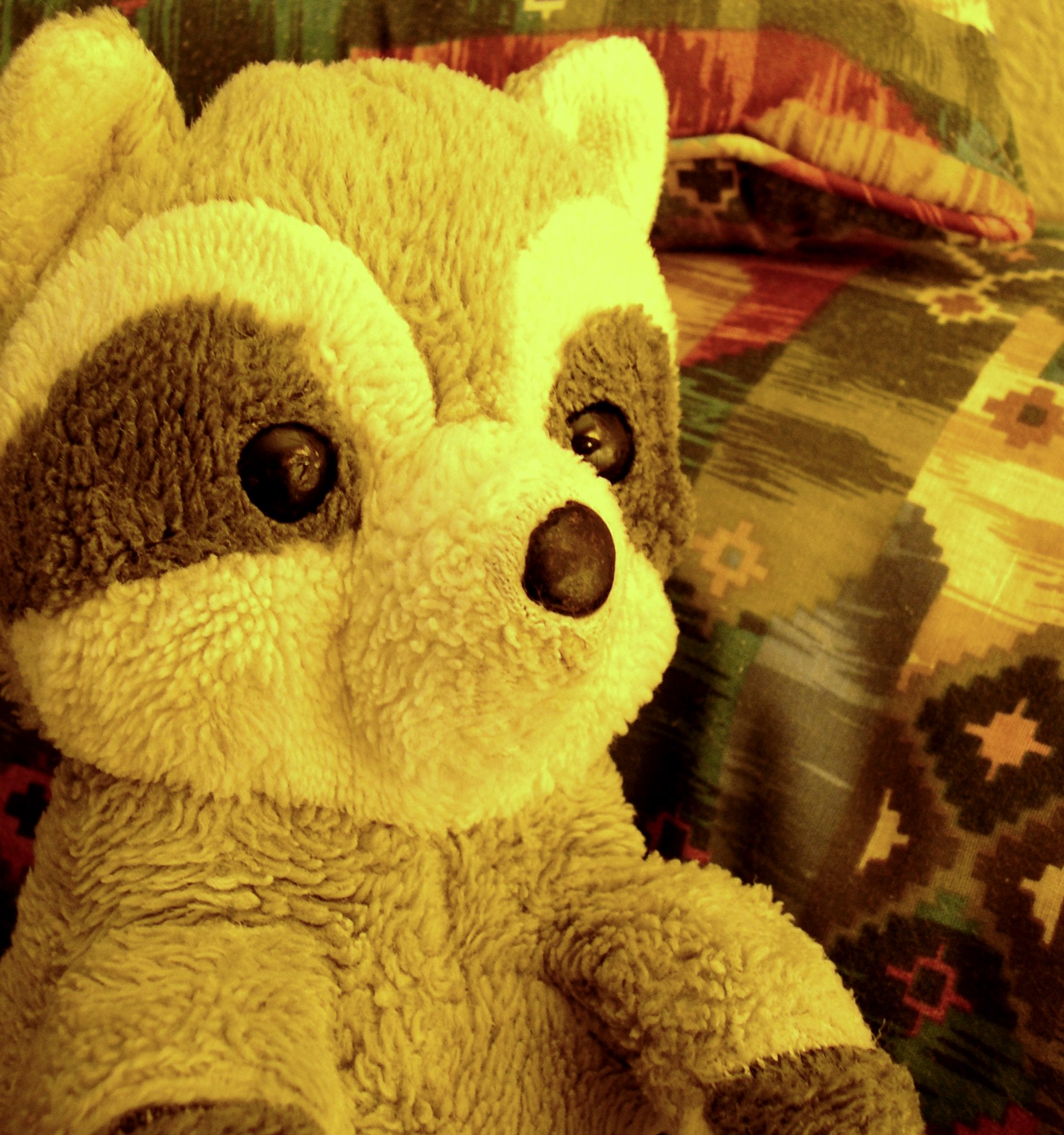
This threadbare little raccoon has seen the world.
Gludgey in Drew’s room in Vacaville, CA, soon headed back to Tennessee, August 2003
“I like things that look used, especially when they were used by someone who matters to me.” – Gary Hager
Does this raggedy raccoon look familiar? If so, you may have seen him in this post. Actually, I have pictures of him in any number of places; looking out the window of the Coast Starlight, cruising the Caribbean, catching the rays of Hawaiian sunshine. He’s a world traveler, and though he never talks about his experiences, they have clearly left their mark on him.
On Drew’s first Christmas, when he was about 9 months old, our dear friends who were his unofficial godparents gave him this then-plush and beautiful toy raccoon. For reasons never clear to us, Drew soon told us “his name is Gludgey.” (Drew was an early talker, but the spelling was my own guess that met his later approval.) Gludgey has been everywhere with Drew, for more years than we would have ever predicted. In fact, as Drew got older, I was a bit torn between being happy that he was not eager to leave childhood behind, and worried that his friends would tease him for hanging on to his dearly loved toy companion. If Drew felt the slightest bit self-conscious about it, he gave no sign of it.
I’m not exaggerating. Gludgey went away to summer camps, on all our vacations, even on medical mission trips to South America with his buddy who was by then in high school. Then he went off to college with Drew, thousands of miles from his California home. The next year, the day Drew left to go back to school at the end of the summer, Jeff came into the kitchen with a rather sad expression on his face. “I see Drew left Gludgey behind this time. That’s the end of that. I guess he has finally grown up.”
That night the phone rang. “I forgot to bring Gludgey — can you mail him to me?” I agreed, but I snapped several photos first (including the one above) in case the Gludgemeister got lost in the mail. He didn’t. In fact, I believe he went to Athens and later, to Oxford with Drew, spending those overseas semesters with him. I have to wonder what Drew’s classmates thought.
In case you’re curious, Gludgey was consigned to a closet shelf when Drew married and had the good sense to take someone else’s decorating preferences into consideration, but I suppose the venerable raccoon will re-emerge about the time Grady is old enough to notice him. As these things tend to go, Grady may not like him– at least not at first– but he probably won’t have immediate veto power.
Do you have old, well-loved toys, blankets or other comfort objects (including furniture) that you would not part with for anything newer or grander? I’ve found that many of us do. At nearly 57, I have a soft spot in my heart for anyone who treasures old things. As the wonderful story The Velveteen Rabbit so eloquently describes it, it’s not getting OLD – it’s becoming REAL. Please tell us about your favorite “real” things!
This post was first published seven years ago today. The original post, comments and photo are linked, along with two other related posts, below. These links to related posts, and their thumbnail photos, do not appear in the blog feed; they are only visible when viewing the individual posts by clicking on each one. I have no idea why, nor do I know how they choose the related posts. That’s just the way WordPress does things.
If you look close enough

Teens from church visit a senior member’s home and take a closer look at her life.
Fairfield, California, August 2003.
“Even the most ordinary life is a mystery if you look close enough.” — Kennedy Fraser
It seems to me one of the saddest aspects of modern culture that people get a lot of their reality from television shows. Admittedly I know very little about it since I’ve shunned television for over 25 years now, but the term “reality TV” seems an oxymoron. How could anything on television be reality? Even the so-called news is carefully packaged, edited and slanted to someone else’s specifications.
If reality TV is popular, it’s probably because people are basically fascinating to begin with. I realize I might get an argument here, but I honestly believe it. I have never ceased to be amazed at the complexity of each and every life I’ve ever been acquainted with, and the fact that there are millions and billions of them only increases my awe that each life is very different from every other. If people seem all alike and boring to you, it may be that you’re not looking closely enough.
I guess the blogosphere is the online version of reality TV. But at least here, we can talk back and forth, and get to know each other. Some of you I have met in person, some I have known for years, and some I have never met, but feel as if I have; as if we could go to lunch and talk as old friends do, with no awkward silence or pretension. I love that. I love that I have come to know a little bit about so many people all over the world, people who were totally unknown to me before, whose existence was hidden to me by the limitations of geographical distance and half-imaginary borders of culture, nationality or age differences. More than ever, we are surrounded by rich opportunities for friendship, understanding, and joy.
Not everyone is comfortable interacting online, and that’s OK. But all of us, no matter our preferences and habits, daily come into contact with lots of people whose lives touch ours in some direct or indirect way. I’ve found that life is much more interesting when I stop to take a closer look at the people in my life. It’s a lot harder to stay depressingly immersed in the relatively small world of my own challenges and troubles; a lot easier to avoid despair when I realize that we all struggle at times, and have much to offer each other.
Who are the celebrities of your personal world? Who is in the supporting cast? If your life was a reality TV show, who would be the characters we’d come back to see again and again? There is mystery in the ordinary; can you unravel it? Stay tuned!
This post was first published seven years ago today. The original post, comments and photo are linked, along with two other related posts, below. These links to related posts, and their thumbnail photos, do not appear in the blog feed; they are only visible when viewing the individual posts by clicking on each one. I have no idea why, nor do I know how they choose the related posts. That’s just the way WordPress does things.
The most effective technique

Kindness is a trait we start to learn early.
Drew visits the animals on my friend Judy’s farm, near Dayton, Ohio, 1987.
“People often ask me what is the most effective technique for transforming their life. It is a little embarrassing that after years and years of research and experimentation, I have to say that the best answer is–just be a little kinder.” — Aldous Huxley
I thought quite awhile about Huxley’s conclusion, and I think it has a lot of merit. I can think of hardly any world problem — war, disease, hunger, crime — that would not lessen significantly if kindness grew and became more widespread. And on a smaller scale, much day-to-day misery is alleviated in countless situations by people who show kindness in big or little ways.
But on a more personal level, as I consider my own life, I know that thinking, feeling and being kinder is a solution to many of the little irritations that sour my moods and put a grouchy expression on my face. When I’m feeling patient with other people, my day just seems to go better. When I’m angry or frustrated with others, even for good reasons, it’s my own day, mood and life that suffer most. And I’m a hotheaded person who needs this lesson more than almost anyone I know.
Sometimes, the simplest things can be the hardest. Kindness is a trait that comes naturally to many of us at least some of the time, but there is never enough of it to go around. Yet it’s fairly easy to find ways to be kind if we are willing to make the effort, and as with so many actions, one kindness often leads to another.
Next time you’re having a really bad day, try this: take a few deep breaths, remind yourself that you will most likely survive whatever minor disasters you’re coping with, and resolve to use kindness as a strategy to lighten your mood and make an immediate improvement to your attitude. Then practice — even if it feels stiff and unnatural at first — smiling at people, opening doors for strangers, complimenting cute babies or dogs you see, letting someone who is obviously in a hurry go ahead of you in the checkout line at Walmart. Even if you can’t muster any affection for strangers, FAKE it. I bet it will brighten your day, even if only by allowing you a private inner laugh at your own awkward efforts.
Have you ever made a conscious effort to be more kind? If so, how did it make you feel? Do you agree with Huxley that kindness is an effective means of transformation?
This post was first published seven years ago today. The original post, comments and photo are linked, along with two other related posts, below. These links to related posts, and their thumbnail photos, do not appear in the blog feed; they are only visible when viewing the individual posts by clicking on each one. I have no idea why, nor do I know how they choose the related posts. That’s just the way WordPress does things.
The world’s largest collection

OK, so I didn’t leave my ENTIRE collection on the beach at Captiva! January, 2013
“I have the world’s largest collection of seashells. I keep it on all the beaches of the world…perhaps you’ve seen it.” — Steven Wright
I think one of the best traits we can develop is the capacity to thoroughly enjoy something without having to own it. If you can master this skill, you can have more fun than money could ever buy. And you’ll eventually enjoy a financial freedom that opens up all sorts of opportunities to you that would be unavailable if you were encumbered with the many costs of owning things.
When ownership is not your goal, you can go shopping for the evening, and ooh and ahh over any clothing, shoes, jewelry or furnishings that catch your eye. Price is unimportant if you’re not trying to take anything home with you, but just want to appreciate its beauty. Then you’ll come home without any shopping bags or bills, but a bank of visual images that are just as pretty (maybe prettier) in your memory as they would be in your home.
You can explore parks and libraries and streets of your home town, all for nothing (or next to nothing). With a free card to your local public library, you can take home any books you see that even mildly interest you, and keep them for weeks before returning them. Browse to your heart’s content, read about places you’ve never been and hobbies you might explore.
If you like to collect things, start collecting photographs! Now that digital cameras are affordable, you can take as many as you like at no additional cost. As the signs in many national parks and forests read: “Take nothing but pictures. Leave nothing but footprints.” Photographs are a joy to have, and you can store thousands of them on an SD card the size of a postage stamp. The ultimate alternative to dusty clutter!
I’ve often heard grandparents say that the most appealing aspect of grandchildren is that you can enjoy them, but somebody else has to take them home and take care of them. That same principle can apply to everything from diamonds to dresses to décor. It’s fun, and even necessary, to own some things. But it’s even more fun to collect moments of enjoying things you will never have to worry about owning.
What are some things you enjoy most without ever wanting to buy, own, or take care of?
This post was first published seven years ago today. The original post, comments and photo are linked, along with two other related posts, below. These links to related posts, and their thumbnail photos, do not appear in the blog feed; they are only visible when viewing the individual posts by clicking on each one. I have no idea why, nor do I know how they choose the related posts. That’s just the way WordPress does things.
Other springs

Jeff enjoys springtime on Grand Cayman Island, March 2011
When we began this endless trek,
I feared I saw a darkened door,
Through which a line of marching sick
Were heading for some winter shore.
But now the news the doctor brings
Seems to promise other springs. — Jane Yolen
One year ago today, Jeff went into the local emergency room with sudden, acute abdominal pain that suggested appendicitis. That day I got a phone call from him in the ER with the kind of devastating news we all dread; news that would change our lives abruptly and irrevocably.
It was the beginning of a year that was to bring him two different cancers diagnosed (apparently unrelated to each other), four surgeries, four weeks in the hospital, two different courses of chemotherapy and one of radiation, countless trips to Bethesda, and further surgeries and treatments planned, with no completion of treatment in sight. The initial diagnosis of atypical cardinoid in the appendix was worrisome enough, but with the additional finding of Stage IV adenocarcinoma of the colon, with multiple tumors scattered over the liver and lungs, his prognosis was grim indeed.
On Christmas Eve 2010, a dear friend of ours had been diagnosed with a brain tumor. Sometime in the weeks following, Jeff picked up a copy of the book The Radiation Sonnets, written by the prolific and multiple-award-winning author Jane Yolen, who penned the sonnets daily as a way of coping with her husband’s cancer treatment. Jeff hoped the book might bring comfort to this wonderful couple we loved, who were facing a such a formidable challenge. He didn’t read it, but asked me to review it and decide whether it would be an appropriate gift.
By the time I was able to skim the book, our friend’s prognosis and condition had worsened, and I felt the hopeful tone on which the book ended might not fit the current circumstances. I set the book aside hoping the time would come when it might be more fitting for them, or if not, there might be other friends who could benefit from it someday.
Shortly after Jeff’s second cancer diagnosis in November 2012, I was going through the cache of gifts I keep on hand when I buy something perfect for a particular person, to save for the next Christmas or birthday. I found Yolen’s now-forgotten book and decided to read it, with the somber realization that the person I had been saving it for turned out to be me.
The poem I partially quote above, entitled “Ask the doctor,” falls slightly more than halfway through the book. I clung to it and read it often during the darkest days, with the fervent hope that there might someday be an appropriate time to feature it in this blog. I am filled with gratitude and joy that the time finally seems right.
It’s not that we’ve gotten any particularly good news lately, but Jeff has again managed to fend off some frightening and excruciatingly painful side effects from the chemotherapy that has ravaged his body, and with every comeback, I feel more hopeful. As did Yolen’s husband, Jeff still faces a very uncertain future, but one that holds considerably more hope than it did just over ten months ago when I began this blog.
All of you who have joined us on this path, through your visits here, comments, thoughts and prayers, have helped us reach a brighter place. I think of every reader with appreciation and a deeply thankful heart. You have created for me this supportive community that has upheld me through more than I could have imagined thus far. As we continue forward with a renewed determination to defeat despair, know always that you have played an important role in our ability to rise above the pain and sorrow. As I love to say in my comments, “thanks for being here!”
This post was first published seven years ago today. A few of these posts are so hard to re-visit that I actually dread returning to them. This is one. What makes it so difficult for me is remembering how I felt when I wrote this. Although I acknowledge here that Jeff’s future remained uncertain, I really did believe, indeed I felt certain, that he would beat the disease, and that this story would have a happy ending. My heart breaks knowing that Jeff and I, who felt so hopeful then, were all too soon to have those hopes dashed, and that his death was one of many profound losses in store for me. I thank God I had no idea what the future would bring.
Still, even back then I had looked up information to find out what happened to Yolen’s husband, who inspired her hopeful poem about “other springs.” Like Jeff, he had a few springs yet to live after this poem was published, but he too succumbed to one of the most vicious diseases known to modern medicine. Did Yolen ever look back on this poem with the same desolation that I feel now in my heart when I read this?
The original post, comments and photo are linked, along with two other related posts, below. These links to related posts, and their thumbnail photos, do not appear in the blog feed; they are only visible when viewing the individual posts by clicking on each one. I have no idea why, nor do I know how they choose the related posts. That’s just the way WordPress does things.
A harmony in autumn

The yearly Autumn Moon Festival celebrates the season with fitting grandeur.
Chinatown, San Francisco, September 2003
“There is a harmony in autumn, and a luster in its sky, which through the summer is not heard or seen, as if it could not be, as if it had not been!” — Percy Bysshe Shelley
If I was absolutely forced to choose a favorite season, it would be autumn. Even its name is more beautiful in my ears than the names of the other seasons. It’s a whirl of exciting events: the beginning of a new school year for many of us, the coming of fun holidays that call up our creative and decorative talents as no other season does, the delicious cooling of the weather, drawing us back to the kitchen to bake our favorites and spend time with loved ones.
In San Francisco’s Chinatown, the Autumn Moon Festival begins today. It is celebrated yearly with seemingly as much color and enthusiasm as the better-known Lunar New Year. It seems a fitting way to begin the parade of festivities that will follow all over the USA, across many regions and cultures. As the leaves turn to crimson, orange and gold, and the scent of fireside merriment is in the air, we feel an awakening of the spirit that renders us more than ready to bid farewell to summer’s joys.
What do you love best about autumn? Do you decorate, bake, or do anything traditional each year to mark the beginning of this lovely season? I hope you will be able to get outside this week, while the temperatures are still warm but the unmistakable touch of fall is there to energize and refresh you.
This post was first published seven years ago today. The original post, comments and photo are linked, along with two other related posts, below. These links to related posts, and their thumbnail photos, do not appear in the blog feed; they are only visible when viewing the individual posts by clicking on each one. I have no idea why, nor do I know how they choose the related posts. That’s just the way WordPress does things.
The gift of crisis
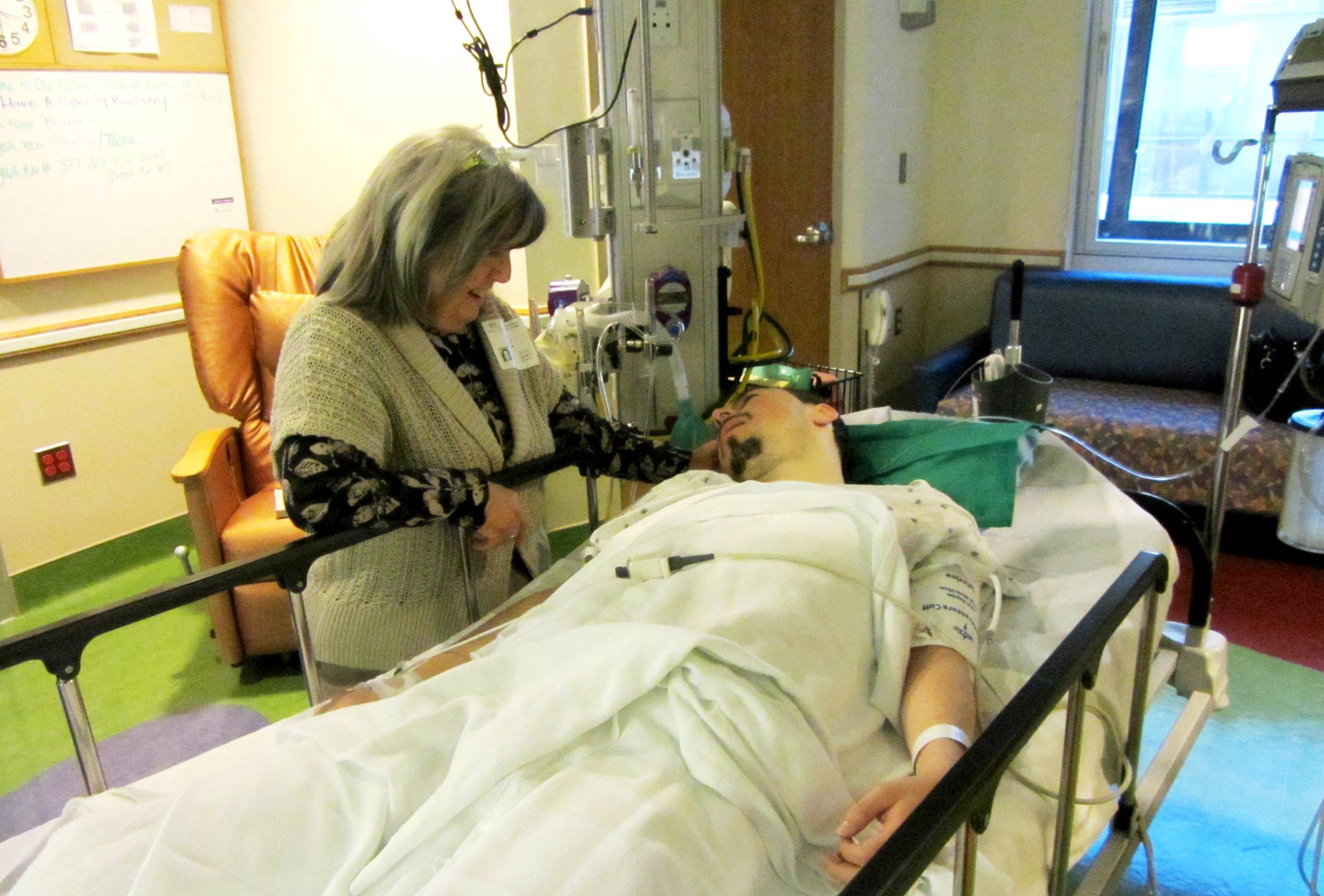
Aunt Carla was waiting for Matt when he woke up from his cardiac ablation.
Washington, DC, October 2012
“You have been offered the gift of crisis. As Kathleen Norris reminds us, the Greek root of the word crisis is “to sift,” as in to shake out the excesses and leave only what’s important. That’s what crises do. They shake things up until we are forced to hold on to only what matters most.” — Glennon Doyle Melton
Probably the only person I know who comes close to really understanding what Matt’s life has been like so far, is my sister Carla. Like Matt, she was born with a lot of medical challenges that meant she spent far too much of her childhood in hospitals. As if all that were not enough, as a young girl she was severely injured in the automobile accident that almost took our mother’s life, which resulted in more surgery and hospital time.
I can say in all honesty, though, that I’ve never detected the slightest bit of self-pity on her part about all she has suffered. Instead, I remember her telling me about the friends she made in the hospital, the doctors and nurses and fellow patients she described, how she loved the many cards people sent her, and how I always missed her patient and cheerful spirit when she was not at home with us.
It’s no coincidence that Aunt Carla has a particularly close bond with Matt. She’s the one who came to stay with him during Jeff’s long hospitalization recently, and the one who also was here with us for Matt’s own recent cardiac hospitalization last October. She and Matt share a lot of inside jokes, a love of the Pink Panther movies, Monty Python’s Holy Grail and similar zany humor, and so many silly giggles that I have occasionally been known to tell them both to STIFLE IT!!!
But what she and Matt share most is an understanding of what really matters; an intuitive sense that eludes most of us who get in a tizzy about things that are relatively unimportant. As Melton says, crisis sifts out the empty fluff and leaves behind the essentials that enrich life most — and, obviously, that includes love, loyalty and a lot of laughter.
Have you ever been offered the gift of crisis? If you’re like me, you’d do your best to politely decline it. But that’s usually not an option. What, then, has it taught you? What got sifted out, and what remains?
This post was first published seven years ago today. The original post, comments and photo are linked, along with two other related posts, below. These links to related posts, and their thumbnail photos, do not appear in the blog feed; they are only visible when viewing the individual posts by clicking on each one. I have no idea why, nor do I know how they choose the related posts. That’s just the way WordPress does things.
In the fall
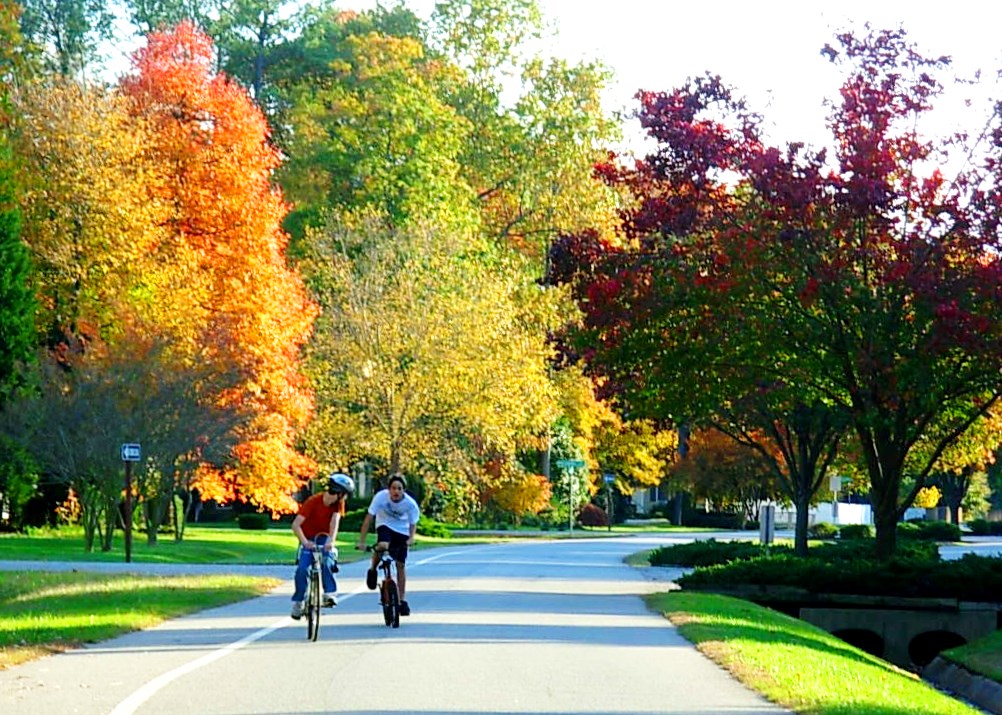
It’s not New York, but fall is full of possibilities for students everywhere. Yorktown, 2008
“Don’t you love New York in the fall? It makes me want to buy school supplies. I would send you a bouquet of newly sharpened pencils if I knew your name and address.”
― Nora Ephron
I love fall because it is connected with my happiest memories of childhood. In particular, the onset of cooler mornings and the sight of children headed back to school evokes the excitement I always felt at the beginning of each year, when anything seemed possible. A new teacher, a new set of classmates, new books, visits to the school library (of which I could NEVER get enough) and yes, school supplies. My first few years of school established a love of pencils, pens, crayons, glue, tape and paper that has lasted to this day.
How I envied those children who came to school with bright new boxes of SIXTY-FOUR different color crayons! Even now, at the age of nearly 57, I have never yet owned such a magnificent range of creative possibilities in wax. Because my mother was frugal, I had to settle for the school-issued box of 8 fat crayons with their frustratingly broad tips that only grew less defined with use – and there was no way to sharpen them, either. Still, I was happy to get a new set each year.
Despite being without the most appealing and flashy educational accoutrements, I had abundant delightful provisions to enjoy. I wish some perfumer would bottle a fragrance that was a combination of scents that included pencil shavings, powdered tempera paint mix, chalk, duplicator fluid, freshly bound books, and the smell of new pulp tablets – with maybe some freshly baked cafeteria buttered yeast rolls thrown in. I would buy that bouquet in huge quantities if I could. The back-to-school smell quickened my spirit as nothing else has since. I feel sad to realize that computers and related technologies have rendered many of these supplies obsolete, though our children’s children will have other things to remember.
What are some of your favorite back-to-school memories?
This post was first published seven years ago today. Fall 2020 will be vastly different for students all over the world, as COVID-19 continues to leave schools unable to open fully, if at all. I hope at least a few of the formerly typical autumnal delights will remain to brighten the start of a new school year.
The original post, comments and photo are linked, along with two other related posts, below. These links to related posts, and their thumbnail photos, do not appear in the blog feed; they are only visible when viewing the individual posts by clicking on each one. I have no idea why, nor do I know how they choose the related posts. That’s just the way WordPress does things.
The people weeping
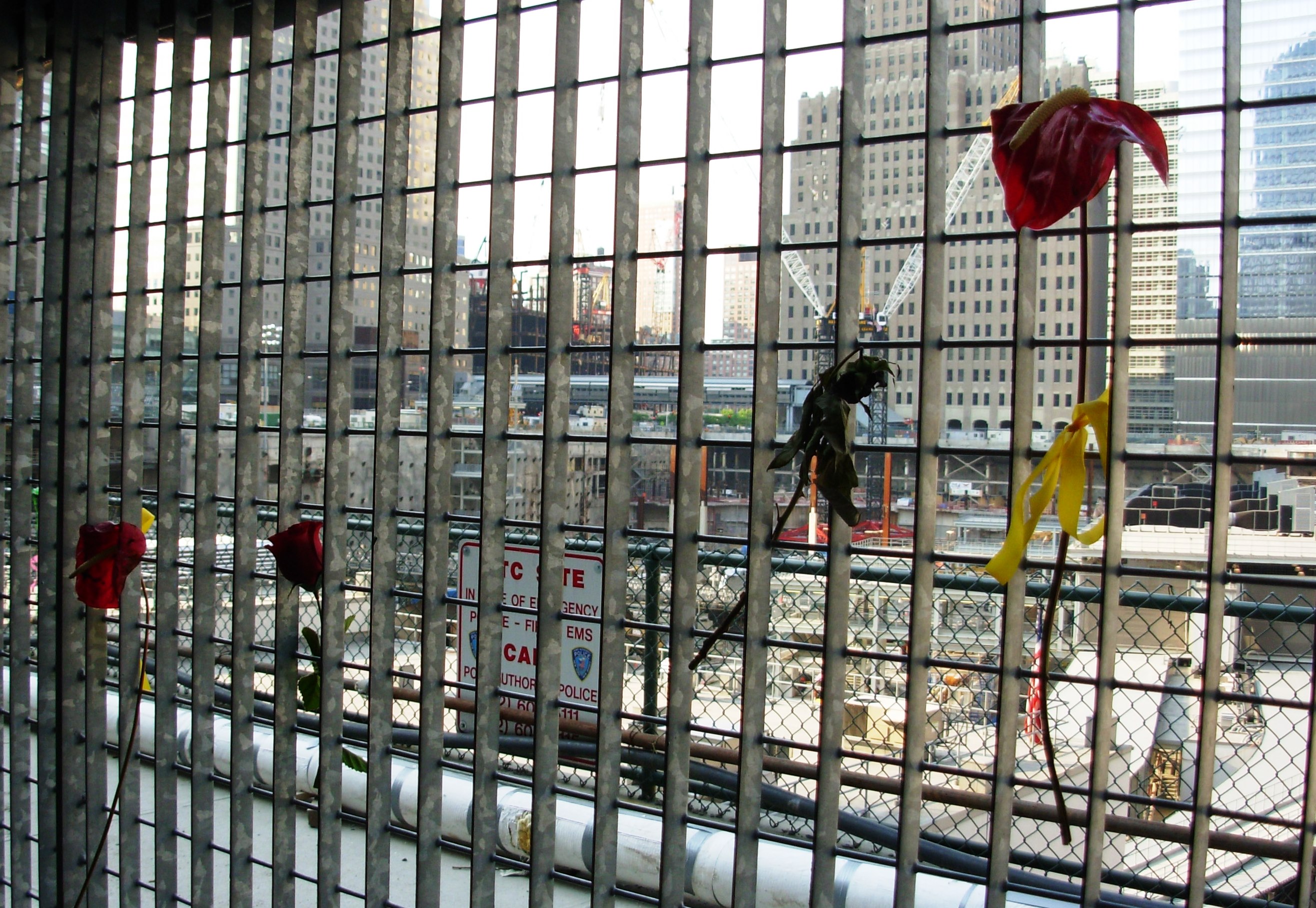
Memorial flowers left on the fences surrounding Ground Zero, May 2007
There is sobbing of the strong,
And a pall upon the land;
But the People in their weeping
Bare the iron hand:
Beware the People weeping
When they bare the iron hand.
— Herman Melville
Almost all of us who are old enough to remember September 11, 2001, can describe where we were and what we were doing when we first heard of the terrorist attacks that morning. We can recall how we felt; what we feared; what we first thought or said or did.
It’s a bit harder to recall accurately the pervasive uncertainty of those first few days after the attack, when none of us really knew what would come next. With airline pilots and Air Force officers among my friends and immediate family, that sense of insecurity was heightened for me, but none of my loved ones endured more than a disrupted schedule. For most of us, the ensuing years have unfolded with less trauma or inconvenience than we feared they might. Aside from airport hassles and other forms of increased government scrutiny, our lives have remained much the same as we had come to expect.
Not so for the families of those who perished in the attacks, or who died (and are still dying) in the wars that followed. Not so for the wounded warriors who continue to fight for healing and a return to any resemblance of the life they knew before. Not so for the families who still are enduring separation from loved ones deployed to war zones.
Today it’s fitting to look back with grief for those whose lives were lost or changed forever. It’s appropriate to resolve that we will remain vigilant against threats to freedom, whatever form they take, and recognize that the related inconveniences we sometimes encounter are minor in comparison to the price paid by those who willingly place themselves in harm’s way to protect and defend.
On this September 11th, I wish you a lovely early-autumn day, with skies free of threats, and hearts free of fear — and the full understanding of what a blessing those freedoms are.
This post was first published seven years ago today. In November 2019, my British friend and I visited the new World Trade Center and the memorial fountains that mark where the Twin Towers stood. It was all more beautiful than I ever imagined it could be, so beautiful that I cried. The resiliency of the human spirit is amazing.
The original post, comments and photo are linked, along with two other related posts, below. These links to related posts, and their thumbnail photos, do not appear in the blog feed; they are only visible when viewing the individual posts by clicking on each one. I have no idea why, nor do I know how they choose the related posts. That’s just the way WordPress does things.
When action grows unprofitable

Matt joins Arnold the Snoring Pig in a little afternoon shut-eye, August 2013
“When action grows unprofitable, gather information; when information grows unprofitable, sleep.” — Ursula K. Le Guin
When I read this quote I liked it instantly. As a librarian, I tend to prioritize information gathering over action, and action over sleep. But Le Guin’s formula makes a lot of sense to me. It’s very easy to get stuck in a cycle of doing something that is no longer helpful, and may even be harmful. Habit is a powerful force. It’s also important to remember that sometimes, all we need to do to improve things is TAKE A BREAK already and get some rest!
In this, as in so many other ways, Matt and Jeff have a lot to teach me. Both of them are able to sleep much more soundly and easily than I do, and not surprisingly, both of them generally get more sleep than I do.
When Matt had surgery on his arm recently, his Aunt Gloria gave him an adorable “snoring pig” (Matt LOVES pigs) and one recent afternoon while he was still wearing his arm brace, I caught him napping with his cute little toy. Apparently the pig’s snoring was contagious! Maybe I should try sitting down with it sometime.
If you’re feeling tired or out of sorts today or anytime soon, think about Le Guin’s formula. Sometimes a bit of additional information might keep you from spinning your wheels and getting nowhere, but if all else fails, try a night (or an afternoon) of sound sleep!
This post was first published seven years ago today. The original post, comments and photo are linked, along with two other related posts, below. These links to related posts, and their thumbnail photos, do not appear in the blog feed; they are only visible when viewing the individual posts by clicking on each one. I have no idea why, nor do I know how they choose the related posts. That’s just the way WordPress does things.
Inconceivable antiquity

These crape myrtle trees brighten my summer walks every year. August 2013
“How cunningly nature hides every wrinkle of her inconceivable antiquity under roses and violets and morning dew!” – Ralph Waldo Emerson
Ah, but Ralph, you say “inconceivable antiquity” like it’s a bad thing! Some of us would like to think that nature is all the more appealing because of her longevity. Perhaps the flowers are not meant to be a cunning disguise of age, but rather a joyful, ever-changing celebration of the predictability of the seasons. After all, many a flowering tree or shrub only grows more lush and productive as the years pass. And the blooms disappear just long enough to keep things interesting.
A good example would be the lovely crape myrtles that fill our neighborhood and much of the South. Gorgeous green leaves in the springtime, vibrant blossoms through the hottest months of the summer, and depending on the variety, fall foliage that ranges from bright yellow to flaming red. They drop their leaves in the winter, but even their skeletal outlines have a stark beauty. And then, just when we are fed up with cold weather and bare branches, the cycle begins again.
Maybe we are meant to take a cue from nature’s perennial flowering. Underneath the showy cycles of grandeur lies an antiquity that hints of eternity. And the repetitive displays offer a freshness and youthful vigor reminding us that beauty, though changing, never really grows old.
This post was first published seven years ago today. As I write this, the crape myrtles are blooming beautifully in both my neighborhoods. How little attention they demand, to return such fabulous delight!
The original post, comments and photo are linked, along with two other related posts, below. These links to related posts, and their thumbnail photos, do not appear in the blog feed; they are only visible when viewing the individual posts by clicking on each one. I have no idea why, nor do I know how they choose the related posts. That’s just the way WordPress does things.
Persistent prayer

Pilgrims leave notes of thanks for answered prayers at Wieskirche in Bavaria, Germany
August 2005
“The value of persistent prayer is not that He will hear us, but that we will finally hear Him.” — William McGill
It’s all too easy for believers and unbelievers alike to confuse prayer with some sort of divine bargaining system, or a kind of formal ritual for advising God what we need — as if God were a cosmic host or waiter taking requests. Most believers would never consciously describe it that way, but we do fall into the trap of oversimplifying the power of prayer — which most of us know from experience to be very real — as direct cause and effect: “I asked for this, and I got it.”
Sooner or later, though, when enough prayers go unanswered, even the most unselfish and altruistic of them, we have to come to terms with the inadequacy of this understanding. Over time our prayers evolve from some version of “Let me tell you what I need,” or “Let me tell you what the world needs” to something more along the lines of “Tell me what I need to know (or do or think) about this, and help me hear clearly what you are saying.”
This is not to minimize the assurance and comfort that come from prayer, but it does refocus it, from the faith that we will get what we are asking for, to the faith that God will be with us no matter what happens, and everything will be made right in the end. Ultimately, that’s a much greater solace than clinging to the delusion we are in control of things and will get everything we want, simply because we have a relationship with God.
When I thank readers of the blog for praying for us, and say that we are seeing that your prayers being answered, I don’t mean that we think your prayers will be sure to make Jeff cancer-free (although that may be one divine blessing that comes as a result of them). I simply mean that your prayers on our behalf are already blessing us with the strength and confidence that come from our shared faith in God’s promise to hear us.
I know a lot of people would call it denial in the face of a really grim prognosis, but I believe that Jeff will beat the cancer and live many more years. I don’t think God ever has to worry about long odds. But I also know there is a very real possibility that Jeff might not get well (and he seems to know that better than I do), and if that is how it ends up, the prayers you are praying for us right now, and the warm expressions of caring, will give us the strength to see this situation through.
For walking with us during this difficult time, for helping me to feel less alone, for greeting me each day with words of encouragement, for your kind thoughts and comments and your steadfast prayers, we are thankful.
“May the Lord repay you for what you have done.” (Ruth 2:12)
This post was first published seven years ago today. Reading over it in light of all that has transpired in those seven years, I felt an added dimension to the words I wrote here. There is a bittersweet wisdom that comes with recalling how my innocent hopes for Jeff were gradually dashed against the hard reality of suffering and death. Yet the heartfelt thanks for the prayers that kept us/me going are all the more emphatic now, along with the faith that, as McGill says, I will finally hear God with full understanding.
Reading Daddy’s comment below the original post, along with my answer to him, was almost like time-traveling to when he was here with us — or stepping into an unseen dimension in which he is still here, smiling at me with those raised eyebrows that always accompanied that moment when I finally grasped something he had been trying to teach me. Daddy died almost exactly two years after we wrote those words, but I am reminded of the words of Hebrews 11:4: “And by faith [he] still speaks, even though he is dead.”
The original post, comments and photo are linked, along with two other related posts, below. These links to related posts, and their thumbnail photos, do not appear in the blog feed; they are only visible when viewing the individual posts by clicking on each one. I have no idea why, nor do I know how they choose the related posts. That’s just the way WordPress does things.
I’ve tried
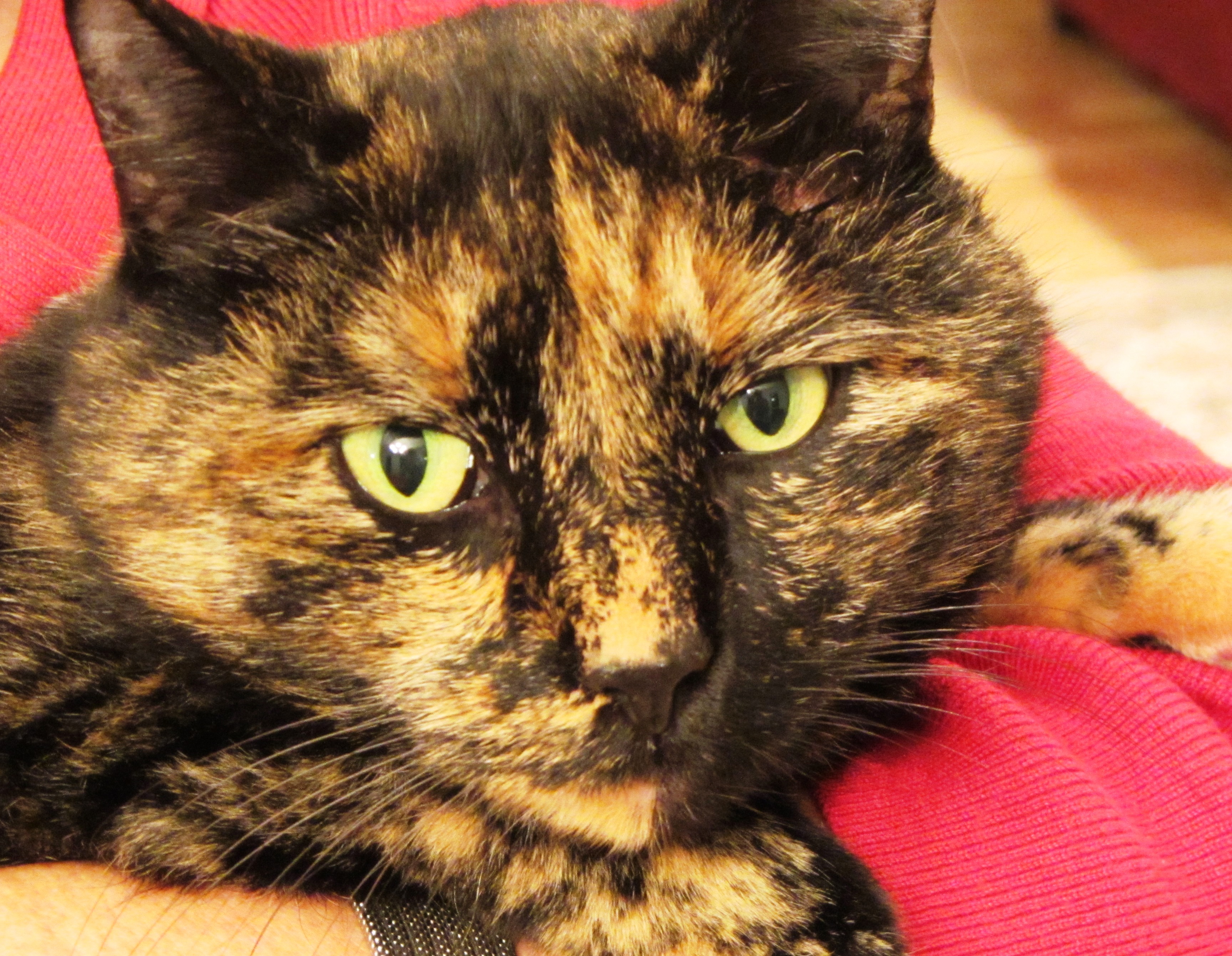
Kit Kat will listen politely, but that doesn’t necessarily mean she agrees with you.
Russellville, Alabama, December 2011
“I’ve tried talking to animals, but it’s no use – their minds are usually already made up.” — Ashleigh Brilliant
Since I’ve featured dogs, birds and other animals here, I thought it was about time to include a cat. This is my sister’s cat, named Kit Kat after the cat we had as children. Kit Kat is a very lovable animal, but like other animals I’ve known, her mind does seem to be made up about most things. Ashleigh is a cat person, so maybe that’s where he got the idea. But cats aren’t alone in exhibiting what often looks like disdain for at least a few of the people they encounter.
Even dogs, who appear to care much more about pleasing humans, often seem to be going along for the sake of being loved. Almost all of us who have lived with any sort of animal have had the experience of having it look at us with bewilderment, disgust, pity, or some combination of all three.
That’s not a bad thing, though. If animals thought the same way we do, their immense capacity to entertain us would be lessened considerably. Besides, if you want to be sure to win their agreement, all you need to do is find out what they like to eat, and keep some of it on hand. They can almost always be talked into a snack. In fact, you can leave the “talk” part out altogether.
Have you ever successfully talked an animal into anything without food being involved?
This post was first published seven years ago today. As with many other beloved subjects of these posts, Kit Kat has since passed from this life. She lived well into her 20’s, a good long life for a feline, and left behind many happy memories.
The original post, comments and photo are linked, along with two other related posts, below. These links to related posts, and their thumbnail photos, do not appear in the blog feed; they are only visible when viewing the individual posts by clicking on each one. I have no idea why, nor do I know how they choose the related posts. That’s just the way WordPress does things.
What really knocks me out

Students in my school library book club show their favorites. Honolulu, Hawaii, 1995
“What really knocks me out is a book that, when you’re all done reading it, you wish the author that wrote it was a terrific friend of yours and you could call him up on the phone whenever you felt like it.” — J. D. Salinger
Who comes to mind when you read this quote? For me, several people do. Alexander McCall Smith, Anne Lamott, Malcolm Gladwell, Jan Karon, Maya Angelou, Maeve Binchy, C. S. Lewis, Jane Austen, Charles Dickens…hey, I’m imagining here, so it doesn’t matter if they died many years ago, or wouldn’t even know what to do with a phone if they heard it ringing.
One of the most magical aspects of reading is the way it connects us directly to the writer in a way that often transcends the short conversations we have in daily life. When we read a book, whether fiction or nonfiction, we take a sort of journey with the author, and there’s nothing like traveling with someone to get to know them. I am so grateful to so many authors who continue to invite us into their worlds through the enchanted gateway of reading!
If you could have an imaginary dinner party with literary guests from any place or time, whom would you invite?
This post was first published seven years ago today. The original post, comments and photo are linked, along with two other related posts, below. These links to related posts, and their thumbnail photos, do not appear in the blog feed; they are only visible when viewing the individual posts by clicking on each one. I have no idea why, nor do I know how they choose the related posts. That’s just the way WordPress does things.
The greater part

One of many lovely sights on the grounds of Mount Vernon, Virginia, April 2010
“I am still determined to be cheerful and happy, in whatever situation I may be; for I have also learned from experience that the greater part of our happiness or misery depends upon our dispositions, and not upon our circumstances. We carry the seeds of the one or the other about with us in our minds wherever we go. ” — Martha Washington
I don’t know when Martha Washington said or penned these oft-quoted words, but she certainly had reason to know firsthand of their truth. Her story was one of wealth and privilege tempered by sorrow, hardship and uncertainty. During her remarkable life, she had the experience of losing two husbands and four children to death. She also endured wartime camp life, staying with her husband (at his request) throughout much of the Revolutionary War.
Accounts of her later years state that she found great comfort in her faith, and even spoke of anticipating death as “a pleasant journey.” The riverside home she shared with George Washington, where they both are buried, is a fitting tribute to her determination to remain serene. Strolling the grounds of Mount Vernon, with its colorful gardens and gorgeous view of the Potomac River, visitors are refreshed by the peace and beauty of this carefully preserved estate.
I’ve always found it inspiring to read the stories of people who lived in the past, whether they were well known or relatively obscure. We are fortunate to have countless diaries, journals and biographies, through which people who passed from this earth long ago may still speak to us, sharing their wisdom and strength. Whose life stories are among your favorites? Have you ever read a biography that left you feeling encouraged, enlightened or determined to learn from another person’s journey?
If you know of a book, online resource or blog post that features an inspiring story, feel free to share your thoughts and links in the comments. We all love to meet fascinating people, even if they are no longer here with us!
Today is my 300th daily post! Thanks for being with me on this journey, which has lasted almost a year now. You have given me joy each day, and made the tough times bearable!
This post was first published seven years ago today. The original post, comments and photo are linked, along with two other related posts, below. These links to related posts, and their thumbnail photos, do not appear in the blog feed; they are only visible when viewing the individual posts by clicking on each one. I have no idea why, nor do I know how they choose the related posts. That’s just the way WordPress does things.
Sowing a seed
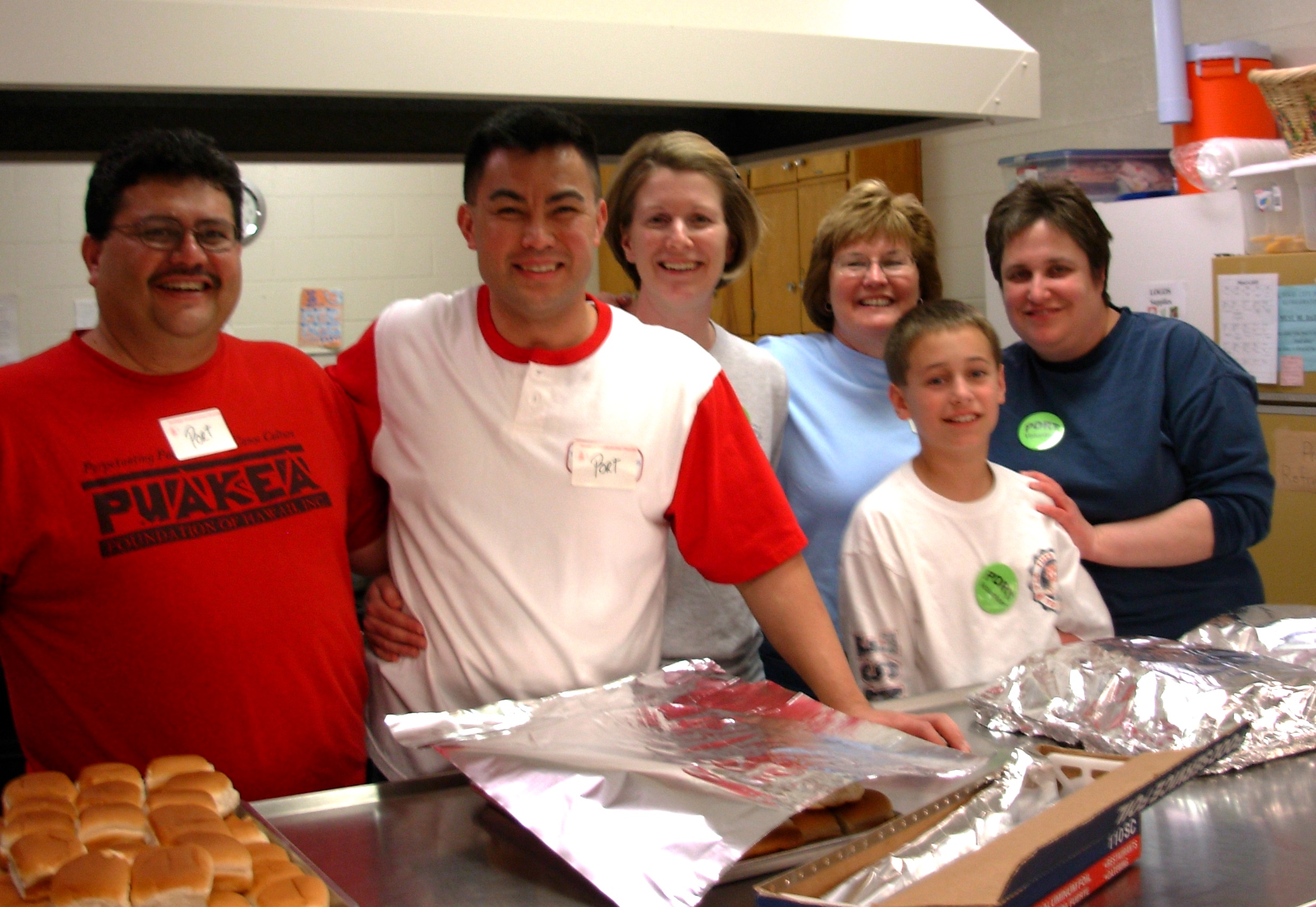
Friends from church have a totally fun evening cooking at the PORT shelter, March 2008
You never can tell when you do an act
Just what the result will be;
But with every deed you are sowing a seed,
Though the harvest you may not see.
— Ella Wheeler Wilcox
It’s not surprising that several research studies document the benefits of volunteering to help others, whether formally or informally. While such efforts take time — hours that must be carved out of already busy schedules — I often hear people say how glad they are when they make it a priority, stating “I gain so much more than I give.”
The great thing about volunteering is that there are countless opportunities, with needs to fit every set of skills or preferences. Show up for a clean-up or work day at a local park, camp or community center. Tutor those who are incarcerated and working toward a GED, or struggling elementary school students who just need a little extra attention, or people who want to learn English but can’t afford classes.
Volunteer to mentor a young adult through Boy Scouts, Girl Scouts, or Best Buddies. Coach little league teams or athletes participating in Special Olympics. Walk dogs at a local animal shelter. Host home gatherings for Bible studies, youth groups or just a bunch of friends and neighbors who haven’t gotten together for a long time.
The camaraderie shared by people working together to serve others is unlike any other you will experience. At such times, the word “community” takes on a whole new meaning. If you’ve been feeling blue, isolated or lonely, you might want to consider joining a local effort to serve others. You’ll meet some of the happiest, most generous and fun people you would ever want to know. And you just might be one of them.
This post was first published seven years ago today. The original post, comments and photo are linked, along with two other related posts, below. These links to related posts, and their thumbnail photos, do not appear in the blog feed; they are only visible when viewing the individual posts by clicking on each one. I have no idea why, nor do I know how they choose the related posts. That’s just the way WordPress does things.
Enter this wild wood

This photo was snapped just inside the gate to our wooded wonderland, April 2008
Stranger, if thou hast learned a truth which needs
No school of long experience, that the world
Is full of guilt and misery, and hast seen
Enough of all its sorrows, crimes, and cares,
To tire thee of it, enter this wild wood
And view the haunts of nature… — William Cullen Bryant
The poem from which these lines are taken describes so well the reasons I treasure our little wooded lot that adjoins the back yard of our York home. This is perhaps the first place I’ve ever lived where I loved the lot as much, or maybe even more, than the house itself. While this bit of land could never be called a forest, nor even a “wild wood,” it still holds the charms of which Bryant wrote so eloquently.
Our little patch of woods contains a small creek, part of our local protected wetlands that can never be cleared or developed regardless of who owns it. Of course, I wouldn’t want to clear it even if we could! In this little kingdom I have shared space with deer, rabbits, birds, turtles, lizards and squirrels (and probably a few reclusive snakes I’d rather not know about) who pass through or live nearby. I would never want to ruin the feeling of being miles away from everything, yet still right in my own back yard.
Do you have a favorite wooded spot — a bit of land on which you live, or one near your home, or a public park with lots of trees — that you visit regularly? If not, I highly recommend you discover one. Ideally, there would be at least one small clearing where you could sit and read, or picnic, or maybe even doze on a folding lounge chair. Or just walk quietly amid the sights and sounds of the forest, and note how many different ways nature can be heard when one stops to listen intently.
Such spots are beautiful all year round, but now, before the leaves start to fall and the weather is still warm enough to make the shade refreshing, I hope you will get away for a walk in the woods. As Bryant attests, it’s a balm for what ails you!
This post was first published seven years ago today. The original post, comments and photo are linked, along with two other related posts, below. These links to related posts, and their thumbnail photos, do not appear in the blog feed; they are only visible when viewing the individual posts by clicking on each one. I have no idea why, nor do I know how they choose the related posts. That’s just the way WordPress does things.
It all depends

Mom and Carla opt for the rarely accidental swing, Lake Sinclair GA, May 2003
“Now then, Pooh,” said Christopher Robin, “where’s your boat?”
“I ought to say,” explained Pooh as they walked down to the shore of the island, “that it isn’t just an ordinary sort of boat. Sometimes it’s a Boat, and sometimes it’s more of an Accident. It all depends.”
“Depends on what?”
“On whether I’m on the top of it or underneath it.”
― A.A. Milne
I just love Pooh. When I read this quote, it made me smile. Many things in my life, from computers to cars to cooking, are sometimes more of an Accident. It all depends.
On this busy Monday, I wish you a day that’s relatively free of such Accidents. But if you do have one (or even a few), I hope they are mild enough to remind you of Pooh’s philosophical sense of humor, so you don’t give up on whatever Boat of yours may have capsized today. Tomorrow it may be a Boat again, and you may be on the top of it. It all depends!
This post was first published seven years ago today. The original post, comments and photo are linked, along with two other related posts, below. These links to related posts, and their thumbnail photos, do not appear in the blog feed; they are only visible when viewing the individual posts by clicking on each one. I have no idea why, nor do I know how they choose the related posts. That’s just the way WordPress does things.


 Defeat Despair