Imaginary walking

This quiet wooded trail runs directly behind our town home in Alexandria. May 2014
“One kind of walking which I do not recall seeing mentioned anywhere in the literature of the subject is imaginary walking.” ― Edwin V. Mitchell
This post is for Bindu, who took me on an imaginary walk via her blog almost a year ago.
A couple of weeks ago when Matt and I had been at the hospital most of the day for his post-operative check-ups and testing, I came in and glanced at the blog comments quickly before dinner and walking.
I noticed Bindu had remarked that she hasn’t been able to enjoy walking as much lately, so I decided I would take her along on my walk — in my imagination, of course — and take some photos to send to her. The late afternoon atmosphere was PERFECT, not too hot and not too cool, only a faint breeze, and the birds were out celebrating in grand style.

There are a few twists and turns, but it’s mostly the same scenery.
The actress Diane Keaton came with us too, via her self-narrated audiobook Let’s Just Say It Wasn’t Pretty, but her stream-of-consciousness chat about the nature of beauty was only playing for part of the walk. The rest of the time, we listened to the gorgeous music of the birds. I wished I had been able to take a video so you could hear how pretty they sounded, but alas! the memory card in my camera was too full for a video.

It’s wonderfully cool here, even on hot days, and dogs and joggers love to run here.
In any case, here are the photos, and I conveniently neglected to picture any of us — so you can put yourself in the picture, and come along. After all, imaginary walks can be taken again and again, and you can bring anyone you want!
If you are unable to get outside for a real walk today, try taking an imaginary one. You can have music, an audiobook, the sound of birds, or just blissful silence. You can have mountains or trees or beaches or snow or an ever-changing vista with all of the above. Imaginary walks are great fun!
One year ago today:
An early-rising, hard-working city

Despite bad press and perpetual complaints, a lot of good stuff happens here.
And yes, a lot of money gets wasted, too. April 2014
“For the people in government, rather than the people who pester it, Washington is an early-rising, hard-working city. It is a popular delusion that the government wastes vast amounts of money through inefficiency and sloth. Enormous effort and elaborate planning are required to waste this much money.” — P. J. O’Rourke
Say what you want about Washington DC, but in my opinion, P. J. O’ Rourke is right. (In my opinion, P. J. is almost always right, but that’s a different topic.) People do rise early and work hard here. I’ve been watching them do so, or sleeping through them doing so, for four years now. It amazes me how early my husband and my neighbors get up and out each morning. OK, so maybe it’s primarily because of mostly unsuccessful efforts to beat the traffic, but still.
At the risk of stirring up a hornet’s nest, I want to say that I honestly believe most of our politicians and their staff work pretty hard. That’s not to say that they all are correct, wise or even honest. But they do work hard. For a variety of reasons too long to go into here, I’ve had occasion to be in fairly close proximity with state and federal elected officials in several different situations, and I find it tiring to experience just one day — or part of a day — of what they live through EVERY TIME they go to work.
People think of politicians as doing a lot of talking, but it seems to me that what they do most is listen, listen, listen — to each other, to their constituents, to the press, to other governmental officials, to lobbyists, and to everyday people who speak to them, formally and informally, on various issues of concern.
Whether you are happy or unhappy with your local state senator and/or U. S. Congressman, I have a suggestion that might be eye-opening: get to know them. Ask for their assistance if there’s an ongoing issue you’ve been unable to resolve. Request a meeting with them. Let them know how you feel about what is going on, and how you wish they would vote. You might be surprised how available they are to you, how patiently they will listen, how sincerely they will make an effort to help.
For the most part, I have been impressed with those I have contacted (except for one particular U. S. Senator named Barbara B who will go unnamed here, but even then, her fellow U. S. Senator was as responsive as her colleague was useless, under extremely difficult post-9/11 circumstances). Several times I’ve had individual situations that might never have been solved without the direct intervention of a Congressman, and I’ve had help from both parties, both sides of the aisle. That’s the truth.
When I first started approaching my elected officials for help, I didn’t know anyone in government, had no special connections, no influence, nothing at all that got me any privileges. All I did was ask, and sometimes, keep asking. Try it! You never know what might come of it. I can speak from experience on that one!

One year ago today:
Recognize each other

Look at all these fascinating people! And there are more who aren’t represented here…
“Whether delivering information, opinions, perspectives, dissenting arguments or humorous asides, the human voice is typically open, natural, uncontrived. People recognize each other as such from the sound of this voice. The Internet is enabling conversations among human beings that were simply not possible in the era of mass media.” — Levine, Locke, Searls & Weinberger, in The Cluetrain Manifesto
Whatever else can be said about technology, it has broken the stranglehold on information dissemination that was formerly held almost exclusively by powerful media groups. It also has enabled interactive exchanges of information, opinion, experience and outright fun. What an amazing development for all of us!
There are some who connect with others best through reading, and some of these readers also connect through writing. No matter which is more descriptive of you, the means of connecting to others have never been more varied, accessible and relatively inexpensive. I’m so thankful for that! Getting to know you is a pleasure.
Contrary to what some may believe, many of us who connect with each other online are gregarious types who have interesting friends and a rich set of experiences in “real life.” Social media and blogging have simply added to that already detailed picture. For more than a few of us, blogging was a big surprise; an unexpectedly versatile and unique hobby that pays worthwhile dividends for the time we invest in it.
However you got here, whenever you come, we are happy to have you join us!
One year ago on today:
Mere living
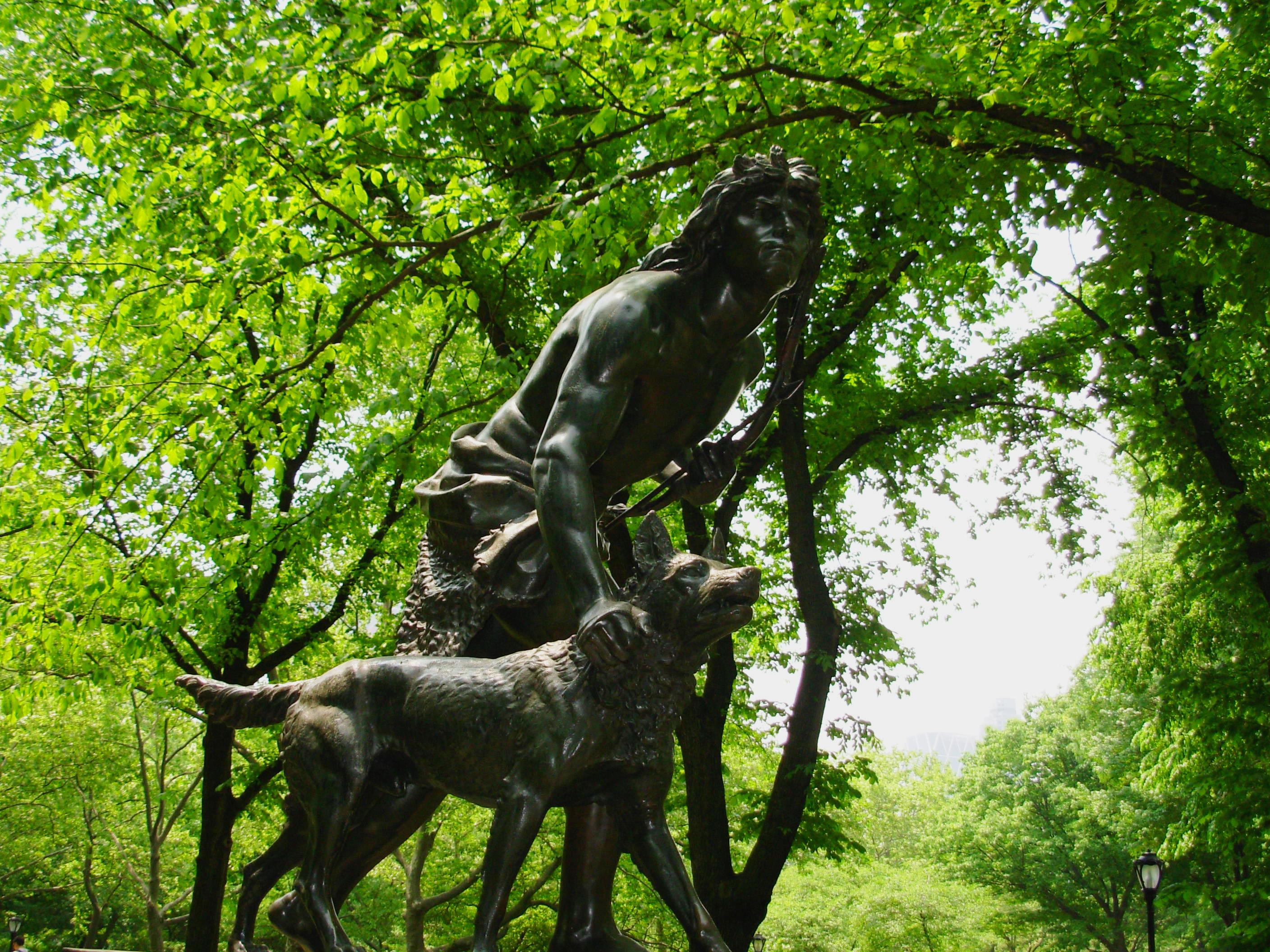
Indian Hunter by John Quincy Adams Ward, Central Park, New York City; May 2007
“How good is man’s life, the mere living!” — Robert Browning
Can we really comprehend the meaning of the phrase “mere living?” If so, probably never as clearly as when we come face to face with the reality of our life’s inevitable end, whether soon or years from now. I wish for you today a keen awareness of how good it is merely to be alive. No matter what else is happening right now, regardless of the pains or sorrows we may be enduring, it’s a privilege to be here. I almost forgot that truth once, but I honestly believe I will never forget it again.
One year ago today:
Colorful beacons

One of hundreds of beautiful orchids that brought me sunshine at the U. S. Botanic Garden, April 2014
“Flowers are those little colorful beacons of the sun from which we get sunshine when dark, somber skies blanket our thoughts.” — Dodinsky
On the Saturday after Matt had open heart surgery, he seemed to be doing well enough that I decided to take Jeff’s suggestion and go down to the Capitol area to visit the U. S. Botanic Garden, where a special orchid exhibit was in its final day. I hesitated but Jeff reminded me that he would be there with Matt, and I might not get the chance to get out again anytime soon. So I had a nice few hours out, losing my worries and exhaustion just briefly in the lovely colors and beautiful, mild spring day.
When I got back that night, Matt had taken a turn for the worse, and the next few days were more difficult. He did not leave the CICU until Tuesday, and it would be another full week before he was able to go home. I’m glad I did not know all that was ahead of us on the Saturday I enjoyed the orchids. It would have been overwhelming, and I probably wouldn’t have enjoyed myself even if I had managed to talk myself into leaving for a few hours. But as it turned out, I needed the emotional boost I got that day, to help me make it through the next ten days.
If anything is bothering you, I hope you will be able to steal away today, or as soon as the weather is nice, for a quick springtime walk. You can enjoy the fresh air and catch the glow of the flowers, beacons that soak up sunshine for for a showy display to lift our spirits when we need it most.
One year ago today:
Utterly unforeseen
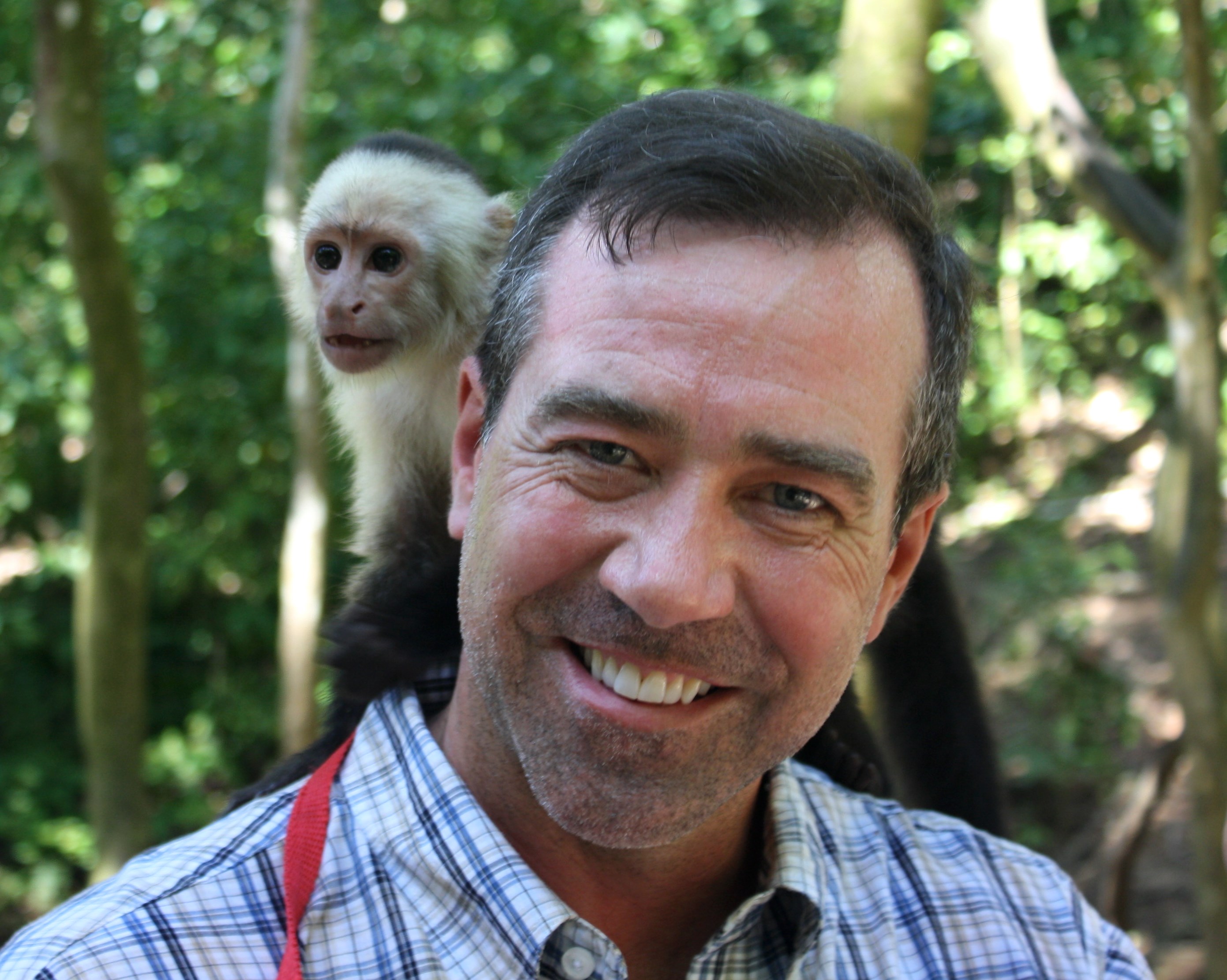
A day of merriment and monkey business in Roatan, Honduras, March 2011
“…since life has an agonizing tendency to offer us the best and the worst at the same time, to give us what we ask for in an utterly unforeseen form, even fairly predictable outcomes prove unrecognizable upon arrival.” – Robert Leleux
Even on vacation — or maybe I should say “especially on vacation” — things can go wrong. (Just see Barb’s post here for proof of that.) On our most recent Caribbean cruise, we got the unwelcome news that one of the stops we had most looked forward to had been changed due to some weather-related reason. We would be docking at a different destination that day. After a bit of disappointment, we decided to make lemonade from the lemons and do something we almost never do; buy a ship-sponsored tour.
Normally, I have no interest in packaged tours. I like to travel “off the beaten path” which saves money and feels more like an authentic experience of wherever we are. I actually prefer using the local public transportation to an air-conditioned tour bus, and it’s sometimes way more, shall we say, exciting — or at least more interesting.
But I didn’t have time to make a plan for this new arrival spot, and we didn’t want to waste the day, so we opted for a mostly self-guided tour of a local nature preserve. It turned out the be the highlight of the trip. It was my first and only chance to interact with monkeys who were not in some sort of cage. That alone would have made it worthwhile, but the entire day was fabulous, with beautiful foliage and flowers, funny animals to watch, and swaying rope-suspended bridges to cross.
Cruises tend to be fairly predictable, and that’s one reason Jeff likes them so much. But even with a schedule, life is ALWAYS unpredictable, and some of our happiest gifts arrive in wrapping that might be unfamiliar or even distasteful to us at first. I’ve come to the conclusion that being flexible in such situations is a key to defeating despair. Besides saving us a great deal of frustration, it can open doors to adventures we didn’t know we wanted.
Have you ever had something wonderful show up in an unrecognizable form on arrival?
One year ago today:
The duty to try

This modest tribute to Lewis and Tolkien adorns a wall at the Eagle and Child,
the Oxford pub where they often met with friends. December, 2005
“I suspect that most of the individuals who have religious faith are content with blind faith. They feel no obligation to understand what they believe. They may even wish not to have their beliefs disturbed by thought. But if God in whom they believe created them with intellectual and rational powers, that imposes upon them the duty to try to understand the creed of their religion. Not to do so is to verge on superstition.”
— Mortimer J. Adler
Perhaps an intellectual such as Adler was a bit harsh on his fellow believers when he suspected most of them were content with blind faith. My theory is that most people who could truly be described as having blind faith aren’t aware of that limitation, but perhaps the lack of awareness in itself is indicative of the complacency Adler warns against.
In any case, the enduring popularity of C. S. Lewis and other authors suggests that there are a great many believers who are eager to understand their own faith, as well as faith in general. Lewis, an erudite atheist who eventually became one of the greatest Christian apologists of all time, could never be said to embrace or advocate blind faith.
In fact, Lewis has probably done more to interest the average person in theology than any number of writings penned by professional theologians. Though it’s easy to forget it, Lewis was not a theologian; he was a professor of literature at Oxford and Cambridge; a man who deeply understood the power of parable, allegory and metaphor to bring difficult concepts to life, and make them accessible to people of average intelligence.
I agree with Adler that faith carries with it the duty to exercise our rational powers. Superstition, which rears its head in almost every facet of life in addition to religion, can easily masquerade as mysticism or the much-overused term currently in favor, “spirituality.” But reason, properly applied and not given weightier authority than is expedient, can help us to tell the difference.
Here’s an interesting question that applies to believers and unbelievers alike: is it possible to have “blind faith” in our own reason, or in our own lack of faith, as well as in faith itself? In other words, do “religious” and “non-religious” people often fall prey to the same errors in thinking?
One year ago today:
True elegance
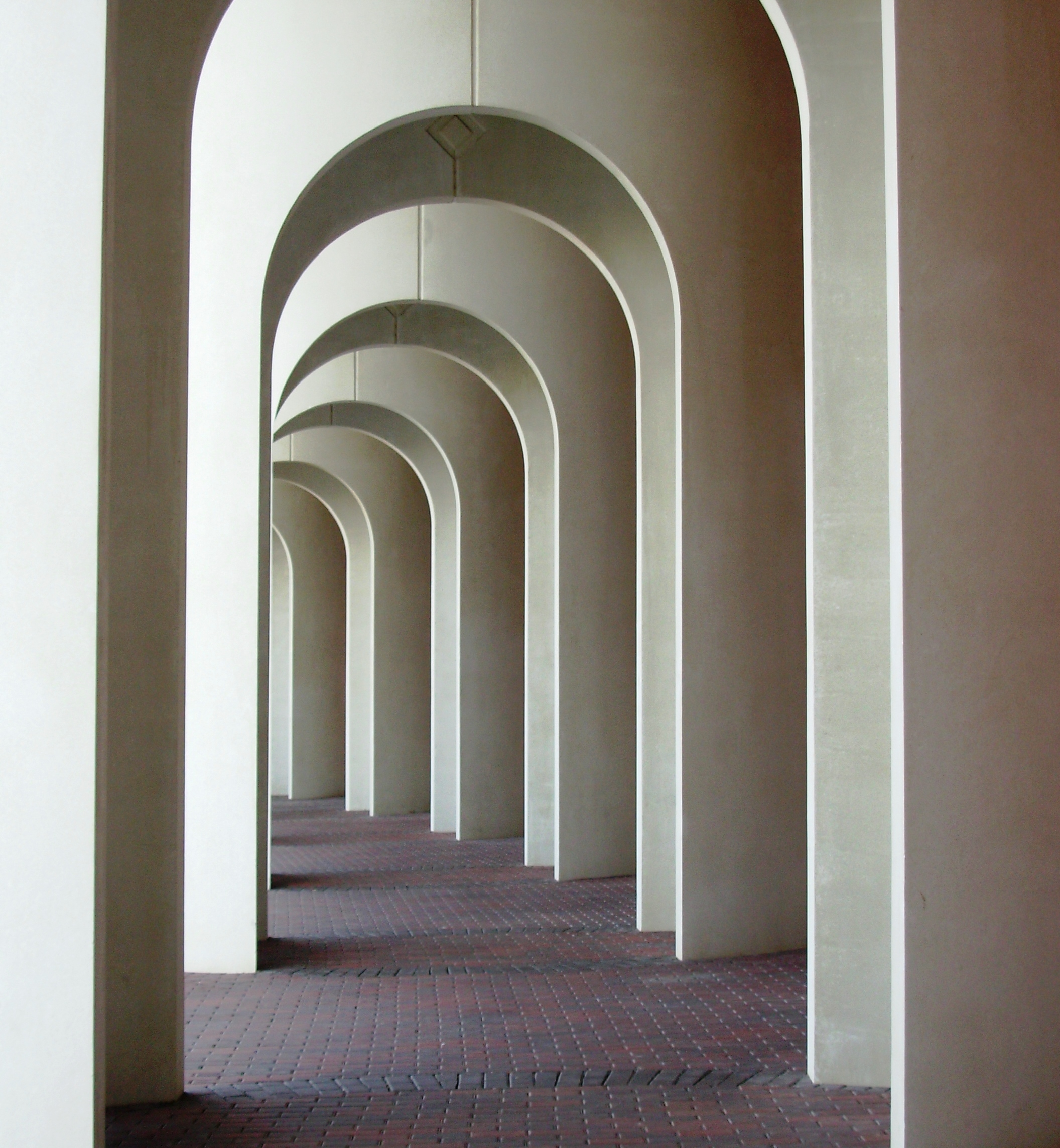
This simple, elegant outdoor walkway is part of the Ferguson Center for the Arts.
Newport News, Virginia, January 2009
“Simplicity is the keynote of all true elegance.” ― Coco Chanel
I think it’s interesting that an icon of fashion design such as Chanel would be a spokesperson for simplicity. In my mind, fashion involves the marketing of endless shoe styles, scarves, purses and costume jewelry, to say nothing of more clothes than the average person can fit easily into her closet. We might fall for a clean, basic dress design dramatically portrayed in an advertisement, but the proliferation of ads themselves sell the idea of more, more, more. And some of the bizarre looks in today’s footwear could not be described as “simple” by any standard.
The same is true in home design; even the magazine spreads that feature a clean, spare style also are selling the idea of ever-changing paint colors, linens, furnishings and trendy looks that are destined to give way to the next “great new thing.” While I love looking at colorful home fashions as much as the next woman (OK, almost as much), I do wonder whether the cost and maintenance are worth indulging in the latest fads, especially in hard-to-change items such as light fixtures and tile backsplashes.
Bling is great fun, but it also takes up a lot of storage space. And my life definitely bears out the old 80/20 rule when it comes to what I actually use and wear most. In fact, for me it might be closer to 90/10. Maybe Chanel’s quote would be a good one to keep in mind next time I go into my closet to put together a donation for Goodwill. Elegance has never been a word I associate with myself, but it’s something to aspire to, especially if it helps me de-clutter.
Do you agree with Chanel that simplicity and elegance go hand-in-hand?
One year ago today:
Anyone who loves

Drew, Matt’s best friend, has always loved him with words AND deeds.
I took this photo without them knowing I was taking it. Vacaville, California, 2002
“We love because he first loved us. Whoever claims to love God yet hates a brother or sister is a liar. For whoever does not love their brother and sister, whom they have seen, cannot love God, whom they have not seen. And he has given us this command: Anyone who loves God must also love their brother and sister.”
— 1 John 4:19-21
“This is how we know what love is: Jesus Christ laid down his life for us. And we ought to lay down our lives for our brothers and sisters. If anyone has material possessions and sees a brother or sister in need but has no pity on them, how can the love of God be in that person? Dear children, let us not love with words or speech but with actions and in truth.” — 1 John 3:16-18
Wow, those are some pretty strong words. They make liars of almost all of us who say we love God. After all, who among us has not felt hatred and anger in our hearts at some time? Maybe even often? How many grudges do we hold; how many people do we secretly despise as weak, wrong, obnoxious or simply less worthy of our time and attention?
And then there’s the matter of how we show our love, even to those lucky few we claim to love. I don’t think John was saying here that words are not important. We’ve talked numerous times on this blog about the importance of kind words and expressions of encouragement. I have survived, in part, on the kind expressions of caring from people in this online community whom I’ve never met, but who nonetheless have come to be friends dear to my heart. Your expressions of caring and solace have been a fortress of emotional support for me, and I have sorely needed such support for a very long time.
But there are some needs that can only be met in person, face to face. There are some situations where genuine love will push us out of our comfortable routines and into worlds where we are unsure of ourselves, even anxious or fearful. At some point we will be forced to decide whether our own need for security and convenience is greater than our love for someone else. At such times, it will be tempting to say “I just can’t do this” or “I know there are others who can do this more easily than I can.” Lay down our lives? You must be kidding me. That’s bound to be hyperbole.
But John didn’t say “Anyone who loves God must also love their brother and sister, if they deserve it.” He also didn’t say “let us not love with words or speech but in actions and truth, as long as we can work it into our schedule without too much inconvenience.” He didn’t say “Love — insofar as you reasonably can.”
For the record, I plead guilty to all of the rationalizations I’ve mentioned here. But the past 28 years have been the ultimate “teachable moment” for me; they’ve made me keenly aware of how often we fall short when it comes to loving those we come in direct contact with, not in words only, but “in actions and truth.” Perhaps I have now “quit preaching and gone to meddling” as the saying goes. If so, I begin by meddling in my own life. These words make me uneasy, and perhaps they should.
Almost all of us have been blessed to be recipients of acts of grace from others. The friend who looks closely enough to fill needs that others disregard; the neighbor who shows up without being asked, to keep the kids when we are sick; the sister who uses her limited vacation days to come help out during hospitalizations. At such times, we experience the true meaning of love in action.
Today, I hope you can think of times when other people have given you their time and effort in ways that made a real difference in your life. Let their shining examples be an inspiration to us when we feel too tired, overwhelmed or busy to care.
One year ago today:
You do not need to know

It was pretty hard to see where we were going on this road at Crater Lake, Oregon,
but it turned out to be a wonderful adventure. June (yes, June) 2000.
“You do not need to know precisely what is happening, or exactly where it is all going. What you need is to recognize the possibilities and challenges offered by the present moment, and to embrace them with courage, faith and hope.”
― Thomas Merton
When a frightening situation arises, my first impulse is to try to find out as much about it as I can. For me, information has always brought a sense of empowerment, along with the comfort of reassurance and/or the chance to prepare myself to face the worst aspects of whatever is going on. I’m sure this tendency to seek power in knowledge has something to do with my lifelong fascination with libraries, which led to my seemingly inevitable path through library school.
With almost any trait, though, it’s best not to take it too far. Since information is often ambiguous at best and contradictory at worst, an over-reliance on it can lead to what a friend of mine called “paralysis by analysis,” a common setback for me. It might seem counter-intuitive, but the older I get, and the more experiences I have, the less I know. Oddly, it comes as rather a relief.
No matter how carefully we plan, the road ahead is uncertain at best, for all of us. Let’s remind each other that life can be an adventure if we choose to see it that way. Regardless of what lies in store, it will be easier to bear if we surround ourselves with people who understand and practice courage, faith and hope.
One year ago today:
Fresh and new and beautiful

Grady makes an exciting discovery! April 2014
“A child’s world is fresh and new and beautiful, full of wonder and excitement. It is our misfortune that for most of us that clear-eyed vision, that true instinct for what is beautiful and awe-inspiring, is dimmed and even lost before we reach adulthood.” — Rachel Carson
Grady wants us all to know that in our very own cabinets, we have some of the most fun toys ever invented. They are called pots and pans. And you thought they were only for cooking!
Today, I invite you to go through the day trying to imagine what the trappings of your everyday life must look like to a baby. Doors that open are pathways to new worlds to explore. Objects are to be experienced by all five senses; if they are silent, you can always bang them on something to access that particular sensory path. Everyone who smiles at you is a new friend.
One year ago today, I posted a quote from Robin Williams about spring being nature’s way of saying “let’s party!” Babies are another way nature reminds us to celebrate. I hope we can channel some of that wonder back into our minds to light up our days.
One year ago today:
Enjoy, endure, survive
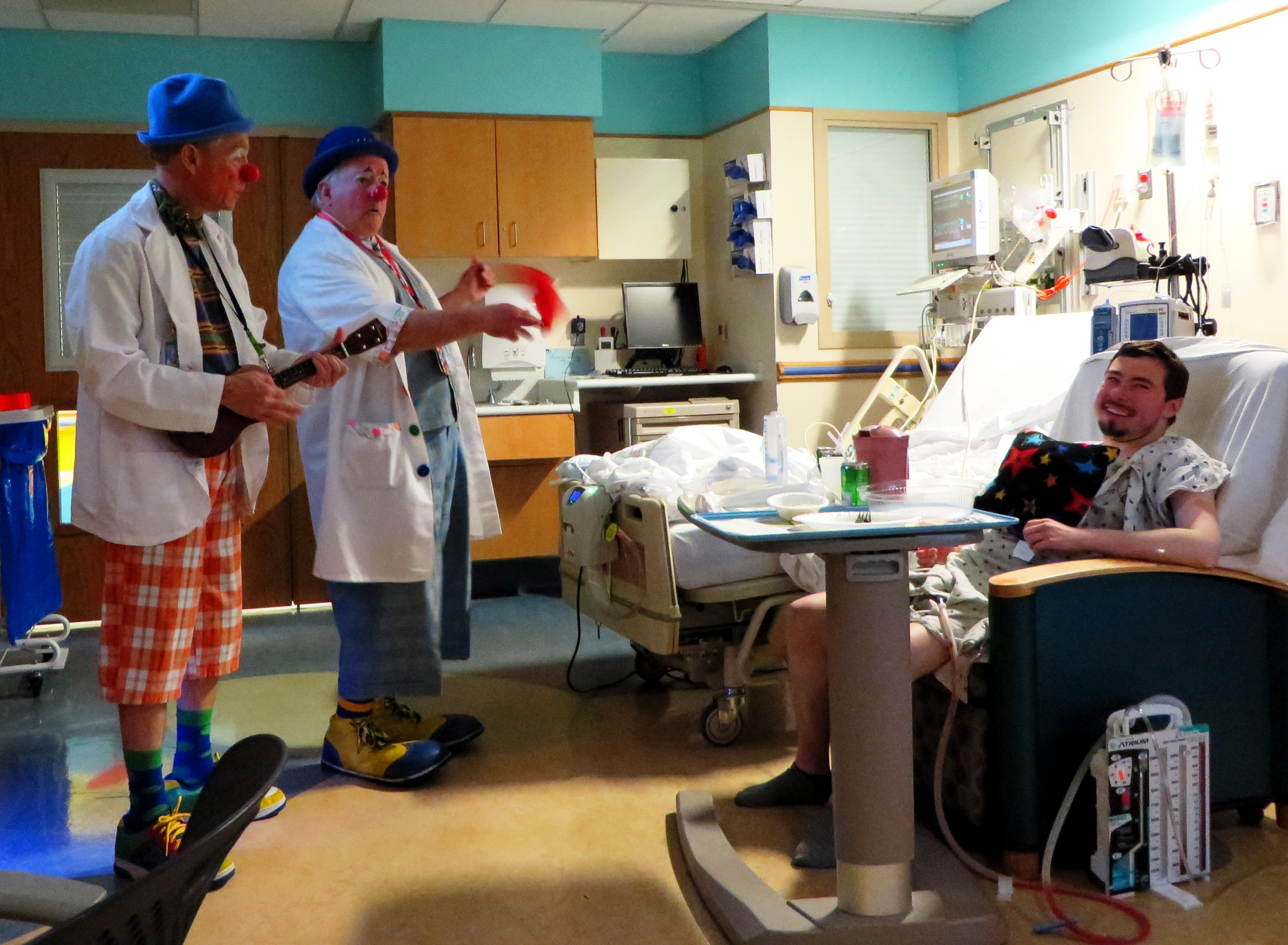
Dr. Beano and Dr. Last N. Class brought smiles to all three of us. April, 2014
“Would you like to know your future? If your answer is yes, think again. Not knowing is the greatest life motivator. So enjoy, endure, survive each moment as it comes to you in its proper sequence — a surprise.” ― Vera Nazarian
I’ve often thought what a blessing it is NOT to know what the future holds. Jeff and I have talked about this numerous times, remembering our innocent newlywed selves and thinking “thank goodness we did not know what lay ahead of us.” That’s not to say that we have not had full, happy lives. But some of what would transpire over the next 30 years would have seemed unthinkable to us in 1980.
As Nazarian implies, the idea of being grateful for the uncertainty applies to moments as well as years. For those among us who have a hard time with unpredictable schedules and unplanned interruptions, this is a significant challenge. But I do think our days are less frustrating if we are able to absorb the minor ups and downs without having everything go according to plan.
On the day after Matt had the roughest night of his hospital stay, all three of us were in a fairly glum mood when we had a fun surprise — a visit from two hospital clowns whose magic tricks and humorous dialogue had us all laughing in minutes. It was amazing how that unexpected little treat brightened up a day that had been stormy inside and out.
I wonder whether a compassionate nurse tipped the clowns off that we could use a bit of cheer. Or maybe they showed up in answer to an indirect summons via somebody’s prayer somewhere. In any case, not knowing they were coming made it all the more delightful.
As you go about your days, I hope the thought of unknown possibilities will bring you joy rather than worry. It may take some effort and a little re-programing of our thoughts to think of the coming days and weeks in anticipation rather than anxiety. But we never know what delights might lie in store for us, interspersed among frustrations and sorrows we’re better off not knowing about in advance.
Today, I hope you will join me in feeling grateful for the blessing of an unknown future.
One year ago today:
Where there is no danger
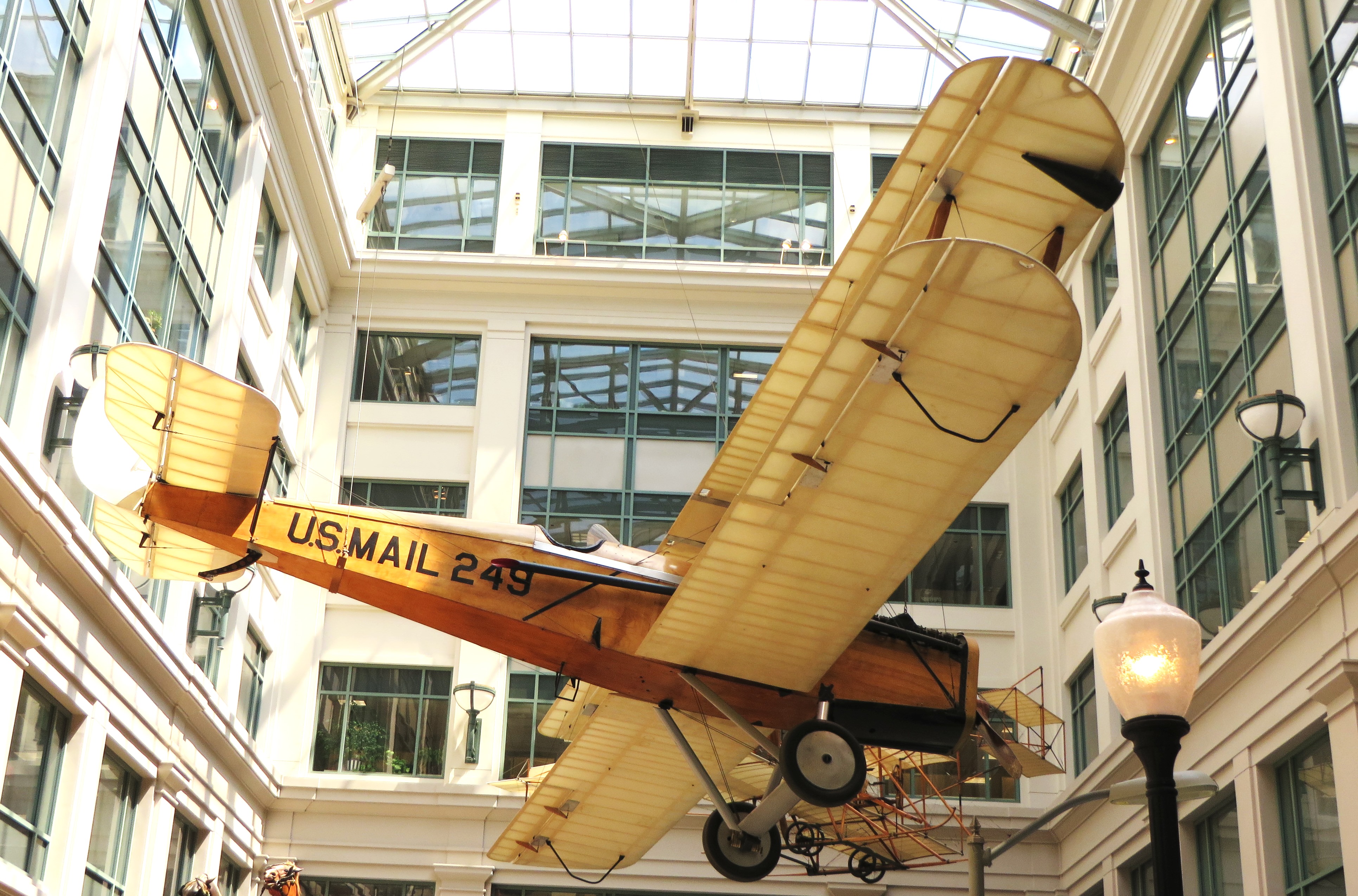
This de Havilland DH-4B (the improved version of the DH-4) is on display
at the National Postal Museum in Washington, DC. April 2014
“What kind of man would live where there is no danger? I don’t believe in taking foolish chances. But nothing can be accomplished by not taking a chance at all.”
— Charles Lindbergh
On this day in 1918, the U. S. Postal Service issued its first airmail stamp. The price was 24 cents, equal to more than four dollars in today’s money. Two days later, the first scheduled U.S. airmail flight took off.
During those early years, flying airmail was considered the most dangerous job in the U. S., and for good reason: 31 of the first 40 pilots hired died in crashes. The de Havilland DH-4 became known as the “flaming coffin” because of its tendency to explode and burn on crash landings, which were not rare occurrences. Within a year, the planes were reconfigured to lessen the risks, but eventually the Post Office would contract the rapidly-growing passenger airlines and other private sector companies to carry the mail.
It was during his years as an airmail pilot that Charles Lindbergh became interested in winning the $25,000 Orteig Prize, to be awarded to the first aviator to fly non-stop from Paris to New York. The rest, as they say, is history, more well-known to most of us than the crucial early experience Lindbergh and other pilots gained flying risky airmail routes. But it’s likely that the courage, skill and expertise Lindbergh developed during his relatively brief time flying the mail were pivotal in his successful transatlantic flight.
It’s easy to get irritated at slow-moving lines at the Post Office, rate increases and delayed mail. But reading a bit of history puts it all in perspective. For only 49 cents we can mail a letter anywhere in the United States, even Alaska or Hawaii, and expect it to arrive at its destination within a week, with very little chance of any loss of life en route. Quite a bargain, all things considered.
One year ago today:
The strength of the sole
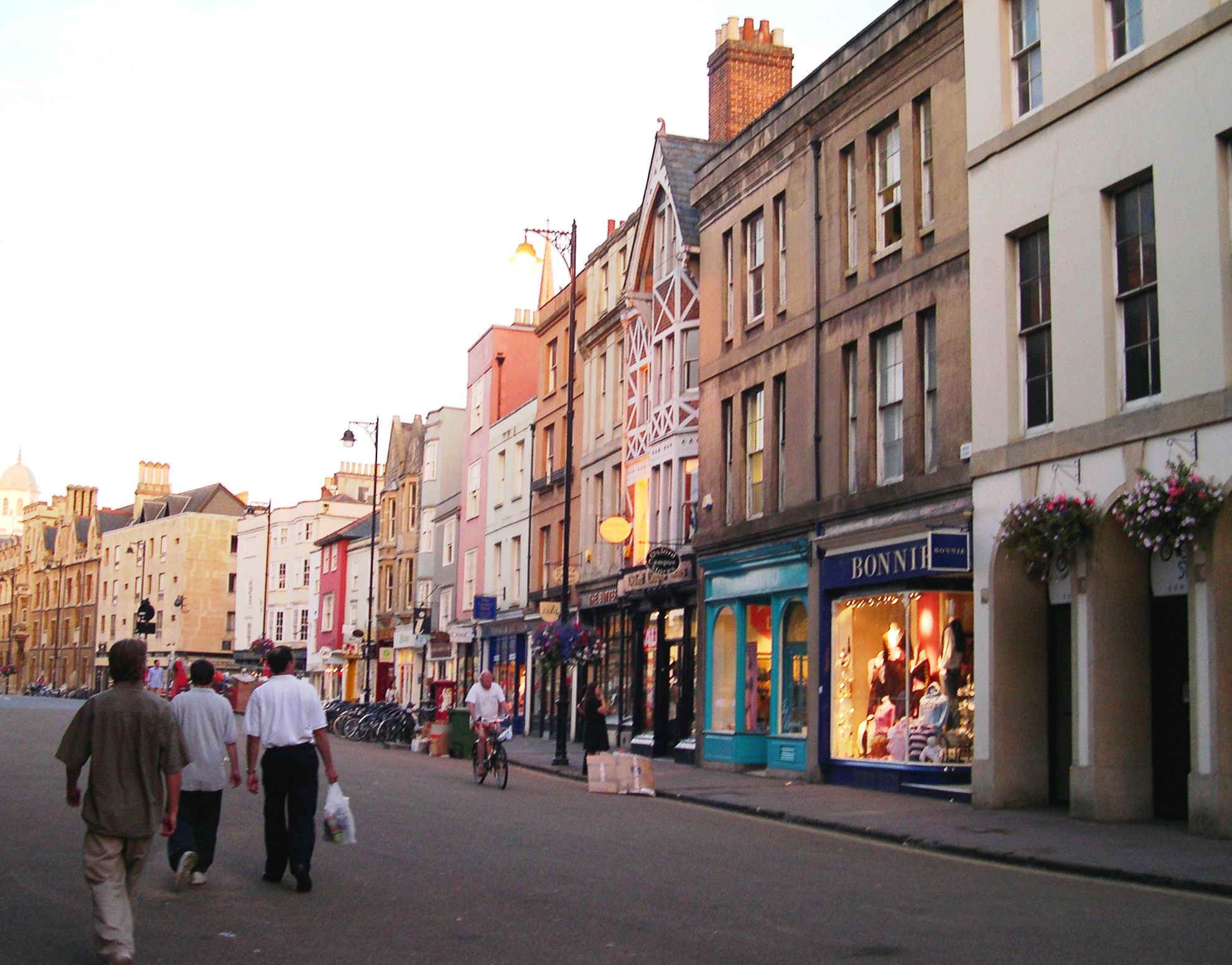
Jeff, Matt and Drew on an afternoon stroll in Oxford, UK, August 2005.
“When you have worn out your shoes, the strength of the sole leather has passed into the fibre of your body.” — Ralph Waldo Emerson
Lately I’ve not been able to walk as much as usual, and when I do walk, I notice there’s a difference to my typical rhythms and behaviors. I’ve been walking mostly head downward, pacing rapidly, with an eye toward getting through the two or three miles as quickly as possible, not taking in the gorgeous sights and sounds that normally add so much enjoyment to my day.
Partly it’s because I am often rushed and barely squeezing in the time to walk. I think it’s more than that, though. I am dealing with a different set of challenges right now than I typically am, or at least a more intense version of the same challenges. Most days, I’m not as able to focus on the springtime greening all around me, or the flowers finally starting to bloom.
That’s OK for now. I find that walking is beneficial no matter how I do it. There’s a lot more introspection to my walks lately, and perhaps some of the mental rehearsal that helps me to work through my worst fears and be prepared for whatever might happen. Walking is a good match for such rumination, a sort of restless pacing with purpose.
If you’ve been thinking you need to be walking, but can’t seem to find yourself in the mood to begin, try starting from wherever you are. I have found that it builds strength physically, emotionally, spiritually and intellectually. Not bad for an activity that is free, safe, green and totally portable. It might not always be fun, though it often is. In any case, the benefits will accrue, and as Emerson attests, soon you’ll find yourself feeling refreshed in a way that is inversely proportional to the wear on your shoes. Your soles won’t be new anymore, but your soul will be.
One year ago on May 11:
At the threshold

Mama and Daddy at our wedding rehearsal dinner in Nashville, June 1980
“The pressure of adversity is the most powerful sustainer of accountability. It’s as though everything you do is multiplied by 50 in order to surpass those with a head-start. I was never capable of slacking when at the threshold of failure.”
― Criss Jami
One year ago, for Mother’s Day, I posted about my mother’s incredible determination to press on through some daunting physical challenges. I’ve often joked about how like my mother Jeff is, but over the past 18 months, I’ve thought of that in a more serious context.
The photo above was taken less than five months after my mother’s craniotomy to repair a hemorrhaging aneurysm at the base of her brain. If you look closely at the left side of her face, you can see the slight indentation of her skull at the temple, and a tiny bit of drooping of her left eye. I was thrilled to have her at our wedding in any condition, but was especially proud of how beautiful she was, wearing a gown she had made herself not long before the wedding.
Watching Jeff (and now Matt) survive circumstances most of us can be thankful we will never face, I have thought often about my mother and others I admire, whose courage and tenacity are a legacy of strength for all who know them. My Aunt Peggy, my sister Carla, and my friend (Jeff’s Aunt) Gloria all come to mind when I think of those who have overcome.
I know there are readers of this blog who have prevailed, and are still fighting, through similar challenges; at least one of you is a three-time cancer survivor! Recently Michael sent me a link to this wonderful video by an artist new to me, Mandisa. The song is set against inspiring video clips of Robin Roberts, Scott Hamilton (a performer I admire as a brother in the faith) and Gabby Giffords. I hope seeing these amazing people will lift your spirits. As you hear Mandisa’s encouraging words, think of all those whose perseverance has inspired you – including the person you see in your mirror!
One year ago on Mother’s Day:
Occupied by jellyfish

A spotted jelly at The Jellies Experience, Monterey Bay Aquarium, CA, December 2002.
“The real world is in a much darker and deeper place than this, and most of it is occupied by jellyfish and things. We just happen to to forget all that. Don’t you agree? Two-thirds of earth’s surface is ocean, and all we can see with the naked eye is the surface: the skin.” ― Haruki Murakami
When I’m staring, mesmerized, at the vastness of the ocean, I’m usually thinking only of the surface; of the play of the light on the waves, and the endless rhythmic motion. The sheer expanse of it leaves me breathless. If I stop to think about the teeming life beneath, extending across the unimaginable distance, it becomes really mind-blowing.
I think that’s why some of us get the creeps when it comes to entering the parallel universe under the sea. There’s something otherworldly about it, but we are faced with the jarring realization that this “other” world is the biggest part of the one we live in, and we depend on it in more ways than we realize.
I don’t think I’d ever make a good marine biologist, but I am glad some people are drawn to that career. And I’m glad aquariums exist for the benefit of the rest of us, who stand, as it were, at arm’s length from the drama of life in the largest kingdom on earth. Even if we only visit aquariums occasionally, it’s an effective reminder of how much we do not know; how small a detail of the big picture we see each day.
One year ago today:
Forever free
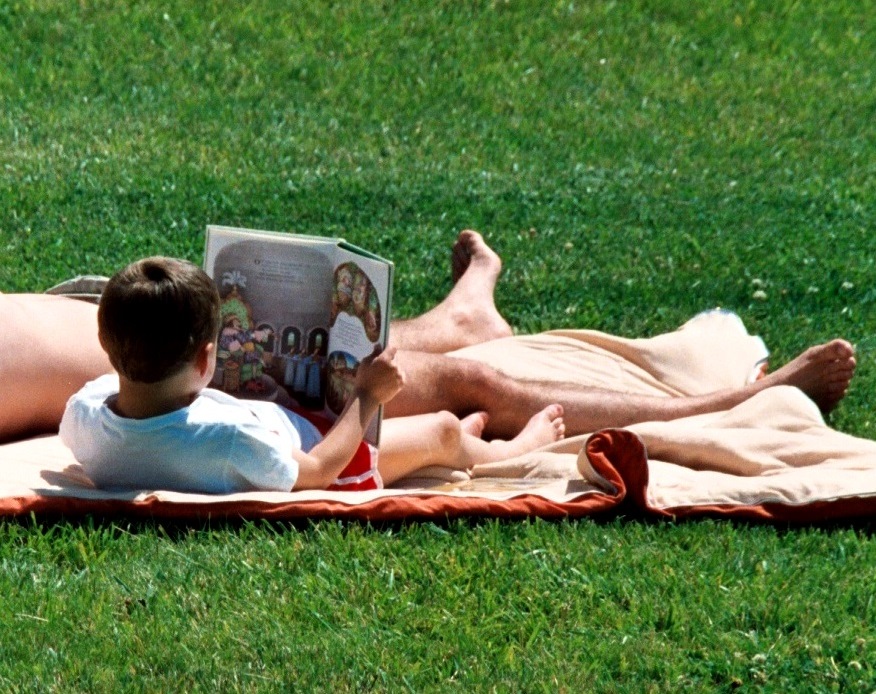
Jeff soaks up the sun while Matt devours a story.
Our backyard at Vandenberg Air Force Base, California, sometime in 1991.
“Once you learn to read, you will be forever free.” — Frederick Douglass
Matt taught himself to read before he started kindergarten, and throughout his elementary school years, his reading tested at several years above grade level. Given the severity of some of his other learning challenges, including extremely deficient motor planning and poor neurological processing of most sensory input, his reading ability surprised and delighted his teachers, many of whom remarked on how he read aloud with dramatic expression that implied a level of comprehension not often present at his age.
I think one reason he was able to become a proficient reader was his absolute obsession with books during his preschool years. Those who knew him then probably remember he was never without at least one book, often several. The photo above was fairly typical of how he would position himself at the beach or in bed, with or without a pillow. It would always make my neck hurt to see him lying with raised head and shoulders, determined not to lose even a minute of reading time.
During those preschool and kindergarten years, I would go to the library and check out 30-40 picture books (there was no limit) and keep them in a box in the trunk of my car. They provided endless free incentives for good behavior. When he would go to occupational therapy or other settings that required his cooperation and effort, all I had to do was remind him that good behavior meant he could choose another book from the treasure chest in the trunk. It worked like a charm at least 95% of the time, and I could run by the library to change out my stockpile of books as often as he went through them.
As Matt has grown older, reading, like music, has been a special gift in his life. He has endured more than his fair share of suffering and loneliness, but he also has been blessed with a zest for life that has been fed by his imagination and his ability to immerse himself in the operas, musicals and stories he loves.
Frederick Douglass, who knew firsthand about enduring cruel limitations and suffering of a far different kind, understood the crucial importance of allowing the mind to break free through the doorway of reading. I hope his words will remind us that the ability to read is a precious gift, one that can give us wings to rise above whatever chains may bind us.
One year ago today:
To west of West

Jeff and the boys on one of our evening walks along a canyon trail near our home.
Vandenberg Air Force Base, sometime in 1990.
“Lands there are to west of West,
Where night is quiet and sleep is rest.
Guided by the Lonely Star,
Beyond the utmost harbour-bar,
I’ll find the heavens fair and free,
And beaches of the Starlit Sea.
Ship, my ship! I seek the West,
And fields and mountains ever blest…”
— J. R. R. Tolkien
I think I would have loved California under pretty much any circumstances, but our earliest days there were absolutely magical. When we left for the west coast in January 1990, we had just passed from one of the most difficult periods of our lives, and driving through the rocky Gaviota Pass felt like the transition from one world to another; a new world more wild, remote and unknown, full of adventure and a paradoxical serenity.
We lived on a lovely street on Vandenberg Air Force Base, in a modest little house where we would spend some of the happiest times of our lives. Down the street from our home, not even half a mile away, was a trail with expansive views of the surrounding wilderness. There was abundant pampas grass lit up by the setting sun (Matt is holding a stalk in the photo), and from one point, we could glimpse the Pacific Ocean.
That trail became a favorite place for evening walks. Though we never saw the mountain lions or coyotes others said they had seen there, it still felt like a small wilderness trek each time we went for a walk along the unpaved path. It was wonderful to have an enchanted kingdom close enough that we could go strolling there any evening we chose.
Vandenberg was a fabulous place for young boys to live; there were huge, deserted beaches with dunes and tide pools and Titan missile launches, and we saw more deer, raccoons and other wild animals there than we have seen anywhere before or since. (The terrible Painted Cave Fire just south of us that year drove huge numbers of animals to seek refuge to the north.)
The Air Force has taken us to some wonderful places we learned to call home, but no time is quite as cherished in our memory as those wonderful years of our sons’ early childhood in one of the most uniquely beautiful places on earth.
We made friends there who have stayed with us in our hearts to this day (and some of them probably will read this post and remember right along with me). Our sons’ young playmates are grown now, and many of them have children of their own. I wonder if they think of those years as fondly as we do?
When I look back on a life full of blessings for which to feel grateful, our years on the rugged central coast of California always come to mind. Those fields and mountains are indeed “ever blest” in our remembrance.
One year ago today:
Reasonable and right
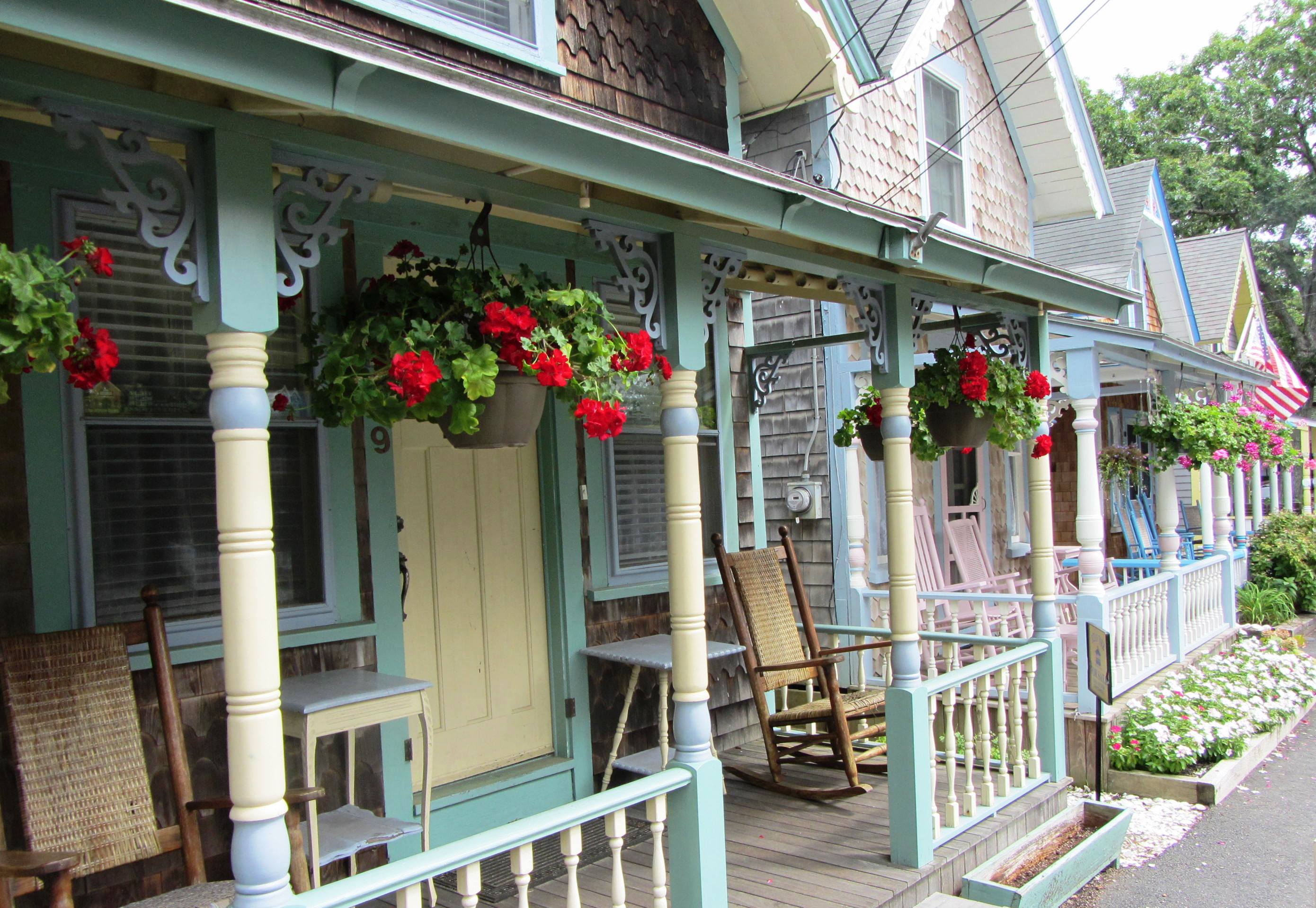
These are historic Martha’s Vineyard Cottages are compact and charming. September 2012
“…it is reasonable and right that men should strive to make the useful wares which they produce beautiful just as Nature does; and that they should strive to make the making of them pleasant, just as Nature makes pleasant the exercise of the necessary functions of sentient beings. To apply art to useful wares, in short, is not frivolity, but a part of the serious business of life.” — William Morris
One year ago today my post was about my love of romantic Victorian decorating, and how it might seem to be at odds with my growing conviction that simplicity is the answer to many modern dilemmas. As I wrote then, I’ve learned to enjoy such frilly delights without needing to own, dust, or maintain them, especially now that there are abundant online images to enjoy through Pinterest and other social media.
In recent months I’ve been particularly drawn to learning more about the “tiny house movement,” as it is sometimes described. I have no delusion that I am anything close to ready for such radical downsizing, but I still think it’s a fascinating concept worthy of attention. One facet of this lifestyle that I find appealing is the attractive design of many of these tiny abodes. Maybe it’s because, as a child, I dreamed of having my own little playhouse of about the same size and design.
Certainly the cottages of the Martha’s Vineyard Camp Meeting Association, pictured at the top of this page, are far too large to be considered tiny homes. Yet they are considerably simpler than the homes belonging to us and most of the people we know, while possessing a unique charm that many newer, more ostentatious homes lack.
William Morris, who is quoted above, produced high quality furnishings normally associated with wealthy or upper middle class consumers. But note that Morris (an ardent socialist) said nothing about size, quantity or monetary value; rather, his emphasis was on the marriage of beauty and utility; the combination of aesthetics with practicality. Perhaps his ideal is echoed in the delightful designs of the cottages pictured above, and in the cute coziness of many of the tiny homes springing up across the country and around the world.
For the majority of us who are not ready for such a drastic departure from the norm, there are some helpful lessons to be learned from those who are choosing this path. You’ll find more food for thought in this post, titled “The top 10 tips I’ve learned from minimalists” at Lara’s blog, The Extraordinary Simple Life.
Advertising may have influenced us to associate beauty with excessive spending and prestige brands, but economic and ecological concerns are causing many of us to re-think our ideas about what is necessary and desirable. Contrary to what we may have been told, practicality and beauty are not mutually exclusive, just as material possessions and happiness don’t always go hand in hand.
Since I have enjoyed dividing our time between two “normal” size homes, I would have a long way to go– and lots of belongings to shed– before I could live full time in a tiny house, or even a gingerbread cottage. But I applaud these modern pioneers of a new (old) way of life, who are proving that frugal does not have to be frumpy, and downsizing can be delightful.
One year ago today:
Turrets, dormers and tchotchkes
A condition of survival

Big Ben and Parliament, quintessential symbols of orderly British discipline and punctuality. August, 2005
“If you do the same thing every day at the same time for the same length of time, you’ll save yourself from many a sink. Routine is a condition of survival.”
– Flannery O’Connor
One of the most insidiously risky aspects of dealing with chronic illness and frequent hospital trips is the disruption to routine. Since I’m a person who has never much liked the idea of routine, nor been as disciplined about maintaining a set schedule as Jeff is, I had thought maybe this disadvantage would affect him more than it does me.
But I should have realized that he is far better at creating his own internal routine than I am. I’m still floundering a bit, feeling overwhelmed and vaguely anxious. I aspire to the wildly popular British maxim someone unearthed from an old, mostly uncirculated World War II motivational poster: “Keep calm and carry on.” Unfortunately, I have a hard time answering the question: “Carry on…with what exactly?”
It’s not that there is no time available, it’s that I’m unfocused when I do have time, not certain which of many backlogged tasks should be prioritized. Life has been unpredictable lately, and the continual adjustments to our schedule leave me feeling disoriented and tired even when I have little to show for the day.
For now I’m just riding the waves, trying to take it easy on myself and hoping things will stabilize soon. But I’ve learned to have a whole new respect for the value of routine in our lives. Perhaps I’m kidding myself, but I imagine that if and when our lives return to some semblance of normalcy, I will be eager to embrace the structure that has been so intrinsic to Jeff’s life for as long as I’ve known him.
What are your reactions to O’Connor’s quote above? Do you find routine to be boring or beneficial? Exhausting or energizing? Does getting up early make structure and discipline easier? Or are high achievers just naturally morning people who make it look easier for them than it really is? Feel free to offer up any handy hints or life hacks that might help me get back on track.
One year ago today:
To welcome and help

Matt with Darla and Nathan Hill, President, Kiwanis Club of Williamsburg, April 2014
“One of the marvelous things about community is that it enables us to welcome and help people in a way we couldn’t as individuals. When we pool our strength and share the work and responsibility, we can welcome many people, even those in deep distress, and perhaps help them find self-confidence and inner healing.”― Jean Vanier
I’ve written here before about our friend Darla, and the difference one person can make in the lives of others. In that post, I quoted Mother Teresa urging people to act as individuals rather than looking to leaders for direction. Today’s quote is from her friend and kindred spirit, Jean Vanier, who emphasizes what can be achieved when people work together in community.
For many years now, Matt has been a member of the Aktion Club chapter affiliated with the Kiwanis Club of Williamsburg, Virginia. I can’t say enough about this wonderful organization, which enables Matt and other adults with disabilities to work alongside Kiwanis Club members in community service projects. The camaraderie and self-esteem that can only come from such teamwork has been invaluable for Matt and so many others.
As people become more and more involved with extended work hours, electronic entertainment and other distractions, I sometimes fear that our churches and community organizations will suffer from dwindling participation, volunteers and resources. It would be sad if the many benefits provided by such groups are curtailed at a time when they are needed more than ever.
I am deeply grateful for the people of Kiwanis and other groups who have worked together to enrich Matt’s life with belonging and joy. I’m thankful for the many volunteers who work to provide food and shelter for homeless people and animals, serve in hospitals and schools, and tutor children and adults learning to read. I appreciate the countless unsung heroes who give to our communities in so many ways without recognition or monetary reward. Why do they do it? I think most would say that they gain as much or more than they give in such efforts.
Is there a local group that could use your help, or a service program to which you’ve been drawn? When we reach out to others who need us, we deal a double blow to despair, lifting someone else’s spirits as well as our own.
One year ago today:
You fall in love
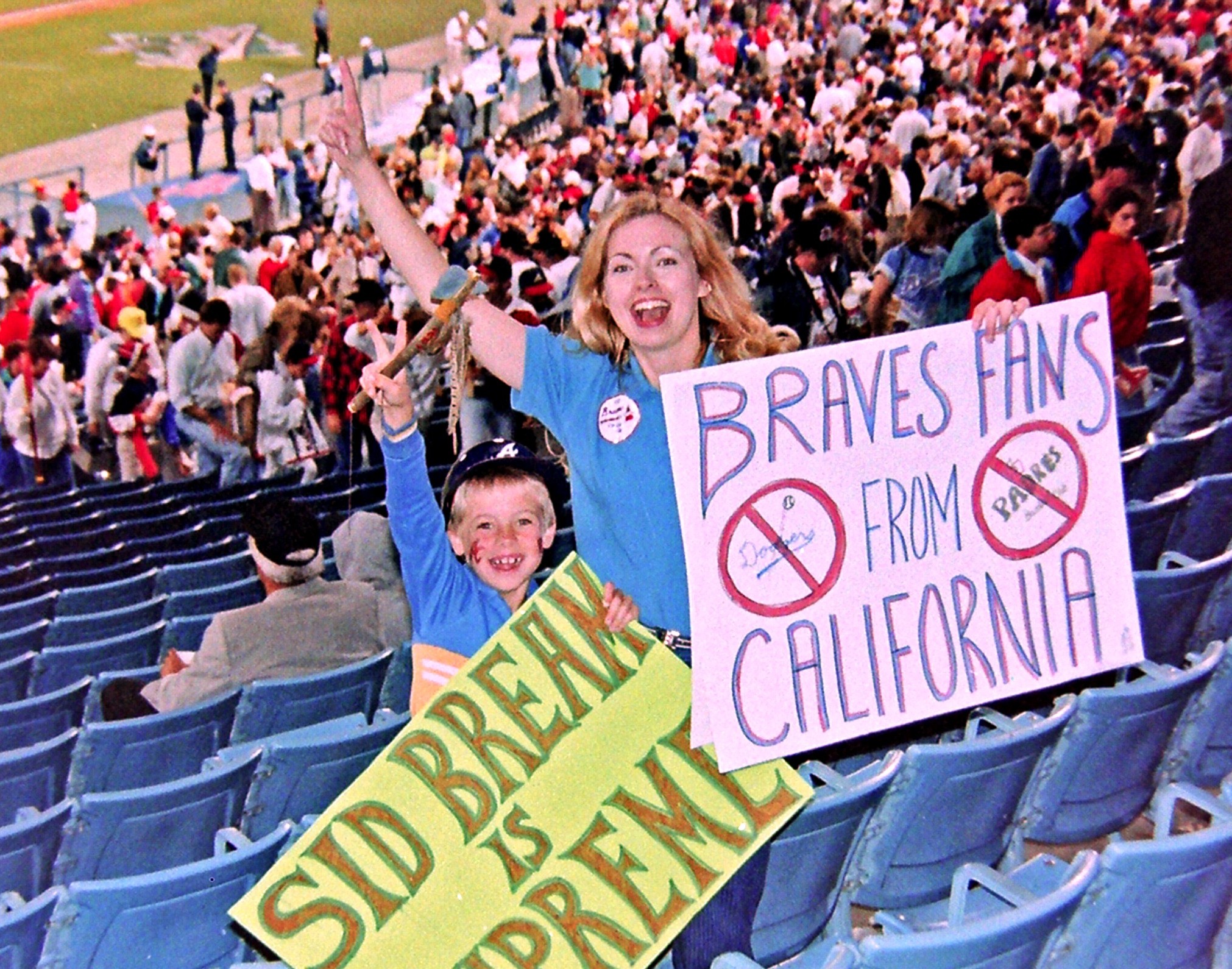
It was exciting even before the game started! World Series Game 3, October 1991
“You may glory in a team triumphant, but you fall in love with a team in defeat. Losing after great striving is the story of man, who was born to sorrow, whose sweetest songs tell of saddest thought, and who, if he is a hero, does nothing in life as becomingly as leaving it.” ― Roger Kahn
For fans of baseball and/or underdogs, 1991 was a great year. In an unprecedented turn of events, both teams in the World Series that year had finished last in their divisions the previous season. This “worst to first” fairy tale produced what some historians call the greatest World Series ever.
I didn’t know we’d be witnessing that sort of history when Drew, Matt and I boarded a plane at Santa Barbara, CA in October 1991, bound for Atlanta and World Series game three, the first-ever World Series game to be played in my hometown. I only knew that seven-year-old Drew and his Dad had been having a baseball feast all year, with Drew’s beloved Oakland A’s just slightly more esteemed by him than his baseball-loving Granny’s favorites, the Atlanta Braves.
My mom had gotten us some tickets from a scalper a business contact, and my nephew Ryan joined us for what was more like a massive party than a ball game. The game lasted twelve innings and a then-record time of four hours, four minutes, with never a dull moment. I will always remember how it felt to watch David Justice slide into home plate in a close call for the winning run. The stadium erupted into elated screams as total strangers hugged each other amid a deafening roar.
The Braves went on to lose the series in seven games, after winning all three home games and losing all four of the away games. There must have been something extra-special about that “worst to first” hometown spirit that made the difference for both teams that year.
Having grown up in Atlanta, I was more than accustomed to watching the Braves lose, despite Hank Aaron’s thrilling, record-setting home runs and a stadium affectionately known as “the launching pad.” But no defeat was ever as heartbreaking, yet still exhilarating, as the well-played loss of the 1991 World Series. Nearly 23 years later, I still feel the way I did then; despite the agony of a close defeat, it was just as good as if they had won.
To this day, some say the series was lost on a bad call. But none of that matters now; the loss was far more edifying a lesson for Drew and me — and I suspect, for many others too. To watch these players, so disappointed yet magnificently graceful in defeat, was to fall in love with a team that would go on to win a record 14 straight division titles. For all their victories, though, it was their 1991 loss that won even the most jaded hearts of Atlanta, and much of the baseball-loving world.
Have you ever experienced a bittersweet loss that felt almost as good as a win? Do you know anyone who has seemed more heroic in defeat than they might have seemed in victory? In the poetic toast of George L. Scarborough, “A hard-fought failure is a noble thing! Here’s to the men who lose.”
One year ago today:
Amid the trials

Some of our azaleas as photographed on Easter morning, April 2012
“How fair is a garden amid the trials and passions of existence.” — Benjamin Disraeli
We’ve now owned our York home nearly ten years, longer than we have ever owned any property. Among the many features of the home I’ve treasured, the azalea garden in our back yard is a favorite. Countless times that little triangle of ground has brought me joy, consolation, or gratitude for its beauty.
Year in and year out, through good times and bad, it’s been there for us to plant, transplant, weed, prune, clean up, photograph, stroll around and generally enjoy. Pasha is buried in the corner by the fence, surrounded by evergreen shrubs and flowers.
This photo was taken from our deck, but our bedroom windows also have a nice view of the garden. There are camellias, dogwoods, rhododendron, peonies and other plants, but it’s unquestionably the azaleas that dominate in the spring and fall. Their steadfast presence decorates our lives and feeds our spirits, and I’m so happy we have not had to move away and leave them.
What features of your own home or garden do you most enjoy?
One year ago today:
The way you see

This 2007 addition to the Royal Ontario Museum in Toronto
gives us a stark reminder of how different past and future can be. May 2009
“Your past is important because it brought you to where you are, but as important as your past is, it is not nearly as important as the way you see your future.”
― Tony Campolo
Some of us are fascinated with history, seeing many lessons in the past, and finding much to like there. Others of us see history as irrelevant, and take no time or thought about what has gone before. Campolo’s quote emphasizes that the past could never be irrelevant, since it made things what they are today. At the same time, he wisely reminds us that our real business in the present will be determined to a greater extent by how we see the future.
Depending on how you grew up, you may want to get as far away as possible from your past, or you might want a very similar life to continue for you, albeit with a few modern updates. How might either view affect your present life? Can an overly close attachment to your past make you reluctant to embrace the changes that time inevitably brings? Or can a strong desire to leave (maybe even flee or escape) the past lead to reckless decisions or foolish bridge-burning?
Campolo seems to suggest here that we should give the future, rather than the past, more influence on our daily lives. We cannot undo or re-live the past, but we can substantially improve our own futures if we live in optimism that is unconstrained by baggage from earlier times. Whether we are saddled with overly high expectations from having enjoyed more freedom or riches than we now have, or burdened with bad memories of unhappiness we endured long ago that makes us dread the coming years, we need the clarity that comes from seeing that the future can be as different from the past as we care to make it.
How do your ideas about the past and the future influence your behavior each day? Do you look forward with more anticipation than dread? Which attitude is most likely to make for a happy, productive day today?
One year ago today:
That faint semblance
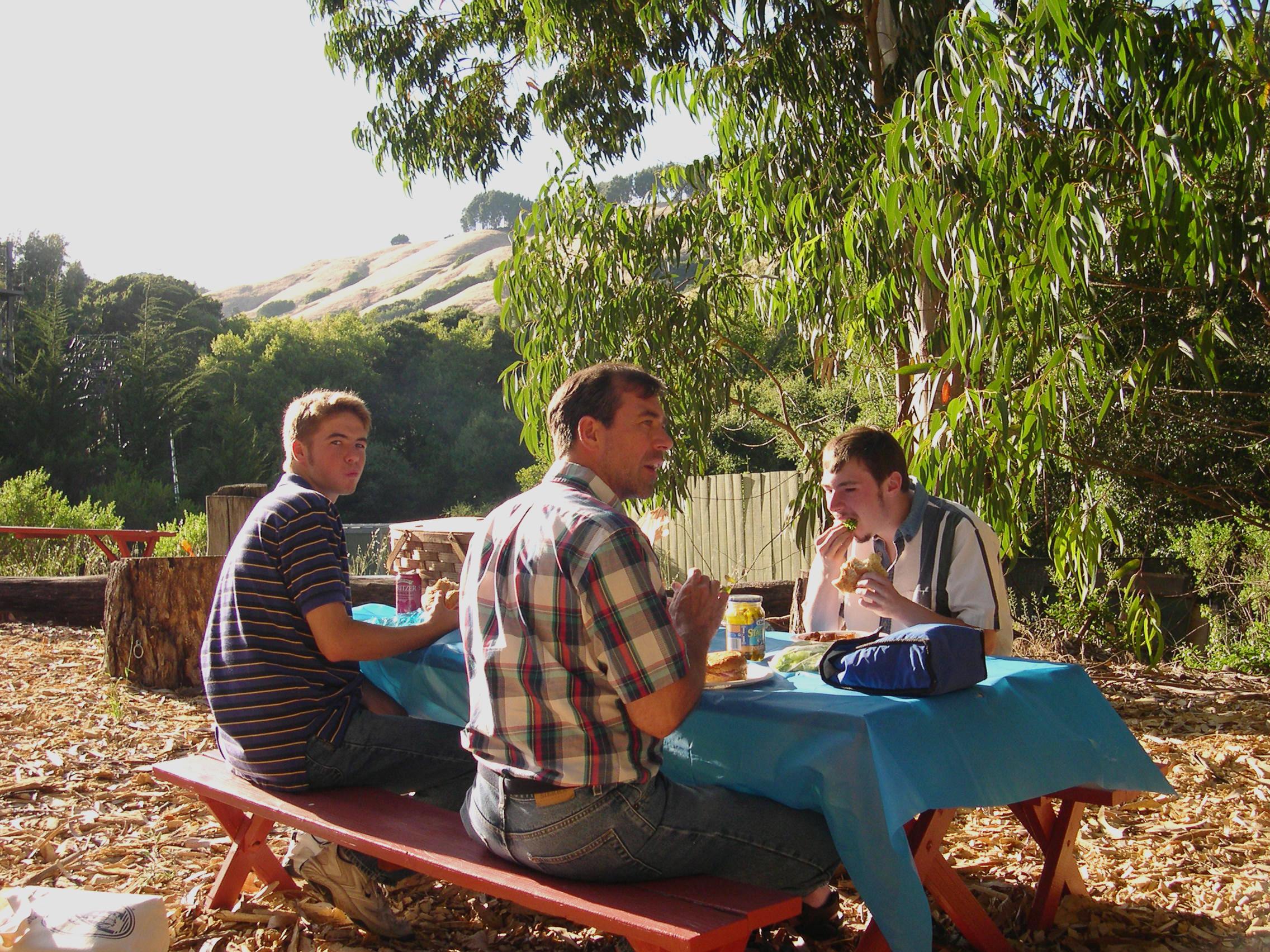
Jeff, Drew, Matt and I enjoyed a picnic at Cal Shakes
before a wonderful production of Arms and the Man, July 2003
“That faint semblance of Eden, the picnic in the greenwood.”— Herman Melville
If there’s anything more festive than a picnic, it’s a picnic at a fabulous outdoor theater just before a stellar production. The California Shakespeare Theater in Orinda, California, invites audiences to bring their own feasts (or buy food available there) and enjoy al fresco dining in their picnic areas before curtain time.
The sublime climate proves nature’s own air conditioning is best. Eucalyptus and oak groves, situated against a stunning mountain backdrop and scattered with sculptures, provide an aesthetic experience that surpasses any electronic special effects I’ve ever seen.
I’m not sure how we discovered the theater affectionately known as “Cal Shakes,” but I’ve found that hardly any tourists, and surprisingly few locals, seem to have heard of it. What this tells me is that there are well-kept secrets everywhere, and I’m challenging you to play detective and scout out a wonderful, perhaps lesser-known spot for a serene springtime picnic. (Then you can report back to us so we can enjoy it if we are ever in your neck of the woods!)
I’ve noticed picnic tables scattered in unlikely places such as shopping centers, libraries and other non-park settings, but of course, the best place to hunt may be a city, county or regional park that’s not a huge tourist spot. Or it may be a place that doesn’t have a picnic table at all – but a blanket and perhaps some folding chairs or tables can turn a lovely clearing into an unforgettable luncheon. The birds and crickets will provide music that’s way better than Muzak.
The next time you have a few hours available on a warm, sunny day, pack some of your very favorite treats and beverages, and head for an outdoor setting. If you’re like us, you’ll find yourself asking “Why don’t we do this more often?”
One year ago today:


 Defeat Despair