So much your own

Do they look alike or what? Grady and Megan, March 2014
“Child, who sculpted you,
that your face is so like mine
and yet so much your own?” — Joan Walsh Anglund (I think*)
I was about to draft a post for today when I realized something exciting: it’s Grady’s birthday! But without giving you the exact date, or the number of years that separate them, I have to mention that his mother Megan’s birthday is very near to the same day.
This is one of my very favorite pictures of the two of them. It’s not particularly flattering; it was one of those casual snapshots that nobody is expecting. They’re not dressed up and putting on their camera faces here. But the moment I saw it, I was struck with how very much alike they look in this shot.
From the day Grady was born, I always thought he looked like Megan. At times, I will see an expression or a behavior that reminds me of Drew, but for the most part, I think he has more of his mother’s looks. Yet he is very much an individual too. It has always amazed me that no matter how much we try to imagine babies before they are born, they always defy our predictions and turn out to be completely unique. I think that’s a wonderful and divine thing.
I’ll bet you have lots of children in your family who look remarkably like one of their parents or grandparents, and yet are completely, unforgettably themselves. Fred Rogers is right: there is no one in all the world exactly like each of them — or you either, for that matter.
Happy Birthday Grady! And Megan, too! You both are cause for great celebration.
*Disclaimer: This poem is quoted completely from my memory; I believe that it came out in Joan Walsh Anglund’s wonderful book A Cup of Sun, which was published in 1967. Though she is a prolific author whose work was enormously popular (I met her at Rich’s department store at the height of her fame, and she is a beautiful person), much of her work has become mysteriously obscure. In fact, the U. S. Postal service recently featured a poem from that same book on the Maya Angelou stamp, and President Obama (among many others) mistakenly quoted that poem as having been something Angelou wrote.
I don’t want to add to the confusion by misquoting her again, so if any of you happen to have access to a copy of A Cup of Sun, please enlighten us and/or correct that verse if my memory has failed me!
This post was first published seven years ago today. Obviously, a lot has changed since then.
Shortly after this published the first time, two different readers in opposite corners of the USA were thoughtful enough to track down copies of A Cup of Sun and send them to me. Yes, I was right about the poem, and had remembered it word for word.
The original post, comments and photo are linked, along with two other related posts, below. These links to related posts, and their thumbnail photos, do not appear in the blog feed; they are only visible when viewing the individual posts by clicking on each one. I have no idea why, nor do I know how they choose the related posts. That’s just the way WordPress does things.
You’d think I knew

A youthful Bugs Bunny appeared as nose art on many Allied planes in World War II.
FB-111 Bugs Bunny by MSGT Jose Lopez Jr., National Archives via Wikimedia Commons
“The way I run this thing you’d think I knew something about it.” — Bugs Bunny
Bugs Bunny is 75 years old today! No puns about gray hares, just heartfelt celebration for the laughs he has given us all these years. Bugs had some very similar cartoon cousins who came before him, but the general consensus is that the Bugs we know and love made his debut in the animated film A Wild Hare, released on this day in 1940. (That is, the film was released on this day, not the rabbit.)
Bugs Bunny is, hands down, my favorite cartoon character of all time. For as long as I can remember, I have admired his casual confidence and ability to be unfazed by any situation. He’s a lovable smart aleck whose wisecracks manage to be congenial rather than combative. His irrepressible personality must appeal to a lot of other people, too, because he’s the 9th most portrayed film personality in the world, according to Warner Brothers.
He’s even a veteran of World War II, having been named an honorary Master Sergeant in the Marine Corps, and the official mascot of Kingman Army Air Field in Arizona, where Clark Gable and Charles Bronson were among the trainees. Bugs showed up as a mascot for a number of other military squadrons, decorating the noses of aircraft. Though his personality is relaxed, good-natured and mostly passive, his ability to outwit Elmer Fudd (or anyone else who had it in for him) sends a clear message: don’t mess with me, or your aggression will backfire.
Bugs moves through his world with a detached curiosity, inquisitive without ever being drawn in by any attempts to sabotage him. But he doesn’t take himself too seriously, and when he’s wryly amused at the foolishness of others, he cuts his eyes towards us with a conspiratorial expression that tells us he knows we are in on the joke.
Bugs is still going strong at 75, which should be an encouragement to those of us who are getting closer to that milestone. He is an amusing illustration of the truth behind the old saying that those who laugh, last.
This post was first published seven years ago today. The original post, comments and photo are linked, along with two other related posts, below. These links to related posts, and their thumbnail photos, do not appear in the blog feed; they are only visible when viewing the individual posts by clicking on each one. I have no idea why, nor do I know how they choose the related posts. That’s just the way WordPress does things.
Not actually alone

On a day trip into the city, I enjoyed strolling through another world entirely.
Pacific Heights, San Francisco, January 2004
“There are only two things I like to do alone: reading and traveling, and for the same reason. When you travel, and when you read, you are not actually alone, but rather surrounded by other worlds entirely, the footsteps and phrases of whole other lives keeping you company as you go.” — Shauna Niequist
There’s nothing to compare with sharing the beauty and excitement of travel with friends and family, but even so, I completely agree with what Niequist says here. I also enjoy traveling alone, and reading alone, and for the same reason.
Oddly, there’s a sense in which, traveling solo, I connect with new people more (because I notice them more) and I end up having some interesting conversations with strangers. When I travel with friends and family, I am in a sort of cocoon of the familiar and safe. On my own, my senses are more alert, more finely tuned, less distracted, and I enter those “whole other worlds” more completely.
Reading is, of course, the ultimate solo escape; one doesn’t have to worry about timetables or personal safety or finances or finding a decent place to have lunch. If I had to choose one or the other, reading would win out over actual physical travel every time. But traveling, whether near or far, can open the mind to awareness of the wider world in a way that reading cannot do as completely. No matter how vividly we re-create sights and sounds and smells in our imagination, it’s not quite the same as actually being there
Sometime this year, I hope you will make time for a solo getaway, even for just an hour or two. If you’re timid about traveling alone, choose a place closer to home that seems safer, but try to choose something a bit unfamiliar. Museums, parks, even riding the public transportation to a different destination can be a fun adventure. Take along a few things that will make your day easier or more complete — a camera, a water bottle, sunscreen or some energy snacks — but try to travel light, to enjoy the sense of freedom that comes with being by yourself.
What other worlds and other lives are out there waiting to make your acquaintance?
This post was first published seven years ago today. The original post, comments and photo are linked, along with two other related posts, below. These links to related posts, and their thumbnail photos, do not appear in the blog feed; they are only visible when viewing the individual posts by clicking on each one. I have no idea why, nor do I know how they choose the related posts. That’s just the way WordPress does things.
Time to relax

Have a seat and relax! I’m bringing some virtual refreshments.
San Juan Capistrano, California, July 2003
“The time to relax is when you don’t have time for it.” — Sydney J. Harris
I’m guessing today is a busy day for you. All the more reason to give yourself a quick break, or maybe even a long one. See that bench in the garden, pictured above? That’s your virtual space to sit down for a few minutes and relax. I’ll bring some imaginary iced tea or lemonade or a frozen fruit slushy.
As I write this today, I’ve been watching a team of men working in the massive undertaking of bringing down our majestic old oak, which towered well over 100 feet high until yesterday. It’s a job that is expected to take three full days, and we’re now halfway through day two. Not only is the work amazingly difficult and risky (can you imagine climbing that high to attach a crane to a tree limb before sawing it down?) but they are doing it with temperatures in the 90’s and very high humidity.
It’s thrilling to watch them, and also interesting. They can’t be in a hurry because a lot of care is needed with every step, and the work goes in stages. The huge chunks of tree that go sailing in the air over our roofs have to be set down with surgical precision by the crane operator, so as not to hit fences, roof lines, or existing landscaping.
When they started, I was a bit anxious for their safety. I kept bringing out pitchers of ice and water, and watching with held breath as one or another of them would go high into the tree branches, or stand on the ground while the crane slowly lowered a massive section of trunk.
At first I was surprised that they had such a large crew working, but then I noticed that some were busy sawing, climbing, lifting or carrying, while others were resting, wisely sitting underneath the shade of the poplar and dogwood trees surrounding the work area. I would guess that the rest time is vital to the overall process; when work is this strenuous, I don’t see how it could continue in the stifling heat without allowing for breaks.
Among the millions who work hard every day, they are probably more aware than most that working nonstop can be dangerous. Muscles, after all, cannot go endlessly without some relief.
But can the mind or the soul do it? Sometimes it seems as if we think so. Surrounded by urgency that may be real or devised, fueled by caffeine or sugar or nicotine, and kept artificially wakeful by electric lights, we might be ignoring our need for rest and relaxation. And it will be quite risky for us to keep ignoring it.
I couldn’t remember knowing anything of Sidney J. Harris until I started writing this post. As is my habit, I looked for information to link to his name. It seemed ominous to read that he died as the result of a heart attack at 69, an age that sounds increasingly young to me. I wonder whether his words about relaxation are the result of hard experience.
Let’s all resolve to remember his words, and not get so caught up in activity that we forget to take breaks. As such paradoxical truths often go, we are sometimes least likely to rest when we most need to do it. If you are thinking to yourself “That sounds lovely, but it’s just not possible right now,” try extra-hard to carve out some time, even 5 minutes. The virtual lemonade will be ice cold and waiting for you!
This post was first published seven years ago today. The original post, comments and photo are linked, along with two other related posts, below. These links to related posts, and their thumbnail photos, do not appear in the blog feed; they are only visible when viewing the individual posts by clicking on each one. I have no idea why, nor do I know how they choose the related posts. That’s just the way WordPress does things.
The great cure

She must be thinking “Hmmm, I feel better already!”
Liebesglück (“The Diary Entry”) by August Müller (1836–1885)
public domain via Wikimedia Commons
“Whenever you are fed up with life, start writing: ink is the great cure for all human ills, as I have found out long ago.” — C. S. Lewis
It seems that a great many people don’t like to write, and I find that amazing. Whether I’m writing a letter, an email, a blog post or a grocery list, there is nothing that comes more easily to me (as my patient readers have discovered). That doesn’t mean I’m a good writer; plenty of people who are exceptionally good writers, including my husband and older son, don’t write nearly as much or as often as I do — though I wish they did. And plenty of us who write reams will never be numbered among the gifted, or even the widely published. It’s still a wonderful exercise for the mind, heart and soul.
I agree with Lewis that writing is therapeutic. It benefits the writer, and in some cases, it also benefits those who read the writing. In fact, it can even benefit those who never read it. I have often written poems, stories and letters that I never intended anyone to read. In doing so, I have unburdened myself without unduly burdening others. Thus my unread writings may have benefited those who know me, whether they realize it or not. I’m sure many others could say the same.
But sometimes we have the great good fortune of encountering an author who loves to write, and is very good at doing it. Such writers somehow convey their joy in the writing process without ever mentioning it. Their fluid pace or razor-sharp descriptions imply years of close acquaintance with pen and ink. The act of writing surely served a helpful or joyful end in their own lives, but its greatest contribution by far lies in the untold numbers of people who are led to ponder, rejoice, laugh or cry at the bits of life that have been translated into words through ink coupled with imagination.
If you’re feeling fed up, remember the wise words of my favorite author. Ink (even the electronic version of it) is a great cure. Spend a few minutes confiding your thoughts to a paper or screen. Promise yourself that you can burn, erase or delete anything you don’t want anyone else to see. Then start. You might be surprised how much it will help.
This post was first published seven years ago today. The original post, comments and photo are linked, along with two other related posts, below. These links to related posts, and their thumbnail photos, do not appear in the blog feed; they are only visible when viewing the individual posts by clicking on each one. I have no idea why, nor do I know how they choose the related posts. That’s just the way WordPress does things.
Don’t lose sight
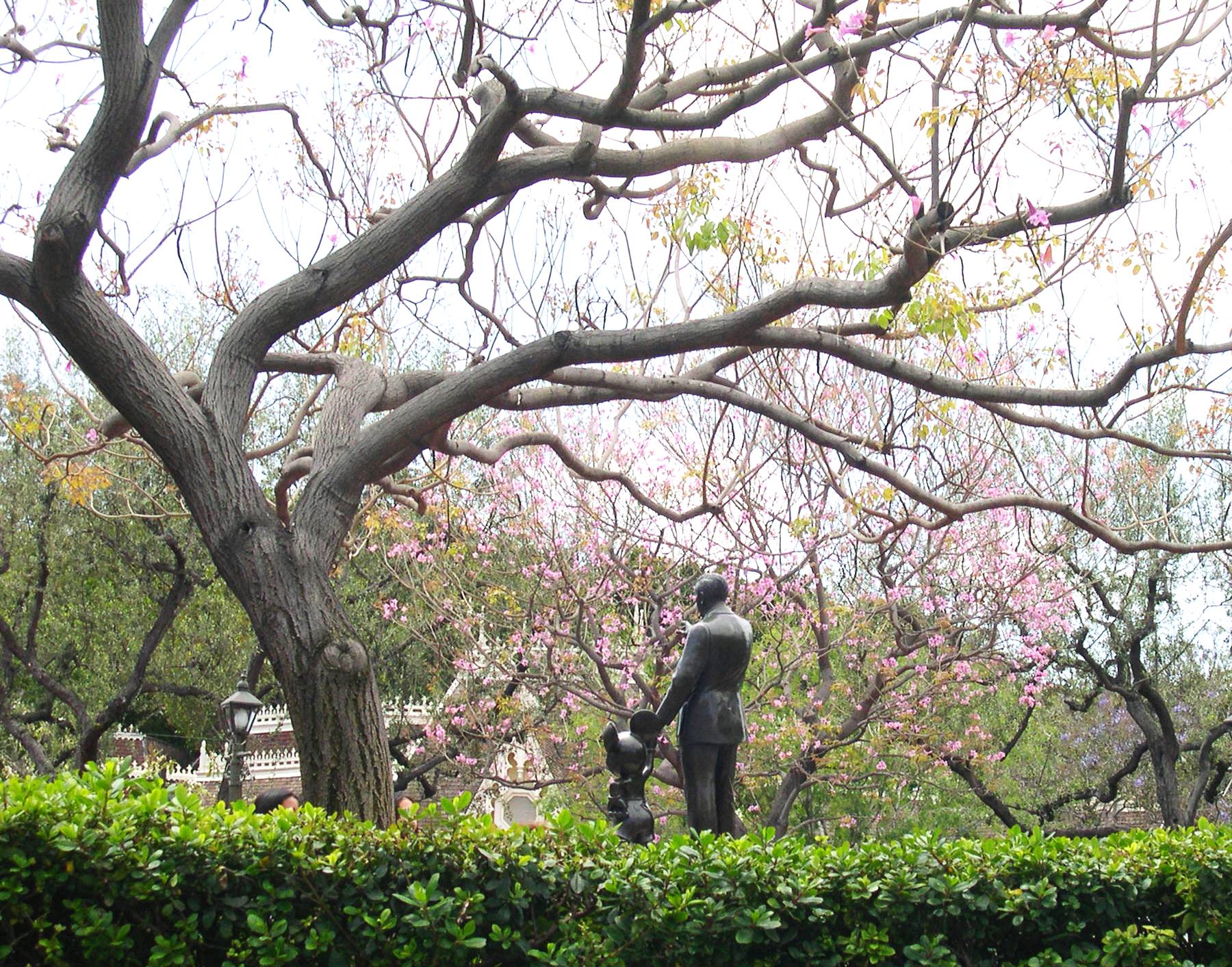
A statue of Walt Disney and Mickey Mouse stands in the park they built together.
Disneyland, California, April 2003
“I only hope that we don’t lose sight of one thing — that it was all started by a mouse.”
— Walt Disney
Walt Disney’s success is legendary, and the tough road he took to get there is well documented. He died in 1966, soon after his 65th birthday, an age that sounds far too young to me now. I had recently had my tenth birthday when he died, and I remember feeling sad when I heard of his passing. Though at that time I had never been inside a Disney park, or seen more than one or two of his movies, I can remember thinking that he had changed history as surely as any politician or statesman.
Our family has always been fond of Disney, and we have spent many happy hours enjoying the parks and movies that bear his name, so it’s not surprising that we find him inspirational. But surely even the most anti-Disney curmudgeon out there would have to admit that it’s rather amazing that such a huge empire came from a little cartoon mouse.
Mickey had an early name change (he started out as Mortimer Mouse) and several cosmetic alterations over the years. His first feature film, Steamboat Willie, was rejected by nearly every film executive in the industry, leaving Disney deeply in debt until he found success by allowing just one theater to run it at a very low price. Mickey was a smash hit, and the world — especially the world of children — would never be the same.
Big things almost always start small, which can be good news or bad news, depending on which direction things go in the beginning. Are there any small things in your life that later became great assets, or more unhappily, tremendous liabilities? Are the small steps you take each day leading you in the right direction?
If it seems that you are not accomplishing as much as you wish, remember the plucky little cartoon mouse with the dubious beginnings, and channel his cheerful, never-give-up attitude. It’s doubtful that you will ever build the kind of game-changing industry that Disney did. But I’m sure he would be the first to agree: if you set your sights high and refuse to let discouragement get you down, you CAN live happily ever after.
This post was first published seven years ago today. The original post, comments and photo are linked, along with two other related posts, below. These links to related posts, and their thumbnail photos, do not appear in the blog feed; they are only visible when viewing the individual posts by clicking on each one. I have no idea why, nor do I know how they choose the related posts. That’s just the way WordPress does things.
Come as children

Outside is Grady’s favorite place to be!
On the trail back from my Mama and Daddy’s garden, Fayetteville, Georgia, May 2015
O men, grown sick with toil and care,
Leave for awhile the crowded mart;
O women, sinking with despair,
Weary of limb and faint of heart,
Forget your years to-day and come
As children back to childhood’s house. — Phoebe Cary
Today I invite you to set aside a few moments for remembering what it was like to be a child. Are you able to step back in your imagination and experience it through a lens unclouded by the years that have passed since? If you can manage it, you might find yourself moving back to the present with a slightly different focus.
It’s a mistake, of course, to see childhood through overly sentimental eyes; if we think of it as a time that was easy or consistently happy, we aren’t remembering accurately. Childhood is difficult in many ways, and it’s much harder for some than for others. But the powerlessness we experience as children, the nagging insecurities borne of knowing how much lies just outside our understanding and ability, is balanced by the sheer wonder at things we haven’t yet grown accustomed to seeing.
Grady’s parents tell us that one of his first spoken requests consisted of a single, insistent word: “Outside!” He loves being outdoors, and notices things we adults stroll past, with our eyes focused high above his head. We are looking farther out, into the direction in which we are headed, and don’t usually notice what’s right at our feet.
Like most children, Grady isn’t in that sort of a hurry. Recently at my parents’ home in Georgia, Drew asked him if he wanted to go down to the garden and help compost some yard waste. I don’t need to tell you his answer. In fact, it was much easier to get him down there than it was to talk him into coming back. He wasn’t eager for “outside” to be over.
If he was moving slowly to begin with, he stopped in his tracks when he heard the neighbors’ goats bleating in the distance. He was entranced, and wanted to see them. “Goats!” he cried, and it was not a statement, it was a request. Drew told him that we couldn’t see the goats because they were in their shed at the moment. Grady kept crying for the goats, and Drew kept patiently explaining. I’m not sure Grady understood what a shed was, let alone that the goats were confined in it, but he did seem to conclude that we were not refusing him anything that was in our power to grant him. With a last sniffle, he changed tracks. “Bunnies?” he asked hopefully.

Grady was not happy when he couldn’t see the goats.
Children grow accustomed to having little say over many areas of life, and Grady is no exception. He’s quite good at moving on from disappointment. Once he started back down the trail to Granny’s home, he found other things to capture his interest, and the whining ceased. Clearly, he understood that crying over deferred requests was a waste of time; there were too many other things to enjoy.
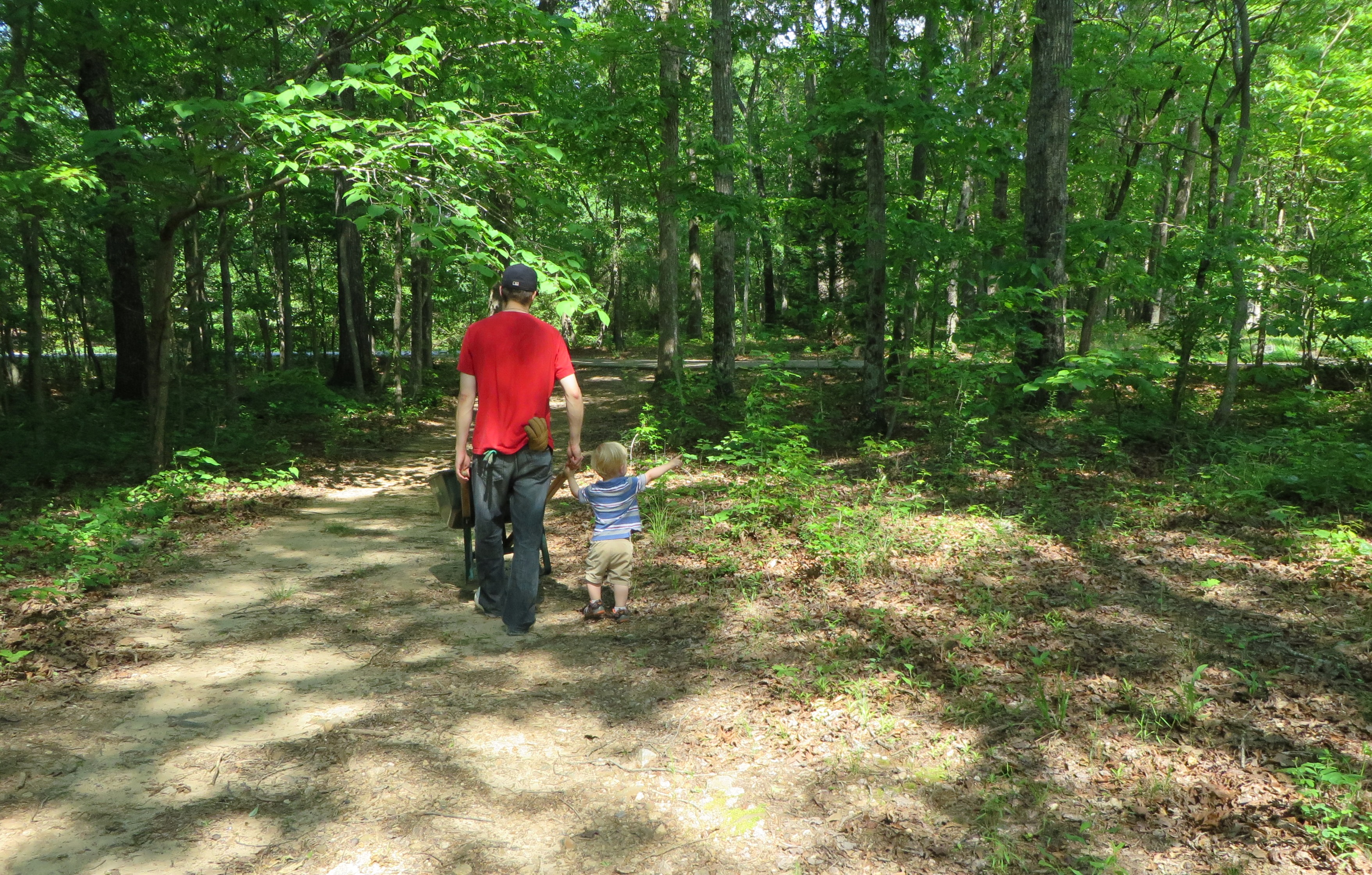
He soon forgot his disappointment — too many other things to see!
Whenever I find myself daydreaming about childhood, I come back to the present refreshed, happy to be an adult with a considerable amount of discretion over my circumstances, as well as power over my own attitude about them. But I do bring with me the awareness of what it was like to believe ardently, to trust completely, to explore joyfully. I remember again that dandelions and clover blossoms are pretty, no matter what grown-ups say, and seeing a bunny or squirrel lightens my heart, even if they are munching on my carefully tended plants.
In most ways I believe the years have been a friend to me, but along the way I definitely accumulated more baggage than I intended to bring into old age. You are welcome to join me in temporarily setting excess baggage down and forgetting the years for a short time. Put on your play clothes and tennis shoes — or just go barefoot. I’ll race you to the garden!
This post was first published seven years ago today. The original post, comments and photo are linked, along with two other related posts, below. These links to related posts, and their thumbnail photos, do not appear in the blog feed; they are only visible when viewing the individual posts by clicking on each one. I have no idea why, nor do I know how they choose the related posts. That’s just the way WordPress does things.
Created for the transcendent

Jeff enjoying the beauty of Lancaster County, Pennsylvania, June 2015
“We were made to enjoy music, to enjoy beautiful sunsets, to enjoy looking at the billows of the sea and to be thrilled with a rose that is bedecked with dew…Human beings are actually created for the transcendent, for the sublime, for the beautiful, for the truthful…and all of us are given the task of trying to make this world a little more hospitable to these beautiful things.” ― Desmond Tutu
The more I understand the great truth of Bishop Tutu’s statement, the more I understand and like other people. One thing I’ve loved most about blogging is the way it has opened my eyes to how many people in the world share common joys and observations about the blessings that surround us in this world, however dismal the news may be. When we look at beautiful things together and share our appreciation, it connects us to each other.
I encourage you to spread happiness by sharing your joy with others. It doesn’t have to be in a blog or book or song or painting; it can be a casual remark to a cashier or mail carrier or person waiting with you at the bus stop. Most of us love to hear someone else making a cheerful remark about the weather or the colorful flowers or anything else worthy of praise, even (and maybe especially) when we are feeling down ourselves.
What are some ways we can make this world a bit more hospitable to these beautiful things?
This post was first published seven years ago today. The original post, comments and photo are linked, along with two other related posts, below. These links to related posts, and their thumbnail photos, do not appear in the blog feed; they are only visible when viewing the individual posts by clicking on each one. I have no idea why, nor do I know how they choose the related posts. That’s just the way WordPress does things.
The experience of a great people

The flags were flying proudly in Lancaster County, Pennsylvania, June 2015
“The flag of the United States has not been created by rhetorical sentences in declarations of independence and in bills of rights. It has been created by the experience of a great people, and nothing is written upon it that has not been written by their life. It is the embodiment, not of a sentiment, but of a history.”
— Woodrow Wilson
As the number of stars on the U. S. flag increased over the years, so have our population, our industry and our government. While not all of the changes and phases have been good or happy ones, few citizens of this country would wish to go back to former times. Nostalgic fondness for childhood notwithstanding, most of us have an easier life than our parents or grandparents could have imagined.
With our nation’s birthday celebration approaching, I’m mindful that today we are at the midpoint of a much more somber anniversary, that of the three-day Battle of Gettysburg fought on July 1-3, 1863. Wilson’s words about the flag having been created by the experience of a great people are true of the painful crucibles of our freedom, as well as the joyous moments of glory and unity.
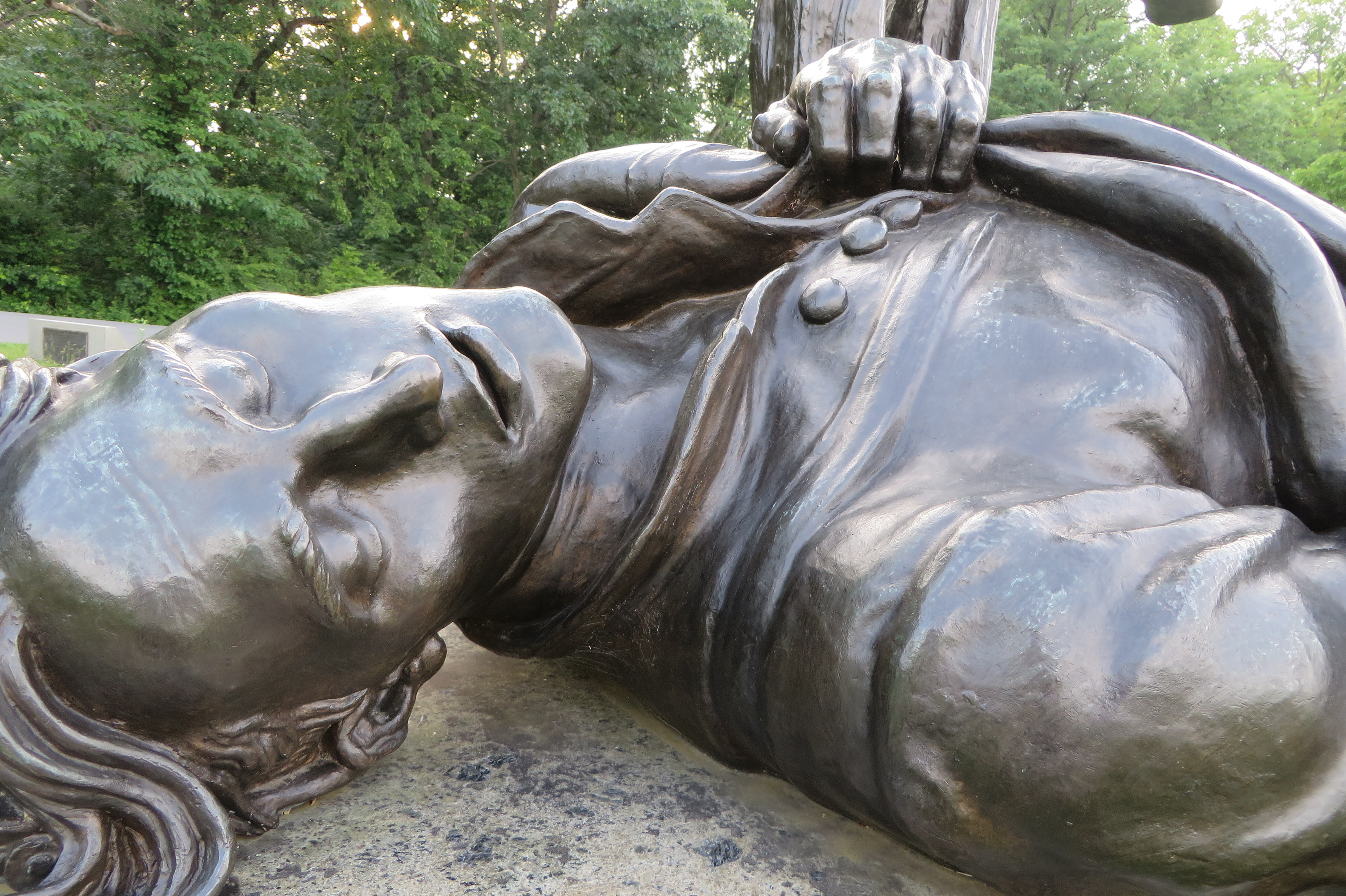
Detail of a monument to a fallen soldier at Gettysburg
There’s a pall of sadness that lingers over the fields of Gettysburg, where so many American lives were spent in the taking of other American lives. In the polarized climate of political argument that dominates so much of the media, it’s easy to wonder whether we could ever be brought to such a state of affairs again.
I hope not, and I trust not. Our flag has survived trial after trial, none more devastating than the Civil War that threatened to destroy our national unity. Such hard-earned lessons are not easily forgotten by those who take the time to examine them. While we celebrate the 4th with picnics, ball games and other fun events, let’s take a few minutes to reflect on the sacrifices of previous generations who gave us the freedom to live unencumbered by the burdens they bore.
Happy Birthday, USA!
This post was first published seven years ago today. The original post, comments and photo are linked, along with two other related posts, below. These links to related posts, and their thumbnail photos, do not appear in the blog feed; they are only visible when viewing the individual posts by clicking on each one. I have no idea why, nor do I know how they choose the related posts. That’s just the way WordPress does things.
Hopeful signs

Tracy Caldwell Dyson is looking in your direction, and so am I!
Self-portrait by Dyson, Expedition 24 flight engineer, International Space Station,
September 2010. NASA photo via Wikimedia Commons.
“I’m looking for some hopeful signs — and something keeps telling me to look in your direction.” — Ashleigh Brilliant
Today is my 800th published post, not counting the special posts linked above. That number becomes more amazing to me the more I think about it. Not only have I been writing that much, but many of you have been reading that much!
This blog contains enough of my words to constitute several full length novels, which is proof that writing a little bit every day can eventually make you an author. Or not. But at least it’s a substantial amount of practice. And those of you who have read most of my posts have now read the equivalent of several full length books, in terms of quantity (no claims about quality implied). At the very least, you have earned my respect for your stamina.
If each of these blog posts had been an annual Christmas newsletter, I would have been sending them out every year since 1215, when noteworthy happenings to report would have included King John signing the Magna Carta, Genghis Khan and the Mongols capturing Beijing, and the birth of Kublai Khan, an event that would have resounding consequences for American high school English students centuries later.
All that to say, I am deeply honored to realize that you have been willing to join me here read my rambling thoughts, and to exchange ideas, observations, jokes, joys and sorrows. For those of you who have been with me steadfastly for over two years, I now have had more contact with you, more frequently, than with almost anyone else I know. Considering that there are some of you whom I’ve still not met face to face, I think that’s a special kind of wonderful.
I got a letter yesterday from my British pen pal, Sue, and we had shared our amazement at having been writing to each other for 25 years now. We have met face-to-face only once, in 2001. Yet our friendship has outlasted many relationships that were largely based on geographic proximity.
Maybe this says something about the power of the written word. Or maybe it means I’m easier to take in writing than in person. Either way, I’m humbled by the many ties I’ve formed through this blog. On a continual basis, I see and hear things that remind me of you. And I have learned so much from you!
I smile so often to think of Sheila (and Bill and Walter and Jack) in their oceanfront home in South Carolina. I think of Merry in Oklahoma and Susan in New Hampshire and Carolyn in Tennessee and Michael in Washington and Mary Ann in California and Bob in Oregon and Cherie in Florida, and I’m literally all over the USA map without taking a step outside my door.
When we visited Lancaster County recently, I thought of Judy when I saw the exquisite crafts, and of Raynard when we went to the Shady Maple. (We weren’t hungry enough for the Smorgasbord, Raynard, but we did enjoy shopping and snacking — and plan to go back one day with bigger appetites! It really is amazing.) We had never been to that part of Pennsylvania, but it felt more familiar than it would have felt even three years ago.
Thanks to Sheila, I know what a Sun Conure is– in fact, I count one among my animal friends now (hello, Walter! 😀 ). Thanks to Boomdee, I know that Canadian rabbits change colors with the seasons. Thanks to Eric, I know those rabbits are called Snowshoe Hares. Thanks to Alys, Michael and others, I know a lot more about the flowers and shrubs I love so much. Sometimes I’ll catch myself saying “I wonder why this plant isn’t blooming? I need to ask Alys” or “What kind of flower is that? Maybe Michael would know…”
I shouldn’t have started naming names, because now so many of you are coming to mind that there’s no way I can write about all of you. When I hear news from around the world, there are so many I’ve met via this blog whose faces come to mind, bringing to life countries where I’ve never had the privilege of traveling. When I pray, I remember the struggles and trials you have shared with me, and ask for blessings in your lives.
Each of you, with your comments or your cheerful Gravatars left at the bottom of my posts, have been part of this online world that has been a source of comfort and joy since the earliest days of Defeat Despair, when our family was coming to terms with lives that had abruptly and unexpectedly and irrevocably changed. Though I don’t post daily now, I still feel connected to all of you every day, and count my associations with you, whether brief or extensive, among the blessings of my life.
I hope you can keep looking here for encouragement. And when I’m in need of reminders of goodness, I know I can look in your direction. As I’ve said so many times– thanks for being here!
This post was first published seven years ago today. Since that time, the British pen pal I mentioned, Sue, came to spend two wonderful weeks with me in late 2019, just before Covid hit the world. In that seven years I also met several of my readers in person. Susan has been to visit me several times. On one visit she went with Matt and me to celebrate Raynard’s birthday, with his wife Mary and dozens of his friends and family at the Shady Maple, a memory I now treasure. Another memory close to my heart is my visit to Judy and Stew and their sweet doggie in Pennsylvania. And those are just a few examples of the gifts this blog has given me.
The original post, comments and photo are linked, along with two other related posts, below. These links to related posts, and their thumbnail photos, do not appear in the blog feed; they are only visible when viewing the individual posts by clicking on each one. I have no idea why, nor do I know how they choose the related posts. That’s just the way WordPress does things.
For a moment

This sweet bird has been keeping me company this month. Alexandria, June 2015
“I once had a sparrow alight upon my shoulder for a moment, while I was hoeing in a village garden, and I felt that I was more distinguished by that circumstance that I should have been by any epaulet I could have worn.” — Henry David Thoreau
Not long ago Jeff called me to the front door to show me a robin’s nest in the cherry blossom branch that extends over our front walkway. It was fairly low, only a few feet from where we pass back and forth underneath many times each day, but the bird nesting there seems unafraid of us or our activity. I suppose suburban birds grow accustomed to human traffic.
I’ve been watching this nest for several days now. It’s set where I can’t get a good photo of it, because the sunlight is always coming into the lens and putting the rest of the picture in the shade, and my little semi-automatic camera doesn’t have the range to compensate for it very well. That’s okay, though, because the important thing is to enjoy seeing the nest with my eyes, while it’s still an active home. I’ve learned from our York “bird condo” (which is what I call the privet hedge where the robins and cardinals like to nest) that these little ones go from egg to hatchling to fledgling surprisingly quickly.
I’ve seen the mama bird (and maybe the papa bird too) standing on the edge of this nest feeding worms to the babies, so I know they have hatched. Since I can’t see inside the nest, I watch daily to see if it’s still attended, just so I’ll know if the babies are still there. I like having the birds making their home so close to ours. It feels friendly and, as Thoreau expressed, it’s also a bit flattering in some strange way.
If it wasn’t for Jeff, I probably would never have noticed the nest at all. Jeff has a sort of radar for the natural world, spotting deer and birds and other critters with an eagle’s eye, though he has a more benevolent interest in them than the raptors do. It’s nice to live with someone who can point such things out to me, because I am always excited to see them, even though I’m not good at noticing on my own.
How about you? Do you have an eye for the natural world? If not, are you lucky enough to have someone around who can act as a scout for you? If you have this type of radar for nature, do you share your observations with others? Some of us are better at seeing than others, but I think most of us do care for animals (and people) when we slow down enough to notice — or when someone else points the way for us.
And sometimes, as with Thoreau, we have the happy experience of having a creature notice us first, and seemingly ask outright for our attention. Such encounters are doubly delightful, and I wish you many of them, along with the eyes and heart to enjoy them.

Update one week later: the babies are growing! Their eyes and beaks are open.
Soon they will leave the nest. Alexandria, June 2015

Second update: the light was good the morning this post published (Thursday),
and I was thrilled to get this wonderful photo of the parent with hungry babies!

Third update, 8:35 am: WHOA! This one started fluffing feathers,
and before I knew it, it was standing up, almost ready to fly away!
I told you they grow up quickly! It sat back down when the worms arrived, though.
And speaking of robins…look what Alys gave me! Enjoy their lovely song here:
This post was first published seven years ago today. The original post, comments and photo are linked, along with two other related posts, below. These links to related posts, and their thumbnail photos, do not appear in the blog feed; they are only visible when viewing the individual posts by clicking on each one. I have no idea why, nor do I know how they choose the related posts. That’s just the way WordPress does things.
Foundations of ease
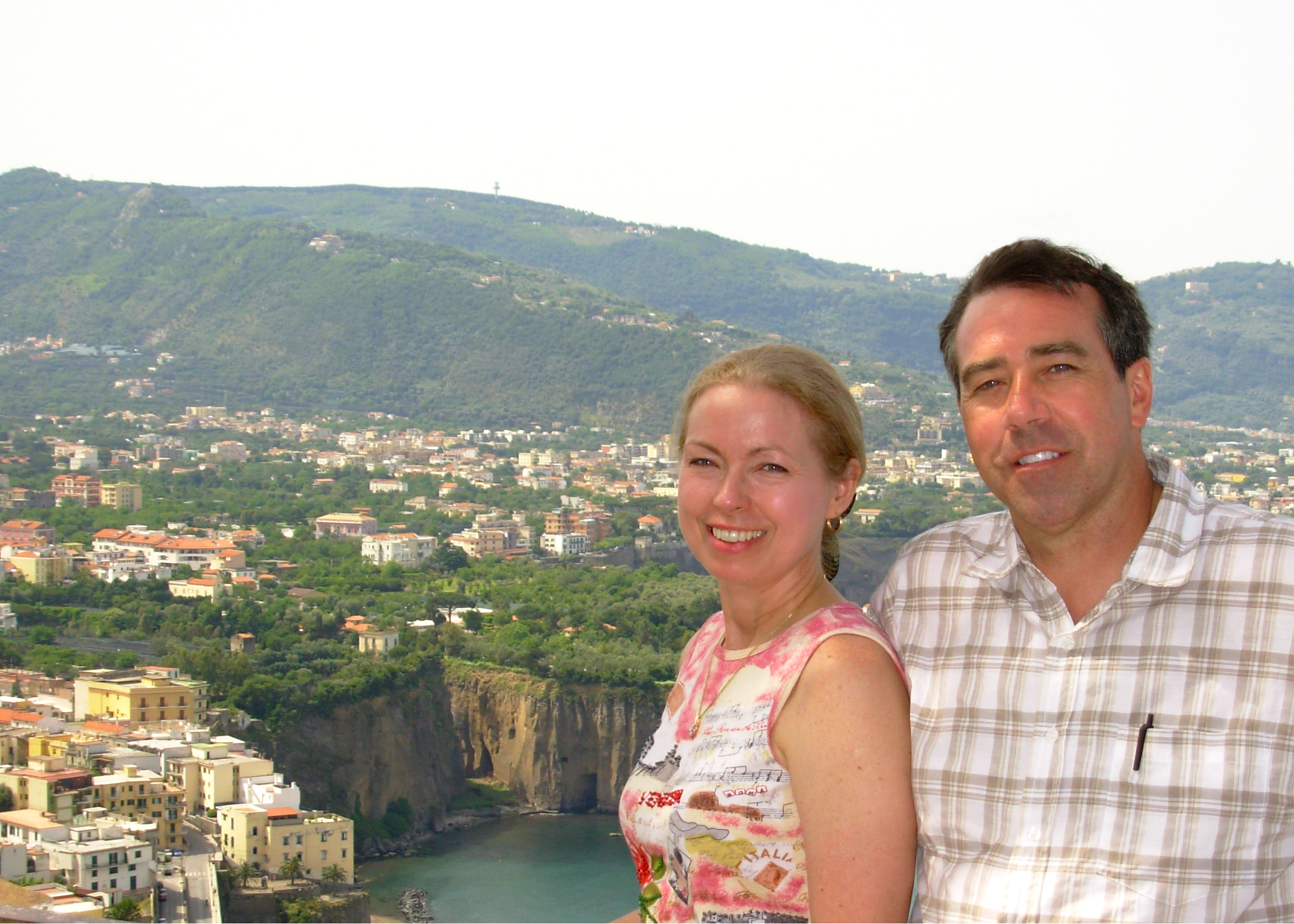
After decades of wishing, our Mediterranean cruise was the vacation of a lifetime.
Jeff and I enjoy the Amalfi Coast of Italy, May 2008.
“Burdens are the foundations of ease and bitter things the forerunners of pleasure.” — Jalāl ad-Dīn Rumi
I had to really think about this one for a few minutes; I wasn’t sure whether it was truth or wishful thinking. Then I remembered the joke about the man who, when asked why he hit himself repeated on the head with a hammer, replied “Because it feels so good when I stop.”
Nobody I know really wishes for burdens or bitter things. Yet some people seem more ready than others to take them on, especially if it means in doing so, they are helping someone else. We tend to label such people as “saints” or otherwise distance ourselves from the expectation that we should measure up to a bar that has been set so high. But no matter how much we try to avoid it, we all end up with cares of our own to endure.
And really, all joking aside, we would not know the meaning of ease if that was all we had ever experienced. Jeff and I are grateful for the relative poverty of the early years of our marriage, when we literally could not afford to eat out even at McDonald’s. Not only did we learn how to enjoy life without spending large sums of money; we also knew how to appreciate the comparative ease that would be ours in the decades to come. When Jeff first finished dental school and got into the Air Force, what some would have viewed as a bare minimum of income felt like wealth to us, and we’ve felt wealthy ever since.
In the same way, the challenges we have faced as parents of a son with significant disabilities have created a unique appreciation for those rare moments we are able to get away together, just the two of us. We don’t have to do anything special at such times for it to feel like a vacation.
I’m sure you have experienced similar levels of gratitude for things that others have always taken for granted. A student who has labored for years toward a degree will someday know just how amazing it is to have evenings and weekends free for hobbies and relaxation. A patient who has suffered through a broken leg or back surgery will have a sharpened understanding of the joy of pain-free movement. A couple who endured the challenges of infertility treatments must have a heightened sense of excitement over a pregnancy or adoption.
Today, think of your own personal burdens and bitter things. In what ways might they be the forerunners of pleasure?
This post was first published seven years ago today. The original post, comments and photo are linked, along with two other related posts, below. These links to related posts, and their thumbnail photos, do not appear in the blog feed; they are only visible when viewing the individual posts by clicking on each one. I have no idea why, nor do I know how they choose the related posts. That’s just the way WordPress does things.
On noticing

They’re beautiful, but don’t try to make soup with them. May 2015
“An idealist is one who, on noticing that a rose smells better than a cabbage, concludes that it makes a better soup.” ― H.L. Mencken
Have you ever noticed that we have a tendency to idealize that which charms us? Because we like the appearance of a product, we might conclude that it’s more functional. If we fall in love with a house we see, we imagine that we’d live a happier life there. When we see actors we admire, we sometimes confuse them with the roles they are playing, forgetting that they might have real-life habits that would drive us crazy if we spent time with them.
It’s natural, of course, to be attracted to surface traits. But a car can run well without being visually appealing, and food can be nutritious and even tasty without appearing particularly appetizing. Somehow, that’s not typically enough for us; we want the whole package. We want and expect things to be perfect, connecting with all our senses in a positive way.
Advertisers know this, of course, and exploit it to devastating effect. Tapping into the power of association, they use images of beautiful people and places to sell everything from beer to deodorant to gadgets to appliances. It’s doubly risky to swallow too many of these messages. Not only can it leave us financially depleted and disappointed by having been sold on more than is actually delivered; it also can build in us an unrealistic level of expectation about pretty much everything, which renders us perpetually discontented with reality.
Next time you’re looking through a catalog or magazine, try to picture how that clothing or furniture or artwork might fit into the context of your own world. How would it look on your body, in your room or on your walls? Have you noticed the gorgeous bathroom photos rarely depict toothpaste, shaving cream, hair care items or other necessities of daily life that will inevitably cluster on our counters? Will everything stay so neatly folded and pressed as it appears in the article about household organization? Or are we buying an illusion?
We come close to perfection surprisingly often in our everyday lives, even if only in a splendid meal now and then, or a well-brewed cup of coffee or tea. As long as we don’t expect that level of delight to generalize to the rest our day, we can treasure such moments as ornaments alongside more mundane experiences. We can enjoy the cabbage soup (or, OK, in my case the tomato basil soup) without expecting it to be as beautiful as a perfect rose, or expecting the rose to give us more than the sheer joy of its fragrance and loveliness.
How can we keep a realistic level of expectation, yet still strive to add joy and beauty to our lives? How can we experience idealism as an asset rather than a liability?
This post was first published seven years ago today. The original post, comments and photo are linked, along with two other related posts, below. These links to related posts, and their thumbnail photos, do not appear in the blog feed; they are only visible when viewing the individual posts by clicking on each one. I have no idea why, nor do I know how they choose the related posts. That’s just the way WordPress does things.
A tree has something to say

The trees greet us each morning. Alexandria, June 2015
“When we are stricken and cannot bear our lives any longer, then a tree has something to say to us: Be still! Be still! Look at me! Life is not easy, life is not difficult. Those are childish thoughts. Let God speak within you, and your thoughts will grow silent.”
— Hermann Hesse
It would be difficult for me to quantify, or even accurately describe, how much solace I have gotten from trees, for as far back as I can remember. As soon as Jeff and I reached a point where we were able to be a bit choosy about where we lived, we prioritized having as many trees as possible to look at from our kitchen and family rooms. Even in California, where trees were far more scarce than they are here in Virginia, we enjoyed having beautiful eucalyptus or willow trees looking back at us from across our yard or just outside our windows.
Once many years ago, when Eric was on a quick layover in San Francisco, I met him in the city and we drove to Muir Woods for a walk. Of necessity, we discussed some heavy, urgent and sad topics related to illnesses among our family members. At one point when we paused to look up into the green cathedral of redwoods overhead, he expressed regret that its beauty was the backdrop for our current preoccupation with worry over our loved ones. “I hope all this talk isn’t messing this up,” he said.
“You can’t mess this up,” I said. “This is way bigger than any of our problems.”
I meant it. The serenity of that timeless glade was a balm to my troubled emotions, more effective than any chemical remedy could have been. And it’s not just the majestic redwoods that inspire me to such transcendent peace. I’m equally comforted by the common trees that light up with the sun each morning, greeting me as I come downstairs to begin my day, whether in York or Alexandria.
As Jeff and I recently celebrated our thirty-fifth wedding anniversary, symbolized by the traditional and modern gemstones of emerald and jade, I am grateful for green in my life, in all its many forms. Whether you find yourself in the midst of summer or winter, I hope you will find some green in your world today, to bring you thoughts of stillness and peace.
This post was first published seven years ago today. The original post, comments and photo are linked, along with two other related posts, below. These links to related posts, and their thumbnail photos, do not appear in the blog feed; they are only visible when viewing the individual posts by clicking on each one. I have no idea why, nor do I know how they choose the related posts. That’s just the way WordPress does things.
In familiar surroundings

There’s no place like home — mine, or yours. Alexandria, May 2015
“As much as I love to travel and see new things, I’m also a homebody. No matter how far I wander, I’m always eager to get back to my own nest. There’s nothing quite as satisfying as the little surprises that can pop up in familiar surroundings. I find a great deal of pleasure right in my own backyard – literally!” — Alison Eads
Summer is a time we usually associate with vacations, but lately I hear frequent references to the “staycation” — enjoying one’s own home by taking quick day trips, hosting festive meals, or simply celebrating the charms of daily life.
Some of us are unable to travel as much as we might like, due to physical or financial limitations. Others of us are finding travel more tiring than it used to be, which enhances the joys of remaining home during the summer.
If you are among those who will be home for most or all of this summer, I invite you to give yourself permission to bring some of the “escape” of travel into your living room or kitchen. Allow yourself extra hours for the things that refresh your soul. Perhaps you can schedule time for crafts, decorating, visiting with friends, writing letters, or quiet reflection. Then follow that schedule as you would a vacation itinerary.
And by all means — if you take some “staycation” photos, send us a virtual postcard to share here!
This post was first published seven years ago today, long before Covid-19 made us practice the ideas here for longer than any of us would have imagined. The original post, comments and photo are linked, along with two other related posts, below. These links to related posts, and their thumbnail photos, do not appear in the blog feed; they are only visible when viewing the individual posts by clicking on each one. I have no idea why, nor do I know how they choose the related posts. That’s just the way WordPress does things.
In the tiny corners

Sometimes the news is good — let’s celebrate!
I photographed this window display in the tiny corner of Mt. Airy, North Carolina, May 2015.
“What God does in the tiny corners of our day-to-day lives is stunning and gorgeous and headline-making, but we have a bad habit of saving the headlines for the grotesque and scary.” ― Shauna Niequist
Today, let’s shine the light on the headline-making happenings in the tiny corners. I’ll start with a few of my own, and then you can send me some from your own tiny corners of the world.
SNAPDRAGON JEFF PRONOUNCED DEAD COMES BACK TO LIFE AND BLOOMS
BIRDS PROVIDE BETTER-THAN-USUAL BACKGROUND MUSIC FOR WRITING
MORNING GOES SMOOTHLY; DAY STARTS WITHOUT ANYTHING BIG GOING WRONG
WEATHER STILL COOL ENOUGH TO ENJOY BEING OUTSIDE UNTIL AT LEAST 10:00 AM
TEA AND NECTARINES TASTING BETTER ALL THE TIME
OK, your turn. Send me some headlines. Let’s use the tabloid approach to spin these beautiful, overlooked happenings into a din of celebration. NO EXPERIENCE NEEDED – BAD CREDIT OK – LIMITED TIME — ACT NOW!
This post was first published seven years ago today. The original post, comments and photo are linked, along with two other related posts, below. These links to related posts, and their thumbnail photos, do not appear in the blog feed; they are only visible when viewing the individual posts by clicking on each one. I have no idea why, nor do I know how they choose the related posts. That’s just the way WordPress does things.
To number our days

More candles, more light by which to see.
Blue candles on birthday cake by Joey Gannon, CC BY-SA 2.0, via Wikimedia Commons
“Teach us to number our days, that we may gain a heart of wisdom.”
— Psalm 90:12 (NIV)
Jeff’s days are numbered. But so are mine, and yours, and everybody’s.
One of the benefits of slamming face-first into the reality of our own mortality is implied in the verse above. I’ve found that many of the things that once bothered me seem laughably minor now. Others, while still serious, have been put into perspective.
This is a lesson we began to experience in depth when Matt was born and struggled to survive his first week of life. The passing years made it ever clearer. Still, it wasn’t until Jeff’s diagnosis that we realized our insight never was as clear as we thought it was.
It’s an oft-repeated cliché: it takes a crisis to open our eyes to what really matters. As with so many other platitudes (“you’ll understand when you’re older” or “just wait until you have children of your own” or “when you have your health, you have everything”) we eventually find out that these bromides are watered down from profound experiences.
The good news is that we don’t have to endure crisis firsthand to learn from it. Long before illness and death touched us personally, I believed (though not completely understanding) that there is wisdom in acknowledging the uncertainty and brevity of life. History, literature, and theology all carry powerful teaching to guide us in honoring the gift of life wisely.
Even for those of us who believe this life is a way station, a passage into eternity, the idea of death is not normally appealing. I’ve found, though, that the older I get, the more I can feel the promised “peace that passes understanding” about the inevitability of physical decline and death. As the years pass and the candles on our cakes grow more numerous, I hope the added light they give is a symbol of the spiritual illumination that comes from the wisdom of numbering our days.
This post was first published seven years ago today. The original post, comments and photo are linked, along with two other related posts, below. These links to related posts, and their thumbnail photos, do not appear in the blog feed; they are only visible when viewing the individual posts by clicking on each one. I have no idea why, nor do I know how they choose the related posts. That’s just the way WordPress does things.
After all

Angels home game, Edison Field, April 2003
Though we know
everything is bounded
by time,
there is, after all,
baseball,
in which time has its function,
but does not rule.
— from the poem “National Pastime“ by Bill Mayer
Break free of time today, or sometime soon, even if only for a few minutes. A baseball park is an ideal place to do that — little league, high school, AAA, even a deserted lot with aging wooden bleachers. If you can’t go to a diamond in person, go there in your mind, perhaps via the poem linked above, ably read by Garrison Keillor.
“Time has its function, but does not rule.” Among many other lessons it teaches us, this is perhaps baseball’s finest truth.
This post was first published seven years ago today. The original post, comments and photo are linked, along with two other related posts, below. These links to related posts, and their thumbnail photos, do not appear in the blog feed; they are only visible when viewing the individual posts by clicking on each one. I have no idea why, nor do I know how they choose the related posts. That’s just the way WordPress does things.
Silence sings
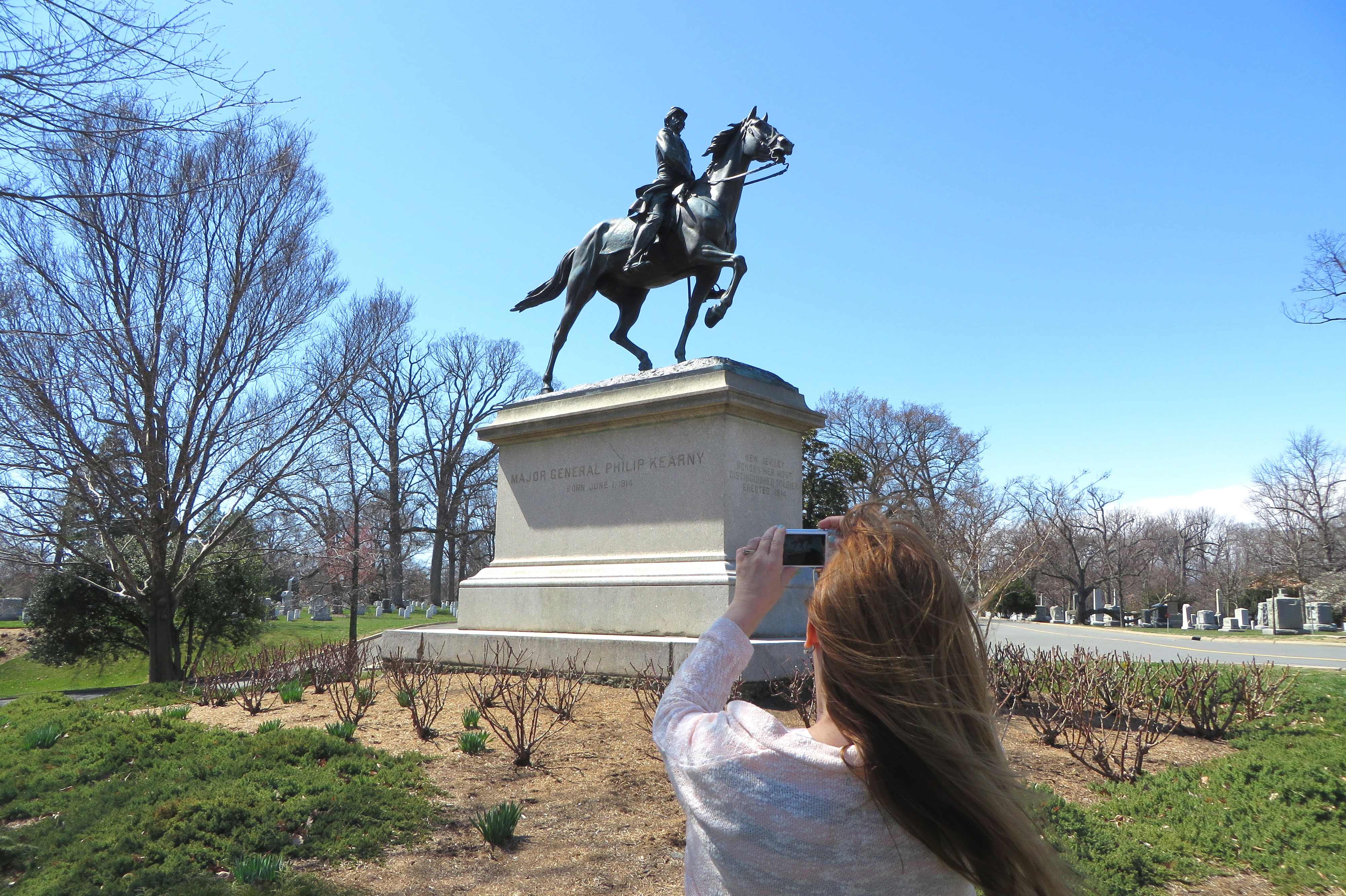
March 2015: Kelly photographs the monument to Philip Kearney,
who lost his arm, and later his life, in the U.S. Army.
“The dead soldier’s silence sings our national anthem.” — Aaron Kilbourn
Today, on Memorial Day, I hope you will join me in listening.
This post was first published seven years ago on May 25, which was Memorial Day that year. The date was adjusted for this re-posting so that it would appear on Memorial Day weekend.
The original post, comments and photo are linked, along with two other related posts, below. These links to related posts, and their thumbnail photos, do not appear in the blog feed; they are only visible when viewing the individual posts by clicking on each one. I have no idea why, nor do I know how they choose the related posts. That’s just the way WordPress does things.
Changing so fast

NASA image, public domain via Wikimedia Commons
“Things are changing so fast that what we once called ‘science fiction’ we now call ‘current events.’ “ — Ashleigh Brilliant
Ashleigh penned that thought in the late 60’s, before humans ever walked on the moon. Yet now his words are more true than ever, which paradoxically demonstrates that the more things change, the more they stay the same.
But really, have you ever stopped to wonder what your ten-year-old self would have thought if someone had come to visit you from the future, and told you all about now? Could you have imagined the internet, digital photography, smart phones, or the availability of hundreds of TV channels, shows, and movies on demand, viewable on a variety of portable devices? What about medical advances such as fully functional artificial limbs, or robotic heart surgery? Dick Tracy’s radio watch and Maxwell Smart’s shoe phone would have seemed unimpressive in comparison.
On the other hand, not all of the news from the future would have sounded appealing. Drones. Terrorists. Environmental disasters. Ebola. Identity theft. The Kardashians.
The good old days weren’t always good for everyone, and not good at all for some of us. But some of the trade-offs of progress seem dubious at best. Those of us who remember reading 1984 or Brave New World in high school have lived to see some features of those dystopic nightmares coming true, or at least close enough to be worrisome.
Still, I wouldn’t go back, even if I could. Would you? What technology would you miss most if you were suddenly transported back to the world of your childhood? What “current events” of today remind you of “science fiction” of years past? And what futuristic notions that now seem impossible might be commonplace in our grandchildren’s world? Beam us up!
This post was first published seven years ago on May 28. The date was adjusted to allow the Memorial Day post of 2015 to appear this weekend.
Reading over this post again, I’m struck by the fact that much of what has transpired in the past three years alone would not have seemed possible to me when I first wrote this post only seven years ago. It’s quite a sobering thought, since most of the events I would never have believed have not been good ones.
The original post, comments and photo are linked, along with two other related posts, below. These links to related posts, and their thumbnail photos, do not appear in the blog feed; they are only visible when viewing the individual posts by clicking on each one. I have no idea why, nor do I know how they choose the related posts. That’s just the way WordPress does things.
Flowerbeds with edibles

Locally grown produce for sale in Sonoma County, California, May 2003
“Creating your own urban farm is as simple as planting your flowerbeds with edibles.” — Greg Peterson
Given my failures at trying to keep the squirrels out of our tomatoes, I tend to doubt that it’s as simple as Peterson makes it sound. Still, I find the idea intriguing. I don’t want to give up my flowerbeds, but maybe there is space for a few edibles alongside them.
This quote is more interesting to me after an experience I had last week at my parents’ home near Atlanta. My brother Al was cooking dinner for Mama and Daddy, and he invited me to go out and pick kale with him. To my surprise, he did not lead me down to the large garden area at the rear of their lot. Instead, he pointed me to a square yard of ground beside the patio, just outside the back door, where his sons planted kale several years ago. Apparently those plants have been growing, being harvested, and putting food on their table ever since.
I’m normally not a fan of kale, but I know it’s trendy now, and I got a kick out of picking it. Al cooked it up with some pasta, herbs and Parmesan, and I have to admit I really enjoyed it. It was one of the few times I have eaten anything (other than a tomato) that I literally picked myself less than an hour earlier.
This was not an urban setting by any stretch of the imagination, but that patch of kale could easily be fit into a tiny urban lawn or flowerbed. Have you ever created a windowsill herb garden, or a tiny vegetable patch in a small urban or suburban yard? Tell us your success stories! We’ll all be healthier and happier if we can eat food that is more fresh, local and nutritious. And you can’t get much fresher or more local than right outside your door.
This post was first published seven years ago today. Since that time, I have moved to a neighborhood that features a fenced community garden where one can rent a small raised bed for a very low yearly fee, and grow one’s own vegetables with the convenience of full sun and irrigation for easy watering. There is even a greenhouse adjacent to the slope filled with neighbors’ gardens. I keep saying I’m going to have a vegetable garden there one day. Meanwhile, I’ve enjoyed the fresh vegetables from neighbors, and I love visiting the community garden where friendliness grows right alongside the produce.
The original post, comments and photo are linked, along with two other related posts, below. These links to related posts, and their thumbnail photos, do not appear in the blog feed; they are only visible when viewing the individual posts by clicking on each one. I have no idea why, nor do I know how they choose the related posts. That’s just the way WordPress does things.
We are all storytellers

At eleven months old, Matt had no scar on his chest. July 1986
“We are all storytellers, photojournalists of lives that are rich with tears, bruises, tenderness, strangeness and humor. There’s nothing wrong with shooting smiles and holidays and rituals, but life isn’t a marketing campaign. More interesting stuff is going on. That’s your job as a photographer – to shoot the world as it is. Remember that you have a story to tell and that the camera, honestly used, has a way of staring without being rude.” – George Lange
When I look at this photo, I don’t see a cute bathtub scene. I see an 11-month old infant about to undergo a nightmarish surgical trauma necessary to save his life, and his 27-month-old brother who cannot fully grasp what will happen, but who will nonetheless be indelibly influenced by the fear, uncertainty, and disruption of everyday life that lies ahead in the coming months and years.
I remember going into the bathroom to take this photo because I wanted a shot of Matt’s chest before it was cut open. I didn’t really care that he would have a scar running from just below his neck to the bottom of his rib cage, but I did want to capture a memory of the baby who had not yet known that kind of suffering; the tiny boy who was still untouched by the first of many wounds to come. Of course, I also was keenly aware that this little one might not survive to have another bathtub photo taken.
I’m sure there are many who might wonder why I would even keep, let alone celebrate, a photo that brings back the memory of such fear and sorrow. But the baby did survive, as did his brother and mother and father, and their story is “rich with tears, bruises, tenderness, strangeness and humor.”
I am certain that anyone who is reading this also has a story to tell, a story equally tender and strange and rich with joy and sorrow. My wish for you is that you will remember your story, all of it, and use your camera or art or music or words to commemorate your journey.
Your story matters.
This post was first published seven years ago today. As I schedule this post, less than two weeks before it will be re-published, that baby in the picture is now a 36 year old man. He has had countless surgeries, including the five heart surgeries that involved the cutting open of his sternum, and he survives as a witness of God’s grace, as well as the amazing progress of heart surgery during his lifetime. For example, he is scheduled for a third replacement of his tricuspid valve next week, and we are hopeful it can be done by a catheter procedure that will spare him heart/lung bypass and the trauma of midsternal incision that was necessary the first two times it was replaced.
The original post, comments and photo are linked, along with two other related posts, below. These links to related posts, and their thumbnail photos, do not appear in the blog feed; they are only visible when viewing the individual posts by clicking on each one. I have no idea why, nor do I know how they choose the related posts. That’s just the way WordPress does things.
The years teach us
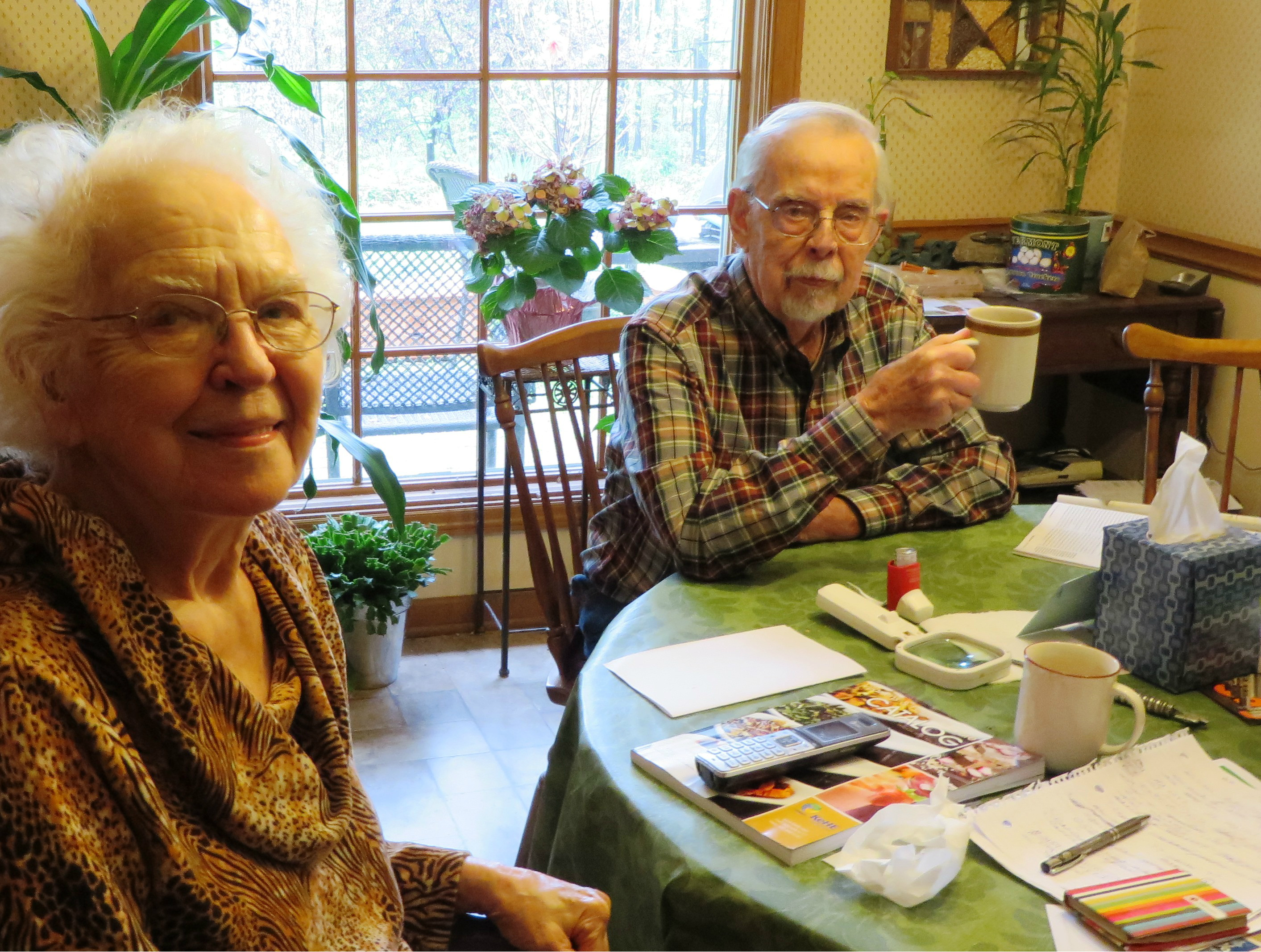
Comparing this photo to the one featured here, I think my folks have held up well. April 2015
“It is very strange that the years teach us patience – that the shorter our time, the greater our capacity for waiting.” ― Elizabeth Taylor (the novelist)
One of the great blessings of having parents who live a long time is the ability to learn from them about how to handle what lies ahead. As my siblings and I are all old enough to be AARP members,* we’ve moved through many of the stages we remember watching our parents negotiate, marveling at how young we feel now compared to how old we once thought adults in this phase of life must be.
The challenges of growing older are slightly different for each person, of course, and everyone differs as to which aspect of aging is most easily handled. But there is little doubt in my mind that one of the most important qualities to have when we pass into the latter half of life is patience. Fortunately, life itself ensures that we will have this quality, if we are blessed to reach our senior years.
I suppose those who can’t learn patience probably are more likely to succumb to accidents, disease, or strokes and heart attacks. It’s as if patience is a sort of screening device. We may as well learn it, because we will need it in ever-increasing measure.
Truthfully, my Daddy always seemed fairly patient to me. My busy and accomplished Mama, not so much. Yet Daddy has grown even more patient over the years, and Mama surprises me at how well she endures (often with a smile or a laugh) things that once would have driven her mad. Looking at them now, I realize two things: one, a long life is a mixed blessing that requires great endurance, and two, I hope Jeff and I are able to find out what it’s like to enjoy that blessing for ourselves, mixed though it inevitably will be.
Those of us facing or enjoying retirement have been, often unconsciously, learning from our elders all of our lives. Most of those lessons have been good ones. I hope we all remember and honor the ones who have made this difficult journey a few years ahead of us, lighting our way with grace, a sense of humor, and the deep conviction that life is good.
—————
*not that any of us actually are AARP members, but just saying…
This post was first published seven years ago today. And I still miss my Mama and Daddy every day. The original post, comments and photo are linked, along with two other related posts, below. These links to related posts, and their thumbnail photos, do not appear in the blog feed; they are only visible when viewing the individual posts by clicking on each one. I have no idea why, nor do I know how they choose the related posts. That’s just the way WordPress does things.
My garden of thoughts and dreams

You’re just in time to come with me on the Yorktown Garden Stroll!
“In my garden there is a large place for sentiment. My garden of flowers is also my garden of thoughts and dreams. The thoughts grow as freely as the flowers, and the dreams are as beautiful.” — Abram L. Urban
This year, the Yorktown Garden Stroll was scheduled a month early, in April instead of May. There weren’t quite as many flowers to admire, but the lovely little historic village is charming any time of year, and the weather was absolutely perfect for a leisurely walk. Hosts on the tour offered refreshments and friendly chat along with displays of their gardens, and naturally I ended up at my favorite of the homes on the program: the festive dwelling where my friend Darla lives with her family.
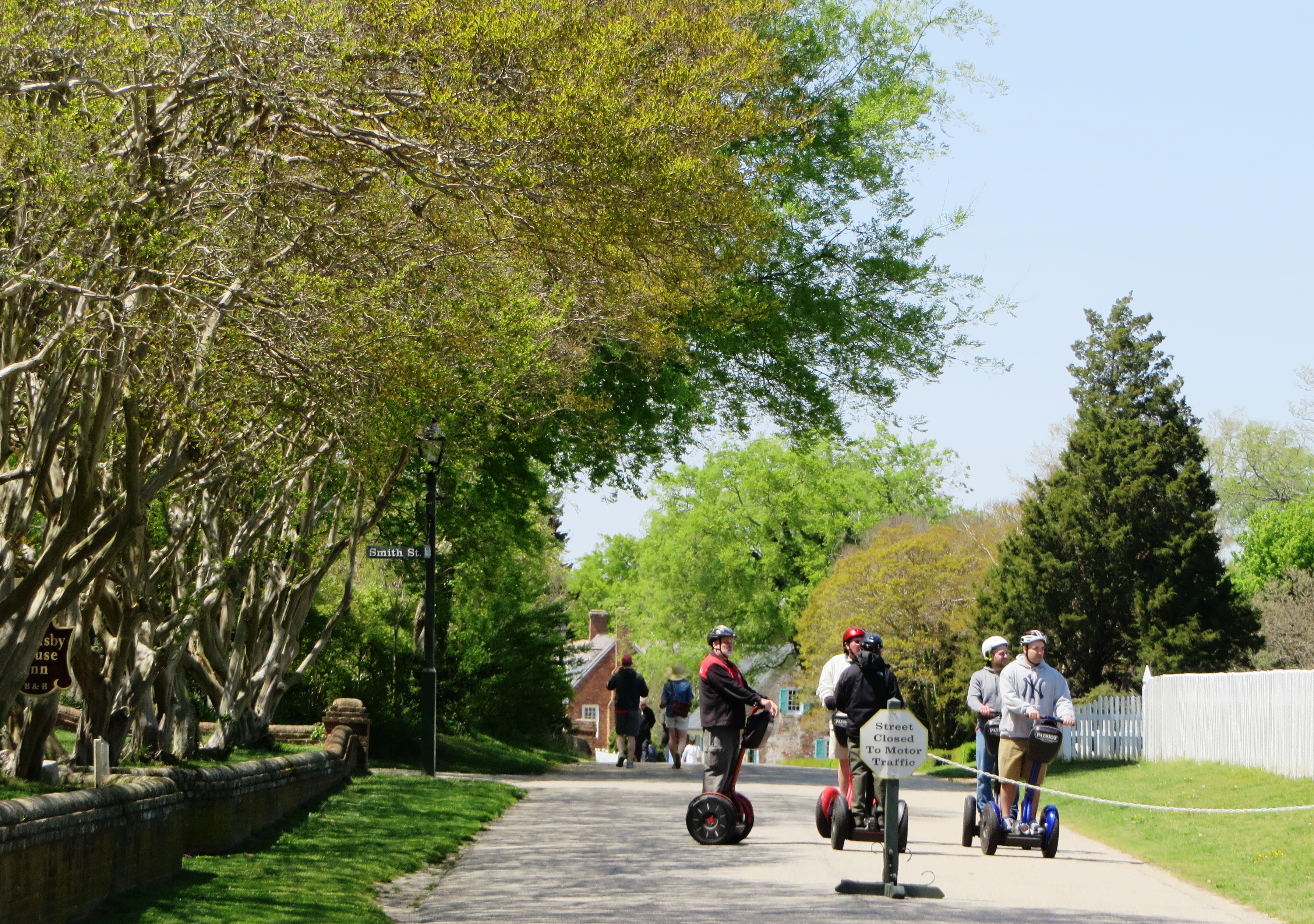
Every time I visit the historic district of Yorktown, I tell myself that I ought to spend one or two afternoons each week there. I think our little hometown is one of the best-kept secrets in America. What you won’t find there: noise, crowds, commercial hype or lavish, costly restaurants and nightspots. What you will find there: flowers, trees and birdsong in abundance, lovingly restored homes, friendly people, a gorgeous riverfront view with a white sandy beach, and unparalleled historic significance.
The hours I spend in the historic district are filled with thoughts and dreams, as I wander its streets and gardens. After nearly eleven years of calling this county my home, there is a large place for sentiment, just as Urban describes. Come along with me and see a few glimpses of it through my eyes…
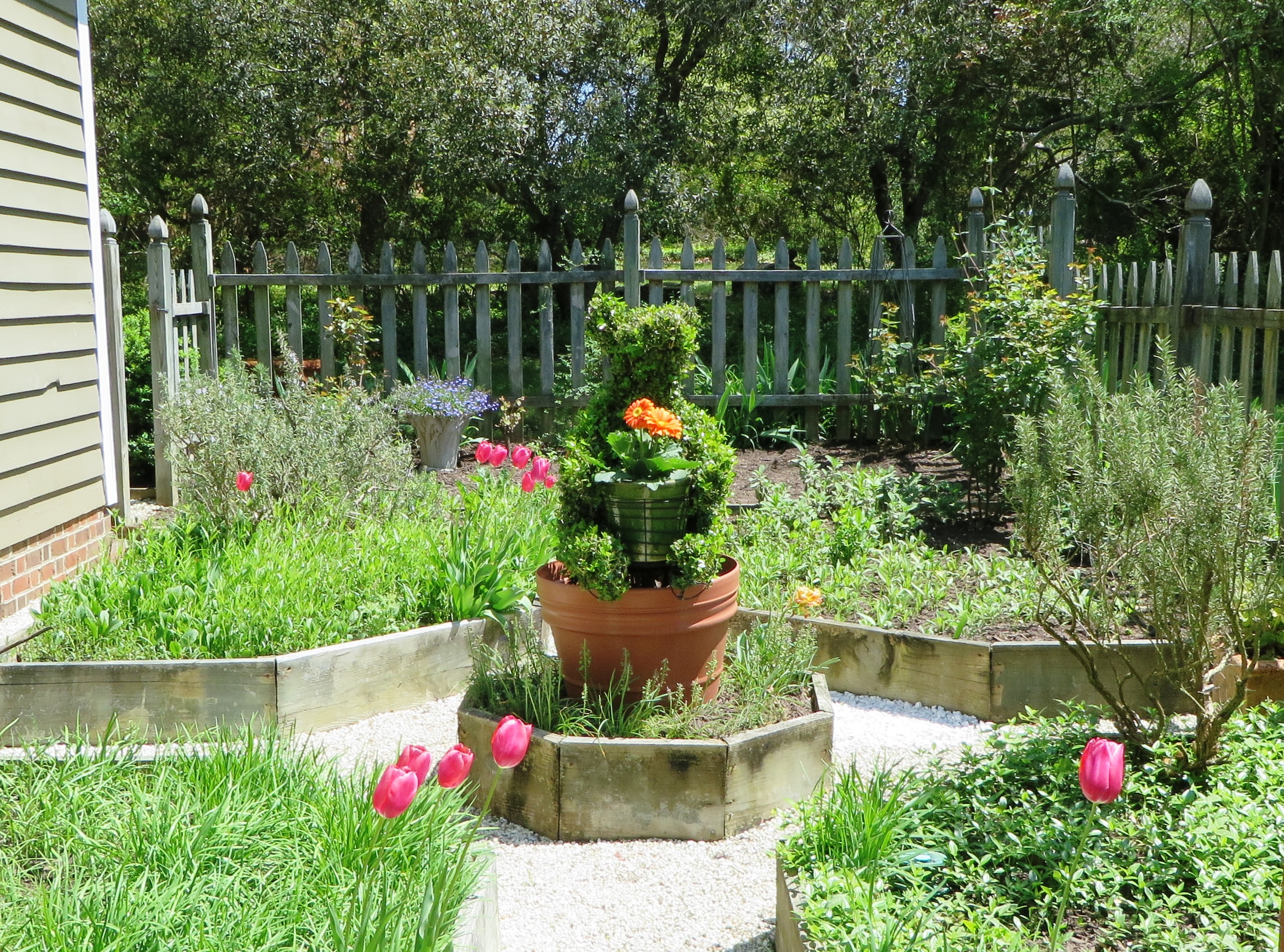
as we wander through the gardens…
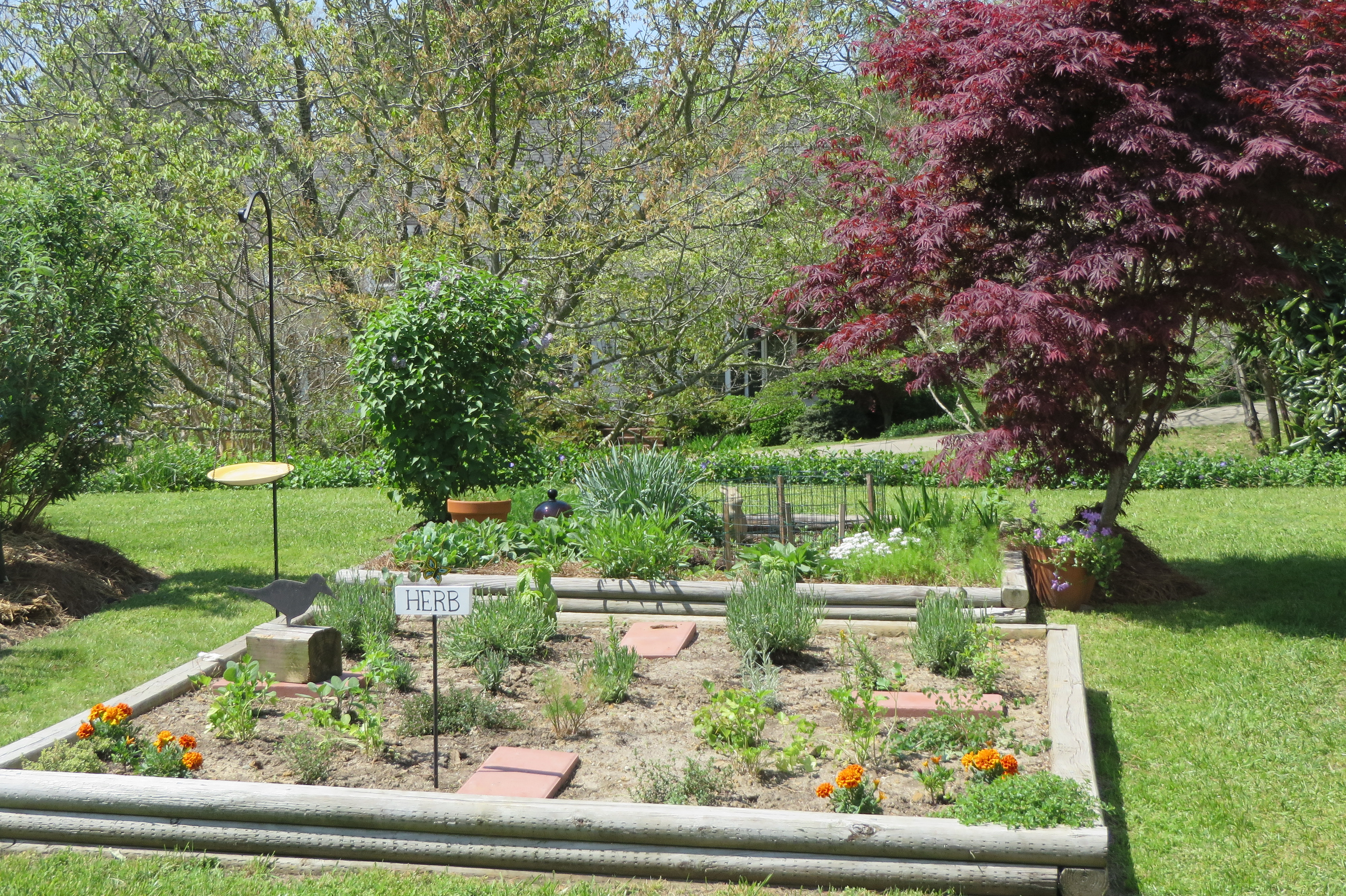

…or in town, visiting historic buildings and galleries featuring local artists’ work.
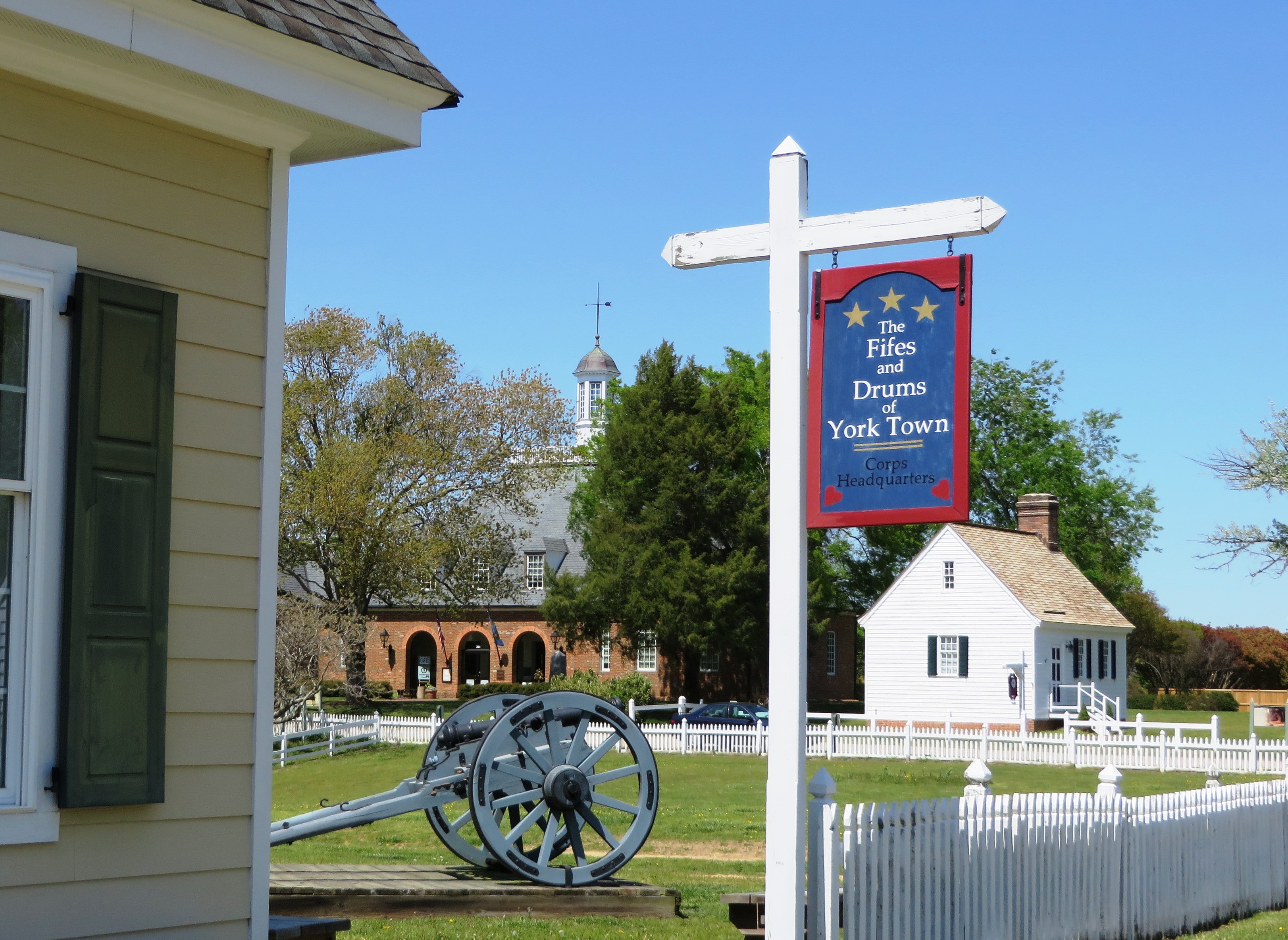

I never tire of walking here, but you can take a Segway if you prefer.
Wait! We haven’t been down to the beach or the waterfront shops!

But I guess there’s no time for that today…maybe another day. Let’s head back to Darla’s for a look at her herb garden.
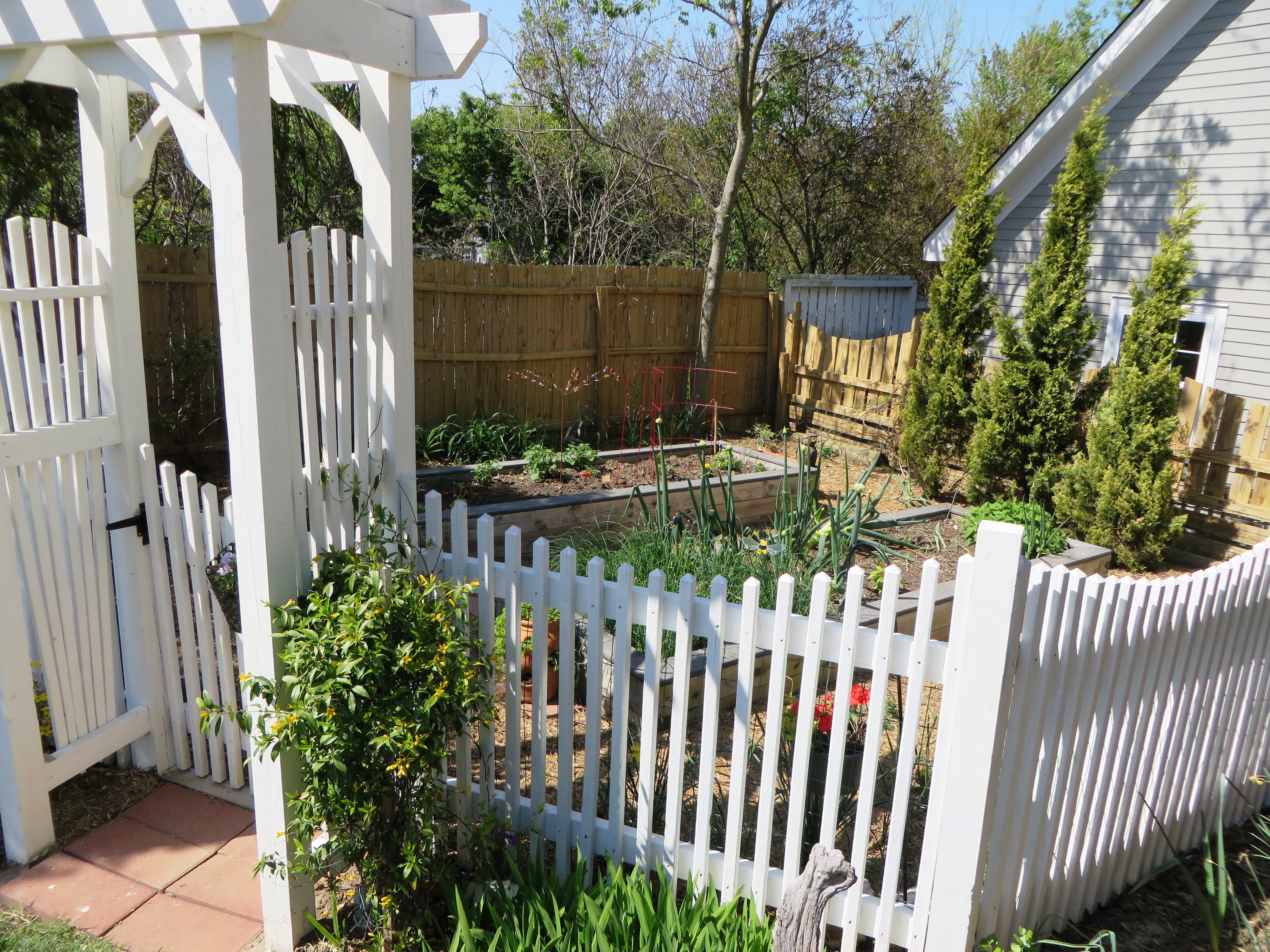
She’s taking a break at her next door neighbor’s home — let’s pop over and say hi!

Just a few steps away from Darla’s front door is a staircase to the beach! A great place to go before tea, or after tea, or both!
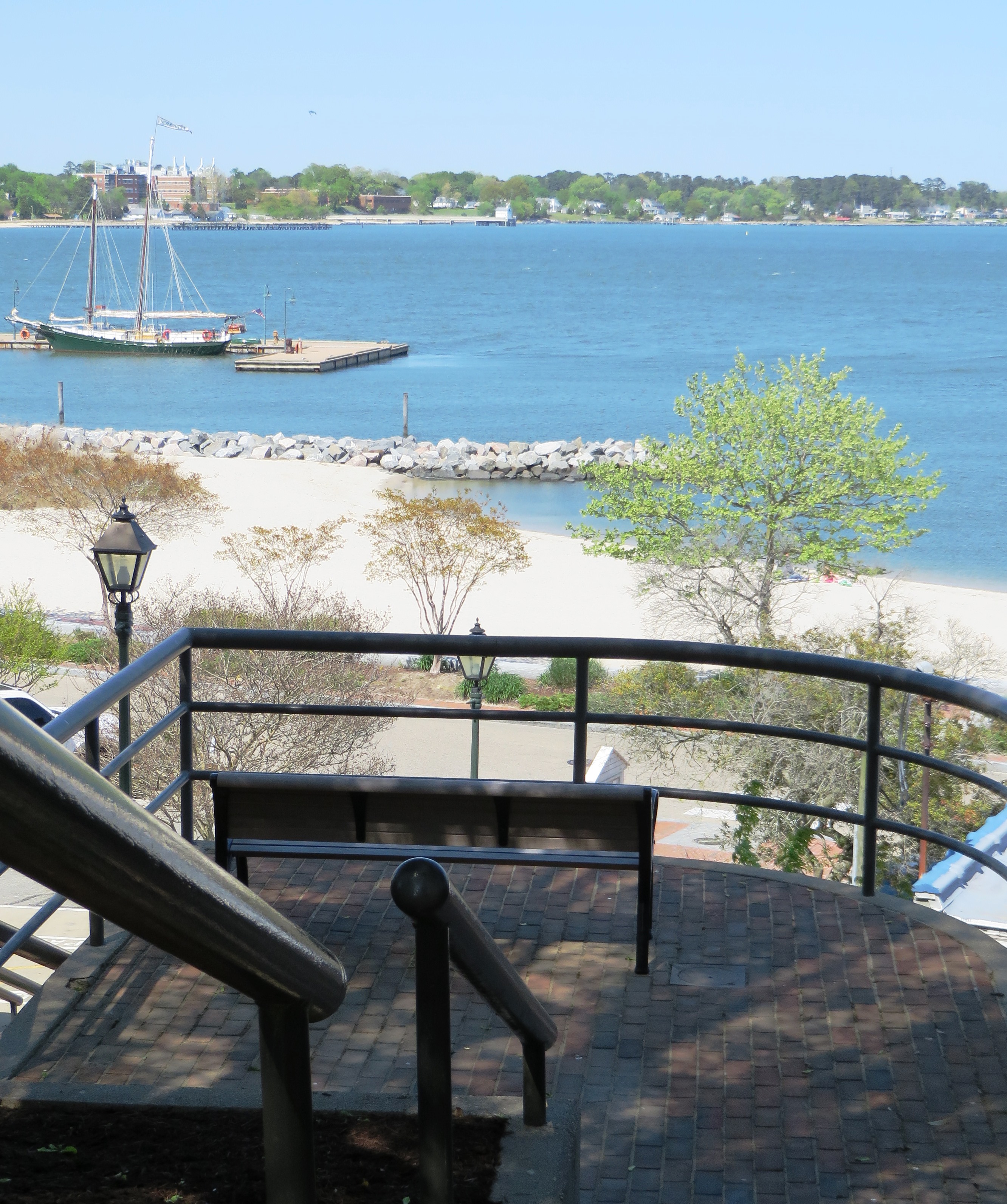
Darla’s neighbors across the street have quite a view, don’t they?

WOW, where did the afternoon go? Let’s come back sometime soon!
This post was first published seven years ago today. The original post, comments and photo are linked, along with two other related posts, below. These links to related posts, and their thumbnail photos, do not appear in the blog feed; they are only visible when viewing the individual posts by clicking on each one. I have no idea why, nor do I know how they choose the related posts. That’s just the way WordPress does things.
The best baby-sitters

Even toddlers seem more adept at computers than some of the Baby Boomers. April 2015
“The best baby-sitters, of course, are the baby’s grandparents. You feel completely comfortable entrusting your baby to them for long periods, which is why most grandparents flee to Florida.” ― Dave Barry
OK, you can blame this post on Jeff. I preempted the post I had originally scheduled for this date, because Jeff told me that I was creating too many posts about flowers. “Hmmm,” I thought, “What on earth could be more interesting than flowers?” The answer, not surprisingly, was “Grady!” Now, of course I realize that Grady is way more interesting to me than to anyone who is likely to read this, but that’s just one of the perks of being the blogger, hee-hee.
As regards Dave Barry’s quote above: the first part is true. The second is certainly not ALWAYS true, since I would never flee to Florida to escape our grandson. In fact, it would more likely work the other way if we didn’t already live so far from them. But I take every opportunity I can to go see them, and it just so happens that I have some recent photos of a night I actually was able to babysit for Grady for just a couple of hours.
The time flew by! In fact, by the time I was able to pry Grady away from my new touch screen computer, which he promptly figured out how to work about as well as I know how to work it after having had it since Christmas, we barely had any time left for the usual grandparent-grandchild activities such as reading books, singing songs and trashing the house.
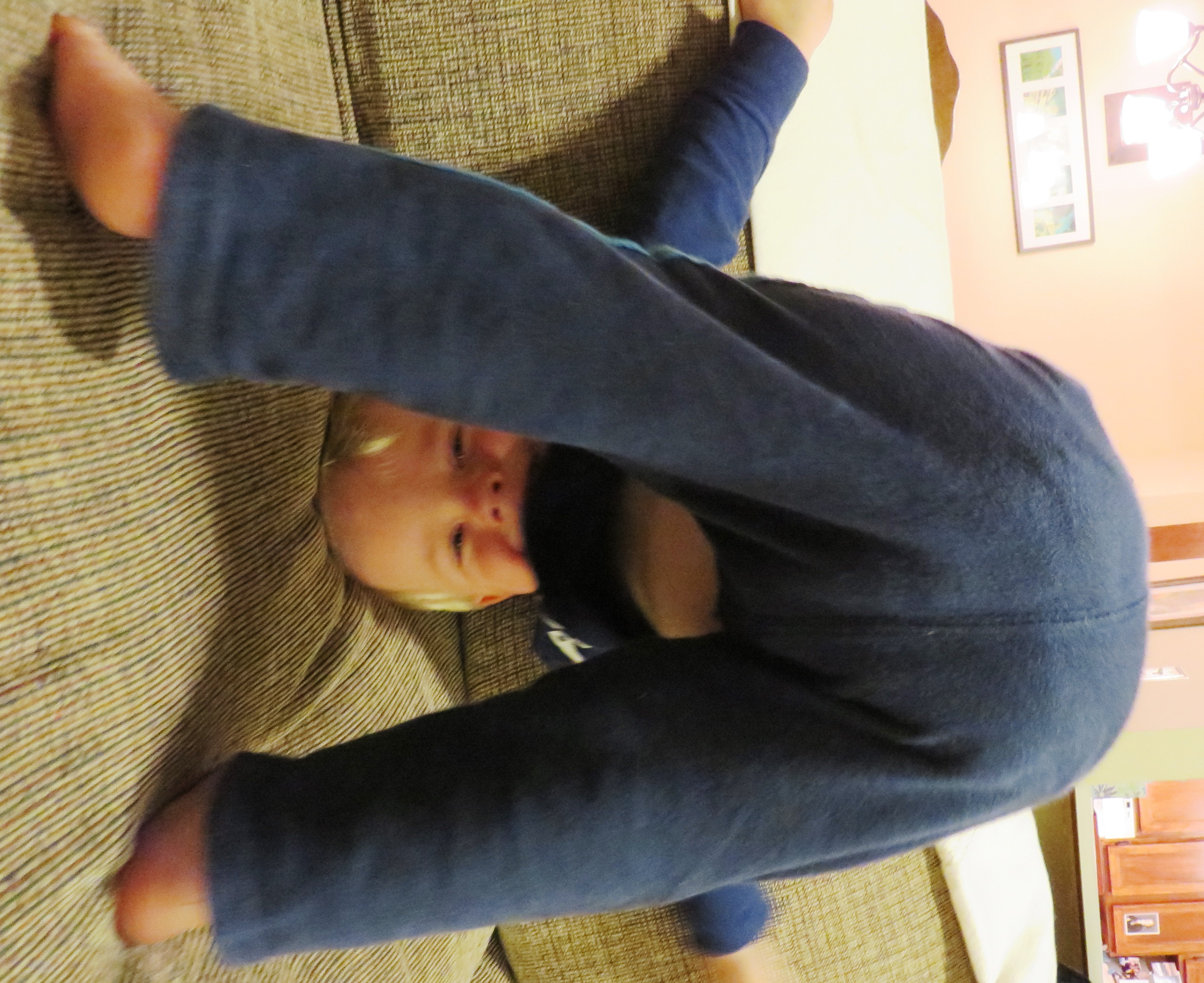
Grady strikes a favorite playtime pose.
But we did manage to squeeze in some time for one of Grady’s new favorite activities, blocks. As you can see in this video clip, Grady is not only attentive to the instructions I gave him (NOT!), but also finds novel ways to improve on my ideas. I got even with him though, since he obviously thought I was setting up a Skype session with PaPa there at the end, when really I was just filming his cute little face for posterity.
At nearly 21 months old, Grady already is adept at convincing me to disregard his bedtime. We were totally busted when Mom and Dad came home at 9:30 (bedtime was 9) and found us still reading bedtime stories. Fortunately, the best people for whom to baby-sit are your own children. They tend to be quite patient with a little rule-bending as long as everyone stays safe and happy, and they get a break from the stress that inevitably comes with even the most loving relationships. They generally appreciate having a little time away from the baby, too.
This post was first published seven years ago today. The original post, comments and photo are linked, along with two other related posts, below. These links to related posts, and their thumbnail photos, do not appear in the blog feed; they are only visible when viewing the individual posts by clicking on each one. I have no idea why, nor do I know how they choose the related posts. That’s just the way WordPress does things.


 Defeat Despair