To west of West

Jeff and the boys on one of our evening walks along a canyon trail near our home.
Vandenberg Air Force Base, sometime in 1990.
“Lands there are to west of West,
Where night is quiet and sleep is rest.
Guided by the Lonely Star,
Beyond the utmost harbour-bar,
I’ll find the heavens fair and free,
And beaches of the Starlit Sea.
Ship, my ship! I seek the West,
And fields and mountains ever blest…”
— J. R. R. Tolkien
I think I would have loved California under pretty much any circumstances, but our earliest days there were absolutely magical. When we left for the west coast in January 1990, we had just passed from one of the most difficult periods of our lives, and driving through the rocky Gaviota Pass felt like the transition from one world to another; a new world more wild, remote and unknown, full of adventure and a paradoxical serenity.
We lived on a lovely street on Vandenberg Air Force Base, in a modest little house where we would spend some of the happiest times of our lives. Down the street from our home, not even half a mile away, was a trail with expansive views of the surrounding wilderness. There was abundant pampas grass lit up by the setting sun (Matt is holding a stalk in the photo), and from one point, we could glimpse the Pacific Ocean.
That trail became a favorite place for evening walks. Though we never saw the mountain lions or coyotes others said they had seen there, it still felt like a small wilderness trek each time we went for a walk along the unpaved path. It was wonderful to have an enchanted kingdom close enough that we could go strolling there any evening we chose.
Vandenberg was a fabulous place for young boys to live; there were huge, deserted beaches with dunes and tide pools and Titan missile launches, and we saw more deer, raccoons and other wild animals there than we have seen anywhere before or since. (The terrible Painted Cave Fire just south of us that year drove huge numbers of animals to seek refuge to the north.)
The Air Force has taken us to some wonderful places we learned to call home, but no time is quite as cherished in our memory as those wonderful years of our sons’ early childhood in one of the most uniquely beautiful places on earth.
We made friends there who have stayed with us in our hearts to this day (and some of them probably will read this post and remember right along with me). Our sons’ young playmates are grown now, and many of them have children of their own. I wonder if they think of those years as fondly as we do?
When I look back on a life full of blessings for which to feel grateful, our years on the rugged central coast of California always come to mind. Those fields and mountains are indeed “ever blest” in our remembrance.
One year ago today:
This post was first published seven years ago today. The original post, comments and photo are linked, along with two other related posts, below. These links to related posts, and their thumbnail photos, do not appear in the blog feed; they are only visible when viewing the individual posts by clicking on each one. I have no idea why, nor do I know how they choose the related posts. That’s just the way WordPress does things.
Reasonable and right
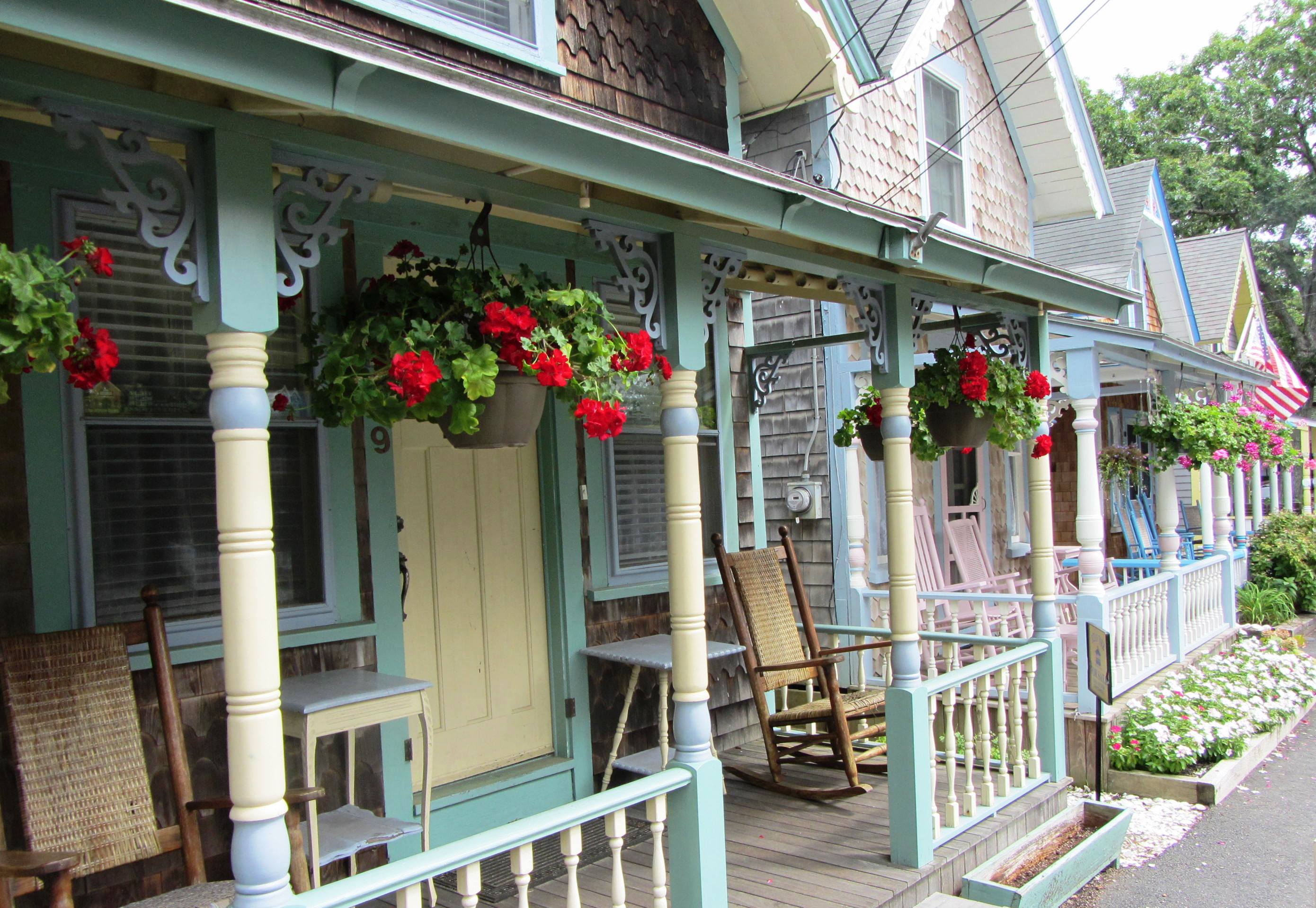
These are historic Martha’s Vineyard Cottages are compact and charming. September 2012
“…it is reasonable and right that men should strive to make the useful wares which they produce beautiful just as Nature does; and that they should strive to make the making of them pleasant, just as Nature makes pleasant the exercise of the necessary functions of sentient beings. To apply art to useful wares, in short, is not frivolity, but a part of the serious business of life.” — William Morris
One year ago today my post was about my love of romantic Victorian decorating, and how it might seem to be at odds with my growing conviction that simplicity is the answer to many modern dilemmas. As I wrote then, I’ve learned to enjoy such frilly delights without needing to own, dust, or maintain them, especially now that there are abundant online images to enjoy through Pinterest and other social media.
In recent months I’ve been particularly drawn to learning more about the “tiny house movement,” as it is sometimes described. I have no delusion that I am anything close to ready for such radical downsizing, but I still think it’s a fascinating concept worthy of attention. One facet of this lifestyle that I find appealing is the attractive design of many of these tiny abodes. Maybe it’s because, as a child, I dreamed of having my own little playhouse of about the same size and design.
Certainly the cottages of the Martha’s Vineyard Camp Meeting Association, pictured at the top of this page, are far too large to be considered tiny homes. Yet they are considerably simpler than the homes belonging to us and most of the people we know, while possessing a unique charm that many newer, more ostentatious homes lack.
William Morris, who is quoted above, produced high quality furnishings normally associated with wealthy or upper middle class consumers. But note that Morris (an ardent socialist) said nothing about size, quantity or monetary value; rather, his emphasis was on the marriage of beauty and utility; the combination of aesthetics with practicality. Perhaps his ideal is echoed in the delightful designs of the cottages pictured above, and in the cute coziness of many of the tiny homes springing up across the country and around the world.
For the majority of us who are not ready for such a drastic departure from the norm, there are some helpful lessons to be learned from those who are choosing this path. You’ll find more food for thought in this post, titled “The top 10 tips I’ve learned from minimalists” at Lara’s blog, The Extraordinary Simple Life.
Advertising may have influenced us to associate beauty with excessive spending and prestige brands, but economic and ecological concerns are causing many of us to re-think our ideas about what is necessary and desirable. Contrary to what we may have been told, practicality and beauty are not mutually exclusive, just as material possessions and happiness don’t always go hand in hand.
Since I have enjoyed dividing our time between two “normal” size homes, I would have a long way to go– and lots of belongings to shed– before I could live full time in a tiny house, or even a gingerbread cottage. But I applaud these modern pioneers of a new (old) way of life, who are proving that frugal does not have to be frumpy, and downsizing can be delightful.
One year ago today:
Turrets, dormers and tchotchkes
This post was first published seven years ago today. The original post, comments and photo are linked, along with two other related posts, below. These links to related posts, and their thumbnail photos, do not appear in the blog feed; they are only visible when viewing the individual posts by clicking on each one. I have no idea why, nor do I know how they choose the related posts. That’s just the way WordPress does things.
A condition of survival

Big Ben and Parliament, quintessential symbols of orderly British discipline and punctuality. August, 2005
“If you do the same thing every day at the same time for the same length of time, you’ll save yourself from many a sink. Routine is a condition of survival.”
– Flannery O’Connor
One of the most insidiously risky aspects of dealing with chronic illness and frequent hospital trips is the disruption to routine. Since I’m a person who has never much liked the idea of routine, nor been as disciplined about maintaining a set schedule as Jeff is, I had thought maybe this disadvantage would affect him more than it does me.
But I should have realized that he is far better at creating his own internal routine than I am. I’m still floundering a bit, feeling overwhelmed and vaguely anxious. I aspire to the wildly popular British maxim someone unearthed from an old, mostly uncirculated World War II motivational poster: “Keep calm and carry on.” Unfortunately, I have a hard time answering the question: “Carry on…with what exactly?”
It’s not that there is no time available, it’s that I’m unfocused when I do have time, not certain which of many backlogged tasks should be prioritized. Life has been unpredictable lately, and the continual adjustments to our schedule leave me feeling disoriented and tired even when I have little to show for the day.
For now I’m just riding the waves, trying to take it easy on myself and hoping things will stabilize soon. But I’ve learned to have a whole new respect for the value of routine in our lives. Perhaps I’m kidding myself, but I imagine that if and when our lives return to some semblance of normalcy, I will be eager to embrace the structure that has been so intrinsic to Jeff’s life for as long as I’ve known him.
What are your reactions to O’Connor’s quote above? Do you find routine to be boring or beneficial? Exhausting or energizing? Does getting up early make structure and discipline easier? Or are high achievers just naturally morning people who make it look easier for them than it really is? Feel free to offer up any handy hints or life hacks that might help me get back on track.
One year ago today:
This post was first published seven years ago today. The original post, comments and photo are linked, along with two other related posts, below. These links to related posts, and their thumbnail photos, do not appear in the blog feed; they are only visible when viewing the individual posts by clicking on each one. I have no idea why, nor do I know how they choose the related posts. That’s just the way WordPress does things.
To welcome and help

Matt with Darla and Nathan Hill, President, Kiwanis Club of Williamsburg, April 2014
“One of the marvelous things about community is that it enables us to welcome and help people in a way we couldn’t as individuals. When we pool our strength and share the work and responsibility, we can welcome many people, even those in deep distress, and perhaps help them find self-confidence and inner healing.”― Jean Vanier
I’ve written here before about our friend Darla, and the difference one person can make in the lives of others. In that post, I quoted Mother Teresa urging people to act as individuals rather than looking to leaders for direction. Today’s quote is from her friend and kindred spirit, Jean Vanier, who emphasizes what can be achieved when people work together in community.
For many years now, Matt has been a member of the Aktion Club chapter affiliated with the Kiwanis Club of Williamsburg, Virginia. I can’t say enough about this wonderful organization, which enables Matt and other adults with disabilities to work alongside Kiwanis Club members in community service projects. The camaraderie and self-esteem that can only come from such teamwork has been invaluable for Matt and so many others.
As people become more and more involved with extended work hours, electronic entertainment and other distractions, I sometimes fear that our churches and community organizations will suffer from dwindling participation, volunteers and resources. It would be sad if the many benefits provided by such groups are curtailed at a time when they are needed more than ever.
I am deeply grateful for the people of Kiwanis and other groups who have worked together to enrich Matt’s life with belonging and joy. I’m thankful for the many volunteers who work to provide food and shelter for homeless people and animals, serve in hospitals and schools, and tutor children and adults learning to read. I appreciate the countless unsung heroes who give to our communities in so many ways without recognition or monetary reward. Why do they do it? I think most would say that they gain as much or more than they give in such efforts.
Is there a local group that could use your help, or a service program to which you’ve been drawn? When we reach out to others who need us, we deal a double blow to despair, lifting someone else’s spirits as well as our own.
One year ago today:
This post was first published seven years ago today. The original post, comments and photo are linked, along with two other related posts, below. These links to related posts, and their thumbnail photos, do not appear in the blog feed; they are only visible when viewing the individual posts by clicking on each one. I have no idea why, nor do I know how they choose the related posts. That’s just the way WordPress does things.
You fall in love
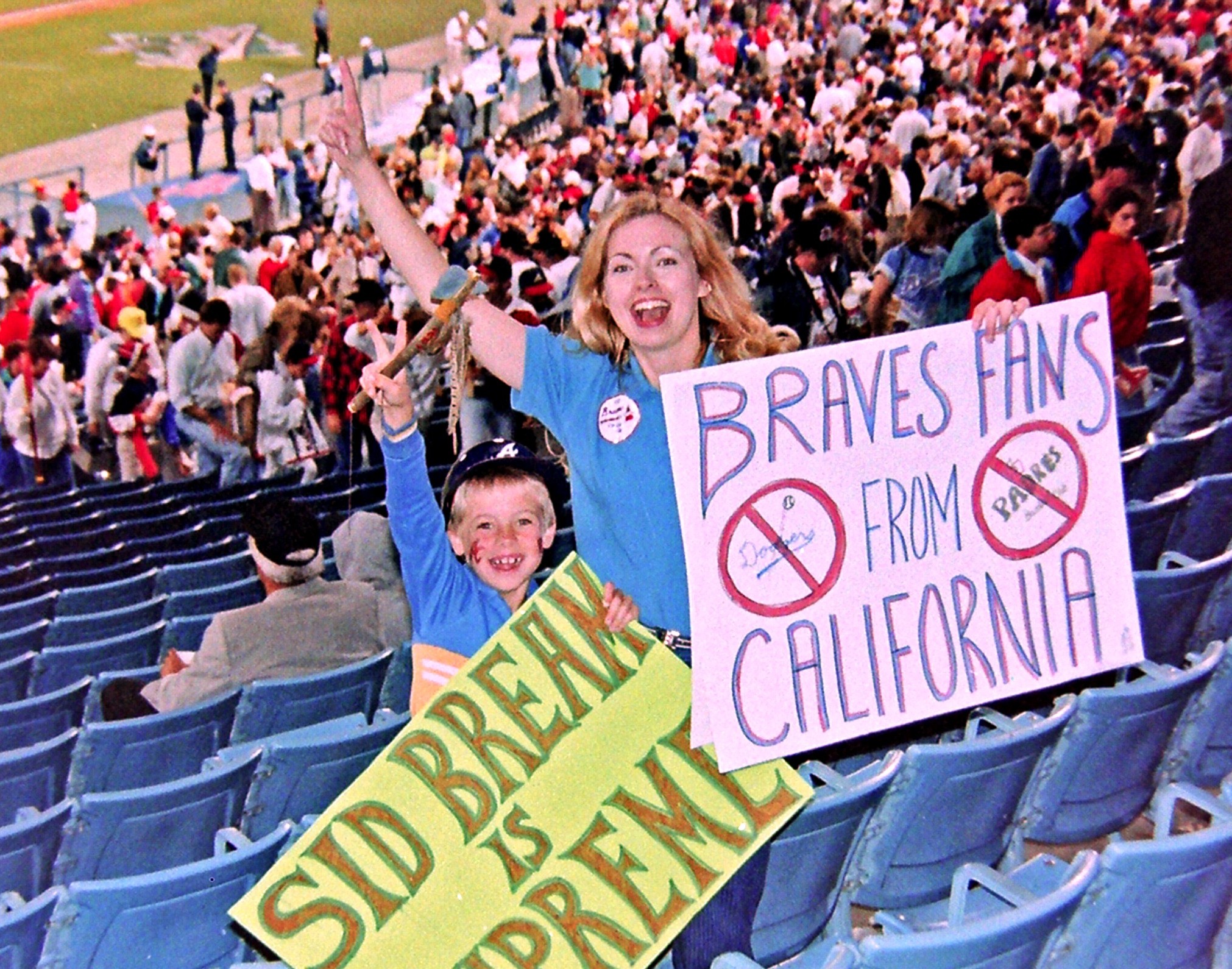
It was exciting even before the game started! World Series Game 3, October 1991
“You may glory in a team triumphant, but you fall in love with a team in defeat. Losing after great striving is the story of man, who was born to sorrow, whose sweetest songs tell of saddest thought, and who, if he is a hero, does nothing in life as becomingly as leaving it.” ― Roger Kahn
For fans of baseball and/or underdogs, 1991 was a great year. In an unprecedented turn of events, both teams in the World Series that year had finished last in their divisions the previous season. This “worst to first” fairy tale produced what some historians call the greatest World Series ever.
I didn’t know we’d be witnessing that sort of history when Drew, Matt and I boarded a plane at Santa Barbara, CA in October 1991, bound for Atlanta and World Series game three, the first-ever World Series game to be played in my hometown. I only knew that seven-year-old Drew and his Dad had been having a baseball feast all year, with Drew’s beloved Oakland A’s just slightly more esteemed by him than his baseball-loving Granny’s favorites, the Atlanta Braves.
My mom had gotten us some tickets from a scalper a business contact, and my nephew Ryan joined us for what was more like a massive party than a ball game. The game lasted twelve innings and a then-record time of four hours, four minutes, with never a dull moment. I will always remember how it felt to watch David Justice slide into home plate in a close call for the winning run. The stadium erupted into elated screams as total strangers hugged each other amid a deafening roar.
The Braves went on to lose the series in seven games, after winning all three home games and losing all four of the away games. There must have been something extra-special about that “worst to first” hometown spirit that made the difference for both teams that year.
Having grown up in Atlanta, I was more than accustomed to watching the Braves lose, despite Hank Aaron’s thrilling, record-setting home runs and a stadium affectionately known as “the launching pad.” But no defeat was ever as heartbreaking, yet still exhilarating, as the well-played loss of the 1991 World Series. Nearly 23 years later, I still feel the way I did then; despite the agony of a close defeat, it was just as good as if they had won.
To this day, some say the series was lost on a bad call. But none of that matters now; the loss was far more edifying a lesson for Drew and me — and I suspect, for many others too. To watch these players, so disappointed yet magnificently graceful in defeat, was to fall in love with a team that would go on to win a record 14 straight division titles. For all their victories, though, it was their 1991 loss that won even the most jaded hearts of Atlanta, and much of the baseball-loving world.
Have you ever experienced a bittersweet loss that felt almost as good as a win? Do you know anyone who has seemed more heroic in defeat than they might have seemed in victory? In the poetic toast of George L. Scarborough, “A hard-fought failure is a noble thing! Here’s to the men who lose.”
One year ago today:
This post was first published seven years ago today. The original post, comments and photo are linked, along with two other related posts, below. These links to related posts, and their thumbnail photos, do not appear in the blog feed; they are only visible when viewing the individual posts by clicking on each one. I have no idea why, nor do I know how they choose the related posts. That’s just the way WordPress does things.
Amid the trials

Some of our azaleas as photographed on Easter morning, April 2012
“How fair is a garden amid the trials and passions of existence.” — Benjamin Disraeli
We’ve now owned our York home nearly ten years, longer than we have ever owned any property. Among the many features of the home I’ve treasured, the azalea garden in our back yard is a favorite. Countless times that little triangle of ground has brought me joy, consolation, or gratitude for its beauty.
Year in and year out, through good times and bad, it’s been there for us to plant, transplant, weed, prune, clean up, photograph, stroll around and generally enjoy. Pasha is buried in the corner by the fence, surrounded by evergreen shrubs and flowers.
This photo was taken from our deck, but our bedroom windows also have a nice view of the garden. There are camellias, dogwoods, rhododendron, peonies and other plants, but it’s unquestionably the azaleas that dominate in the spring and fall. Their steadfast presence decorates our lives and feeds our spirits, and I’m so happy we have not had to move away and leave them.
What features of your own home or garden do you most enjoy?
One year ago today:
This post was first published seven years ago today. The original post, comments and photo are linked, along with two other related posts, below. These links to related posts, and their thumbnail photos, do not appear in the blog feed; they are only visible when viewing the individual posts by clicking on each one. I have no idea why, nor do I know how they choose the related posts. That’s just the way WordPress does things.
The way you see

This 2007 addition to the Royal Ontario Museum in Toronto
gives us a stark reminder of how different past and future can be. May 2009
“Your past is important because it brought you to where you are, but as important as your past is, it is not nearly as important as the way you see your future.”
― Tony Campolo
Some of us are fascinated with history, seeing many lessons in the past, and finding much to like there. Others of us see history as irrelevant, and take no time or thought about what has gone before. Campolo’s quote emphasizes that the past could never be irrelevant, since it made things what they are today. At the same time, he wisely reminds us that our real business in the present will be determined to a greater extent by how we see the future.
Depending on how you grew up, you may want to get as far away as possible from your past, or you might want a very similar life to continue for you, albeit with a few modern updates. How might either view affect your present life? Can an overly close attachment to your past make you reluctant to embrace the changes that time inevitably brings? Or can a strong desire to leave (maybe even flee or escape) the past lead to reckless decisions or foolish bridge-burning?
Campolo seems to suggest here that we should give the future, rather than the past, more influence on our daily lives. We cannot undo or re-live the past, but we can substantially improve our own futures if we live in optimism that is unconstrained by baggage from earlier times. Whether we are saddled with overly high expectations from having enjoyed more freedom or riches than we now have, or burdened with bad memories of unhappiness we endured long ago that makes us dread the coming years, we need the clarity that comes from seeing that the future can be as different from the past as we care to make it.
How do your ideas about the past and the future influence your behavior each day? Do you look forward with more anticipation than dread? Which attitude is most likely to make for a happy, productive day today?
One year ago today:
This post was first published seven years ago today. The original post, comments and photo are linked, along with two other related posts, below. These links to related posts, and their thumbnail photos, do not appear in the blog feed; they are only visible when viewing the individual posts by clicking on each one. I have no idea why, nor do I know how they choose the related posts. That’s just the way WordPress does things.
That faint semblance
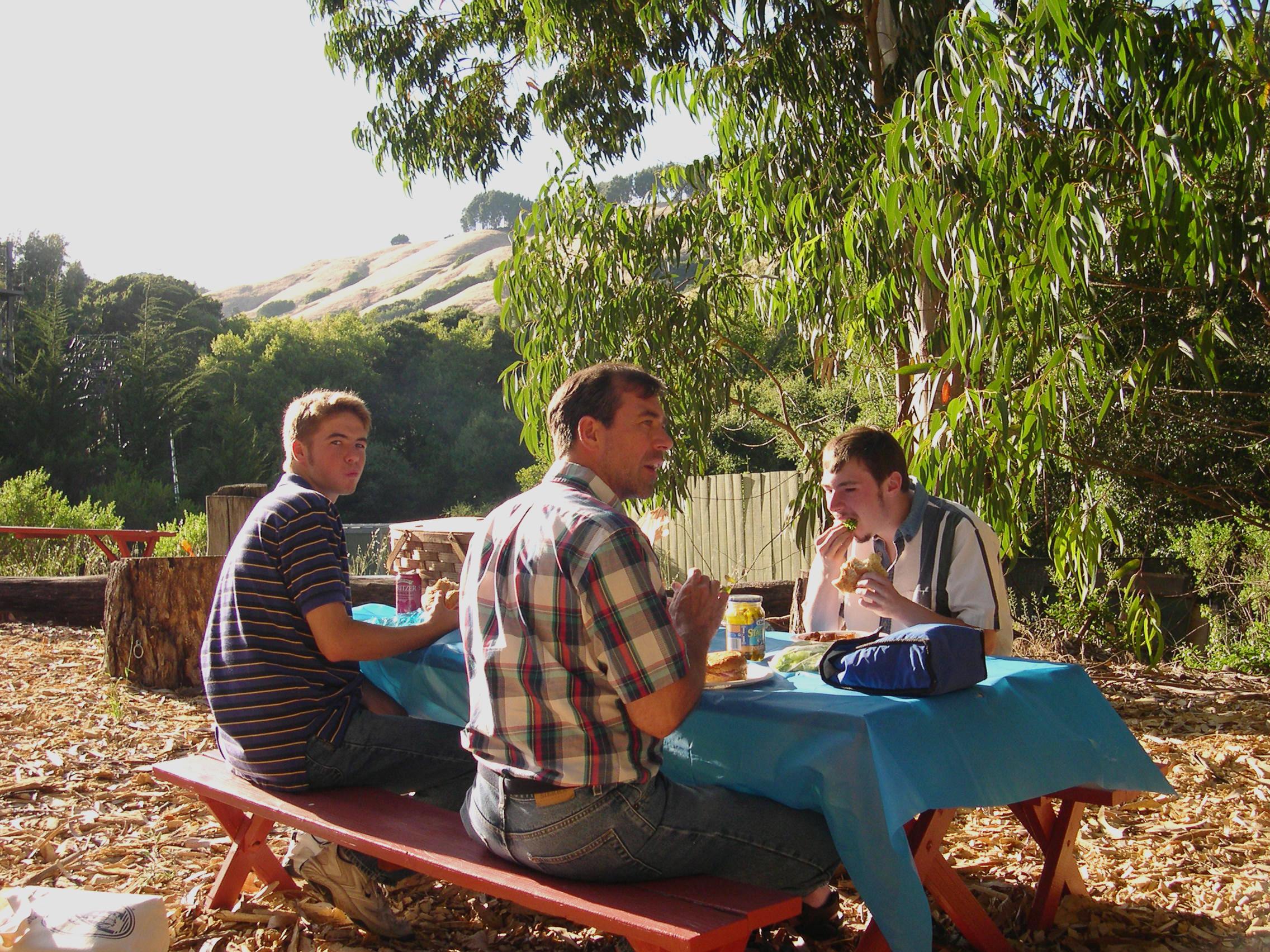
Jeff, Drew, Matt and I enjoyed a picnic at Cal Shakes
before a wonderful production of Arms and the Man, July 2003
“That faint semblance of Eden, the picnic in the greenwood.”— Herman Melville
If there’s anything more festive than a picnic, it’s a picnic at a fabulous outdoor theater just before a stellar production. The California Shakespeare Theater in Orinda, California, invites audiences to bring their own feasts (or buy food available there) and enjoy al fresco dining in their picnic areas before curtain time.
The sublime climate proves nature’s own air conditioning is best. Eucalyptus and oak groves, situated against a stunning mountain backdrop and scattered with sculptures, provide an aesthetic experience that surpasses any electronic special effects I’ve ever seen.
I’m not sure how we discovered the theater affectionately known as “Cal Shakes,” but I’ve found that hardly any tourists, and surprisingly few locals, seem to have heard of it. What this tells me is that there are well-kept secrets everywhere, and I’m challenging you to play detective and scout out a wonderful, perhaps lesser-known spot for a serene springtime picnic. (Then you can report back to us so we can enjoy it if we are ever in your neck of the woods!)
I’ve noticed picnic tables scattered in unlikely places such as shopping centers, libraries and other non-park settings, but of course, the best place to hunt may be a city, county or regional park that’s not a huge tourist spot. Or it may be a place that doesn’t have a picnic table at all – but a blanket and perhaps some folding chairs or tables can turn a lovely clearing into an unforgettable luncheon. The birds and crickets will provide music that’s way better than Muzak.
The next time you have a few hours available on a warm, sunny day, pack some of your very favorite treats and beverages, and head for an outdoor setting. If you’re like us, you’ll find yourself asking “Why don’t we do this more often?”
One year ago today:
This post was first published seven years ago today. The original post, comments and photo are linked, along with two other related posts, below. These links to related posts, and their thumbnail photos, do not appear in the blog feed; they are only visible when viewing the individual posts by clicking on each one. I have no idea why, nor do I know how they choose the related posts. That’s just the way WordPress does things.
Love and laughter
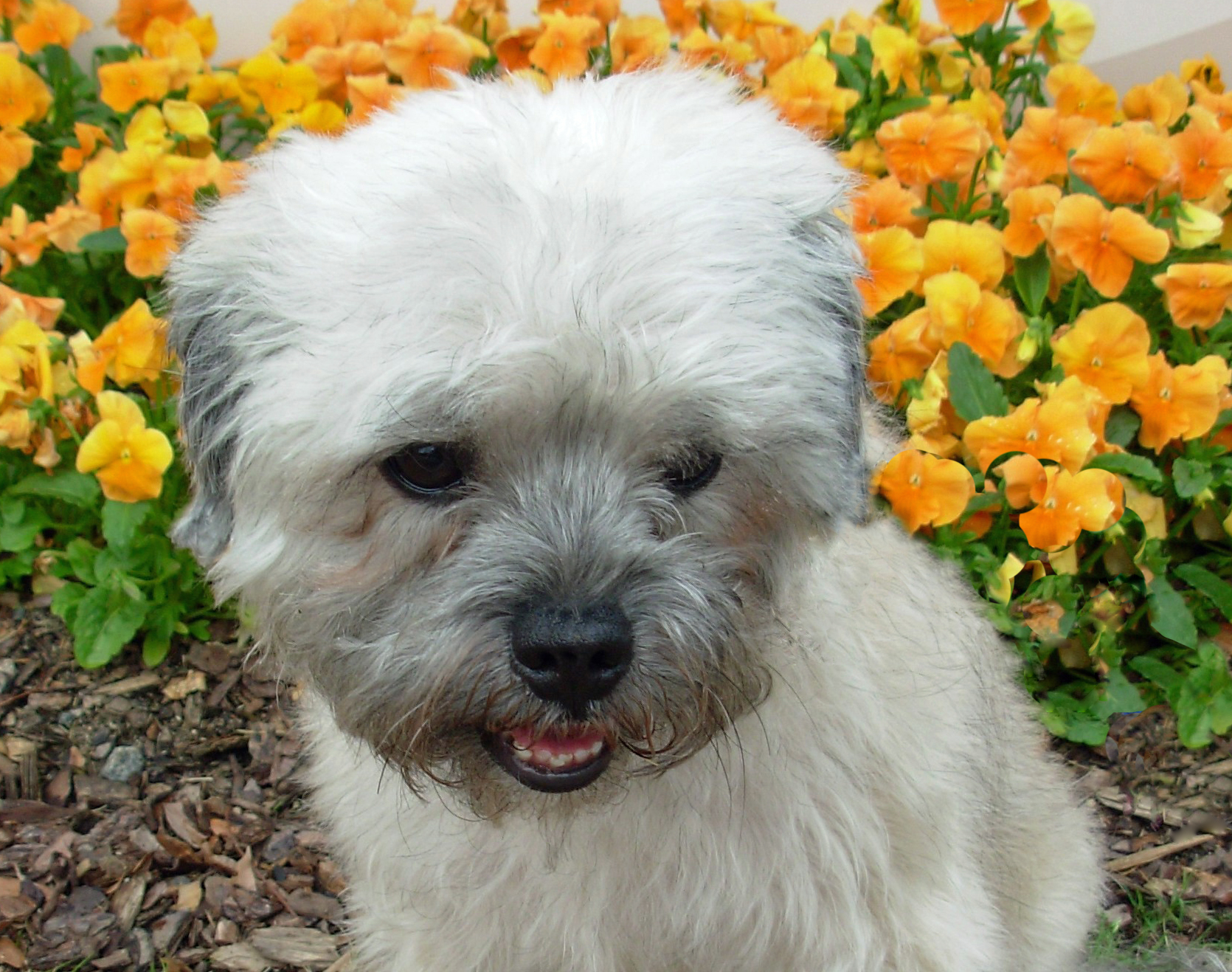
A March 2008 photo of Maxwell, a sweet friend who died unexpectedly this year.
“Such short little lives our pets have to spend with us, and they spend most of it waiting for us to come home each day. It is amazing how much love and laughter they bring into our lives and even how much closer we become with each other because of them.”
― John Grogan
One year ago today we celebrated the 16th birthday of our Schipperke, Pasha. Though we hoped it would not be his last, we knew it might be. We did not know he would leave us only two months later after a mercifully quick decline. We also had no way of knowing how many of our friends and loved ones would be sharing our grief through the loss of their own dogs during the twelve months to come.
Marlee, Salty, Austin, Maxwell, Molly, and probably others I am forgetting to name — each leave their unique paw prints on the lives and hearts of their families and friends.
As Grogan attests, our dogs bring us closer to other people. We have experienced bittersweet memories of Pasha over the past year as each milestone passes for the first time without him. Our animal-loving friends understand, and knowing that they do, we feel a bond with them that goes beyond the words of consolation we speak to each other.
Such short lives, for them, and for us too. Let’s honor their memory by spreading love and laughter to others, as they did for us.
One year ago today:
This post was first published seven years ago today. The original post, comments and photo are linked, along with two other related posts, below. These links to related posts, and their thumbnail photos, do not appear in the blog feed; they are only visible when viewing the individual posts by clicking on each one. I have no idea why, nor do I know how they choose the related posts. That’s just the way WordPress does things.
The last best hope

The World War II Memorial, with the Lincoln Memorial in the distance, March 2005
“The fiery trial through which we pass, will light us down, in honor or dishonor, to the latest generation…We shall nobly save, or meanly lose, the last best, hope of earth.”
—Abraham Lincoln
First time visitors to Washington DC often notice that the various monuments located near the mall appear much closer to each other on the maps than they prove to be when strolling between them. It’s an activity best suited to those who are able to walk at least a few miles, and is definitely more appealing in good weather.
Despite the inconvenience of having to cross a lot of terrain to get to these memorials, there’s something fitting about the distances between them. Walking is conducive to the sober reflection that properly accompanies the history represented by such iconic sights. It’s far too easy to forget the suffering and sacrifices of people who came before us, caught up as we are in daily concerns that seem petty compared to the endurance required of past generations.
I like to read and remember history when I’m feeling sorry for myself. It gives me perspective on my individual woes, gratitude for all that I tend to take for granted, and inspiration from the perseverance and courage shown by people who have survived far more cataclysmic times. I hope you will make time to visit a nearby memorial, or read a biography or history of some pivotal moment in the past. Those who came before us were far from perfect, but there is much to honor and celebrate in their stories, which made possible our own.
One year ago today:
This post was first published seven years ago today. The original post, comments and photo are linked, along with two other related posts, below. These links to related posts, and their thumbnail photos, do not appear in the blog feed; they are only visible when viewing the individual posts by clicking on each one. I have no idea why, nor do I know how they choose the related posts. That’s just the way WordPress does things.
Our consolation

New Hampshire’s Franconia Notch State Park, a place of refreshing solitude. May 2009
“Gladly do we quit the dust and din …to go and breathe peacefully in some far-off nook of the woods, all surprise that the brook is so limpid, the forest so still, the solitude so enchanting. Thank God there are yet these uninvaded corners…The realm of silence is vaster than the realm of noise. Herein is our consolation.”
— Charles Wagner
One year ago I quoted a different passage from this same work by Wagner, noting the irony that his words were penned over 100 years ago, before the onslaught of electronic stimulation we face today. The need for quiet places to find solace in nature seems a timeless and universal trait of humans.
Today, I hope you will grab your planner and prioritize a time this afternoon, this week or this month to step outside your routine obligations and bask in the enchanting solitude Wagner describes. It may not be urgent, but it has always been important.
One year ago today:
This post was first published seven years ago today. The original post, comments and photo are linked, along with two other related posts, below. These links to related posts, and their thumbnail photos, do not appear in the blog feed; they are only visible when viewing the individual posts by clicking on each one. I have no idea why, nor do I know how they choose the related posts. That’s just the way WordPress does things.
In the heart
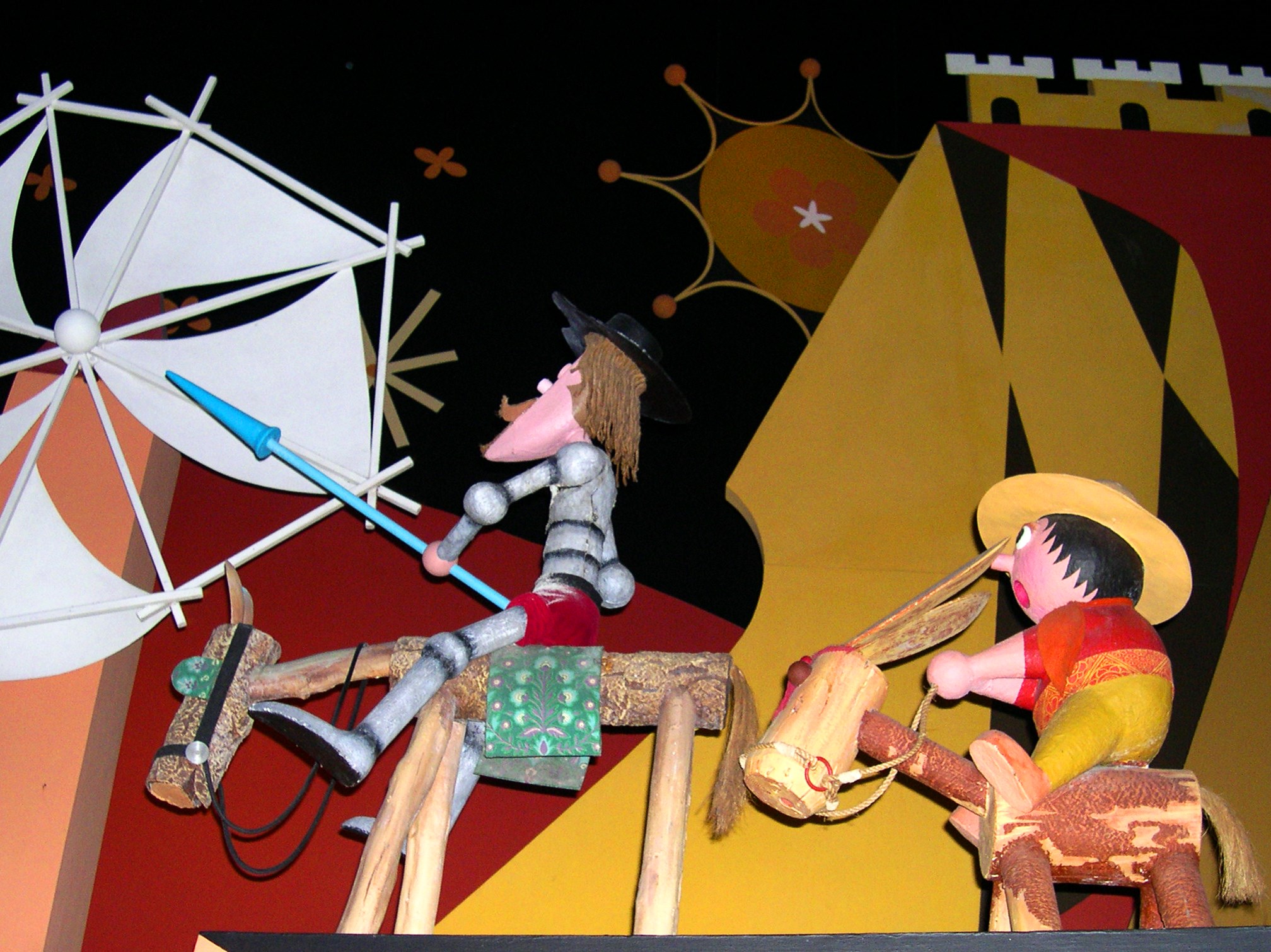
Disney’s “It’s a Small World” features Don Quixote and Sancho Panza.
Walt Disney World, August 2003
“Truth is not reflected in a mirror, but contained in the heart. It is often obscured by reality.” — Alan A. Malizia
One year ago today, my post mentioned Don Quixote, a literary character I’ve been hearing about all of my life. Our father is a fan of Quixote, especially as brought to life in the musical Man of La Mancha, the soundtrack of which played in the background of my childhood more times than I could count. I’m grateful for its timeless messages of courage, honor, and the refusal to give in to despair.
Recently I came across a review of the Quixote story that makes an interesting point about the difference between truth and reality. I am re-blogging it here from Alan Malizia of Contagious Optimism. I hope you will enjoy it, and remember its message the next time reality seems grim!
CONTAGIOUS OPTIMISM:Uplifting stories from around the globe.
Of Truth And Reality
March 16, 2014
Alonso Quixana (Don Quixote) is an aging gentleman who is enamored by and devours books about chivalry. He becomes so absorbed with the subject that he soon escapes reality as he fancies himself a knight, and travels about the countryside performing acts of imagined valor and good deeds. His world, as that of Cervantes, was anything but virtuous or chivalrous.
Quixana recruits a good-natured and keen-witted farmer, Sancho Panza, to be his squire (actually more of a protector), and onward they go. Windmills are seen as menacing giants to be vanquished, and ladies of the evening are seen as simply ladies, as beheld through the refined eyes of the brave and good knight. One woman in particular, Aldonza, he chastely adores. He chooses to call her by another name, Dulcinea, and envisions her his lady.
Of course the upright world, which he battles to uphold through his quests was at that time downright debased and debauched. However, Don Quixote saw it as it otherwise should be.Don Quixote’s virtuous behavior and insistence of compliance to the same, by those (often the dregs of society) whom he came upon, was first viewed as humorous and entertaining. But in time would become intrusive and threatening to their customary practices.
Yet his example, though a worldly contradiction to all, other than himself, began to have a converting effect. The prostitute Dulcinea began to see herself as a lady and act as such. And Sancho, who played along most unwillingly at first, became a dedicated and loyal companion with each new imaginary adventure.
Meanwhile, Alonso Quixana’s niece, being so embarrassed by his antics, feigns concern for his sanity and safety, and contrives a plan with the family doctor, Dr. Carrasco, to hopefully return him to his senses. Alonso (Don Quixote) is confronted by Dr. Carrasco, disguised as the Knight Of The Mirrors, and accompanied by compatriots dressed in armor and carrying reflecting shields. Dr. Carrasco challenges Don Quixote’s claim that his love, Dolcinea, is a lady. The doctor characterizes her as no more than an alley cat.
Don Quixote, angered beyond reason at this insult to his lady, takes up Carrasco’s gauntlet and is surrounded by those with mirrored shields. He is forced to see his image at every turn, which appears that of a madman. Reality strikes an overwhelming blow as the doctor’s disparaging and humiliating rants cut deep. Don Quixote falls to the ground after seeing the foolish dreamer that he is perceived to be. The plan succeeds because he returns to reality. For better or worse?
The mirror is where truth and reality come face-to-face. However, what you see is not necessarily what you get. If reality yields to truth, then there is order. Reality is subject to the variables of time and circumstance. Truth is not. If a couple is thinking about buying a house, but one says to the other, “In reality we cannot afford to buy now.” Does that mean forever? No, because with the passage of time, circumstances have an opportunity to change. So in the future, that same couple may have the means to purchase a house.
Now, if a person were to step off a ledge, in an attempt to refute the law of gravity, he will find that the outcome of his experiment will not be altered by time nor circumstance. The first is an example of reality, the second of truth. Conversely, let us suppose that truth yields to reality. Then there is disorder, in this instance, as truth changes congruently with reality by time and circumstance. If truth does change, then truth is a lie. Our friend on the ledge should then get a different outcome to his experiment on a Thursday, than he would have gotten on a Monday – which would then make the law of gravity a lie, and that is not the case.
For truth is ageless and beyond contestation. The story does not end with Alonso Quixana on his death bed, a beaten man. Present with him is his squire Sancho and his lady Dulcinea. They are overcome with grief, because the man that lay prostrate before them is not he who rekindled in their hearts the flame of goodness, charity and dignity. They remind him of the truth that he stood for in his quest to revive chivalry.
As he listens to their pleas, something stirs within him. His despairing heart is rejuvenated by their overtures of encouragement and love. He rises up vigorously and passionately promises to sally forth again. However, his endearing strength of spirit is too much for his frail and aged body to bear. As he succumbs to death, he is again Don Quixote, who passes from this world to the next, while in the arms of his lady and squire. He dies as he lived: a knight.
The image that Don Quixote beheld in the mirror was his reality, not his truth. His truth was in how he saw himself. And this, likewise, is how others saw him. The profound impression left upon those who crossed his path encouraged change (where once thought impossible) – and for the better. So much so that an Aldonza believed she could become a Dolcinea.
Takeaway: Truth is not reflected in a mirror, but contained in the heart. It is often obscured by reality. Yet truth’s existence is confirmed by its outward effectiveness. No matter how distorted the inconsistent worldly realities may jade a heart, there in its farthest corner truth abides: A truth that endures and ensures the restoration of life to its full goodness, for one who desires it enough to fight for it. Like Don Quixote, we too can fulfill our just cause. If in the end, we are found fighting still.
via Alan Malizia in Of Truth And Reality at Contagious Optimism.
One year ago today:
This post was first published seven years ago today. The original post, comments and photo are linked, along with two other related posts, below. These links to related posts, and their thumbnail photos, do not appear in the blog feed; they are only visible when viewing the individual posts by clicking on each one. I have no idea why, nor do I know how they choose the related posts. That’s just the way WordPress does things.
Failures…were successes

(Photo by Dani of Teddy and Tottie)
“Some of the biggest failures I ever had were successes.” — Pearl S. Buck
One year ago today, my post was about the beauty that is often present in imperfection. A couple of weeks ago I had a most unusual experience which underscores the point that some setbacks often turn out to be successful in a unique way.
If you read the comments, you may have figured out that a few of us in the blogosphere recently got together for an online tea time, crossing the international date line so that some participated on Monday evening while others were simultaneously joining us on Tuesday morning. Time travel via the internet!
Technology being what it is, however, things did not go as planned. No matter – it was great fun anyway. Now that I’ve updated my version of Skype, it should go better next time and we’ll all be able to see each other. But, the interesting part is that the voices came through amazingly clearly, as if we were all in the same room, and some of us agreed that we actually heard the voices more than we would have with pictures to distract us. With so many different accents going, that made it even more fun.
Afterward I was able to see some of what I missed through the blog posts of other attendees. I invite you to hop down to Australia with me for a few minutes and see Dani’s colorful photo review of the event, which I’m re-blogging here:
More Lady Edith than Audrey!
Posted on April 8, 2014
OK, so I looked a little more Downton Abbey than Breakfast At Tiffany’s for our big EVENT this morning.
Do you remember last week I was trying to channel my inner Audrey Hepburn, with hats and gloves being a prerequisite for a mysterious EVENT!
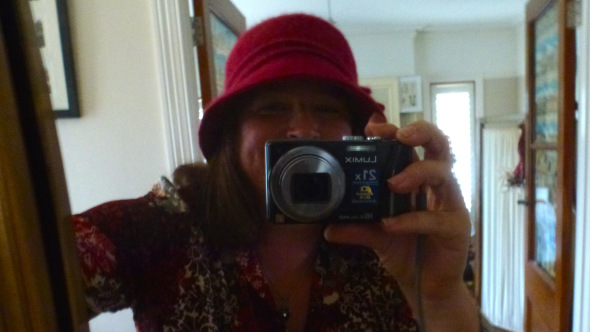
Well, I’m the first to admit that in the fashion stakes I was a little off the mark – and so was the weather …
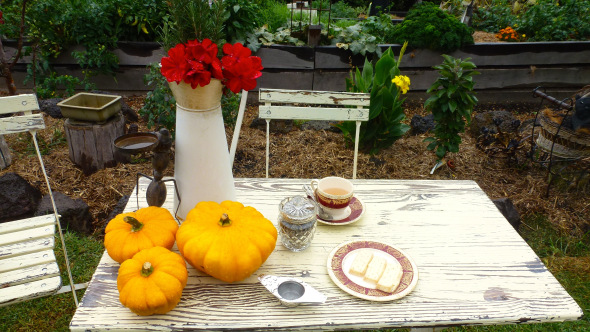
I had a lovely garden setting for the EVENT in front of the veggie patches in The Oasis (not in front of the pond after all because I never did get to tidying it up!) …

… but the weather rained on my parade …

… or, rather, my super exciting … drum roll, please …
international …

Super-duper, splendiferous …multi-national tea party!
Yes, THE EVENT was a Skype, international, hat-and-glove wearing, poem-reading tea party organised by the amazing Boomdeeadda, featuring bloggers from Canada, the USA, New Zealand and little ‘ol me in Australia.
Somehow Boomdee worked out all the time differences, co-ordinated everyone’s available times and pulled the whole amazing thing together!
My shortbread got a bit soggy …

Tigger took over my high tea table when I moved inside to escape the rain …
And my rarely-worn mascara began running down my cheeks from a combination of rain and laughter as we all valiantly battled our way through a few Skype technical hitches.
We could all hear each other, but most of us couldn’t see each other.
I was one of the lucky ones because I managed, by complete dumb luck on my behalf, to see the gorgeous Gardening Nirvana – all the way over in California, USA! And she could see me! So exciting!
But, at the start, I could only see Boomdee’s stylish gravatar – and only hear the beautiful ladies from The Contented Crafter, Life On The Bike And Other Fab Things and Defeat Despair.
Casper instantly fell for Gravatar Boomdee’s charms – and thoroughly enjoyed the range of accents and conversation …
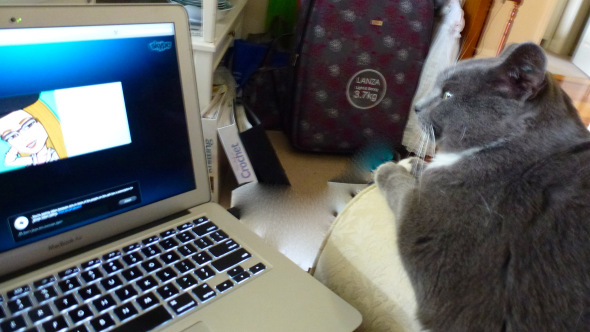
We all decided that despite technical difficulties – just hearing each other’s voices was fabulous enough – and we talked for ages about all sorts.
Finally, after reading out poems we’d selected for the Skype tea party, the extraordinary organiser of the EVENT appeared before my very eyes.
Yay! Boomdeeadda!

Thank-you for organising such a wonderful, exciting event!
I feel as though I have been on an overseas holiday this morning (without the scary plane ride or the hole in my bank balance!)
Aaah! The wonderful world of blogging just got even better!
via Dani at More Lady Edith than Audrey! | Teddy And Tottie.
********************************************************************
Dani, I couldn’t agree more…and thanks for giving us a virtual look at your lovely Australian garden! The next best thing to actually being there!
One year ago today:
This post was first published seven years ago today. The original post, comments and photo are linked, along with two other related posts, below. These links to related posts, and their thumbnail photos, do not appear in the blog feed; they are only visible when viewing the individual posts by clicking on each one. I have no idea why, nor do I know how they choose the related posts. That’s just the way WordPress does things.
Part of the silence

“In order to see birds it is necessary to become part of the silence.” – Robert Lynd
Today’s photos are NOT mine, as much as I’d like to take credit for them. I’m re-blogging some amazing photos by Michael of talainsphotographyblog. Michael is a talented and prolific photographer who gives us a closeup view of the earth’s beauty. This is a great place to visit for nature lovers, especially those who are fond of birds.
Michael must be super-talented at becoming part of the silence, because he features all kinds of birds I have seldom seen, as well as uncommonly sharp shots of many common favorites.
If you haven’t been to Michael’s blog, here’s a small sample of what you have been missing. I hope these lovely pictures brighten your day as much as they do mine:
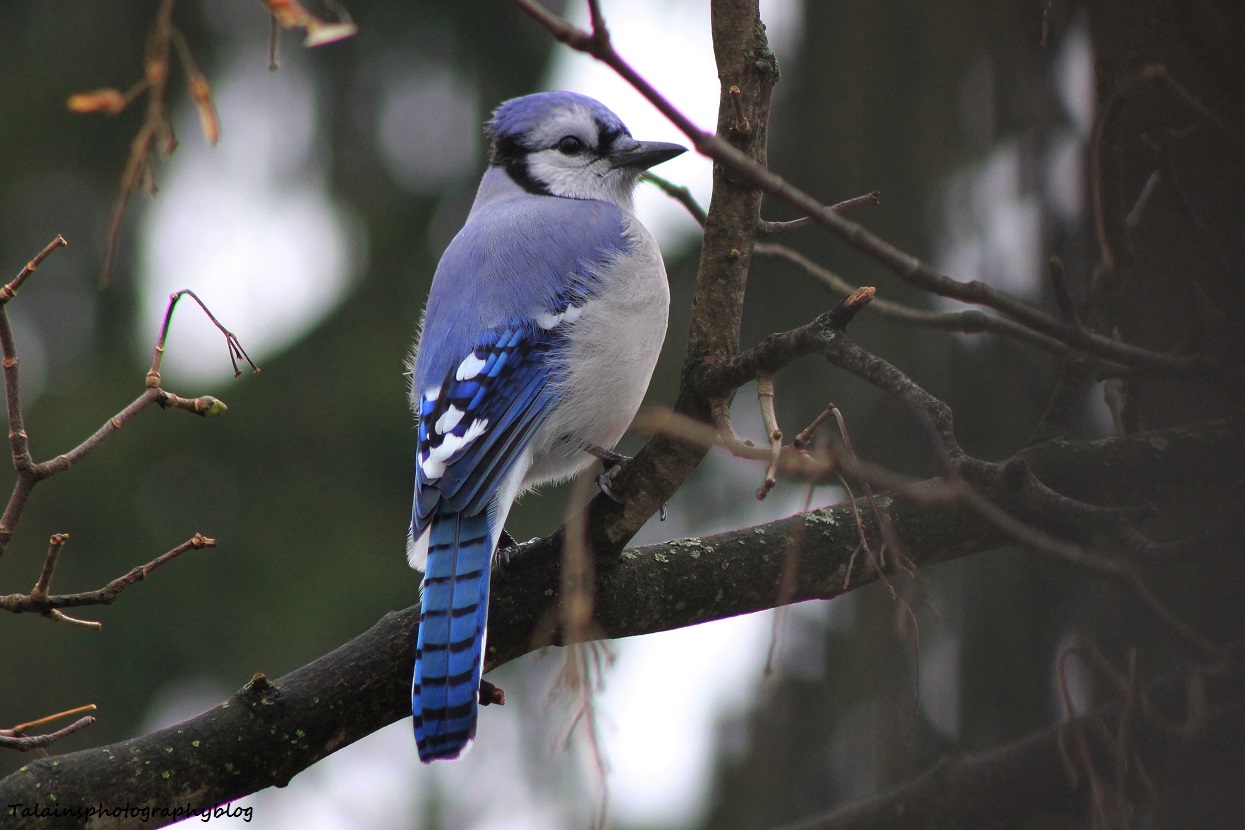 My best of 2013 | talainsphotographyblog | Page 2.

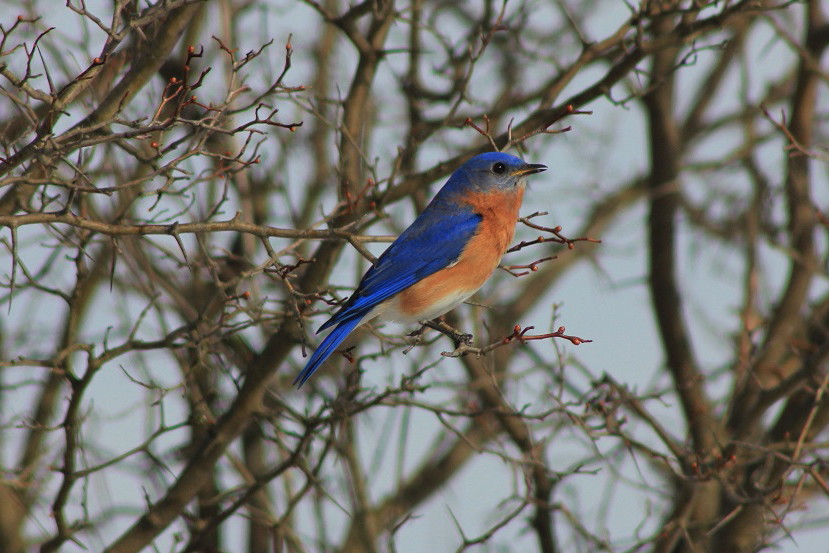
via Birds | talainsphotographyblog.
One year ago today:
This post was first published seven years ago today. The original post, comments and photo are linked, along with two other related posts, below. These links to related posts, and their thumbnail photos, do not appear in the blog feed; they are only visible when viewing the individual posts by clicking on each one. I have no idea why, nor do I know how they choose the related posts. That’s just the way WordPress does things.
The best way

I’ve never walked this particular path, so I have no idea where it goes.
Colonial Williamsburg, Virginia, photographed November 2004
He says the best way out is always through.
And I agree to that, or in so far
As that I can see no way out but through—
Leastways for me…
…Bless you, of course, you’re keeping me from work,
But the thing of it is, I need to be kept.
There’s work enough to do—there’s always that;
But behind’s behind. The worst that you can do
Is set me back a little more behind.
I sha’n’t catch up in this world, anyway.
I’d rather you’d not go unless you must.
Today’s post is dedicated, with sincere appreciation and gratitude, to all who read this blog and share this uncertain path with us. Your presence, comments, prayers and good wishes are a continual source of encouragement.
One year ago today:
This post was first published seven years ago today. The original post, comments and photo are linked, along with two other related posts, below. These links to related posts, and their thumbnail photos, do not appear in the blog feed; they are only visible when viewing the individual posts by clicking on each one. I have no idea why, nor do I know how they choose the related posts. That’s just the way WordPress does things.
Hard to plan

It looks to be a busy week, as usual. April 2014
“I arise in the morning torn between a desire to improve the world and a desire to enjoy the world. This makes it hard to plan the day.” — E. B. White
I am writing this post in advance as usual, but I have a better-than-average idea what we will be doing on the day it is published, and it likely will be a long, difficult day for us. So I thought we could use a bit of comic relief today, especially since that was the theme one year ago. Let’s all hope that laughter is indeed the best medicine. Matt certainly has enjoyed that particular blessing in abundance; I pray it serves him well now.
Today, I encourage you to go out and improve the world. Or have fun. Or preferably, both! Drop me a line and fill me in on how it goes. I am eagerly awaiting good news.
One year ago today:
This post was first published seven years ago today. The original post, comments and photo are linked, along with two other related posts, below. These links to related posts, and their thumbnail photos, do not appear in the blog feed; they are only visible when viewing the individual posts by clicking on each one. I have no idea why, nor do I know how they choose the related posts. That’s just the way WordPress does things.
In every picture

Kathy, LaRhodia, Andy and Robert capture memories through photography.
I took these photos at various times during 2004-2008.
“There are always two people in every picture: the photographer and the viewer.” — Ansel Adams
Looking through family snapshots, it’s usually pretty easy to tell who took the pictures. It’s the person who isn’t in many of them. With the advent of “selfies” it’s changing somewhat, but generally speaking, photographers don’t spend much time in front of the lens.
Maybe that’s why I like to take pictures of people taking pictures. I have something in common with people who love cameras, and I enjoy catching them in the act of saving memories for themselves and other people to enjoy.
Are you the photographer in your family? If not, try making some photos of the person who is normally behind the camera rather than in front of it. If you can manage to take a picture of him or her taking pictures, so much the better. It’s a nice way to round out the story in a collection of photos; a nod to the unseen storyteller whose presence, though seldom seen, is always felt.
One year ago today:
This post was first published seven years ago today. The original post, comments and photo are linked, along with two other related posts, below. These links to related posts, and their thumbnail photos, do not appear in the blog feed; they are only visible when viewing the individual posts by clicking on each one. I have no idea why, nor do I know how they choose the related posts. That’s just the way WordPress does things.
Many ports

Jeff snapped this photo of me aboard the Balclutha in San Francisco,
during one of the riskiest seasons of my life. November 2003
“There are ships sailing to many ports, but not a single one goes where life is not painful.” ― Fernando Pessoa
Sea voyages make good metaphors for life, because they encompass the adventure, daring, uncertainty, beauty and danger that are part of living. It might be easy to dream of a journey as a means of escape, but in reality, trouble is everywhere and risk abounds, even for those who try to escape calamity by staying home.
As Pessoa points out, pain will be inevitable even with a smooth voyage and safe arrival. Though we may not set sail for the same ports, we have sorrow in common. We also have joy, hope, compassion and the excitement of discovery. Let’s continue to help each other in faith that what unites us is greater than what divides us. All of us face challenges, known and unknown, and we need each other.
One year ago today:
This post was first published seven years ago today. The original post, comments and photo are linked, along with two other related posts, below. These links to related posts, and their thumbnail photos, do not appear in the blog feed; they are only visible when viewing the individual posts by clicking on each one. I have no idea why, nor do I know how they choose the related posts. That’s just the way WordPress does things.
The everyday struggle

The dragons are formidable, but they are no match for our faith and tenacity.
Disney’s California Adventure Park, July 2004
“One wrestles with one’s dragons until the end of one’s life — it is a constant and eternal process. The crises in one’s life only show up in intensity what is going on every day. The crises are there, perhaps in order to illuminate the everyday struggle…so that one may be better prepared to fight, not “next time” but all the time — tomorrow and the day after.” — Anne Morrow Lindbergh
I’ve often said that the crises are easier to get through than the relatively smaller challenges that come with each day. During a crisis, we typically have adrenaline, determination and the active support of friends and family to get us through. There is also the feeling that, whatever is happening, it is time-limited and will pass. In between major life events, though, the seemingly minor setbacks and relentless annoyances can take a cumulative toll that is ultimately as formidable as the life-and-death moments.
I think Anne Lindbergh’s insights are correct; life is an ongoing struggle for pretty much all of us, though our individual circumstances vary on the surface. During her 94 years, she weathered larger storms than most of us will, but so many of us are drawn to her writing not because of her accounts of remarkable and unprecedented experiences. Rather, it is her knack for detailing the common trials we all must negotiate; the ubiquitous obstacles we must overcome just to get through another day.
If your path today is impeded by figurative dragons, or only pesky gnats and flies, I hope you’ll have plenty of illumination to guide your way. Remember how much you have survived already, and take heart! You obviously have the right stuff to get through another day.
One year ago today:
This post was first published on April 4, 2021. The dates were adjusted to allow the Easter weekend posts of 2014 to appear on Easter weekend 2021. The original post, comments and photo are linked, along with two other related posts, below. These links to related posts, and their thumbnail photos, do not appear in the blog feed; they are only visible when viewing the individual posts by clicking on each one. I have no idea why, nor do I know how they choose the related posts. That’s just the way WordPress does things.
The singing of birds

These hungry baby Robins can’t yet sing for their supper, but they would if they could!
Our York back yard, May 2008
“For, lo, the winter is past, the rain is over and gone; the flowers appear on the earth; the time of the singing of birds is come…” — Song of Solomon 2:11-12
Let’s hope the winter is mostly past by now, and the rain, while not over and gone, will surely give way to more sunny days ahead. The time of the singing birds is definitely here, and I hope we will all enjoy it!
What are your favorite springtime joys?
One year ago today:
This post was first published on April 3, 2014. The dates were adjusted to allow the posts from Easter weekend 2014 to appear on Easter weekend 2021. The original post, comments and photo are linked, along with two other related posts, below. These links to related posts, and their thumbnail photos, do not appear in the blog feed; they are only visible when viewing the individual posts by clicking on each one. I have no idea why, nor do I know how they choose the related posts. That’s just the way WordPress does things.
The first spring day

Let’s take an imaginary break at this gazebo in Yorktown, Virginia.
I took the photo in May 2013, but we can pretend it’s today!
“The first day of spring is one thing, and the first spring day is another. The difference between them is sometimes as great as a month.” — Henry Van Dyke
On March 17, St. Patrick’s Day, we returned to Alexandria to find six inches of snow on the ground. Really! I had just left behind our daffodils, finally blooming in York County, and here I was shoveling snow AGAIN during what I thought would be mild weather. And the first day of spring, according to the calendar, was only three days away.
But, as Van Dyke points out, that’s a very different thing from the first spring day. The crazy thing is, we had a couple of days that felt like spring weeks ago, minus the flowering trees and other signs of new life. This year, the warm days seem merely to have provoked more winter weather.
Those of you who live in more northern climates are probably thinking I’m a weather wimp – and you’re right! Still, I am hoping — yet again — that THIS time, by the time this message is published, we will be having some true springtime weather, not only here, but maybe even north of here.
In any case, I hope this photo will chase away the winter blues, even if your weather does not. I’m sending you a bouquet of wishes for the lighthearted sound of birdsong, the cheerful color of flowers, and the delicious warmth of bright sunlight.
One year ago today:
This post was first published on April 2, seven years ago. The re-post date was adjusted to allow the Easter weekend posts from 2014 to appear on Easter weekend 2021. The original post, comments and photo are linked, along with two other related posts, below. These links to related posts, and their thumbnail photos, do not appear in the blog feed; they are only visible when viewing the individual posts by clicking on each one. I have no idea why, nor do I know how they choose the related posts. That’s just the way WordPress does things.
Our noblest hopes

This mounted tiger appears high overhead at the Museum of Natural History.
The Smithsonian Institution, Washington DC, April 2013
“Our noblest hopes grow teeth and pursue us like tigers.” — John Gardner
Tigers may be my favorite wild animals. Their beauty and power fascinate me. I like this quote, because I believe hope can be a formidable weapon against despair. I tend to think of hope as a passive, almost delicate quality; something silent and steadfast, but hardly the word that comes to mind when we see a magnificent tiger.
Yet think of history’s most daring explorers, the legendary defenders of the weak, champions of justice and underdogs who defeated the enemy against all odds. Consider the many heroic characters of fairy tales and other literature. Aside from courage, what other quality do they all have? Hope — the refusal to give up or give in, the persistent belief that success, or victory, or a breakthrough, is within their power.
Note that Gardner is not referring to pipe dreams or selfish aspirations here – he says it’s our noblest hopes that can pursue and overtake us.
The next time you are feeling defeated by despair, remember that hope, once awakened, is a ferocious and mighty asset. Feed your noblest hopes, let them grow teeth, and watch them empower you to do more than you ever imagined.
One year ago today:
This post was first published seven years ago today. The original post, comments and photo are linked, along with two other related posts, below. These links to related posts, and their thumbnail photos, do not appear in the blog feed; they are only visible when viewing the individual posts by clicking on each one. I have no idea why, nor do I know how they choose the related posts. That’s just the way WordPress does things.
Open arms
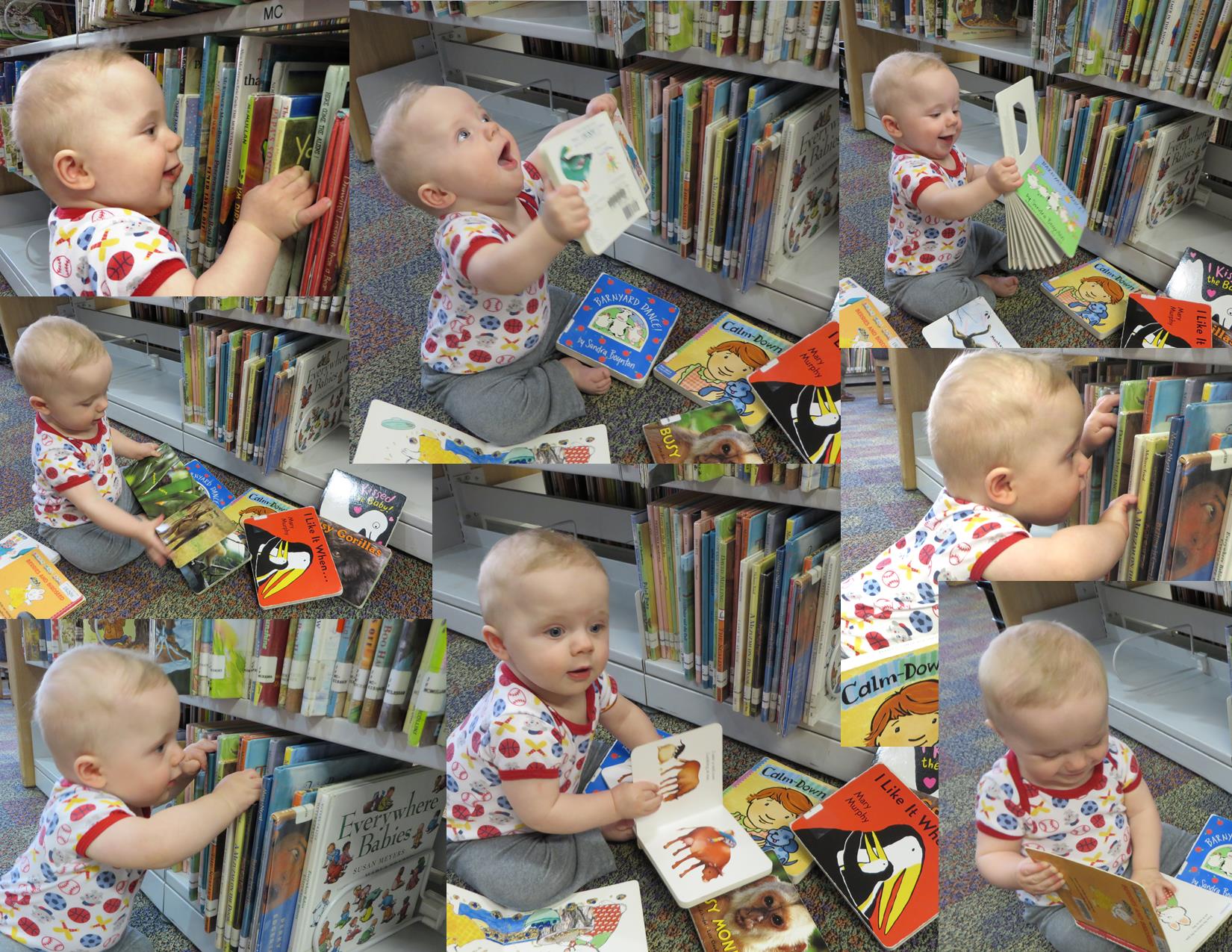
This is what happens when your grandmother is a librarian. Dunwoody, Georgia, March 2014
“A library should be like a pair of open arms.” ― Roger Rosenblatt
“So why on earth would you take an eight-month-old baby to a library?” my mother asked me, when I told her how Matt and I had spent the previous day with Grady. As a retired librarian who specialized in youth services, I just smiled and offered her the photographic evidence, some of which appears in the collage above. My mother understood immediately.
This was Grady’s first-ever trip into the open arms of the public library. I hope there will be many, many more in the weeks and months and years to come. Knowing how much both his parents love reading, I have a sneaky suspicion my hope will almost certainly be fulfilled.
Next time your mind needs a hug, head for your local library — but be warned: you might find it’s hard to leave!
One year ago today:
Libraries will get you through
This post was first published seven years ago today. The original post, comments and photo are linked, along with two other related posts, below. These links to related posts, and their thumbnail photos, do not appear in the blog feed; they are only visible when viewing the individual posts by clicking on each one. I have no idea why, nor do I know how they choose the related posts. That’s just the way WordPress does things.
The earth laughs

One week each year we are treated to this sight outside our bedroom and bathroom windows.
Photographed from our bedroom, Alexandria, Virginia, April 9, 2014
“The earth laughs in flowers.” ― Ralph Waldo Emerson
If Emerson is right, this spring ought to be a riot of hilarity, the kind that comes as a huge relief after sustained tension. Last week, the cherry blossoms “brought down the house” with the earth’s mirth in the DC area. I hope you too are having a jovial treat now appearing in your local landscape. Feel free to send photos or links to share with us, and let’s join the earth in laughing away our winter doldrums.
One year ago today:
This post was first published seven years ago today. The original post, comments and photo are linked, along with two other related posts, below. These links to related posts, and their thumbnail photos, do not appear in the blog feed; they are only visible when viewing the individual posts by clicking on each one. I have no idea why, nor do I know how they choose the related posts. That’s just the way WordPress does things.
You know how it is

This April day was part March, part May, all fun.
Overlooking the Rhine River in Germany, April 2007
“The sun was warm but the wind was chill.
You know how it is with an April day.
When the sun is out and the wind is still,
You’re one month on in the middle of May.
But if you so much as dare to speak,
a cloud comes over the sunlit arch,
And wind comes off a frozen peak,
And you’re two months back in the middle of March.” – Robert Frost
When getting ready to go out for a long walk, I’ve learned that the temperature is not the biggest consideration in deciding how warmly to dress. What seems to make the most difference is: how windy is it? A sunny, warmish day can feel frigid with a strong wind, but if the air is calm and the skies clear, it will be a pleasant walk even if the temperatures are below 50.
By now I hope most of us are experiencing at least some days such as Frost describes here, where the calendar seems to have moved on a few weeks, if only temporarily. As for those March winds, I have a whole new appreciation of their relatively temperate nature, after the snows of last month! But today, I wish you a day that feels like May.
One year ago today:
This post was first published seven years ago today. The original post, comments and photo are linked, along with two other related posts, below. These links to related posts, and their thumbnail photos, do not appear in the blog feed; they are only visible when viewing the individual posts by clicking on each one. I have no idea why, nor do I know how they choose the related posts. That’s just the way WordPress does things.


 Defeat Despair