At the mere sight
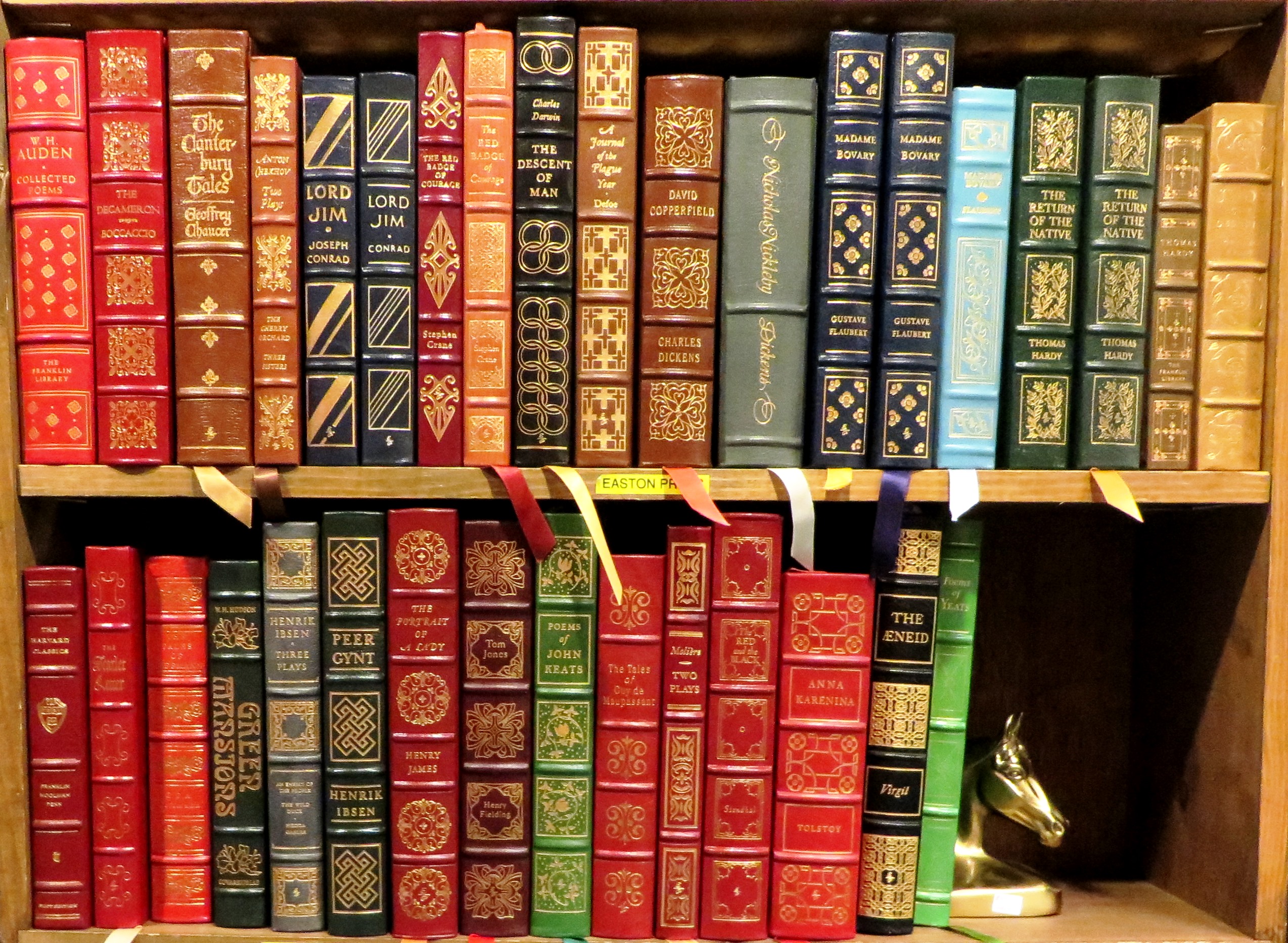
Does this photo make you smile? I hope so!
I snapped it inside a bookstore in Charlottesville, Virginia, in June 2014.
“Many people, myself among them, feel better at the mere sight of a book.”
― Jane Smiley
I was quite a few years into adulthood before I realized that the mere presence of books was a comfort to me, even if I didn’t reach out and take one from the shelf. This seemed a bit illogical at first. I wondered whether it had to do with my early memories of my mother, a frugal woman with little money to spare in my preschool years, who nonetheless bought me a Little Golden Book on each trip to the grocery store. Perhaps I equate books with love, I thought.
But that’s only part of the equation. I have to factor in the human presence that I find in books; when I pick one up, I know I will be encountering at least one other person, and often many, who will dull the edge of loneliness I sometimes feel even among crowds. The voice of a book is almost invariably more personal and direct than a lot of what passes for conversation in casual gatherings.
And of course, there’s the matter of distraction from the woes of my immediate surroundings. No matter what is troubling me, I know that a book will take me away for however long a time I choose to spend with it. It may open my eyes to things I hadn’t noticed before, or my mind to ideas I’d never encountered. It may introduce me to worlds so delightfully similar to my own that I feel an instant sense of belonging, or so astoundingly different that I am stunned by the novelty.
Books are more than books. They are promises of discovery, consolation, excitement or enchantment. They are, contrary to the stereotype of the solitary and introverted bookworm, one of the surest ways we have of getting outside ourselves and into a realm where we realize that we are not the center of the universe.
What to you see when you see a book? How do you feel when you enter a roomful of them?
One year ago today:
Due gratitude and respect

I photographed this statue of Mercy Otis Warren at the Barnstable County Courthouse.
Cape Cod, Massachusetts, May 2009
“Thus the hurry of spirits, that ever attends the eager pursuit of fortune and a passion for splendid enjoyment, leads to forgetfulness; and thus the inhabitants of America cease to look back with due gratitude and respect on the fortitude and virtue of their ancestors, who, through difficulties almost insurmountable, planted them in a happy soil.”
— Mercy Otis Warren
One year ago today, my post featured a favorite quote from Martha Washington. Only recently did I discover that quote was taken from a personal letter she wrote to one of the women I most admire in American history, Mercy Otis Warren.
Those of us who are fond of history have a sort of private “honor roll” of well-known figures we admire, and among these, there are a few for whom we feel an instant, almost mystical affinity. Mercy Otis Warren is such a person for me.
She has been called “perhaps the most formidable female intellectual in eighteenth-century America” and “mother of the Bill of Rights.” This effusive praise may be a bit overblown, but it is beyond question that her influence was extraordinary for any female born into such a male-dominated society as existed in colonial America. Wife, mother, sister, writer and patriot, she was a friend and confidante to many men and women whose names are far more widely known and recognized.
It’s always amusing to discover words that sound startlingly current despite being written hundreds of years ago. I have to wonder what sort of “hurry of spirits” could have been at play in a time when the fastest travel was by horseback, and distant communication was confined to written correspondence that might take months (or even years) to reach its destination. Yet Warren expresses regret at the haste and forgetfulness that attends the pursuit of “splendid enjoyment.” She pays tribute to the fortitude and virtue of ancestors whose lot in life was more difficult than her own, grateful for their role in planting her generation “in a happy soil.”
Perhaps this is one more indication that some things never change. Always there are people who choose gratitude for present circumstances over despair at current difficulties; those who take bold action in uncertain times, rather than cower in fear of what lies ahead.
It’s wise to look at history from many angles, and not to see the past through the rose-colored glasses of uninformed admiration. Still, I think we tend to underestimate the inspiring character of those who persevered to overcome obstacles that were removed from our paths long ago. The human story is rich with lessons in courage, strength and triumph. Spending time with these lessons is a great way to defeat despair.
One year ago today:
Sought and found

Matt with just a few of the many fabulous staffers at Camp Baker, June 2014.
“I don’t know what your destiny will be, but one thing I know: the only ones among you who will be really happy are those who have sought and found how to serve.”
― Albert Schweitzer
Matt was so happy to be able to return to Camp Baker this year, after missing last year due to breaking his arm and needing surgery to fix it. As soon as we drove up and got out of the car to register for camp, we were greeted with enthusiastic camp staffers. “Matthew, you’re back!” and “We missed you SO MUCH last year!” and “We were so sad last year when we got the news you wouldn’t be coming because you broke your arm!”
It was heartwarming that these young people (most of whom come from England each summer to work at the camp) not only remembered Matt, but also were mindful of what he had been through in the past year. I wish everyone who worries about young people nowadays could come to Camp Baker with us each year. It’s a great way to feel optimistic about the future. These staffers bear no resemblance to the sullen, gadget-addicted stereotypes one often sees portrayed in the media.
No matter what age a person is, I’ve found Schweitzer’s observation to be true. The people I meet who are focused on loving and serving others are the happiest I know. Those who are focused on their own problems, deficits and challenges are distracted, frustrated and unpleasant. For the record, I fall into the latter category far more often than I wish I did. The ones in the former group are my inspiration to keep looking upward and outward.
Next time you’re feeling sad and overwhelmed, or pessimistic about the state of the world, seek out places where people are busy with outreach to those who need them. They aren’t hard to find. Community groups, places of worship, schools, neighborhood associations and service organizations are full of volunteers for whom helping others is a labor of love. If you spend some time with these folks — or better yet, join them — you will soon find what you are seeking.
When we serve, we usually are too busy to worry about our own happiness, but somehow it manages to sneak in the back door and prepare quite a feast to greet us when we return, tired and satisfied, from a day spent with others. Whatever our destiny may be, the secret to real joy is surprisingly consistent.
One year ago today:
The ordinary things
![Milne and Shepard are remembered at Ashdown Forest, where animals and children still play. Photo by David Brooker via Wikimedia Commons [CC-BY-SA-2.0 (http://creativecommons.org/licenses/by-sa/2.0)]](https://defeatdespair.com/wp-content/uploads/2014/09/milne-monument-ashdown-forest-by-david-brooker-via-wikimedia-commons.jpg)
Milne and Shepard are remembered at Ashdown Forest, where animals and children still play.
Photo by David Brooker via Wikimedia Commons [CC-BY-SA-2.0 ]
Look closely at the name of the person who wrote today’s quote. I’ll give you a hint: his middle name was Robin. Yesterday I quoted from Winnie the Pooh. Today I quote from the boy who loved the original “Edward Bear,” and inspired the timeless stories.
Christopher Robin Milne was not pleased with the fame imposed on him by his father’s literary success. In fact, he was persecuted by his classmates at boarding school, who would taunt him with verses about him they took from Milne’s writing. The probability that these bullying classmates were teasing him out of jealousy or envy did not lessen the sting.
The magical moments in Ashdown Forest that his father preserved for future generations to enjoy as the “Hundred Acre Wood” were to be Christopher Robin’s happiest times. There is a lesson and a gift for all of us in this truth. You may never become famous as a character in a beloved semi-imaginary world, but rest assured: there are moments in your most normal days that literally are the stuff that dreams are made of.
What ordinary things will you encounter today, that will be looked back upon “with the greatest affection?”
One year ago today:
![Photo by Nigel Freeman [CC-BY-SA-2.0 ] via Wikimedia Commons](https://defeatdespair.com/wp-content/uploads/2014/09/a-a-milne_and_e-h-shephard_memorial_plaque_-nigel-freeman-cc-by-sa-2-0-via-wikimedia-commons.jpg)
Photo by Nigel Freeman via Wikimedia Commons [CC-BY-SA-2.0 ]
A moment just before

Just thinking about “hunny” makes Pooh happy! Disneyland, Anaheim, CA, April 2003
“Well,” said Pooh, “what I like best,” and then he had to stop and think. Because although Eating Honey was a very good thing to do, there was a moment just before you began to eat it which was better than when you were, but he didn’t know what it was called.”
― A.A. Milne
I can totally sympathize with Pooh here. I’ve always found Christmas Eve a bit better than Christmas morning, and planning for an exciting trip is at least half the fun of going. While this preliminary excitement may set us up for anticlimax or disappointment with the actual event, it can also enhance our pleasure, extending special times by giving us an early start on the fun.
The joy of anticipation is strong evidence that mental imagery can exert as much or more power over our moods as our external circumstances do. A number of studies suggest that visualization can improve athletic or competitive performance, and generating positive mental stimuli can improve mood and task response.
Of course, we don’t need to know all the scientific details to connect with what Pooh is thinking of here. The most important thing to remember is that we can schedule happiness for ourselves, even in a day that holds no particular treat in store, by focusing on the things that make us happiest.
We all enjoy displays in museums and stores without needing to buy them or take them home. We can enjoy the presence of a friend through reading or remembering a letter or a funny moment shared in the past. In the same way, we tap into the happiness we feel when we see fresh flowers, take a sip of an ice-cold drink on a hot day, or relax in a hammock or easy chair when we feel tired, without actually doing any of those things, except in anticipation or memory.
Pooh didn’t know what to call this kind of bliss, and I don’t either. But I agree with him; it’s “what I like best.” I hope that each day will bring you many moments of this unique felicity.
One year ago today:
Where you’re meant to be
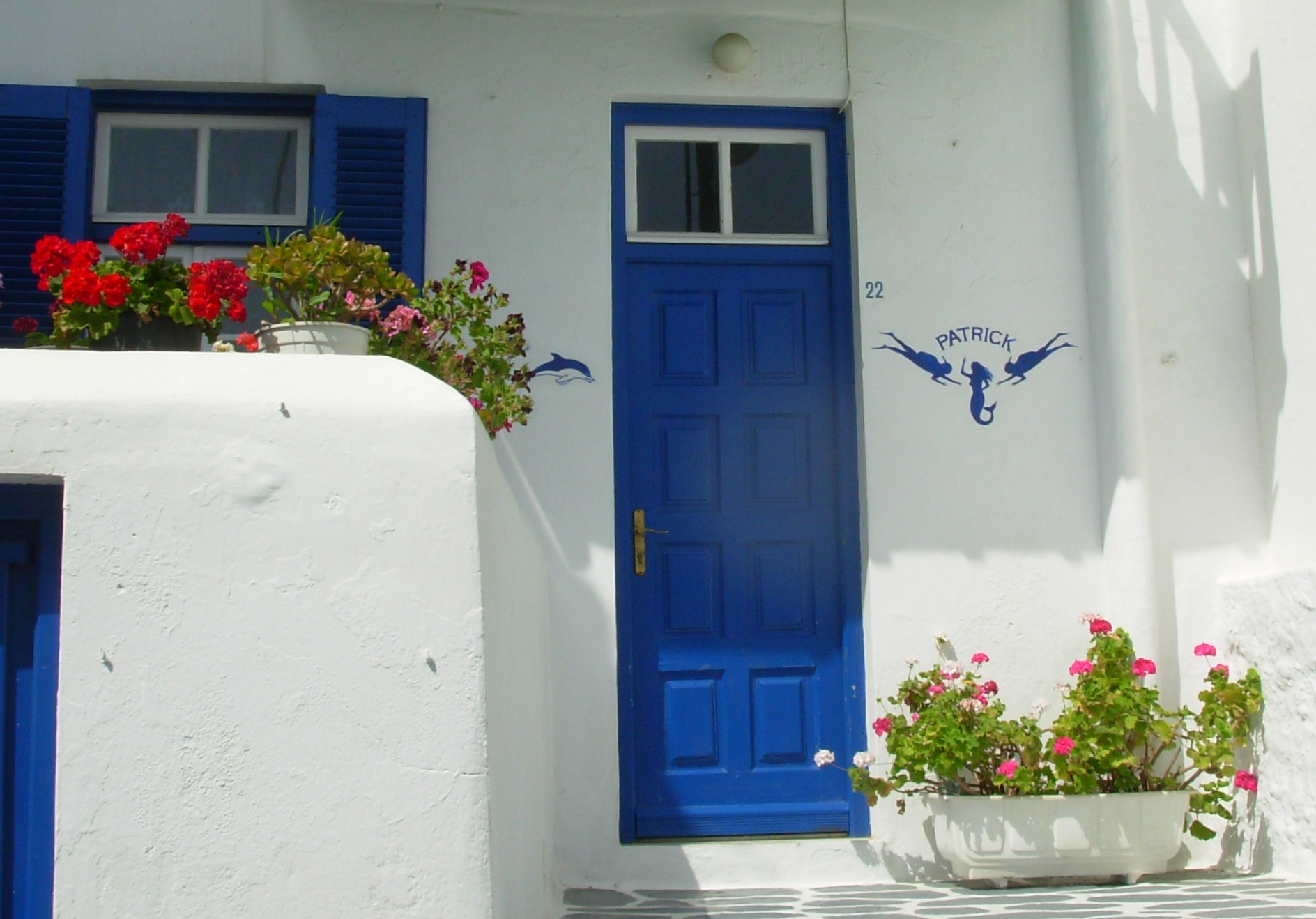
Only one doorway, but its beauty blesses all who see it. Mykonos, Greece, May 2008
“A great human revolution in just a single individual will help achieve a change in the destiny of a nation and, further, can even enable a change in the destiny of all humankind.” ― Daisaku Ikeda
“Let everyone sweep in front of his own door and the whole world will be clean.”
— Johann Wolfgang von Goethe
“There’s nowhere you can be that isn’t where you’re meant to be.” — John Lennon
When I was a young person struggling to make sense of the concept of free will in a world that often left me feeling powerless, I asked my father to explain the seeming discrepancy between God’s foreknowledge and our own individual choices. The entire discussion was too long to duplicate here (and involved some of Daddy’s tendency to illustrate abstract ideas with simple drawings on the back of envelopes or dinner napkins 😀 ) but the gist of it was this: no matter how we choose, God can use our choice to work for good.
Of course, that doesn’t mean we don’t make mistakes, and those mistakes can cost dearly, in pain and sorrow for us or the people who suffer the consequences of our actions. But no matter how many errors and bad decisions we make, we can never arrive at a place where there is not a best way out, no matter how dark it seems. As long as we live, it is never too late to exercise our free will to go in the right direction.
Sadly, some people will make these choices, if at all, from jail cells or deathbeds. Yet the choice does remain, up until the end of life, and even decisions that seem so delayed as to be inconsequential still can affect the future. Nonetheless, it’s best for everyone if we make the right choices early, and often.
Wherever you are today, you are the only person in your exact circumstances; the only one with precisely the same group of acquaintances, influences, and sphere of potential actions. You have more power than you imagine. How will you choose to use it?
One year ago today:
Now that I am fifty
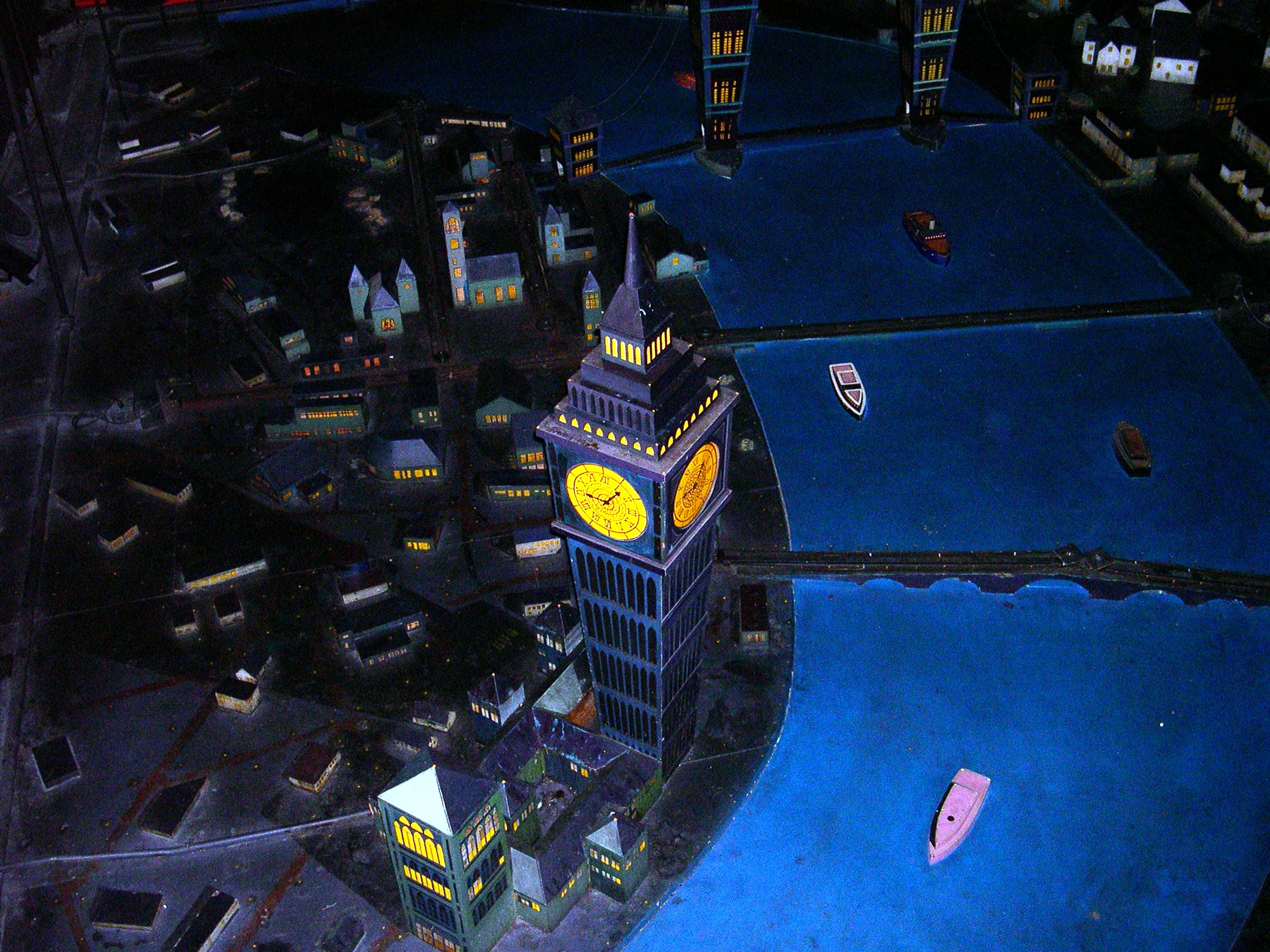
London at night, as seen while flying with my favorite storybook hero, Peter Pan.
Walt Disney World’s Magic Kingdom, August 2003
“When I was ten, I read fairy tales in secret and would have been ashamed if I had been found doing so. Now that I am fifty I read them openly. When I became a man I put away childish things, including the fear of childishness and the desire to be very grown up.”
— C. S. Lewis
All of my life people have told me that I looked or seemed much younger than I am. While I started enjoying this after I was thirty or so, it was absolutely mortifying to hear it as a child, or even worse, as a teenager. I loved turning 40, and 50 was even better, because I no longer felt threatened by being thought childish or immature. Plus I can get my senior discount now without anyone questioning it! In fact, they usually give it to me without my asking for it.
It was great to be a children’s librarian and read picture books without anyone thinking me odd. But I recommend them to everyone, at any age. I used to tell library visitors that the “E” on the spine stood for “everyone,” not “easy.”
Publishers of picture books know that their products must be as appealing to adults as they are to children, because they are designed to be read aloud by adults, and children are notorious for wanting to hear the same stories again and again. This repetition builds early reading skills as toddlers learn to match the appearance of certain words with how they sound. So everyone benefits if the adults enjoy the story enough to keep re-reading it. (As Raynard would say, “I digress.”)
However old you are, I hope you are at least old enough to value the youthful spirit inside you, and don’t feel the need to hide it. As a wise person pointed out to me years ago, one can be childlike without being childish.
If you have lost touch with all that is wonderful about being a child, try spending some time with children and notice what they say, how they think and what they pay attention to. Read aloud to them from a book you loved when you were young. Or rent the Disney version of Mary Poppins and be refreshed by its timeless message.
Today I wish you freedom from the fear of being childish!
One year ago today:
More power than will

Engineers said it couldn’t be done, but that didn’t stop Henry Ford.
Photo by IFCAR, public doman via Wikimedia Commons
“We have more power than will; and it is often by way of excuse to ourselves that we fancy things are impossible.” – Francois VI, Duc De la Rochefoucauld
“I am looking for a lot of men who have an infinite capacity to not know what can’t be done.” — Henry Ford
“Ford decided to produce his now famous V-8 motor. He chose to build an engine with the entire eight cylinders cast in one block, and instructed his engineers to produce a design for the engine. The design was placed on paper, but the engineers agreed, to a man, that it was simply impossible to cast an eight-cylinder engine-block in one piece. Ford replied,”Produce it anyway.” ― Napoleon Hill
Years ago, one of many doctors who evaluated Matt chose a dynamic assessment tool intended to measure not only what he was able to do, but what his potential for learning might be if given mediated instruction. When she met to discus the results with us, she gave us some wise advice. “Remove the word ‘can’t’ from your vocabulary and replace it with the phrase ‘has not yet learned to,’ especially when you are speaking where Matt can hear you.”
I think that’s good advice for almost any of us. While there are things that are truly impossible for us, we are seldom asked or expected to do them. Far more often, we limit our own accomplishments by underestimating our capabilities, or being unwilling to do what it takes to surpass what we are currently able to achieve. More than one historian has portrayed Ford’s legendary determination as sometimes crossing the line into ruthlessness. Nevertheless, he changed history because of his refusal to believe conventional wisdom regarding what was possible.
It’s often hard to know where to focus our efforts for optimal results, but I agree with Rochefoucauld that we tend to excuse ourselves from doing what is difficult by using the word “can’t” instead of “won’t.” Is there anything you need and want to do that you are dodging by saying “I can’t?” Are there things you’d like to do that you haven’t tried, for fear of failure?
One year ago today:
Finished and complete
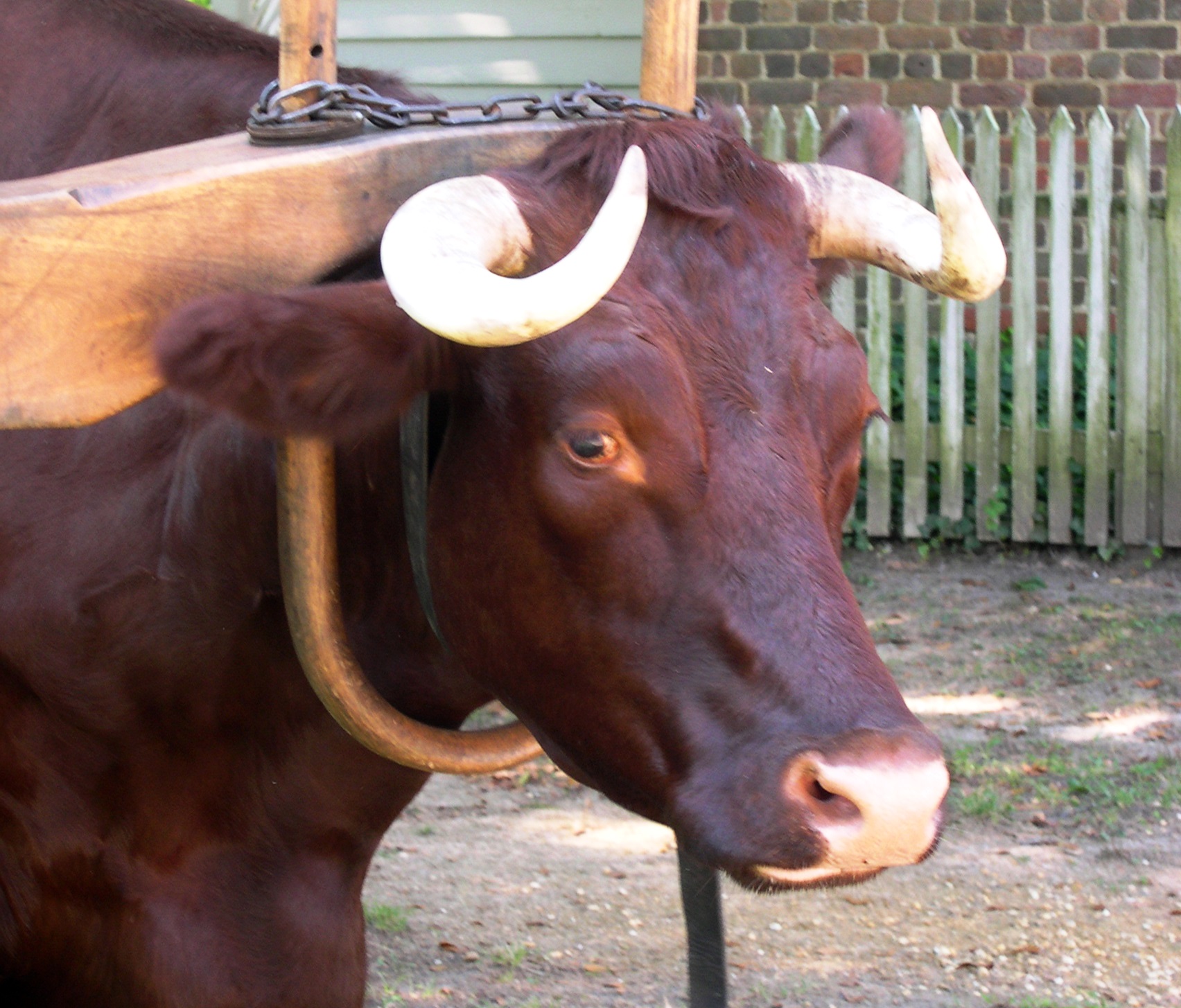
I photographed this yoked ox at Colonial Williamsburg, Virginia, in October 2005.
“For the animal shall not be measured by man. In a world older and more complete than ours they move finished and complete, gifted with extensions of the senses we have lost or never attained, living by voices we shall never hear. They are not brethren, they are not underlings; they are other nations, caught with ourselves in the net of life and time, fellow prisoners of the splendour and travail of the earth.”
— Henry Beston
Years ago Daddy showed me this quote, and I liked it instantly. It captures perfectly the mysterious appeal that draws so many animal lovers to all sorts of creatures. We watch in fascination as each species moves in its own unique sphere, possessed of capabilities that enable survival and usefulness to the environment.
Anyone who watches National Geographic specials about animals soon learns that nature can be harsh and even cruel. This is why Beston’s description of animals as “fellow prisoners” seems so apt. Whether small and agile or large and mighty, each is subject to forces beyond its control, part of a large and magnificent living tapestry.
We may be captivated by their tremendous strength, exotic beauty or astonishing grace, but perhaps it is this common bond of earthly travail that binds us most to the animals. I find it difficult to watch any creature for very long without feeling some degree of sympathy for it. “Caught…in the net of life and time,” we are in good company, surrounded by more varieties of life than any human mind could imagine. Today I hope you will enjoy sharing a few minutes of your attention with at least one or two of these delightful companions.
One year ago today:
The indispensable ingredient
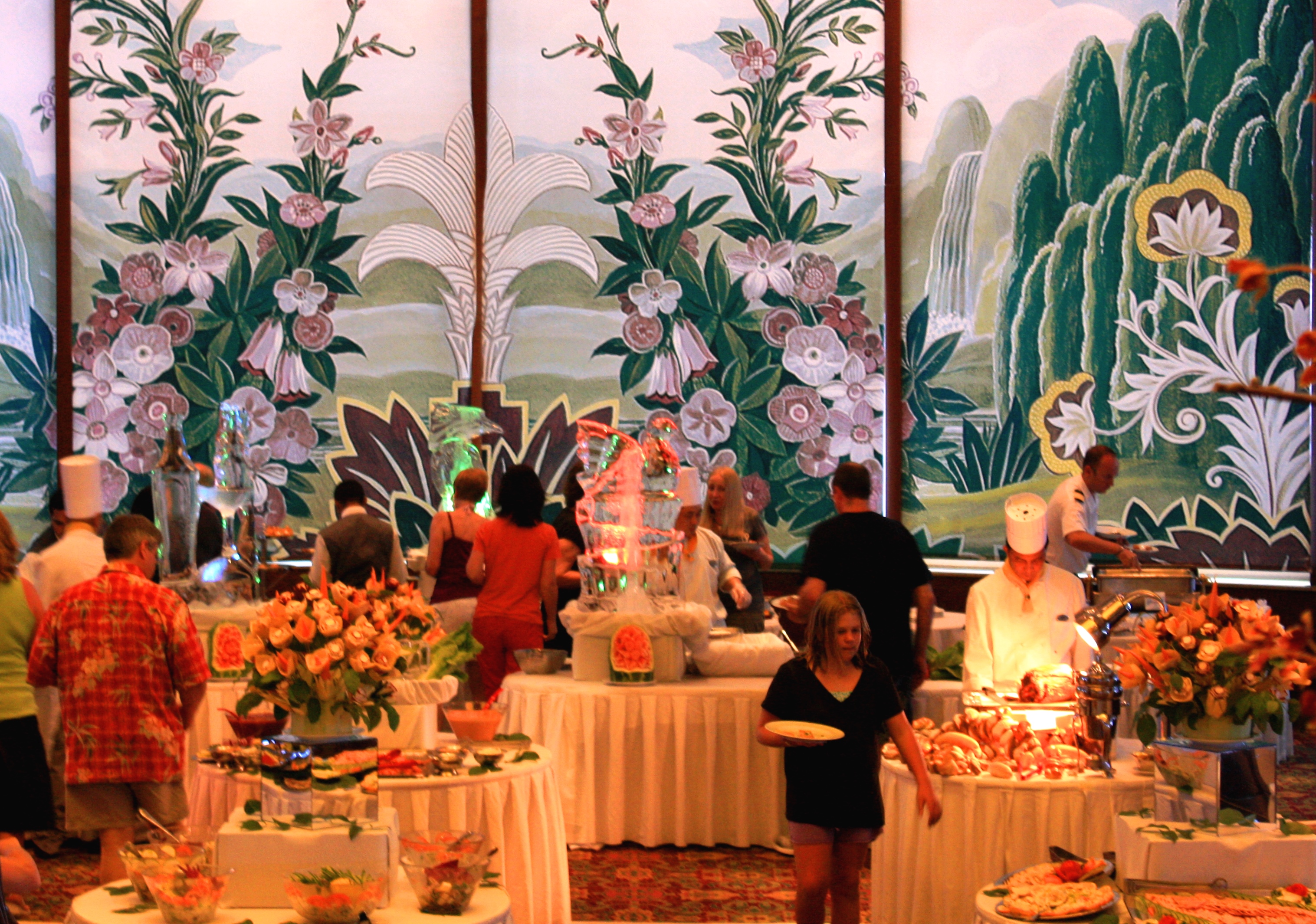
Cruising is a continual feast, but I guarantee that some of these people were complaining.
I took this photo on board the Celebrity Summit, March 2010
“It is literally true, as the thankless say, that they have nothing to be thankful for. He who sits by the fire, thankless for the fire, is just as if he had no fire. Nothing is possessed save in appreciation, of which thankfulness is the indispensable ingredient. But a thankful heart hath a continual feast.” — W.J. Cameron
Have you noticed how quickly we come to expect, and then demand, blessings that we were once thrilled to have? Nowhere is this more evident to me than in the increasing number of comforts and conveniences we think we MUST have, but could actually live without quite easily. I think many aspects of travel fall into this category.
For example, cruising can be one of the most inexpensive ways to see a lot of different places without having to pack and unpack. The food and entertainment choices abound, and in all the cruises we’ve taken, the things we enjoyed far outweighed the things we weren’t crazy about.
Nevertheless, many seasoned cruisers are terribly hard to please. Go to any cruise review website and you’ll find people griping about all sort of things, but a lot of it will be about the food. It seems to be some sort of status symbol nowadays, to talk disdainfully about “chain restaurant food.” Maybe I’m too easy to please, but I don’t understand this sort of ingratitude. It’s as if people become desensitized to abundance, and caught in a cycle of perpetual discontent, always demanding more in either quantity or quality.
The next time I find myself griping about something that many people only dream of having (such as a car, a trip, food on the table, or the health to enjoy any of it) I want to remind myself of all the ways I should feel thankful. That I could afford to buy whatever it is. That I was able to see, hear, taste or otherwise enjoy it. That I was able to make the time in my day, and in my life, to obtain and benefit from it. I could go on, but you get the idea.
I’ve talked with Jeff many times about gratitude, and how I’m almost superstitious about it. I always have the feeling that if I’m not grateful for what I have, it will be taken away from me. Perhaps this attitude springs, in part, from an old folk tale that made a huge impression on me at a very young age.
Nevertheless, the importance of living with a grateful heart cannot be overestimated. I find that when I fully appreciate something, it’s easier to let go of it when the time comes. If I feel and express thankfulness for someone I love while they are still present in my life, I will have fewer regrets for my negligence later, and less sorrow over the loss when we are parted.
Our lives right now are so unpredictable that I have no idea what will be going on in two weeks when this is published. However, I can say with confidence that regardless of what is happening in your life or mine, we all share one thing in common: there will be many things for which we can and should feel thankful. Please join me today in feeling, and more importantly, expressing, sincere gratitude!
One year ago today:
Incredible power
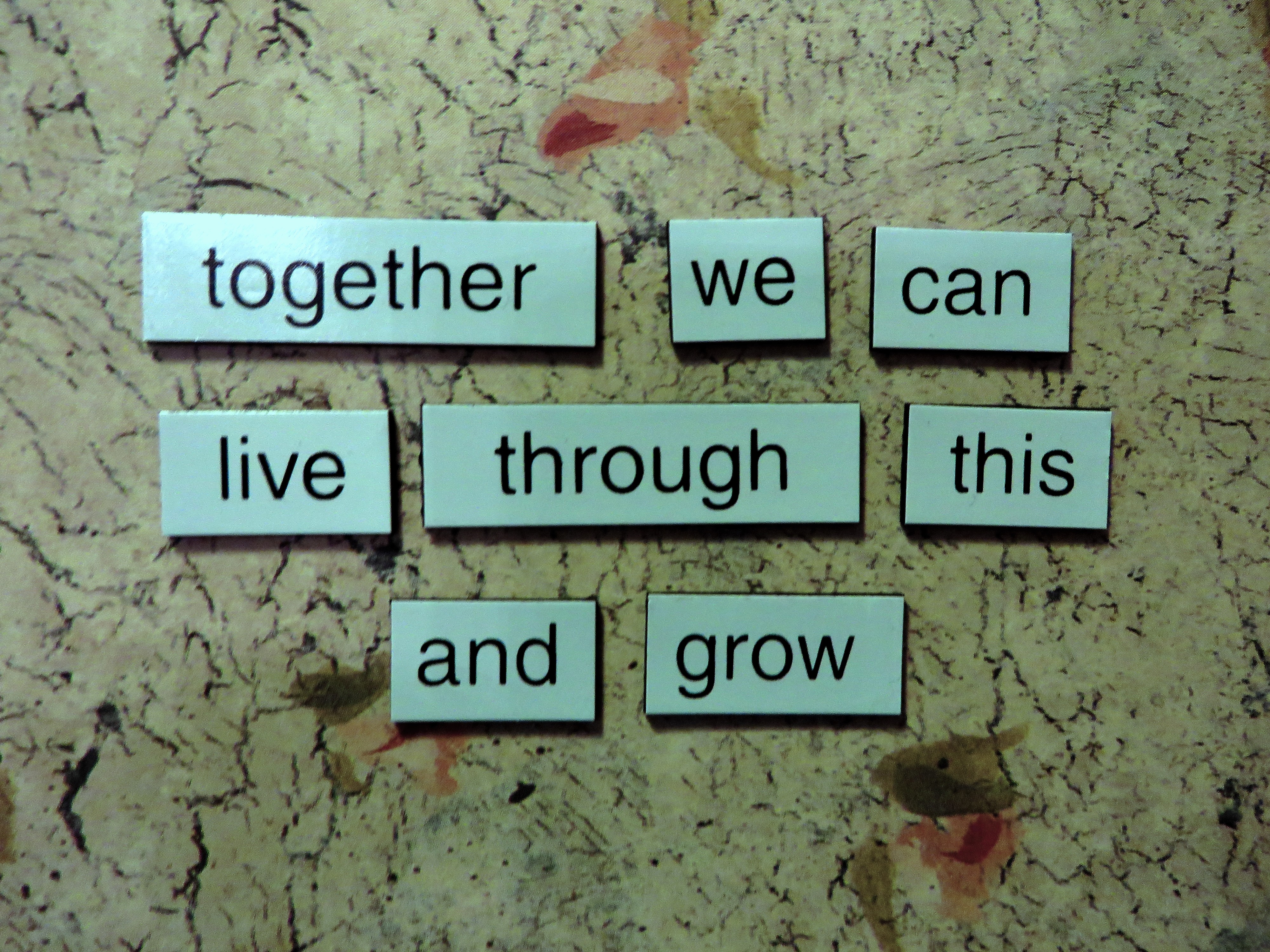
I posted these word magnets in our kitchen after Jeff’s diagnosis in 2012.
They have been there for us to see every day since.
“Words have incredible power. They can make people’s hearts soar, and they can make people’s hearts sore.” – Mardy Grothe
Never underestimate the effect words can have, for better or worse. The Bible’s book of James (chapter 3) is one of many sources of wisdom that remind us of the importance of guarding what we say. One reason I tend to prefer reading and writing to most live conversation is that it comes with a sort of “time delay,” which enables me to be a bit more cautious.
Written words have an additional benefit: they can be available to be read and seen again and again. That’s why posters, signs and Pinterest sites are full of inspiring quotes and witty sayings with which we decorate our homes and our computer screens.
Today, I encourage you to find a few ways to post some inspiring words where you can see them often. You can do a simple Google image search and come up with all kinds of ideas. Letters and cards from loved ones, magazine clippings and even catalogs can provide you with plenty of material to make yourself a small index card or larger collage to feed your mind with helpful and uplifting thoughts.
So if you thought words were just for books and blogs, think again! Use words to light up your living spaces and bring a smile to your face, or strength to your spirit. Feel free to share some of your favorites in the comments, or send a photo of a memorable quote that you have posted somewhere in your home or office, and I’ll upload it here. You can email it as an attached file to defeatdespair@verizon.net.
Let’s surround ourselves with words to make our hearts soar!
One year ago today:
Solaced and refreshed

A very young patient enjoys the vocal music of the 82nd Airborne Division Chorus,
who visited Riley Hospital for Children in Indianapolis, Indiana, July 2008.
“Songs for all ages” by The U.S. Army, Public domain, via Wikimedia Commons
“My heart, which is so full to overflowing, has often been solaced and refreshed by music when sick and weary.” ― Martin Luther
I connect with a lot of things Martin Luther said, but none more than this quote. There is nothing quite like music to soothe, heal, cheer, console or bring cathartic tears. Music can reach beyond barriers that may be presented by language, illness, or disability, and has even seemingly awakened coma patients.
Music has never been more freely available than it is today, with online offerings to suit every taste and mood, along with multiple free programs that allow you to build your own playlists. You can put together a collection of your own happy favorites for playing yourself out of a crabby mood, or calming melodies to ease tension and agitation.
If you need a quick dose of cheer, try this favorite from Vivaldi’s Four Seasons, a work that never fails to lift my spirits. This short clip is from “Autumn,” so when you hear it, perhaps it will bring to mind the energizing touch of crisp fall air, which will be here before you know it!
One year ago today:
For others
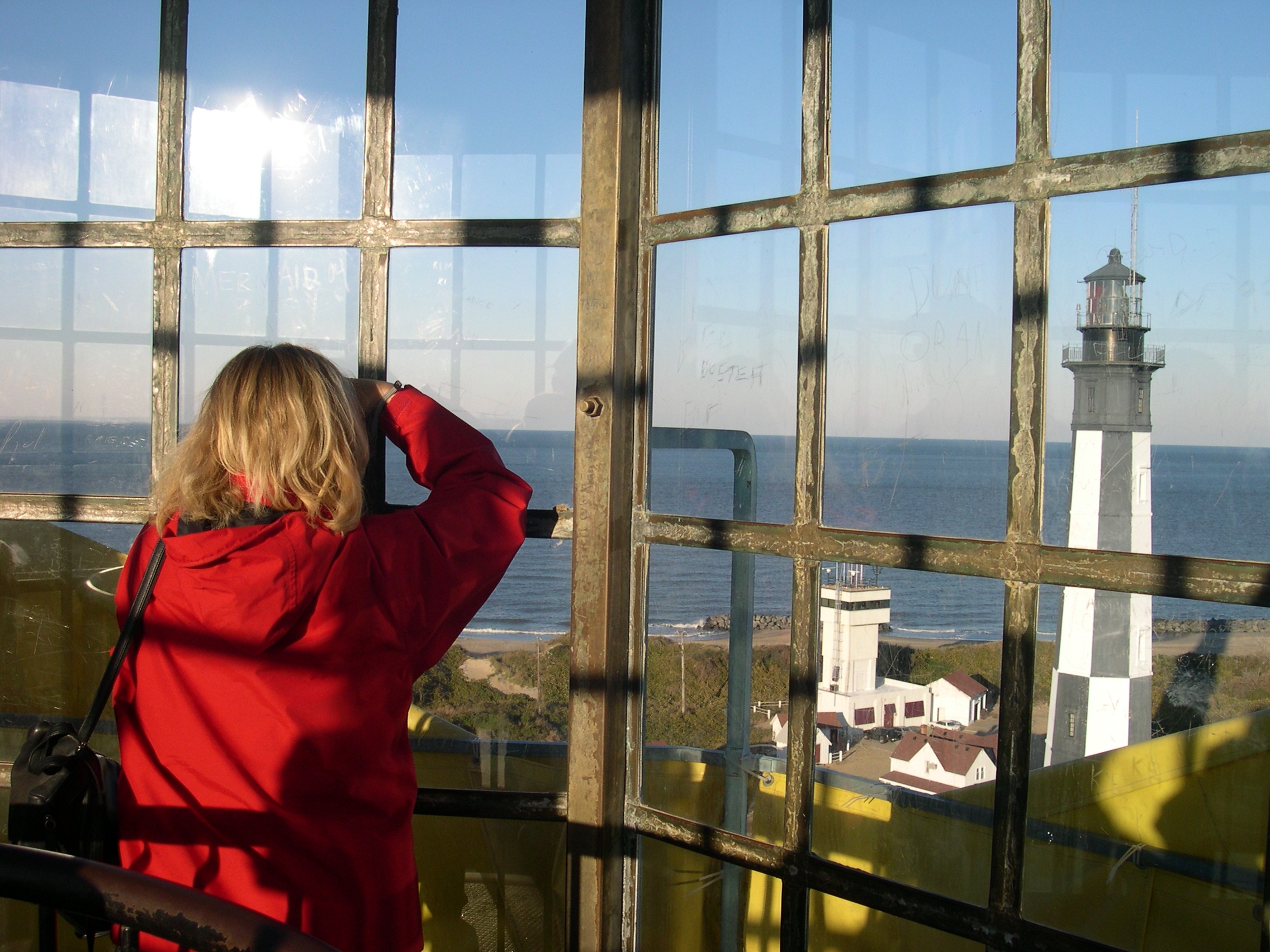
Looking out from one lighthouse to another.
Kathy photographs the newer lighthouse from the older one, Cape Henry Virginia, April 2009.
“The dip of the light meant that the island itself was always left in darkness. A lighthouse is for others; powerless to illuminate the space closest to it.”
― M.L. Steadman
I was surprised at the controversy that erupted when the private journals of Mother Teresa were made public, revealing that she suffered from depression and doubts. Given the nature of her work and the sacrifices she made to continue it, I don’t know how she possibly could have avoided the periodic struggles that are almost inseparable from lifelong faith.
So often we look at those who are shining examples, and we assume it comes more easily for them than it would for us. We think them more gifted, or resilient, or noble, or brave. “I could never do what you do,” we might say, intending it to be a compliment, not guessing that they may be silently thinking: Oh, yes you could if you had to. If you were willing.
In reality, those we see as heroes are probably not much different from the rest of us, except for their commitment to what they believe; the will to keep going no matter how their emotions may assault them. In fact, their steadfast dedication probably means that they get far less encouragement than most of us get. After all, they don’t seem to need it.
But everyone needs it. We all need each other. It may be impossible to be guided by our own lights, but we can see the beams from those of others. Thus when we look outward for light in the darkness, we might consider the question of whether we have sufficient fuel to send forth even a small light ourselves. Someone out there is watching for it.
One year ago today:
A very common phenomenon

Tony Curtis talking to a lot of people he doesn’t know. Washington DC, February 2007.
U.S. Navy image in the public domain, via Wikimedia Commons
“[Fame is] like having Alzheimer’s Disease. You don’t know anybody, but they all know you.” — Tony Curtis
“Being a star has made it possible for me to get insulted in places where the average Negro could never hope to be insulted.” — Sammy Davis Jr.
“Everyone wants to be Cary Grant. Even I want to be Cary Grant.” — Cary Grant
“With fame I become more and more stupid, which of course is a very common phenomenon.” — Albert Einstein
This post is for everyone who has ever felt overlooked or under-appreciated. I suspect that includes most of us. Today we hear directly from those who have been there and know: fame isn’t always as wonderful as it may appear to be.
If you’re reading this blog, it almost certainly means you aren’t famous. Today, I encourage you to join me in celebrating our (relative) anonymity. Though social media and ever-intrusive forms of surveillance have seriously compromised the privacy we once took for granted, we can still go to the grocery store without being mobbed for autographs or castigated for our political views. As celebrities might be quick to tell you, that’s something for which to be thankful.
Go ahead — have as many bad hair days as you like, wear your most comfortable clothing, and ditch the self-conscious worries about what people are going to think of you. Unless you have someone nearby snapping cell phone photos and posting them to Instagram, no one is likely to notice. Besides, even the people you may see face to face probably are looking more at their smart phones or portable devices than they are looking at you. In a weird way, the digital revolution may actually give some of us MORE privacy than we had before.
So dress for less stress, and I’ll see you at Kohl’s or Cracker Barrel or Target. But you might not recognize me. I would never post a photo online that shows what I actually look like most of the time! 😀
One year ago today:
Stored honey

It’s a lot of work to store away a bit of sweetness. Monticello, Virginia July 2014
“Art is the stored honey of the human soul, gathered on wings of misery and travail.”
— Theodore Dreiser
Until I was diagnosed with diabetes in 2010, I used to put lots of honey in my tea each morning. I’ve always loved honey. It amazes me how hard the bees have to work to make it. Sometimes when I was young, Mama would buy honey with the comb still in it as a special treat for me, and I would chew it as if it was chewing gum.
I think Dreiser makes a good analogy between art and honey. It seems to me that most if not all great art comes out of adversity and sorrow. And it’s painstakingly created, even when the skill of the artist makes it seem otherwise.
Think of the lovely plein air paintings of the impressionists; they must have been difficult to create in an outdoor setting, despite the wonderful light and inspiration. I bet that all sorts of pollen, debris and other airborne particles would get stuck in the paint. And imagine the frustration of getting your easel and equipment set up, only to have a storm blow in just as you are getting started!
We spread honey on our toast in the morning without giving it much thought, just as we stroll past great works in a gallery and seldom reflect that we are seeing the cumulative result of countless hours of execution, to say nothing of the lifelong practice and mistakes that came before, building the mastery that left this legacy for us to enjoy.
In the same way, we may overlook the art all around us in our everyday life, offerings of love from people who manage to create beauty out of misery and travail. I hope today you’ll be able to taste the sweetness of honey from human souls, stored to help us through the tough times.
One year ago today:
Tickled silly
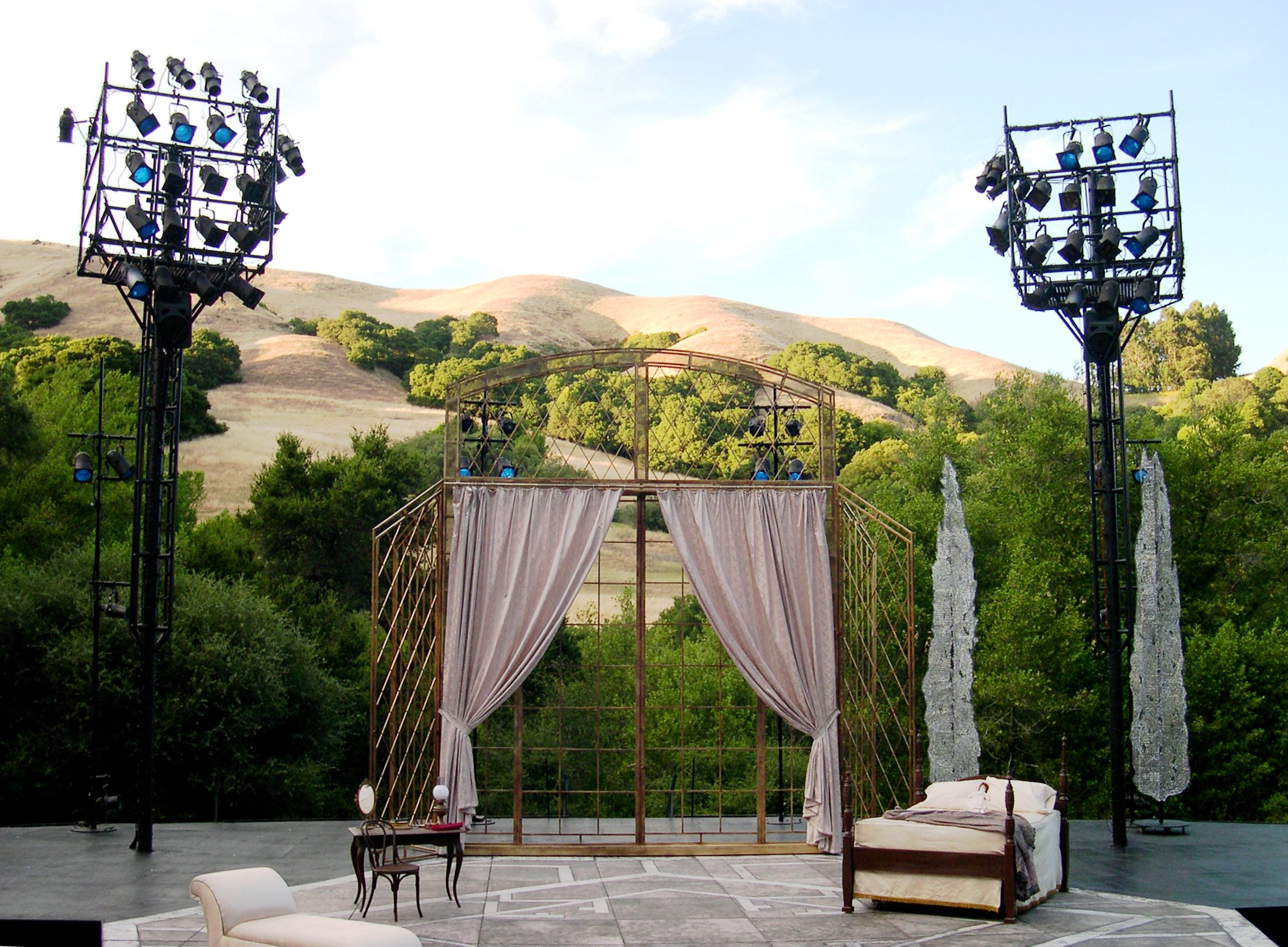
The stage is set for the performance of a lifetime. Break a leg!
California Shakespeare Theater, Orinda, July 2003
“Optimist: someone who isn’t sure whether life is a tragedy or a comedy but is tickled silly just to be in the play.” — Robert Brault
One year ago I wrote about my precious Aunt Peggy, who has survived things that might have left less optimistic people feeling bitter. Peggy is one of those people who are tickled pink just to be in the play, and she’s still one of the leading stars in my cast of characters. Comedy or tragedy, her timing is perfect and her spirit is one in a million.
We all need some optimists in our life, to remind us that the show must go on, and we’re lucky to be part of the production! Who are the stars in your show?
One year ago today:
Not yourself
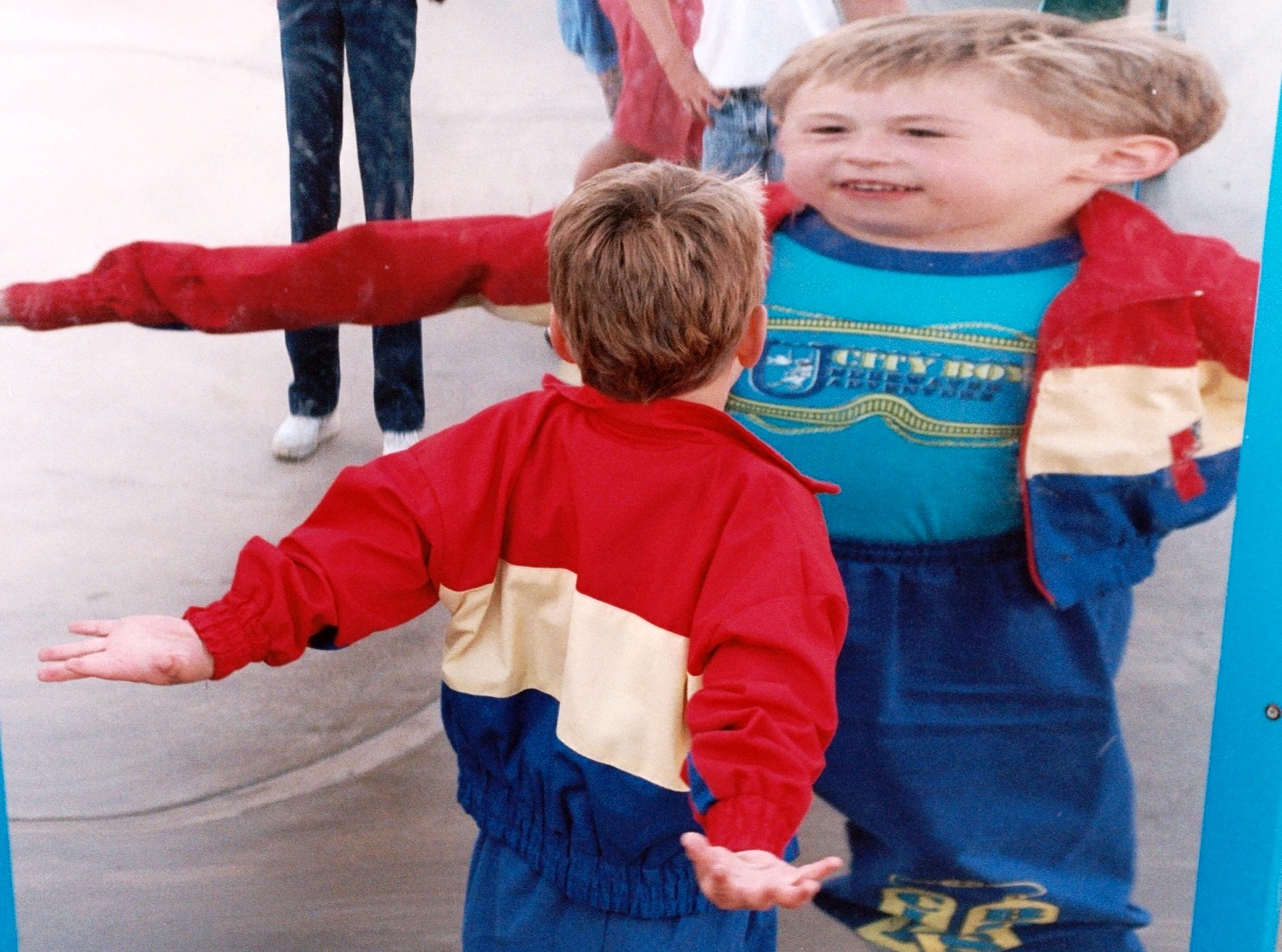
Matt see himself (sort of) in a funhouse mirror in San Diego, California, Spring 1992.
|
When you look |
kool uoy nehW rorrim a otni ton si ti ˛ees uoy flesruoy dnik a tub rorre hsipa fo lufraef ni desop yrtemmys |
|
WOW, I love this poem! What do you see when you look in a mirror? How does it differ from what others see when they look at you?
One year ago today:
Odd corners
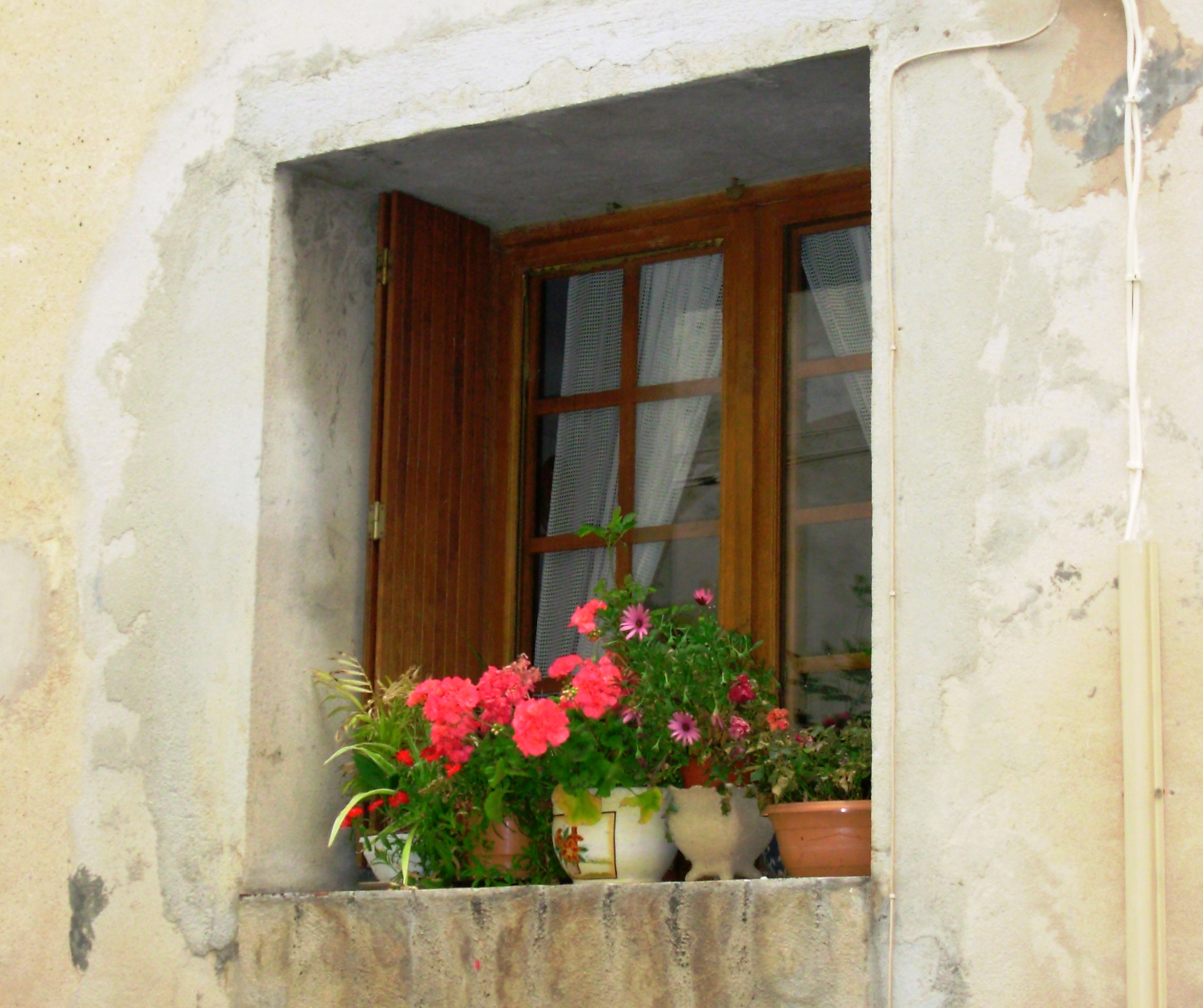
This photo brings back fond memories of a quiet corner of Allauch, France, May 2008.
“It is not on mountaintops that the charm of life lies, for we are seldom there. It is in nooks and vales, in odd corners, that life is spent and finds its settings.”
— Wallace Nutting
Your summer vacation might now be a pleasant memory, or maybe you didn’t even take one. In any case, you can still enjoy one of the perks of travel by looking at your present surroundings with fresh eyes. What is there in your everyday life that you are not seeing? Perhaps you often walk, ride or drive past an appealing house you never noticed, or your neighbor’s begonias are in full bloom this week.
I love visiting friends in their homes, because there are always interesting artifacts and appealing snapshots of their life to be found. These “snapshots” may be actual photographs, but really they can be most anything that gives me a glimpse into some interesting aspect of their personality that is new to me. If I have my camera, I might even ask if I can take pictures of whatever catches my eye. My question often meets with amusement that I think that particular “odd corner” is worth photographing. Something about the commonplace doesn’t seem camera-ready to us.
You can prove that it is, though. Grab your camera or smart phone and look around your own home, inside or out. The toys scattered by children or pets, the notes on the refrigerator door, the items sitting on your kitchen counter…all these are potential still life compositions that will someday bring back memories for you.
Of course, you can also shoot more traditional subjects such as flowers, gardens, people or animals. Whatever you capture in a photo, look for the charms of today, the places your life is spent. You’re not simply preserving a memory; you’re creating one, just by noticing.
One year ago today:
Fuel for our journey

“Fire O” by Marcus Obal, licensed under CCA-Share Alike 3.0 via Wikimedia Commons
“We must embrace pain and burn it as fuel for our journey.” — Kenji Miyazawa
That sounds like a good idea to me. However, it may be difficult to implement. As fuels go, pain is an expensive one. And it’s not particularly clean-burning, either.
Still, there are times when we don’t have much choice. It may be that burning pain for fuel is the least damaging option in the long run, far less damaging than storing it away where it will produce toxic fumes. Besides which, we may not have a lot of other options available for some quick and much-needed energy.
During those times when we find ourselves running low on fuel, whether physically, emotionally or spiritually, I hope we can find ways to utilize the negative experiences of pain, sorrow or frustration, all of which tend to have lessons embedded within. If we’re lucky, we still have a good bit of our journey ahead of us, and we can use whatever assets we find to keep us going. Some will be more attractive than others, but all might turn out to be necessary.
I wish you freedom from pain, but when it strikes, burn it as fuel if you can possibly manage it. Though it’s a tough conversion process, it’s worked for me in the past, and probably will again.
One year ago today:
Not the same thing

Today’s students, like all of us, will learn more outside the classroom than inside it.
I photographed these school children in Dominica, March 2010.
“They say that we are better educated than our parents’ generation. What they mean is that we go to school longer. It is not the same thing.” — Richard Yates
“But knowledge puffs up while love builds up. Those who think they know something do not yet know as they ought to know.” — 1 Corinthians 8:1-2
It bothers me that formal education is becoming a status symbol, a commodity to be rated and sold as a means of achieving society’s wealth and adulation. Never mind that the world is kept running largely by people who are unable to go to the local community college, let alone Harvard. In the mutual admiration society that constitutes much of academia, this kind of reality doesn’t intrude until one’s plumbing goes awry, or the sanitation workers go on strike.
I’m guessing we all know many people who never got a college degree (and maybe never even a high school diploma) who were sources of unfailing wisdom, strength, humor, achievement and support. I feel safe in assuming that many of these people were of our parents’ generation, and went to high school during a time when there was no cottage industry that existed purely to increase SAT scores. They made their way in the world without benefit of AP courses or programs for the gifted, before anyone ever thought to talk about self-esteem.
Knowledge does not equal wisdom, and increasingly, formal education does not necessarily equal either wisdom or knowledge. I’m not knocking education; it’s a wonderful thing. Sometimes you can even get it from a school or a university.
But we learn the most practical and lasting lessons from life outside the classroom, through the person-to-person exchanges we have with each other, especially the ones that don’t involve grades, money, or other not-so-hidden agendas. None of us needed the Ivy League to teach us to cook, pay bills, cheer others on, fix what breaks or volunteer to lend a hand where needed. We learned those things by watching others, and most of the people we watched don’t have any impressive initials after their names.
Today, I hope you will remember fondly those lessons you learned from people who were teachers in the truest sense of the word. They may never be honored with formal titles or pomp and circumstance. But whatever good we have in our lives is directly connected to their unheralded faithfulness in showing up and keeping on.
One year ago today:
Wildly enthusiastic
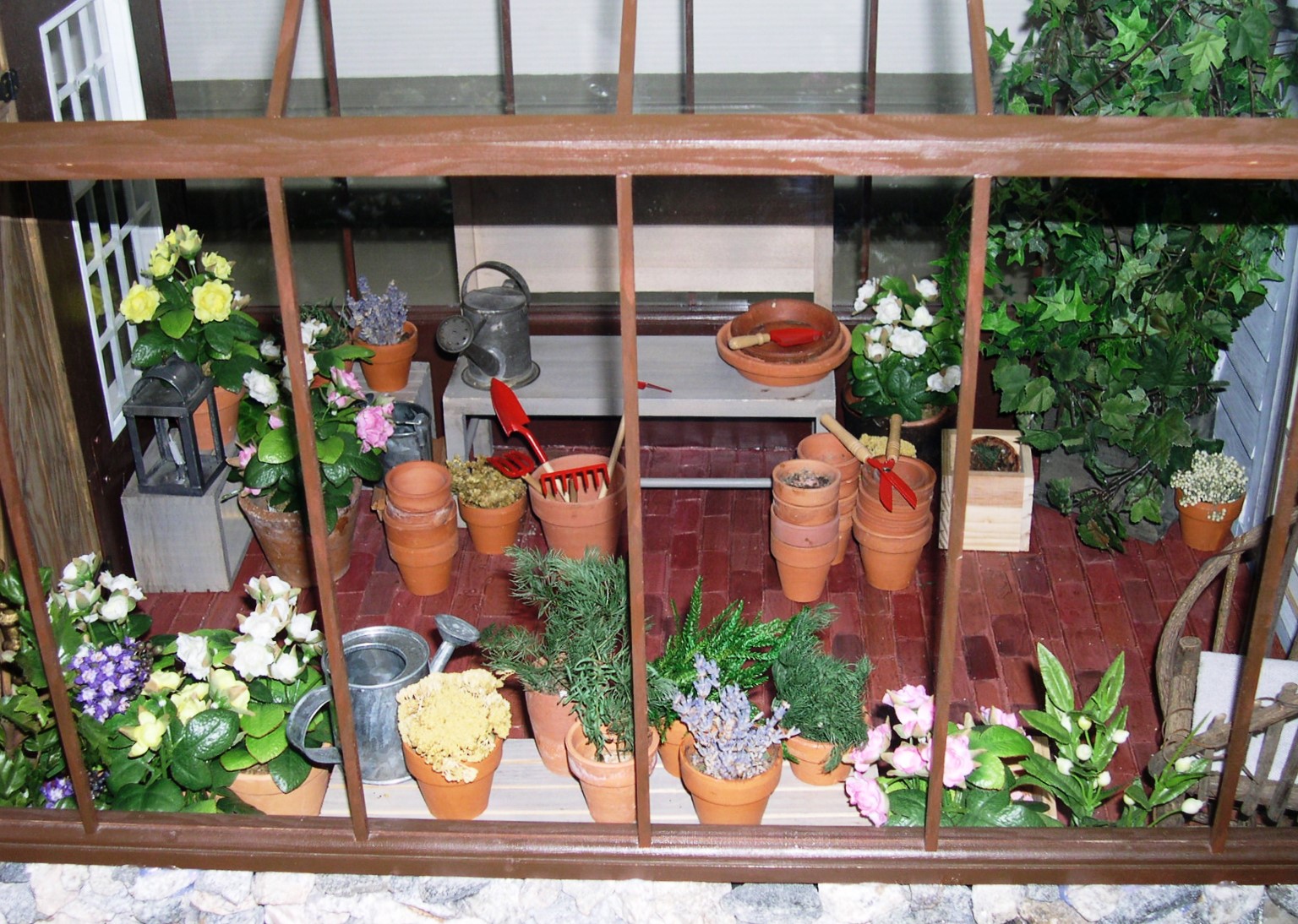
I got so excited about this miniature greenhouse that I took several photos of it.
Tasha Tudor dollhouse, Colonial Williamsburg, Virginia, December 2004
“I still get wildly enthusiastic about little things…It has been after such times of joy that I have achieved my greatest creativity and produced my best work.”
— Leo F. Buscaglia
More than once over the years, people have made fun of me for getting excited over things they considered minor or insignificant. Confusing their own ennui with sophistication, or perhaps irritated at my ebullient chatter, they would make some sarcastic observation about how little it took to make me happy.
I never minded it, though, because I always felt I was the lucky one in that scenario. How pathetic to be so demanding of life, so blind to how amazing and wonderful and crammed with blessings it is on even the worst days!
When I am feeling listless, tired or despondent, there is no better remedy for it than to get enthusiastic about something. Fortunately for me, that’s always been pretty easy to do. Whether it’s a video of Grady, a funny YouTube clip, my neighbor’s adorable dog, or a letter from someone I love, the little rays of sunshine can make my day.
Perhaps my fascination for miniature things, beginning with the exquisite dollhouse my parents made for me when I was a child, is a fitting parallel to my interest in almost everything in the entire world, no matter how small or overlooked. As Sheila mentioned recently regarding the nickname she got from her own interest in life, some people might brand me as a “Nosy Nora.” No apologies from me about that — and no regrets, either!
If you are like me, capable of intense enjoyment of little things, I congratulate you — your life will never be boring, and you will go to bed most nights with a full and grateful heart. If, on the other hand, you find yourself scratching your head over silly people such as I, wondering what it is that’s so funny or happy or delightful, please accept my sincere condolences — and think about joining the party. Even if you aren’t capable of the giddy giggles you will see all around, you might manage a bit of vicarious joy just by watching others having fun.
What little things can you be wildly enthusiastic about today?
One year ago today:
Sometimes to go

“Walking in Yosemite” by Rennett Stowe; Licensed under CCA 2.0 via Wikimedia Commons
“Oh, how one wants sometimes to go from such giftlessly high-flown, cheerless human wordiness into the seeming silence of nature, into the arduous soundlessness of long, persistent labor, into the wordlessness of deep sleep, of true music, and of a quiet, heartfelt touch grown mute from fullness of soul!”
— Boris Pasternak
Probably nobody I know is more fond of a good conversation than I am. I love reading, writing and anything to do with words. But there are times — especially when I’m in a noisy, crowded place, or worse, when the inane chatter of a television is blaring nearby and I’m powerless to stop it — when I just want to flee into the sanctity of silence.
The images Pasternak brings together in this quote evoke, in different ways, that feeling of retreat from empty clatter. Nature’s calm, the satisfaction of manual labor, the balm of sound sleep, lovely music and silent companionship: these are the places of respite from the peculiar stresses of spending too much time amid the “progress” of civilization.
During the long weeks of living in hospital settings over the past year, how we would long for the quiet cocoon of our home! What a solace it can be, to escape to a secluded natural spot away from traffic, urban stress and electronic stimulation. During the grinding heat of the summer (or the chill of winter, for those south of the equator) I wish you many moments of escape to refresh and renew your spirit.
One year ago today:
Like an inheritance

Mama and Daddy with their aging children, January 2014
“Avoid providing material for the drama that is always stretched tight between parents and children; it uses up much of the children’s strength and wastes the love of the elders, which acts and warms even if it doesn’t comprehend. Don’t ask for advice from them and don’t expect any understanding; but believe in a love that is being stored up for you like an inheritance, and have faith that in this love there is strength and blessing so large that you can travel as far as you wish without having to step outside it.” ― Rainer Maria Rilke
Rilke did not have an ideal childhood, but as with many others who mature beyond youthful unhappiness, he was able to see past the difficulties to the timeless treasures that are inherent in family ties. Despite the seemingly universal presence of sorrow and heartbreak in our lives, almost all of us have known the blessings of nurturing love such as Rilke describes.
Today, I invite you to celebrate that love, and if you are fortunate enough to have parents who are still living, thank them for the inheritance they have stored up for you, and rejoice in the boundless world that comes with it.
One year ago today:
To build or to destroy
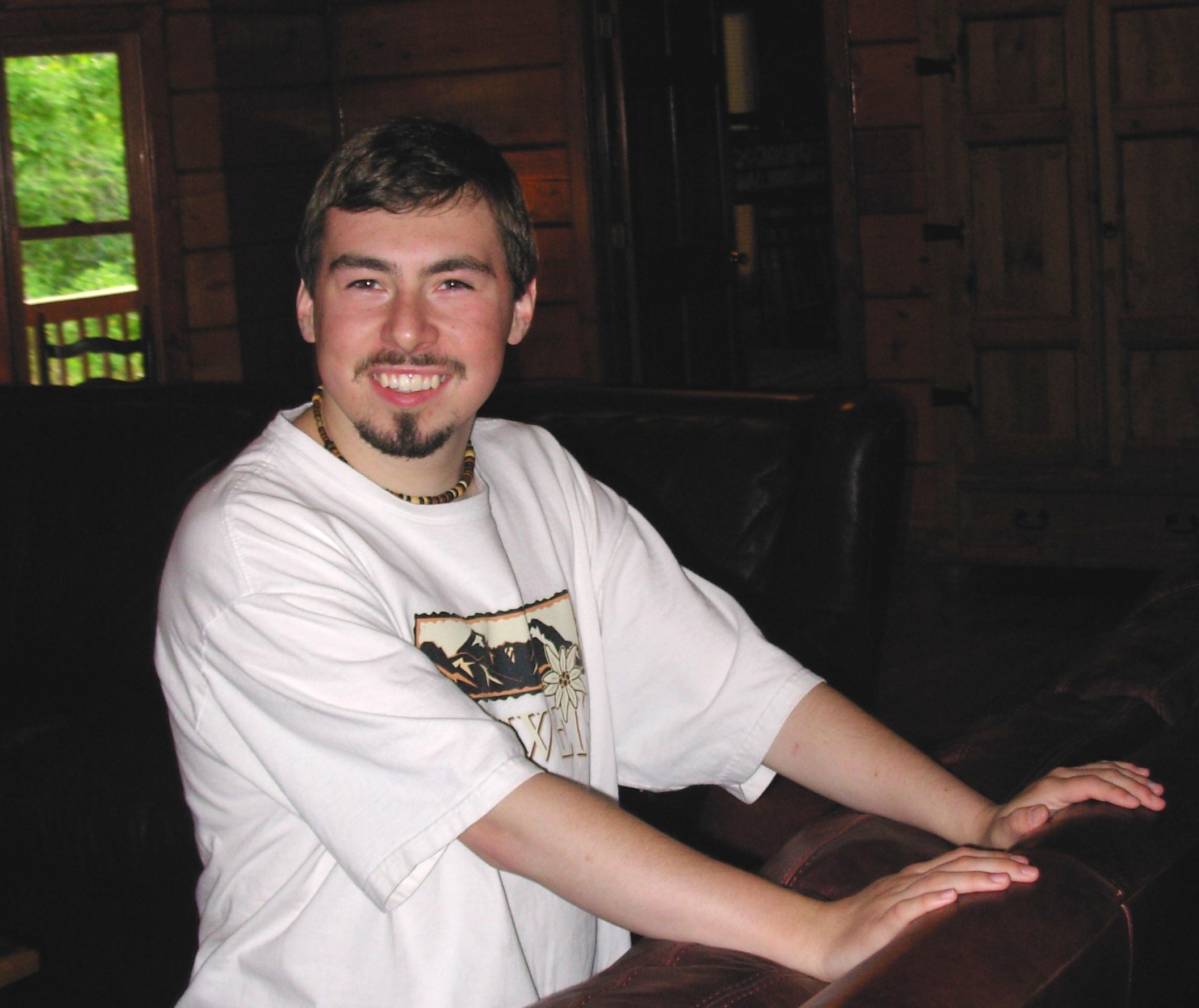
Matt’s sweet spirit is a continual inspiration to drive out anger with love.
Centerville, Tennessee, August 2007
“Usually when people are sad, they don’t do anything. They just cry over their condition. But when they get angry, they bring about a change.” ― Malcolm X
“Anger is just anger. It isn’t good. It isn’t bad. It just is. What you do with it is what matters. It’s like anything else. You can use it to build or to destroy…Passion has overthrown tyrants and freed prisoners and slaves. Passion has brought justice where there was savagery. Passion has created freedom where there was nothing but fear. Passion has helped souls rise from the ashes of their horrible lives and build something better, stronger, more beautiful.” ― Jim Butcher
“My dear brothers and sisters, take note of this: Everyone should be quick to listen, slow to speak and slow to become angry, because human anger does not produce the righteousness that God desires.” — James 1:19-20, NIV
Today (two weeks before this post will publish) my ongoing frustration crossed over to anger, at the endless, exhausting bureaucratic delay and obfuscation that have stood for years now between Matt and an appropriate vocational program or even a day program that would give him something to do with his long hours.
His case worker and countless bureaucrats agree he needs and deserves such services. His cardiologists have put their agreement with our goals in writing, citing Matt’s cardiac health as one reason he needs to maintain an active life. But the Commonwealth of Virginia has outdated laws that differentiate between autism and other kinds of disabilities, so doors remain closed for many young adults with autism, even as the U. S. Department of Justice works with the state at an agonizingly slow pace toward resolution of this inequity.
As it happens, the post I published one year ago had the interesting title “Jump in the lake.” So I decided to look at some quotes about anger. The three I chose to feature above each helped me to focus the inner turmoil that threatened to derail my entire day.
Malcolm’s quote reminded me that anger is often a manifestation of the determination to defeat despair. Butcher’s quote confirmed my enduring belief that anger can be a tool used to achieve desirable ends. But the scripture from the book of James, quoted above, ties it together with a wise and powerful warning: that tool should be used carefully, and not in haste.
Note that James does not say we should never speak, or never become angry. But we should be slow to do so. Ouch! I am far too quick to do both. And isn’t it interesting that James ties anger and speaking together, here and elsewhere?
Anger is like fire, helpful only when well controlled. The reason it does not produce righteousness is that it’s so easily (and often inextricably) mixed with selfishness, jealousy, recklessness, and vengeance, all of which lead to destruction.
When I feel angry, it helps if I remind myself that anger is often a sign of fear, and “perfect love drives out fear.” Today, I’m going to make a conscious effort to drive fear and anger away, by filling my mind with thoughts of love and gratitude. If you are struggling with anger, frustration or despair, I send you a special invitation to join me in the effort to use it to build, not destroy.
One year ago tomorrow:


