Mind and soul
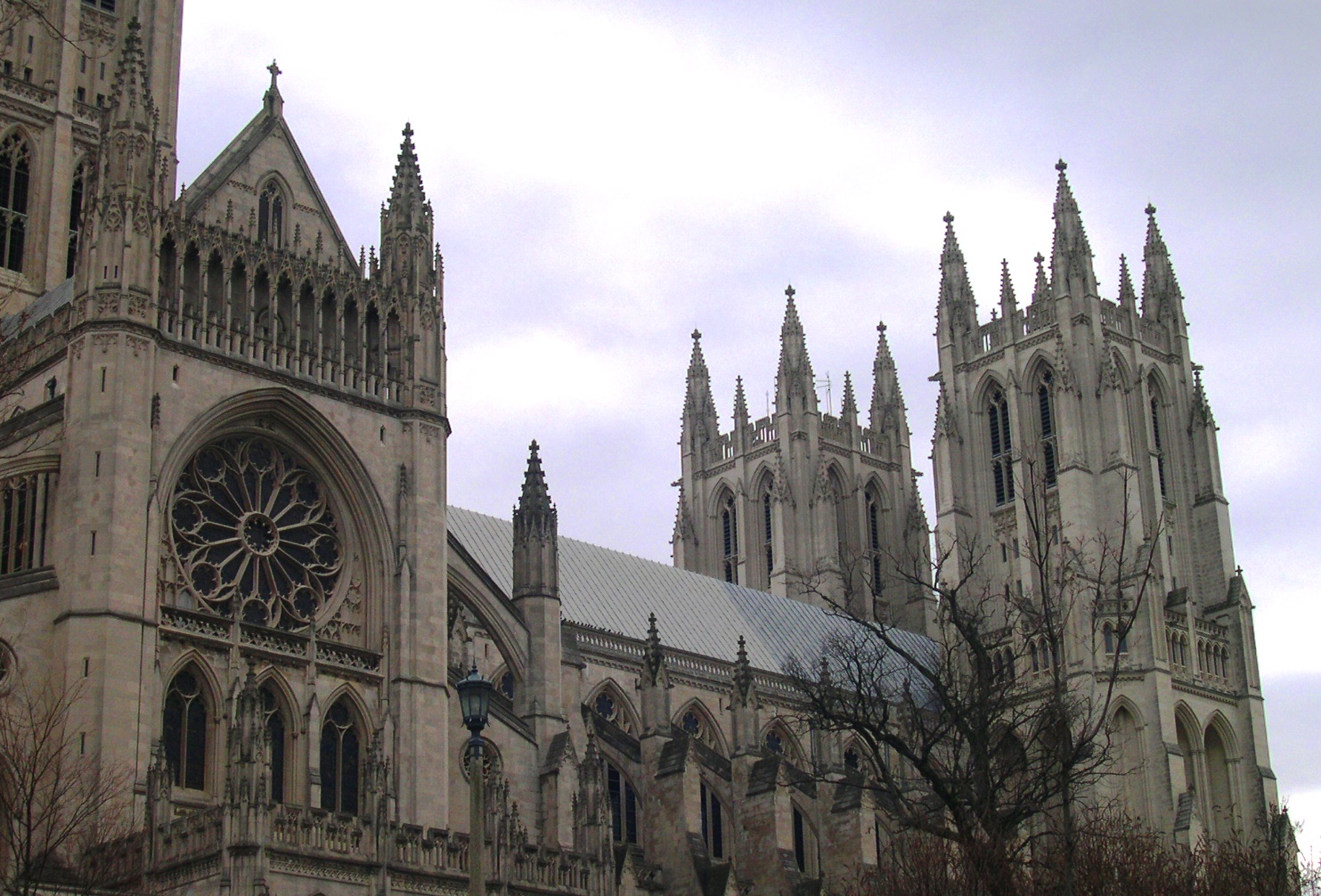
A December 2004 photo of our National Cathedral, built in knowledge and reverence
“Let knowledge grow from more to more,
But more of reverence in us dwell;
That mind and soul, according well,
May make one music as before,
But vaster.” — Alfred, Lord Tennyson
Several miles from the palaces of knowledge found at the Smithsonian Institution, the Washington National Cathedral stands in a quiet residential area seldom congested with the throngs that crowd the monuments and museums. Its lovely architecture, stained glass and surrounding gardens offer a setting conducive to quiet contemplation, set apart from the hectic schedules and political battles of our nation’s capital.
Reverence is a quality that often seems in short supply. In contemporary movies and on television, God’s name is spoken primarily as a conversational byword, an exclamation of surprise or emphasis. But this disregard of spiritual sanctity does not bode well for our world. While it’s true that many evils have been perpetrated under the banner of false or misguided religion, human progress throughout history has been inextricably and undeniably bound up with deeds of courage and compassion enacted by people who lived by faith in a God of wisdom, justice and love.
I believe it’s a mistake to see faith and reason as mutually exclusive. Indeed, many of the greatest minds in history have described how their knowledge served only to deepen their faith. I am grateful today for the knowledge and reverence of those whose sacrificial devotion has made the world a better place for all of us. May we have the wisdom to rejoice that truth lives, despite all efforts to silence or destroy it.
This post was originally published seven years ago today. Whatever changes are wrought by the COVID-19 pandemic and its aftermath, I pray we all will live more reverently, deliberately and humbly. May we be more aware of our own limitations, and how very much could go wrong all the time, every day, yet does not.
The original post, comments and photo are linked, along with two other related posts, below. These links to related posts, and their thumbnail photos, do not appear in the blog feed; they are only visible when viewing the individual posts by clicking on each one. I have no idea why, nor do I know how they choose the related posts. That’s just the way WordPress does things.
The ultimate sophistication
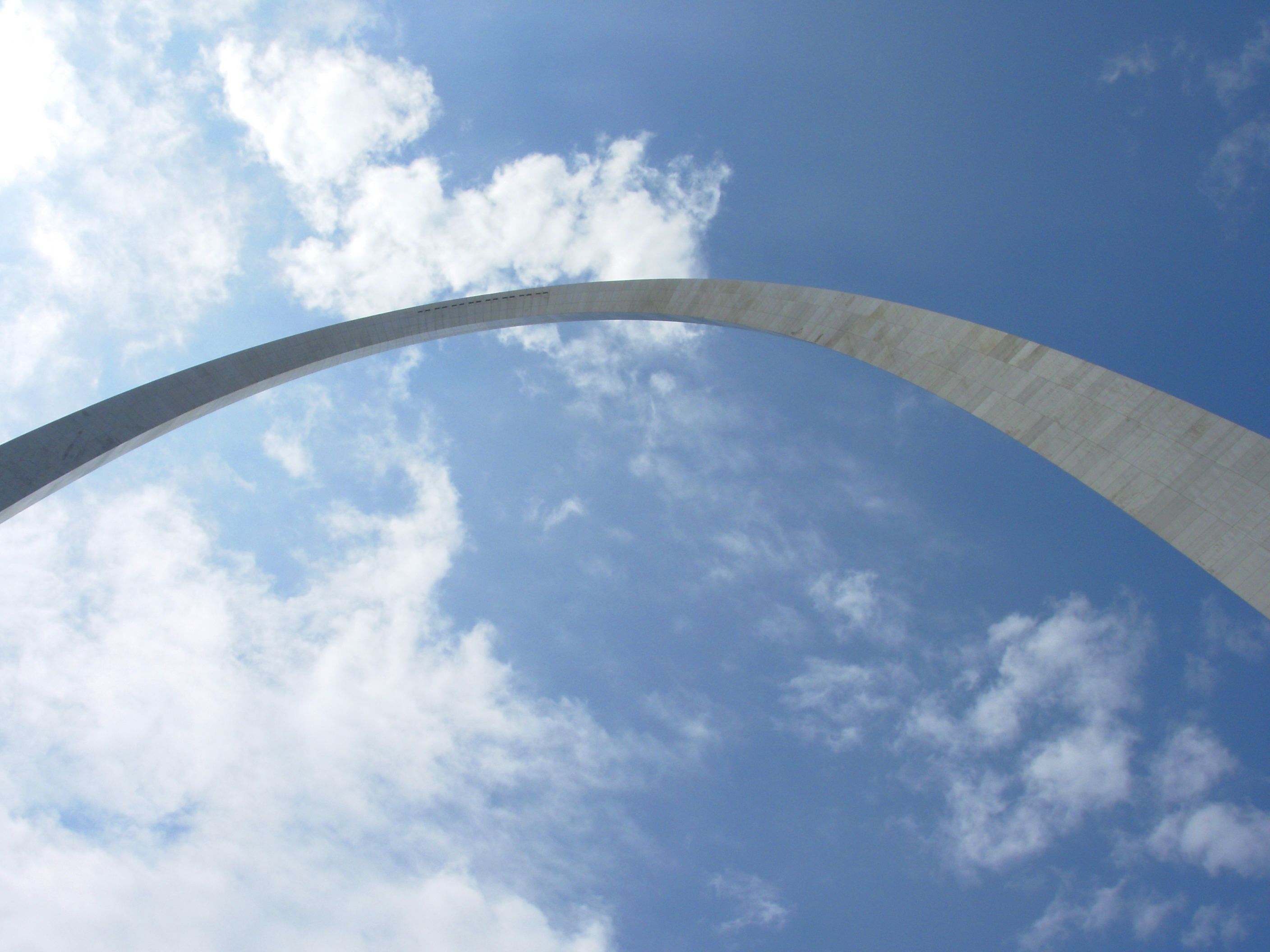
The Gateway Arch, St. Louis, Missouri, April 2008
“Simplicity is the ultimate sophistication.” — Leonardo Da Vinci
Though I’ve confessed to my love of ornamentation, I also admire artists who can produce memorable works with clean lines and few details. Often this type of art has to grow on me over time, as with the Vietnam Veterans Memorial, commonly known as “The Wall.” But sometimes, the simplicity of a design is so perfect as to command instant admiration. The Gateway Arch in St. Louis is high on my list of such works. It looks beautiful from any angle, striking from a distance and remarkable up close.
Simplicity of design or function is all around us, but is inherently easy to miss. When I pay enough attention to notice it, I am usually inspired to work a little harder on my continual battle to de-clutter my life. Whether it’s a building, a room, a functional object or someone’s outfit, simplicity can turn down the noise in my mind and increase my productivity by helping me focus. I hope you will be able to enjoy and appreciate at least a few such designs today.
This post was originally published seven years ago today. The original post, comments and photo are linked, along with two other related posts, below. These links to related posts, and their thumbnail photos, do not appear in the blog feed; they are only visible when viewing the individual posts by clicking on each one. I have no idea why, nor do I know how they choose the related posts. That’s just the way WordPress does things.
Here to change the world
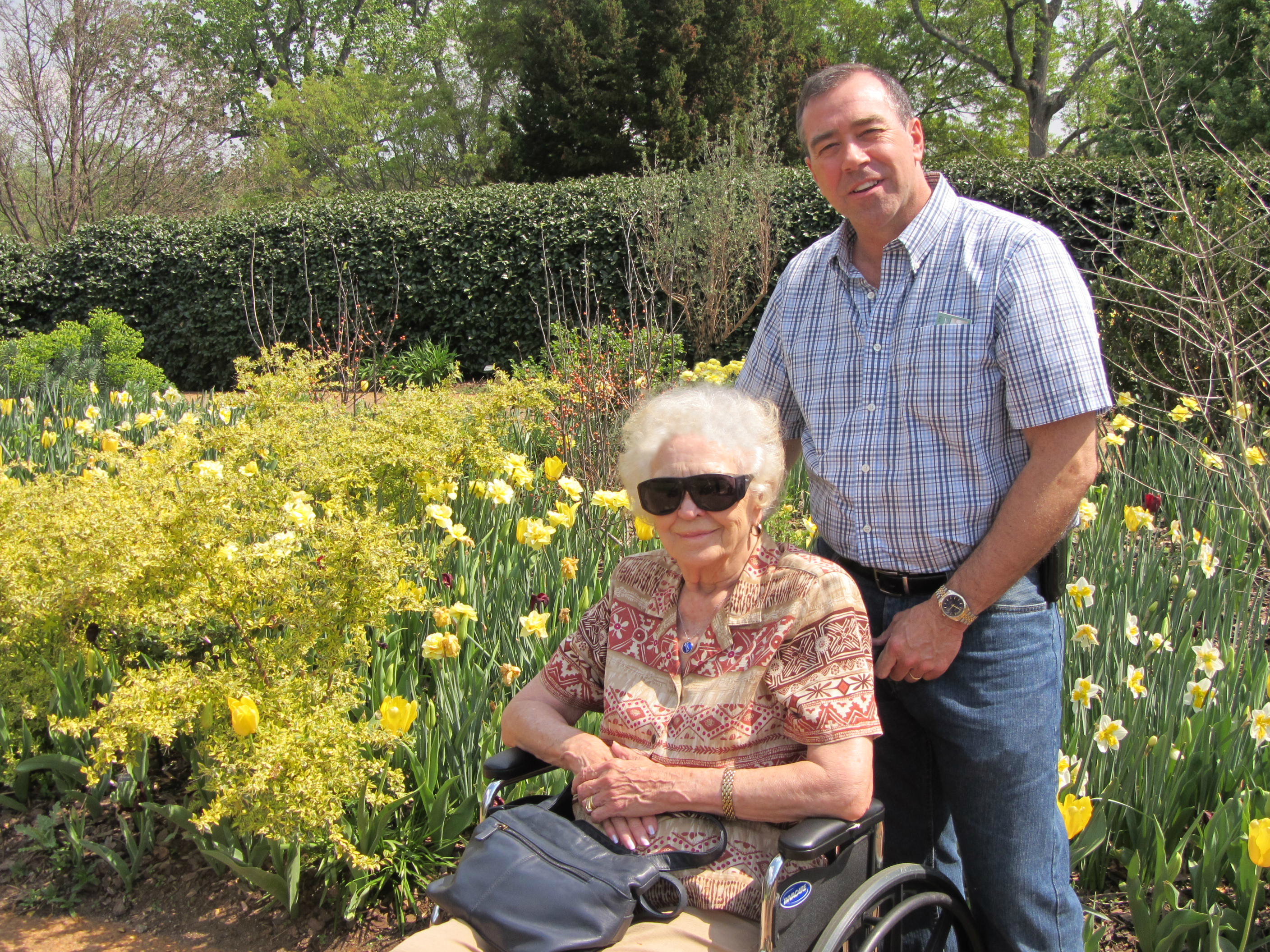
Mom had just had eye surgery, but with Jeff’s help, she was able to enjoy
a lovely day at the Atlanta Botanical Garden in March 2012
“We are here to change the world with small acts of thoughtfulness done daily rather than with one great dramatic leap in results.” — Rabbi Harold Kushner
Everyone loves to see results. There’s nothing more satisfying than completing a major project or putting the final touches on something we’ve labored over for weeks. But in reality, our most important jobs will never be done. Living daily with faith, reverence and humility will always be a challenge, and treating others as we want to be treated will often require patience and stamina.
We aren’t likely to get much honor or applause for the details involved in being thoughtful to others. We all want to change the world for the better, but we probably won’t see dramatic improvement when we make time to care, up close and personally, about one individual at a time.
The good news is that small acts of kindness create synergy that comes back to us, making joyful occasions even happier, and easing the tension in frustrating situations. Thoughtfulness becomes its own reward as we travel through life surrounded with our own portable atmosphere of good will.
We may never see the effect of our actions on the world at large, but that’s not where we live anyway; we’re needed elsewhere. Fortunately, our power to make a difference is located right where we happen to be today; in our families, our neighborhoods, our communities. Whose paths will cross yours today? Whose world can you change?
This post was originally published seven years ago today. The original post, comments and photo are linked, along with two other related posts, below. These links to related posts, and their thumbnail photos, do not appear in the blog feed; they are only visible when viewing the individual posts by clicking on each one. I have no idea why, nor do I know how they choose the related posts. That’s just the way WordPress does things.
Security or opportunity?
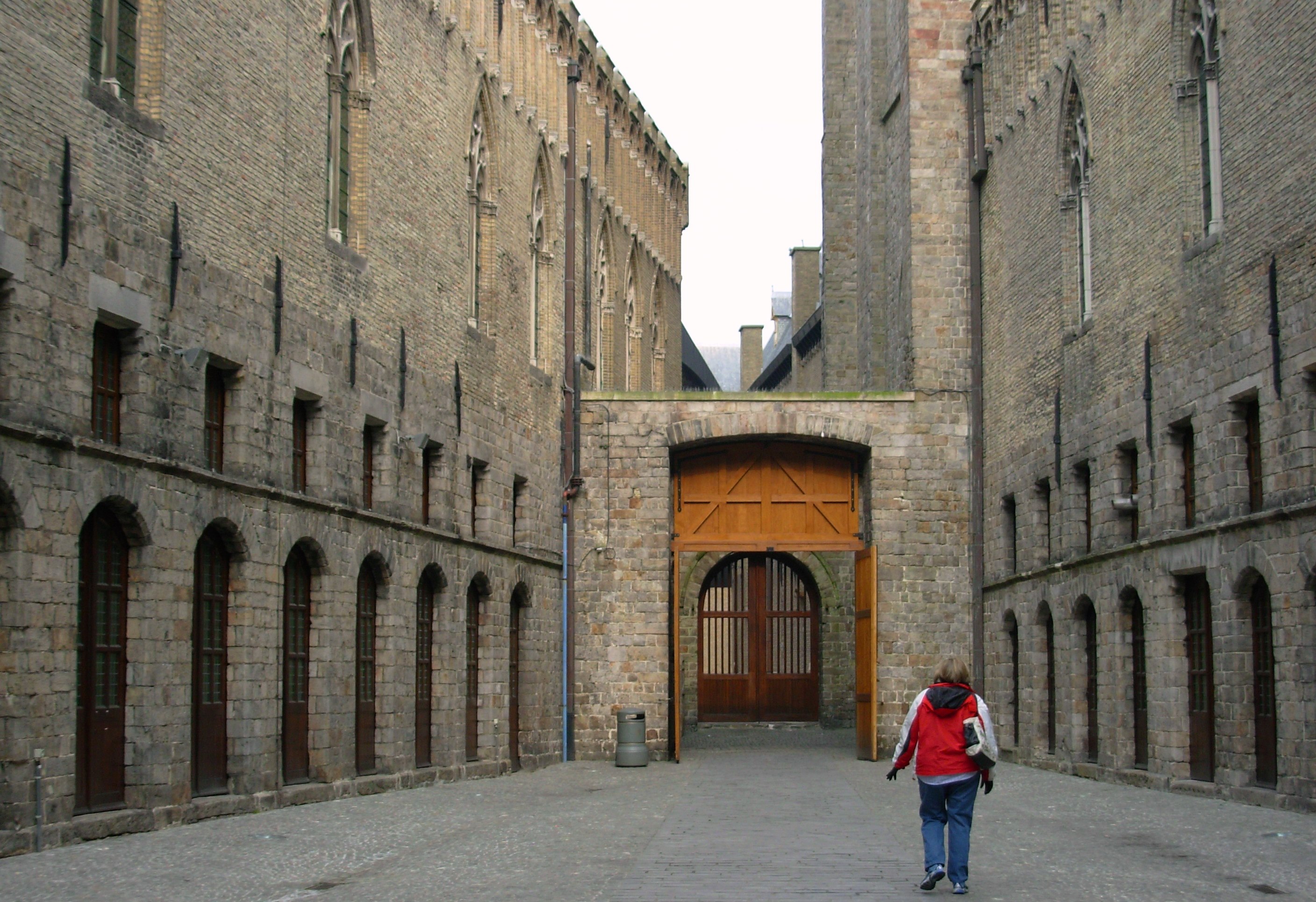
Out of the walls and through the gate:
Amy goes exploring with me in Ypres (Ieper) Belgium, one March evening in 2007
“There is no security on this earth. Only opportunity.” — General Douglas MacArthur
“Too many people are thinking of security instead of opportunity; they seem more afraid of life than of death.” — James F. Byrnes
There’s nothing like watching or reading the news to create feelings of insecurity. Violence erupts all over the globe, and some stories will be endlessly repeated, as if to milk every bit of air time possible out of the chapters and verses of the unfolding tales of evil. But there is really no place to go that is completely secure, and even if you’re locked up tight in the self-imposed prison of your home, illness and injury can strike you there as well.
I’m one of those people who gets defiant when threatened. The more dangerous the outside world sounds, the more determined I am not to shrink from it in fear. The interesting thing is, I think this attitude makes me safer than if I was always running from my own shadow. And even if boldness does not make my life safer, at least it’s way more interesting to be out there exploring than hiding in a closet someplace. I take plenty of common-sense precautions, but I don’t cancel trips or avoid going downtown because of scary things I hear on the news.
Whether your worst fears are of physical danger or psychological intimidation, I wish for you the boldness to face squarely whatever it is that terrifies you. You may need courage to make travel plans, make a speech or make a new friend, but the rewards of overcoming the paralysis of anxiety are many and self-sustaining. And you’ll be bolstered by the discovery that there are plenty more friendly people than unfriendly ones. We’re out here, waiting to meet you!
This post was originally published seven years ago today, yet it seems strangely appropriate during a scenario I could never have imagined when I wrote it. This post may find you venturing gradually back into the wider world, or trying to summon the courage to go someplace besides the grocery store. Just as I did seven years ago today, “I wish for you the boldness to face squarely whatever it is that terrifies you.”
The original post, comments and photo are linked, along with two other related posts, below. These links to related posts, and their thumbnail photos, do not appear in the blog feed; they are only visible when viewing the individual posts by clicking on each one. I have no idea why, nor do I know how they choose the related posts. That’s just the way WordPress does things.
Nature’s way

The party at Keukenhof (in the Netherlands) was underway in this photo from March 2007
“Spring is nature’s way of saying, ‘Let’s party!'” — Robin Williams
Surely by now, warm spring weather has started to arrive in even the chilliest parts of the northern hemisphere. Better late than never! What can we do to celebrate springtime this week? Take a walk, plan a picnic, visit a park. Make some lemonade, bake some cookies (before it gets too hot to turn on the oven), call friends and invite them for a cookout. Or just sit outside and bask in the return of warmer weather. Whatever you do, I wish you joy. May the springtime weather lift our spirits and bring hope to our hearts!
This post was originally published seven years ago today. By now, you may or may not be allowed to do any of the social activities mentioned above. Of all the things I take for granted, I never imagined being restricted– by law, of all things– from seeing friends in person. How strange the world has become! But we can still find ways to party, as some of the things mentioned above can be done in social isolation.
The original post, comments and photo are linked, along with two other related posts, below. These links to related posts, and their thumbnail photos, do not appear in the blog feed; they are only visible when viewing the individual posts by clicking on each one. I have no idea why, nor do I know how they choose the related posts. That’s just the way WordPress does things.
The unexpected
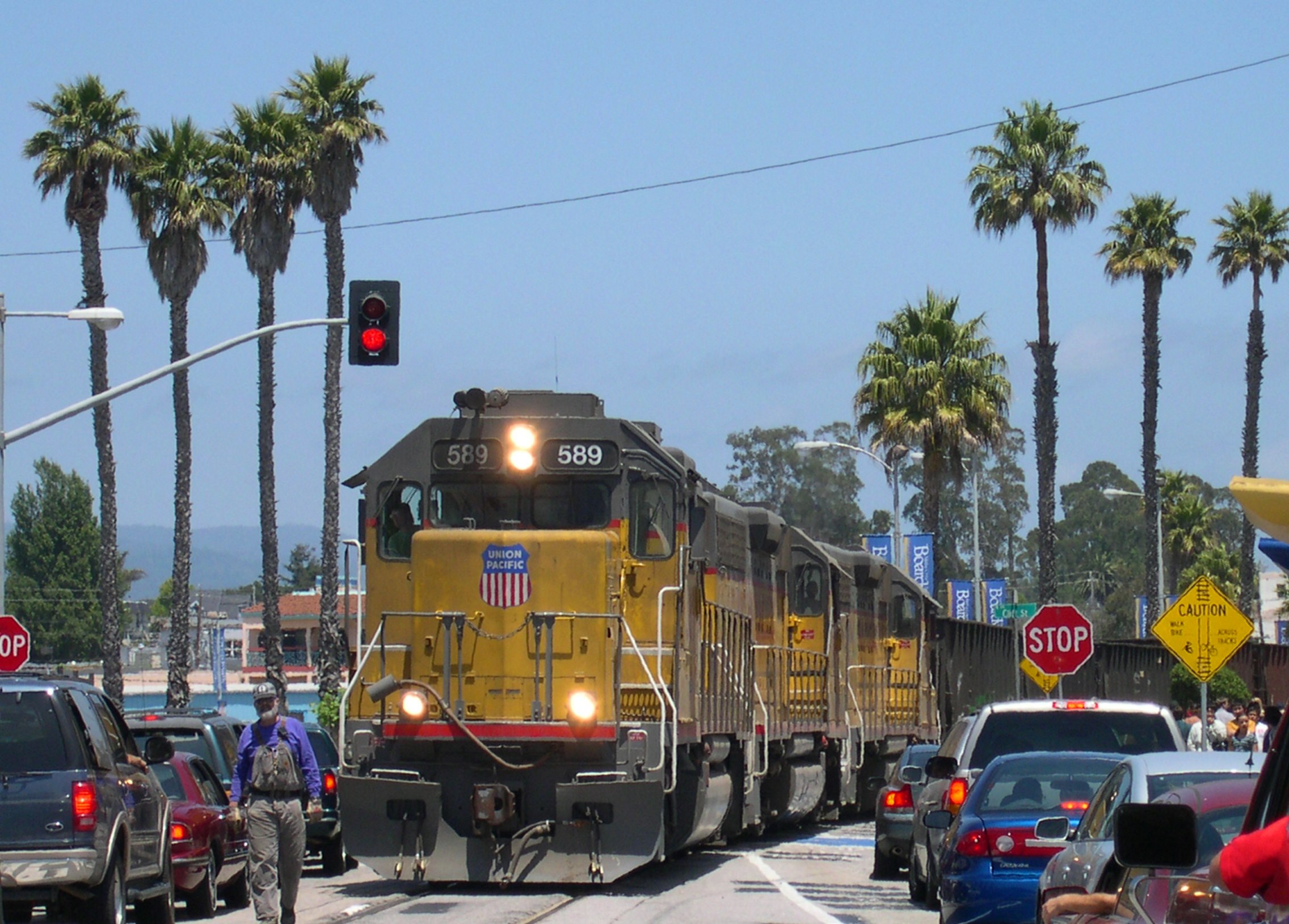
This freight train obviously had the right of way! Santa Cruz, California, 2003
“Look how often the unexpected happens – and yet we still never expect it!”
— Ashleigh Brilliant
There’s never a shortage of surprises in California, and that’s part of why it was so much fun to live there. One sunny day in Santa Cruz, we were waiting in line at a four-way intersection, assuming the traffic backup was just the normal beach crowds. But then we saw something we’d never seen before, and haven’t seen since: a freight train coming right down the center of the city street, which trains apparently share with cars whenever they pass through.
Nobody around us seemed fazed by it, so it was obviously business as usual around there. But we got a real kick out of having a long freight train pass by our car windows so closely that we could have almost reached out and touched it. I image that the fun of it wears off pretty quickly for those who live there, but for us, it was a delightful surprise.
Today, I wish you something fun, friendly or at least interesting– and unexpected!
This post was originally published seven years ago today. The original post, comments and photo are linked, along with two other related posts, below. These links to related posts, and their thumbnail photos, do not appear in the blog feed; they are only visible when viewing the individual posts by clicking on each one. I have no idea why, nor do I know how they choose the related posts. That’s just the way WordPress does things.
A vast early warning
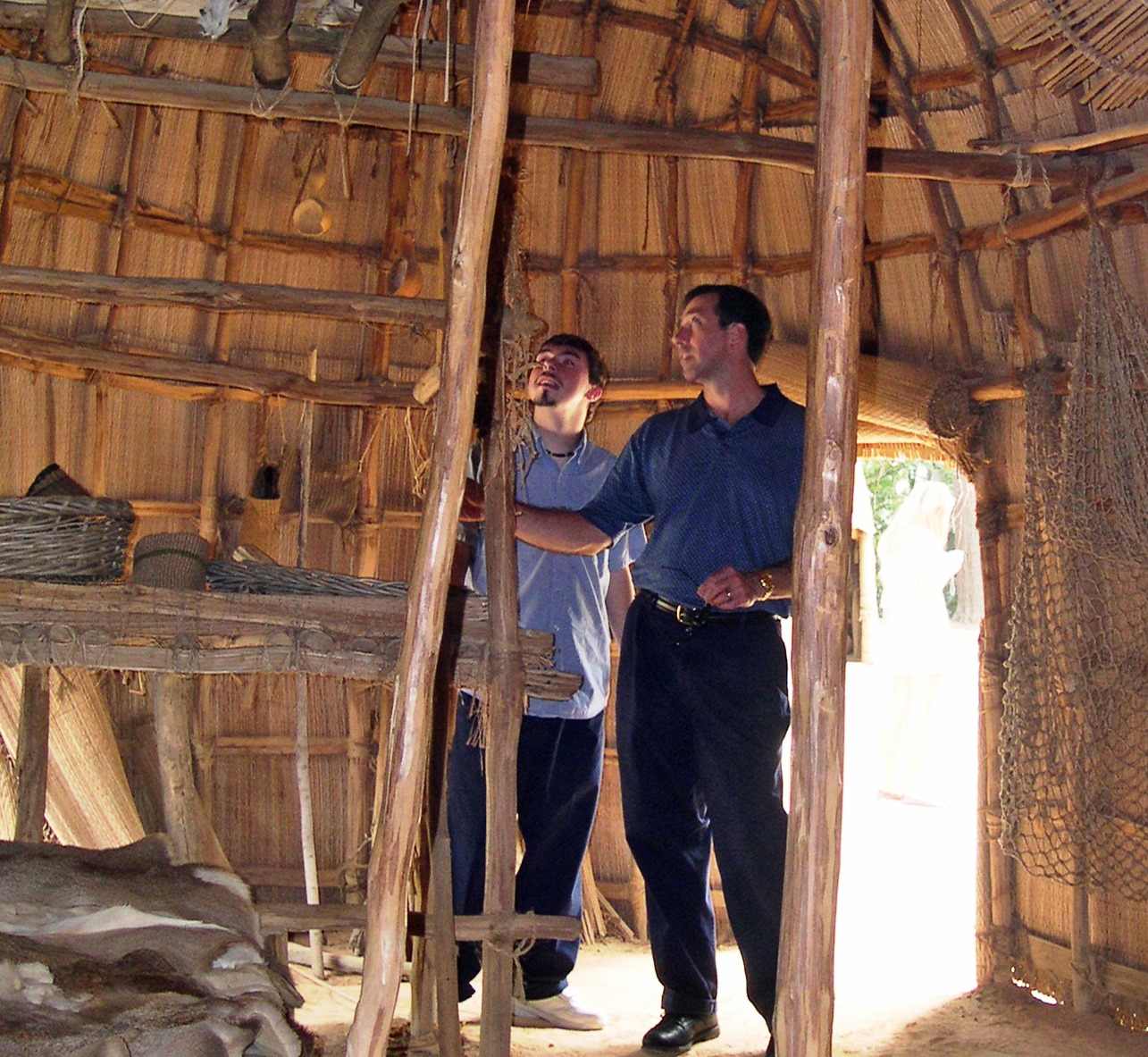
Jeff and Matt at Jamestown, Virginia, August 2005
“A nation that forgets its past can function no better than an individual with amnesia.”
— David McCullough
“History is a vast early warning system.” — Norman Cousins
Living in the “historic triangle” of Jamestown, Williamsburg and Yorktown has only sharpened my already considerable interest in history. I’ve never understood how anyone could find history boring. Its stories, so full of drama in the condensed versions we are able to piece together, answer some questions and raise others. With the benefit of centuries of hindsight, it’s pretty easy to see a lot of mistakes that led to tragedy, and we can always hope that at least some of them won’t be unnecessarily repeated. At the same time, it’s hard not to be grateful that our ancestors were tough, strong and courageous enough to blaze many trails that made things easier for us today.
Few stories from history are more fraught with warnings than the settlement of Jamestown. Without going into the details, let’s just say that it was far from an unqualified success, and the failures, suffering and death are well documented. Yet 13 years ago, on the 400th anniversary of the founding of Jamestown, contemporary Virginians and visiting dignitaries (including Her Majesty Queen Elizabeth II of England) attended many commemorative events in a year-long schedule of celebration.
Perhaps the mere presence of descendants who are around to honor such dubious and painful beginnings is a tribute to the determination that humanity still displays when faced with opportunity and peril. What will future generations remember about us? Let’s do what we can to leave a legacy befitting people who learned some of history’s hardest lessons, and created happier examples for our great-great-great grandchildren’s benefit.
This post was originally published seven years ago today. The original post, comments and photo are linked, along with two other related posts, below. These links to related posts, and their thumbnail photos, do not appear in the blog feed; they are only visible when viewing the individual posts by clicking on each one. I have no idea why, nor do I know how they choose the related posts. That’s just the way WordPress does things.
When you finally see

Jeff and the boys at the Monterey Bay Aquarium, December 27, 2002
“There’s nothing wrong with enjoying looking at the surface of the ocean itself, except that when you finally see what goes on underwater, you realize that you’ve been missing the whole point of the ocean. Staying on the surface all the time is like going to the circus and staring at the outside of the tent.” — Dave Barry
I’ve always found it interesting that some of the most marvelous sights in our universe were unknown to humans for many centuries. I’m not talking primarily about outer space. I’m talking about the undersea world, which is every bit as fascinating and terrifying to me. Because I have a healthy fear of spending much time underwater depending on SCUBA gear to breathe, probably the closest I’ll get to seeing the wonders of ocean life is visiting a good aquarium.
There are many wonderful museums that feature marine biology, but the best one we’ve visited is the Monterey Bay Aquarium, located on the stunning Pacific coast just north of Big Sur in California. I could easily spend an entire day just admiring the views of the water’s surface there, but as Dave Barry says, the real show is underneath. Large, clear and well-lit tanks will give you views of all the dolphins, sharks, jellyfish, rays, fish and turtles you could ask for, and if you get tired of deep sea life, you can always enjoy the delightful antics of the scene-stealing sea otters.
The undersea creatures are so unique in their many colors, forms, and patterns of movement that watching them never fails to underscore my belief that our planet is the work of an amazing Creator of unfathomable (no pun intended) power, love, enthusiasm and passion for life. I hope you can make some time to visit an aquarium near you, and enjoy getting to know a small part of the vast drama that unfolds daily, largely unobserved and unexplored, over 71% of the Earth’s surface.
This post was originally published on May 10, 2013. Since that date fell on Mother’s Day this year, I have swapped the two post dates to fit the theme. The original post, comments and photo are linked, along with two other related posts, below. These links to related posts, and their thumbnail photos, do not appear in the blog feed; they are only visible when viewing the individual posts by clicking on each one. I have no idea why, nor do I know how they choose the related posts. That’s just the way WordPress does things.
You should ramble

The Missouri Botanical Garden, a lovely place to ramble! April 2008
“To enjoy scenery you should ramble amidst it; let the feelings to which it gives rise mingle with other thoughts; look round upon it in intervals of reading; and not go to it as one goes to see the lions fed at a fair. The beautiful is not to be stared at, but to be lived with.” — Thomas Babington Macaulay
What little I have read about Macaulay does not particularly impress me, but I think he’s given us an appealing description. It sounds like a fine way to enjoy a beautiful Saturday in May. I wish you lovely weather today, and at least a little time to ramble amidst the beauty of your particular part of the world. If you see something you want to share, feel free to post links to a blog post or share a description in the comments below. If you have a photo you’d like to share, send it to me at defeatdespair@verizon.net and I’ll post it here. Maybe beauty is not to be stared at, but I think it’s always appropriate to capture and share it with paintings and photos! Happy rambling!
This post was originally published seven years ago today. How little any of us dreamed that, when this was re-posted in 2020, the entire world would recently have been shut down to one degree or another, with the freedom to ramble sharply curtailed in fear of disease and contagion. Here’s hoping that our global confinement ends soon– and that, whenever it ends, we will fully appreciate and enjoy the blessings we too often take for granted, never dreaming how easily they can be taken away. If the shutdown has ended in your part of the world– or even if it has not, and you are free to take walks outdoors– I encourage you to get outside for awhile today, with eyes sharpened and hearts opened in gratitude to all we could easily miss.
The original post, comments and photo are linked, along with two other related posts, below. These links to related posts, and their thumbnail photos, do not appear in the blog feed; they are only visible when viewing the individual posts by clicking on each one. I have no idea why, nor do I know how they choose the related posts. That’s just the way WordPress does things.
The world would kick the beam

As far as I know, this is the only photo of Mama with me as a baby, taken early 1957.
“If the whole world were put into one scale, and my mother in the other, the whole world would kick the beam.” — Henry Bickersteth, Lord Langdale
Even after I became a mother, I have never liked Mother’s Day. It seems to me an artificially contrived and ultimately inadequate invention designed primarily to sell cards and flowers, and in some cases, to assuage an adult child’s guilty conscience. Nonetheless, I do find myself thinking of my own mother each year on this day, and feeling at a loss for words to describe what her presence has meant in my life.
Perhaps I dislike Mother’s Day mostly because none of the sentimental, flowery tributes commonly sold at this time of year ever seemed an appropriate homage to my mother, who was and is a formidable woman. Her blunt practicality and unfailing generosity are equal to her iron will and undaunted courage in the face of adversity. She has never been the longsuffering, quiet, kind and gentle saint portrayed by so many of the maudlin descriptions of motherhood. More than anyone I know, she embodies the truth that tough love is, in many cases, the most beneficial sort.
Yet just when she seems most intimidating, a whimsical humor will break through and leave us laughing. She is still the one I run to when hit with unexpected sorrow or hardship. Somehow, nothing seems quite as impossible after I’ve talked to Mom about it. She’s been through more than most of us can imagine, but always managed to outpace almost anyone I knew.
She survived poverty and polio as a very young child, and has lived almost her entire life with only one “good” leg, but she never allowed that to slow her down. She had four children in four different states within a period of ten years, my father’s career having demanded frequent moves. When she was nearly killed by a drunk driver going 70 mph who rammed into the driver’s door of her car, no one knew if she could ever fully recover, but she soon was back to her unrelentingly busy schedule, caring for her children and working on various church and community efforts.
Years later, when she faced brain surgery for a hemorrhaging aneurysm shortly before our wedding in 1980, she stayed true to form, stoic in the knowledge that she might not survive. Showing no fear and little emotion of any kind, she reminded us that no matter what happened, we all should feel grateful that she had lived through the car crash and was able to care for us until we were all grown. For as long as I can remember, she has given us a nearly flawless example of what it means to live in faith and trust that God will do what is best. I know that example will be with me always.
So, with all due respect to those who celebrate this day, to the preachers who will preach their yearly sermon about mothers, and the restaurants that will be filled to overflowing, and the many fitting tributes of love and appreciation that will be shown today, let’s all admit that no day could ever be long enough, no tribute strong enough, to capture the gratitude so many of us feel for the amazing gifts our mothers have given us. Happy Mother’s Day to all!
This post was originally published seven years ago, on Mother’s Day 2013 ( by the USA calendar – although many countries celebrate the holiday on a different day). The original post, comments and photo are linked, along with two other related posts, below. These links to related posts, and their thumbnail photos, do not appear in the blog feed; they are only visible when viewing the individual posts by clicking on each one. I have no idea why, nor do I know how they choose the related posts. That’s just the way WordPress does things.
Read them fairy tales
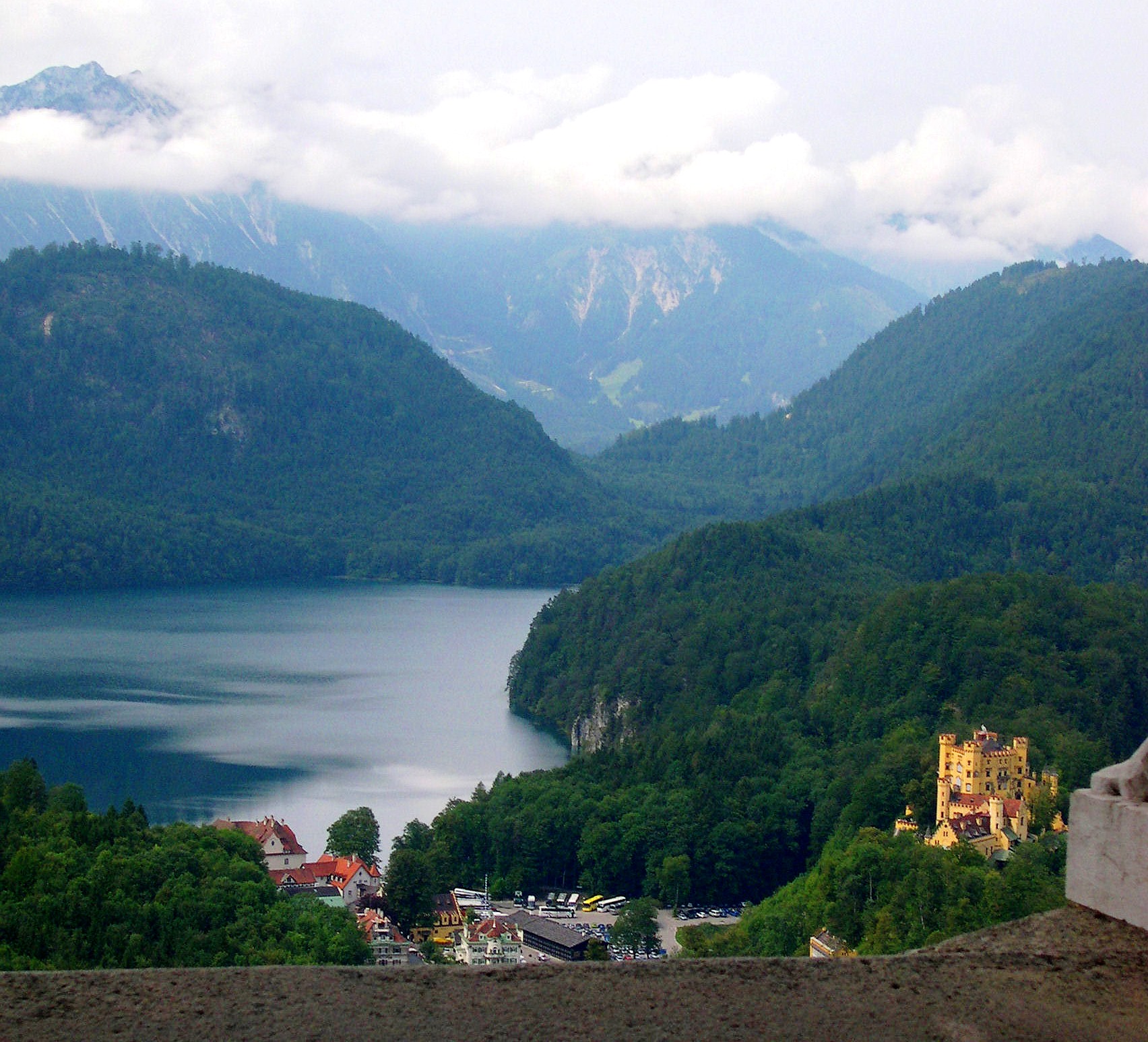
Once upon a time, a mad king built a fabulous castle overlooking the one where he grew up.
Hohenschwangau as seen from Neuschwanstein, Germany, August 2005
“If you want your children to be intelligent, read them fairy tales. If you want them to be more intelligent, read them more fairy tales.” — attributed to Albert Einstein
I could not verify that the quote above actually came from Einstein, but countless sources verify his more famous statement that “imagination is more important than knowledge.” Although it’s often a difficult line to walk, with some of us leaning too far toward creativity and fantasy, and some too far toward empirical data and scientific methodology, we all need to recognize the value of both.
Since we can’t learn anything without paying attention, stories that engage and delight can painlessly teach vital lessons. It’s tempting to see fun reading as an optional activity that is too easily put on the back burner. Today, I hope you will think about allocating some time for imaginative reading, even if there are no children in your home to entertain with fun stories. Reading for fun can be serious business.
This post was originally published seven years ago today. The original post, comments and photo are linked, along with two other related posts, below. These links to related posts, and their thumbnail photos, do not appear in the blog feed; they are only visible when viewing the individual posts by clicking on each one. I have no idea why, nor do I know how they choose the related posts. That’s just the way WordPress does things.
Twilight and dawn

The “dreaming spires” of Oxford, as seen at dusk in September 2005
“…day and night meet fleetingly at twilight and dawn…their merging sometimes affords the beholder the most enchanted moments of all the twenty-four hours.” — Mary Balogh
I have always thought there’s something enchanting about dusk, when the light is waning and paints everything in muted but clearly visible colors. Dawn is just as magical, although I don’t watch it nearly as often. I always welcome the time of year when the days lengthen, and I shift my walks to the evening hours, savoring the calm that seems to settle over everything. Even the sounds I often hear as I walk the familiar streets of my neighborhood– the birds, crickets, a lawn mower running somewhere– seem to announce that all will soon be at rest.
As the porch lights begin to come on and windows are lit from within, the heat of the day subsides and the warmth radiating from the asphalt is a pleasant sensation, not punishing as it would be in the afternoon sun. Neighbors come out to walk their dogs, water their flowers or just sit on decks and patios, taking in the peace. We greet each other in passing, and the sharing of the day’s end creates a sense of community; we all belong here. The prospect of a quiet hour or two of reading, a warm bath and a night of slumber draws me home as I end my walk, but often I will stop and pull a weed or two in my flower bed before going inside, reluctant to leave the enchantment until night pulls the shade completely down.
Such evenings communicate the meaning of the word “respite” in sensory details that a verbal definition could never capture. I wish you many days that end with serenity and gratitude!
This post was originally published seven years ago today. The original post, comments and photo are linked, along with two other related posts, below. These links to related posts, and their thumbnail photos, do not appear in the blog feed; they are only visible when viewing the individual posts by clicking on each one. I have no idea why, nor do I know how they choose the related posts. That’s just the way WordPress does things.
Turrets and dormers
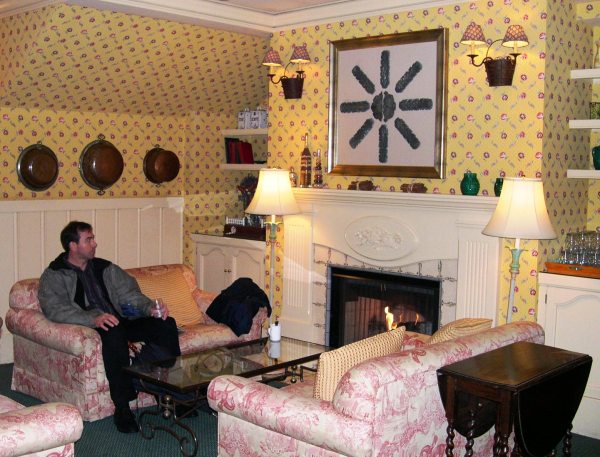
Jeff relaxes at the Petite Auberge in San Francisco, January 2004
“I hereby proclaim that I love turrets and dormers, and massive wooden staircases and fireplace mantels, and curvy old antiques and Oriental carpets and crystal chandeliers and even velvet curtains. And yes, I love tchotchkes. I have a house full of them.” — Zofia Smardz
One of the things I most enjoy about the blogosphere, or the online site Pinterest, is finding out how many others share my enthusiasm for many things that aren’t favorites of my all-male-but-me household. I’ve written a good bit here about simplicity, and the calming effects of quiet, uncluttered environments. But I have to come clean about my love for romantic French country, “shabby chic” or Victorian decorating, especially when I’m not the one who has to do the housekeeping.
That’s why I love bed and breakfast inns. My husband, who would much prefer a good large-screen television with ESPN to an antique four poster bed, is nonetheless occasionally willing to indulge my love of discovering quaint lodgings when we travel. He usually enjoys the breakfasts enough to make it an agreeable option for him, provided I don’t overdo it.
But thanks to the wonders of the internet, I don’t have to wait for a vacation to get my frilly fix. Hundreds (maybe thousands) of talented ladies who visit Pinterest have compiled an abundance of engaging and delightful visual treats for anyone who admires art applied to everyday life. Fair warning: visiting Pinterest is like following Alice down the rabbit hole or through the looking glass. It’s a wonderland out there, and you might not get back to reality as quickly as you think you will!
Feel free to post links to, or photos of, your favorite B & B, fun online shop or Pinterest site in the comments below. Even for those of us who keep decidedly plainer homes, it’s always fun to make a virtual visit to more florid abodes. Today I invite everyone to savor a cup of tea or coffee while making a quick imaginary trip to a lovely, equally imaginary online parlor where we can chat about our next craft project. In moderation, daydreams are sometimes almost as good as reality, and infinitely more practical as a quick getaway.
This post was originally published seven years ago today. The original post, comments and photo are linked, along with two other related posts, below. These links to related posts, and their thumbnail photos, do not appear in the blog feed; they are only visible when viewing the individual posts by clicking on each one. I have no idea why, nor do I know how they choose the related posts. That’s just the way WordPress does things.
Govern the clock
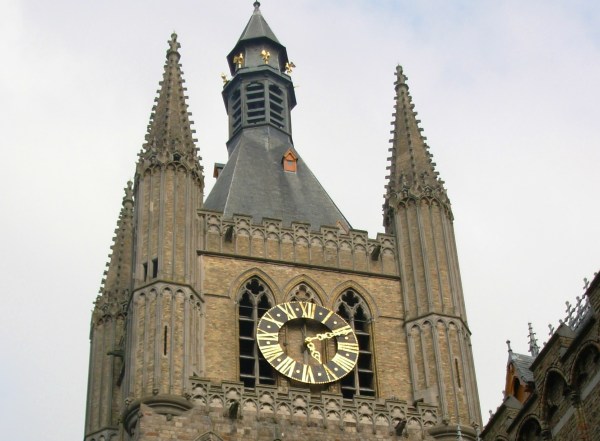
A clock adorns the medieval Lakenhalle (Cloth Hall) in Ypres, Belgium, March 2007.
“I must govern the clock, not be governed by it.” — Golda Meir
As strange as it seems, much of what we think of as “time management” is just one more way of being governed by the clock. While some principles of time management are useful, such as setting goals and priorities, other advice may end up being counterproductive. For example, this whole idea of multitasking is taken too far when we get so greedy about packing so much into our lives that we give nothing our full attention. Rather than having a few very enjoyable projects and hobbies, we take on too much and end up with a vague feeling of stress, pressure, and lack of fulfillment when things go undone. Rather than enjoying time with one special friend or family member, we feel an illogical urgency to make ourselves available every waking hour to anyone with our cell or text number.
Whether we are managing money or time, if we lose sight of them as means to an end, we wind up with the tail wagging the dog. Zealously plotting to squeeze 25 hours into every day often means that we push too hard to relax or enjoy anything, defeating the whole purpose of planning our time. I plead guilty to being one of the worst offenders when it comes to wanting to do too much. It goes with the territory of loving many things. But age does confer certain benefits, one of which is the absolute necessity of slowing down; achieving less but savoring more.
“Time for Living” is a favorite old song from the 60’s by a group called The Association. I’ve sung this song to myself often over the many years since I used to play it on my record player with my brother’s LP. One of my favorite lines from the song says “I took off my watch, and found I had all the time in the world.” Though no one would ever accuse me of being a workaholic, I do get stressed about time far more than I should.
Today, I hope we can all use the clock as a tool to help us enjoy life more, rather than allowing it to be a tyrant poking us in the backside with a stick, telling us to HURRY UP and keeping us from paying attention as our life ticks away. Whatever you are doing today, take five! or ten! or maybe even an hour or two — and just enjoy something. Feel free to tell us about it in the comments below.
This post was originally published seven years ago today. The original post, comments and photo are linked, along with two other related posts, below. These links to related posts, and their thumbnail photos, do not appear in the blog feed; they are only visible when viewing the individual posts by clicking on each one. I have no idea why, nor do I know how they choose the related posts. That’s just the way WordPress does things.
Just stand there shining
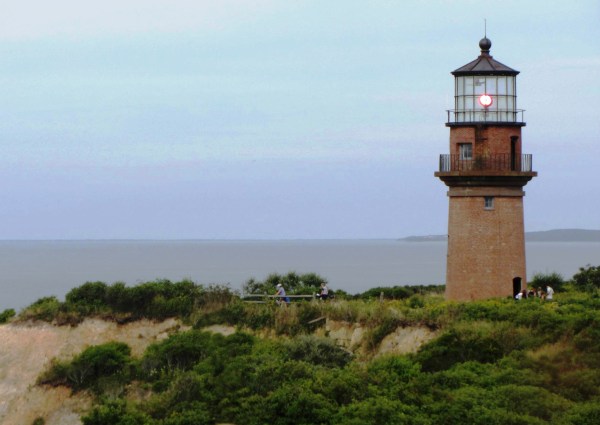
The Gay Head Lighthouse, Aquinnah, Martha’s Vineyard Massachusetts, September 2012
“Lighthouses don’t go running all over an island looking for boats to save; they just stand there shining.” — Anne Lamott
I don’t want to sound paranoid, but people are watching us. They watch us in grocery store checkout lines, in doctors’ waiting rooms, or sitting at the wheel at a stoplight in gridlock. They overhear our cell phone conversations on the subway and at ball games. And they see how we act and react, in big and small dramas, every day of our lives.
Some of these people are strangers, and some are our children, spouses or friends. Some of them are doing okay, but many of them are caught in heartaches and crises of their own. It’s sobering to realize that we have countless tiny chances every day to make life a bit brighter for almost everyone we meet. A smile, a kind word, patience with someone who’s obviously struggling, even if that person is our waitress or cashier or obnoxious co-worker.
One recent morning I went down to the hospital cafeteria to have breakfast. It was the day after Jeff’s portal vein embolization, and the doctors were pleased with how things went. We had begun to feel hopeful again. The woman who served my eggs greeted me with a beaming smile and asked how I was doing. “Better than I was yesterday,” I replied with obvious happiness. You would have thought I was her best friend as she broke into an even bigger smile and said, “I’m so glad you are feeling better! Praise God that you are better today!” I’m not sure exactly why, but that woman’s kindness and sincerity supercharged my already happy mood. And if my mood had been low, I feel certain she would have had something equally encouraging to say.
The troubles of the world can be overwhelming. Sometimes we get confused into thinking that fixing global problems requires the authority of the President or the Pope or a greedy CEO somewhere. We may feel that we are insignificant and powerless, unable to make anything better. When we feel that way, we are normal and typical, but incorrect. The positive changes we make may never be featured on the evening news, or even in somebody’s yearly holiday letter. But that makes them no less real. I know this is so because of all the times when people who had no idea they were changing my mood, my thinking or my life have given me encouragement, compassion or simple courtesy just when I needed it most, when I was on some undefined edge, about to snap or lose heart.
Today, I hope you will celebrate the opportunity to spread cheer and good will on an ordinary day. You don’t have to go out searching for ways to make the world better. Just stand where you are, shining.
See also
This post was originally published seven years ago today. The original post, comments and photo are linked, along with two other related posts, below. These links to related posts, and their thumbnail photos, do not appear in the blog feed; they are only visible when viewing the individual posts by clicking on each one. I have no idea why, nor do I know how they choose the related posts. That’s just the way WordPress does things.
A playful utopia
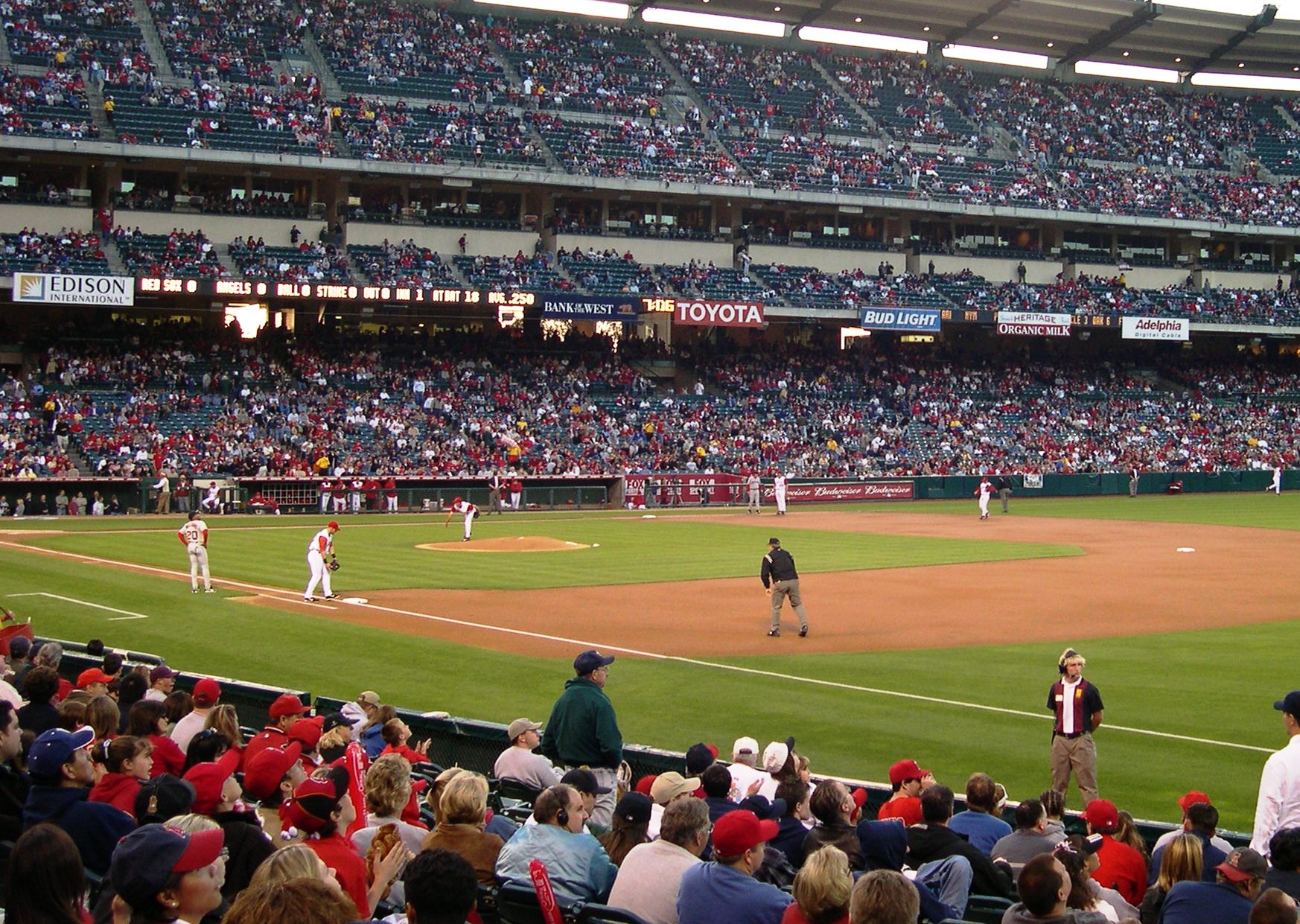
A perfect California evening at Edison Field, Anaheim, April 2003
“Baseball is a harbor, a seclusion from failure that really matters, a playful utopia in which virtuosity can be savored to the third decimal place of a batting average.”
— Mark Kramer
“Baseball is reassuring. It makes me feel as if the world is not going to blow up.”
— Sharon Olds
To borrow the phrasing of Tolstoy’s famous quote about families, it’s my impression that football fans are all alike, but each baseball fan loves baseball in his or her own way. Some, such as my older son, have an encyclopedic knowledge of the game, its history, and its endless statistics, coupled with cherished memories of years spent playing the game. Some, such as my husband, also have fond memories of years of playing, but are more focused on baseball in the present moment, watching when possible, checking scores daily when other priorities prevail.
Others such as my mother and I love the game for reasons we can’t quite define. We don’t completely understand it, or even know all that much about it, compared to the die-hard fans, and we don’t follow many teams. But loyalty to our home team (the Atlanta Braves) and the many human stories behind the amazing plays draw us in, and the cracking of the bats in springtime is music in our ears.
I divide my time between far too many interests and obligations, so most of my fascinations wax and wane, going dormant for long stretches of time, obscured by distractions that are more important or urgent. Baseball is no exception. But for me, there’s nothing quite like walking into a baseball stadium and seeing the field stretched out beneath me, promising an evening when the clock is strangely suspended in a contest that could theoretically go on forever. No matter how long I’ve been away from the game, the magic is always there.
Though I mostly forsake baseball nowadays for things that rightly take precedence in my life, my deep love for it never quite leaves me. As Olds so perfectly describes, baseball banishes my larger anxieties by taking me briefly to a parallel universe that feels as reliable as the sunset, as old as America and as young as every springtime.
This post was first published seven years ago today. How strange that this year, for the first time in my lifetime, there is no baseball season underway. A game that seemed inextricable from American springtime has been sidelined, along with almost everything else, by an unprecedented turn of world events. Among all the shutdowns that are breaking hearts, cancelling hopeful plans and destroying carefully built businesses and retirement accounts, the absence of baseball seems an almost otherworldly omen. Here’s hoping that the game resumes with as much vigor as if it had simply been a prolonged rain delay.
The original post, comments and photo are linked, along with two other related posts, below. These links to related posts, and their thumbnail photos, do not appear in the blog feed; they are only visible when viewing the individual posts by clicking on each one. I have no idea why, nor do I know how they choose the related posts. That’s just the way WordPress does things.
The fantastic show

This is one of my favorites of our many azaleas, photographed in April 2008
“There are some shrubs that seem to scream, ‘Look at me!’ With their showy flowers…planting just one of these shrubs can light up the whole yard…azaleas are sure bets for a spectacular flower show…Their intensity makes one stop and take notice and perhaps feel compelled to give Mother Nature a round of applause for the fantastic show.”
— Duncan Brine
I grew up in the South, and during the twenty years I lived far away from there, I suppose azaleas are near the top of the list of things I missed most. The first springtime we spent in Virginia reminded me of just how much we’d been missing; I had forgotten how spectacular they can be. They grow quickly and bloom brilliantly, with vivid colors that really to light up the landscape.
If azaleas can grow where you live, I highly recommend adding one for a spot of color where you’d most like to see it. We have tried many varieties, including the “bloom again” types that will bloom in summer and fall as well as spring, but we find that these do not even come close to the flowers of springtime. If you can’t grow azaleas where you live, plan to visit one of the fabulous gardens that feature them, such as Callaway Gardens in Georgia. Thanks to the internet, you can see the azaleas online even if you are too far away to visit them in person.
What shrubs bloom most brilliantly where you live? Post a link in the comments below and we’ll all brighten the day today with splashes of color!
The original post, comments and photo are linked, along with two other related posts, below. These links to related posts, and their thumbnail photos, do not appear in the blog feed; they are only visible when viewing the individual posts by clicking on each one. I have no idea why, nor do I know how they choose the related posts. That’s just the way WordPress does things.
Don’t forget the present
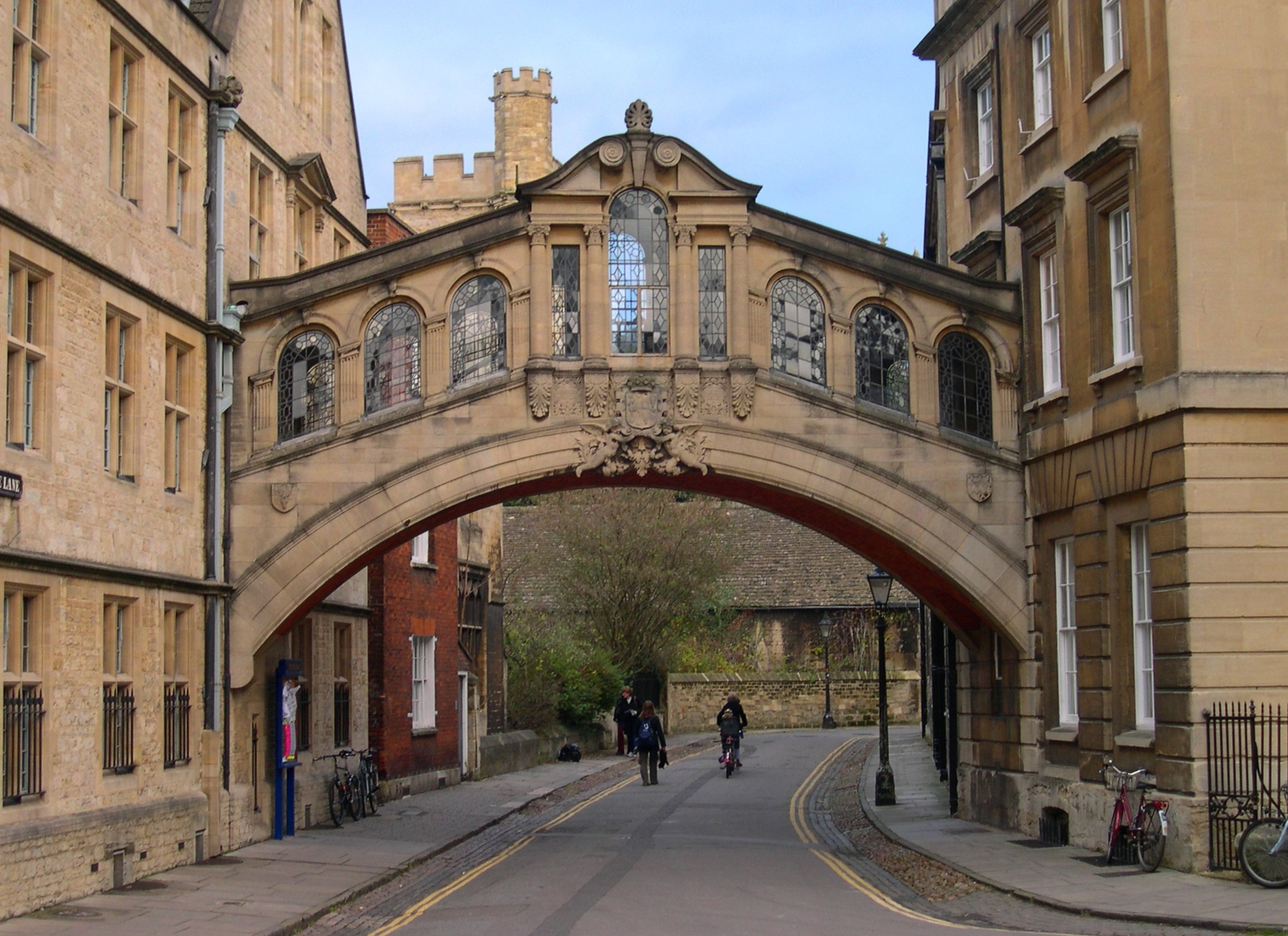
December 2005: the Hertford Bridge at Oxford, a fitting symbol of the past meeting the future.
“Remember the past, and prepare for the future, but don’t forget: the present is where you live.” — Ashleigh Brilliant
The Hertford Bridge pictured above is part of Hertford College, of the University of Oxford in England. It connects the Old and New Quadrangles of that college, with administrative offices in the older building and student accommodations in the newer one. Normally we wouldn’t describe buildings that were constructed over 100 years ago as “new” but when some of the older ones go back to medieval times, new is a relative term.
If the college itself represents the past, its current students must certainly represent the future. At Oxford the two are even more obviously linked than at most universities, so the bridge is an apt symbol. It would be very easy for people affiliated with Oxford or similar places of learning to become over-focused on either the past or the future, but what is happening in the present remains the most crucial consideration for both students and faculty.
Most of us have strong ties to the past, whether they are linked to relatives, vocational experiences or personal memories. And even for those of us who are getting on in years, it’s tempting to spend much time planning for the future. Both past and future are worthy of our regard, but it’s all too easy to let the present slip away without much notice. For me, it happens in various ways; time “frittered away” on unimportant distractions I didn’t intend to prioritize; energy wasted on fretting about unforeseen glitches in my plans; relationships marred, temporarily or permanently, when I allow a bad mood to affect my interactions.
I’m not sure of the origin of the phrase “redeem the time,” but it seems more desirable a term than other verbs we use to describe what we do with time: spend it, pass it, or worst of all, kill it. “Redeem” carries with it a sense of obligation for how we use the ultimate gift of life. We are not all allowed the same quantity of time, but whether our years are long or short, we probably will use it best if we avoid excessive fixation on the past or future. The present is where we live. Let’s make the most of it!
The original post, comments and photo are linked, along with two other related posts, below. These links to related posts, and their thumbnail photos, do not appear in the blog feed; they are only visible when viewing the individual posts by clicking on each one. I have no idea why, nor do I know how they choose the related posts. That’s just the way WordPress does things.
Have a picnic

With friends at one of our favorite picnic spots, Crissy Field in San Francisco, February 2003
“…if you have a place where you can go and have a picnic with your family, it doesn’t matter if it’s a recession or not…” — Jim Fowler
One of the best ways to make an ordinary day into a special occasion is to have a picnic. It can be elaborate or simple fare, and the spot you choose can be close by, or a few hours’ drive. You can find a secluded, quiet corner or settle in a nice shady area near a famous landmark. You can spread a blanket on the ground or use one of many picnic tables provided in parks, welcome centers and other public places. No matter what combination you choose, there is something refreshing and calming about sitting down to rest and eat in a lovely outdoor setting.
Jeff is not quite as fond of picnics as I am, but he is wonderful at packing for them. Sometimes when I plan a picnic with a friend, he will offer to pack for us, and it’s a great surprise to unpack it later and find what is waiting for us. He always errs on the side of too much food and too many choices, which is delightful. Fruits, cheeses, crackers, nuts, those delicious imported cookies dipped in chocolate, sparkling juices and several types of sandwiches (with lettuce and tomato packed separately to prevent soggy bread) are just some of the things I tend to find in any basket he’s packed.
Springtime is a great season for picnics, before it gets too hot and the insects are out in force. I hope you will have at least one festive picnic or cookout in the next few weeks. It’s a good way to have fun that doesn’t involve some sort of electronic screen, and doesn’t cost a lot of money. If you take along a camera and send us a photo, I’ll post it here. Bon appetit!
The original post, comments and photo are linked, along with two other related posts, below. These links to related posts, and their thumbnail photos, do not appear in the blog feed; they are only visible when viewing the individual posts by clicking on each one. I have no idea why, nor do I know how they choose the related posts. That’s just the way WordPress does things.
Each moment an occasion
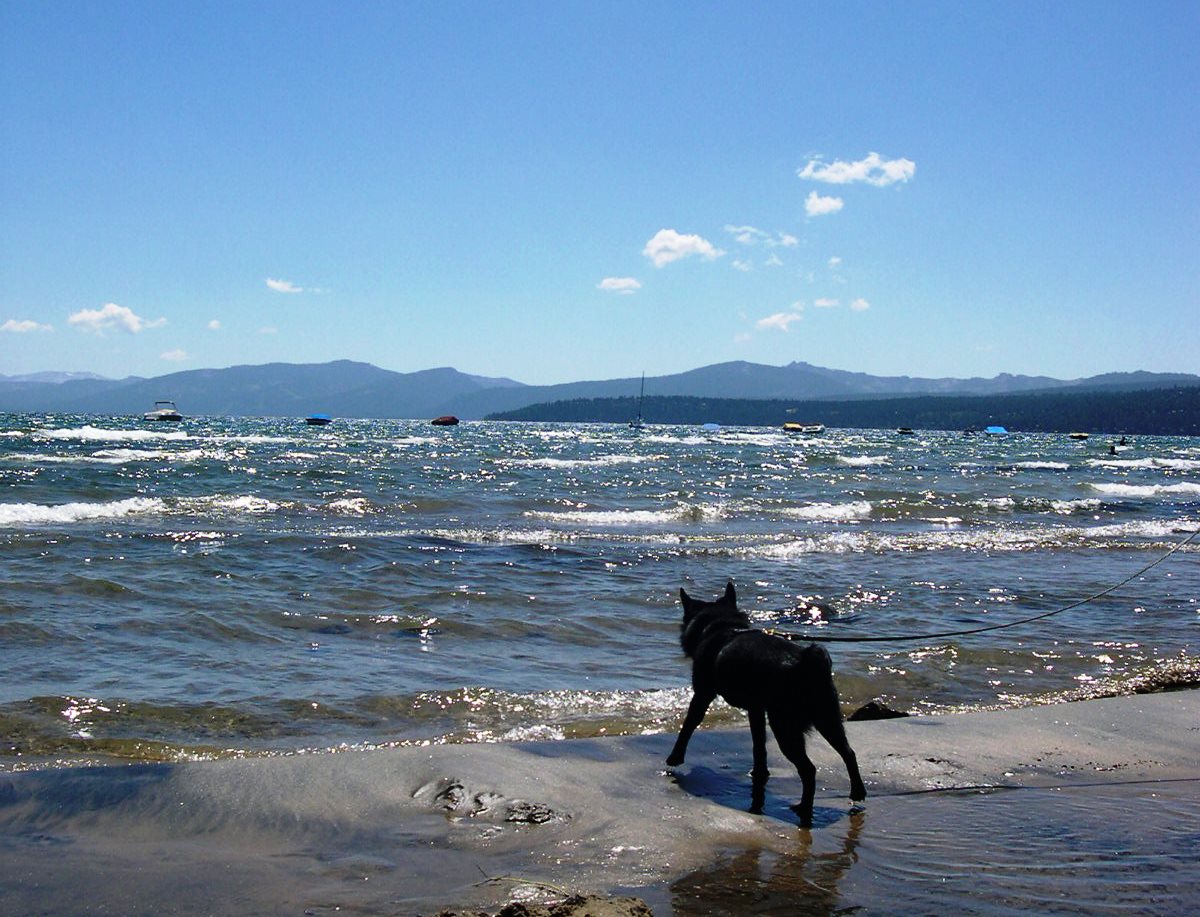
Pasha looks out on the beautiful waters of Lake Tahoe, California, August 2004
My dog lives freely
each moment an occasion
to cherish and leave
Years ago I found this haiku, along with several others, among some handwritten drafts and school papers saved from Drew’s 10th grade year. He was probably around 15 years old when he wrote this, and I doubt he even knows I saved it. I loved it immediately because it captured the very essence of what dogs and other animals have to teach their human friends.
Today, I hope each moment for us will be an occasion to appreciate, enjoy or maybe even cherish– one that we can pass through with gratitude and remember without regrets.
Happy 16th birthday today, to our aging but still lively Pasha!
This post was originally published seven years ago today. The original post, comments and photo are linked, along with two other related posts, below. These links to related posts, and their thumbnail photos, do not appear in the blog feed; they are only visible when viewing the individual posts by clicking on each one. I have no idea why, nor do I know how they choose the related posts. That’s just the way WordPress does things.
The day of liberation

I photographed this memorial at Dachau concentration camp, Germany, August 2005
“So now, muster your strength, and don’t lose heart. We shall all see the day of liberation. Have faith in life. Above all else, have faith. Drive out despair, and you will keep death away from yourselves…The same smoke floats over all our heads. Help one another. It is the only way to survive.” — Elie Wiesel
On this day in 1945, the Dachau concentration camp was officially liberated. The eyewitness accounts of troops and survivors testify to the atrocities that were only beginning to be known to the world. Yet even out of these pits of despair came examples of faith, courage and hope that continue to inspire us.
When we visited Dachau in August 2005, it was a haunting reminder that there have always been those who “bear with unbearable sorrow” and somehow survive. May we remember those who suffer, and open our eyes to ways we can help. And may this brief remembrance enable us to see more clearly the many blessings of our lives today.
This post was originally published seven years ago today. The original post, comments and photo are linked, along with two other related posts, below. These links to related posts, and their thumbnail photos, do not appear in the blog feed; they are only visible when viewing the individual posts by clicking on each one. I have no idea why, nor do I know how they choose the related posts. That’s just the way WordPress does things.
Souls yearn
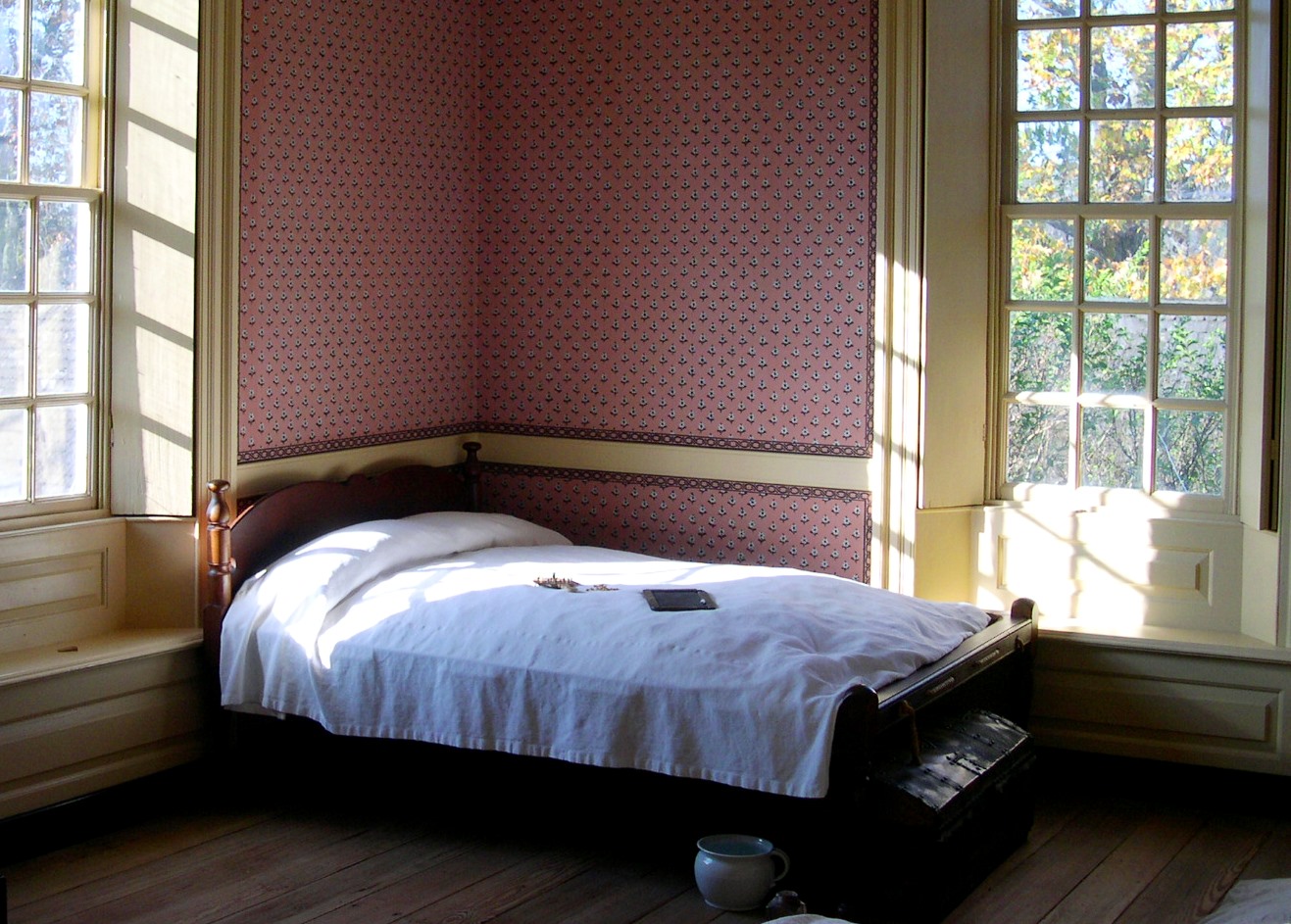
A November 2004 photo of a bedroom at Colonial Williamsburg.
Was life really simpler for our ancestors?
“When the fever-stricken patient is undermined with heat and craving with thirst, he dreams in his dozing of a fresh brook where he might bathe or a clear spring where he might drink in long drafts. In the same way, in the complex agitation of modern existence, our wearied souls yearn for simplicity.” — Charles Wagner
The most remarkable thing about today’s quote is that it was written in May 1895, as part of the author’s preface to his book A Simple Life which is now available for free downloads at Project Gutenberg. I found the quote in one of the original editions of the book, a lovely antique (published in 1905) which was a gift from my Aunt Peggy, to whom it belonged for many years.
I have to wonder what could have been complex about life before electricity, telephones or automobiles were widely available, not to mention smart phones, iPads, DVRs or other trappings of our times. Yet the term “complex agitation” was applied to life over 100 years ago. Could it be that this tendency toward over-stimulated frustration is more a function of human nature than of any particular era or location? If so, then its opposites, serenity and simplicity, would seem to be traits that require cultivation regardless of external circumstances.
Today, whatever our day is like, I hope we realize we can choose between serenity or agitation no matter what comes our way. Contented simplicity is probably no more easy or difficult than it has ever been. The good news is that it surely lies within our reach. Given the multitude of advantages we enjoy compared to the audience to whom Wagner was writing, we have the perfect opportunity to choose wisely.
This post was originally published seven years ago today. The original post, comments and photo are linked, along with two other related posts, below. These links to related posts, and their thumbnail photos, do not appear in the blog feed; they are only visible when viewing the individual posts by clicking on each one. I have no idea why, nor do I know how they choose the related posts. That’s just the way WordPress does things.
Built in hope
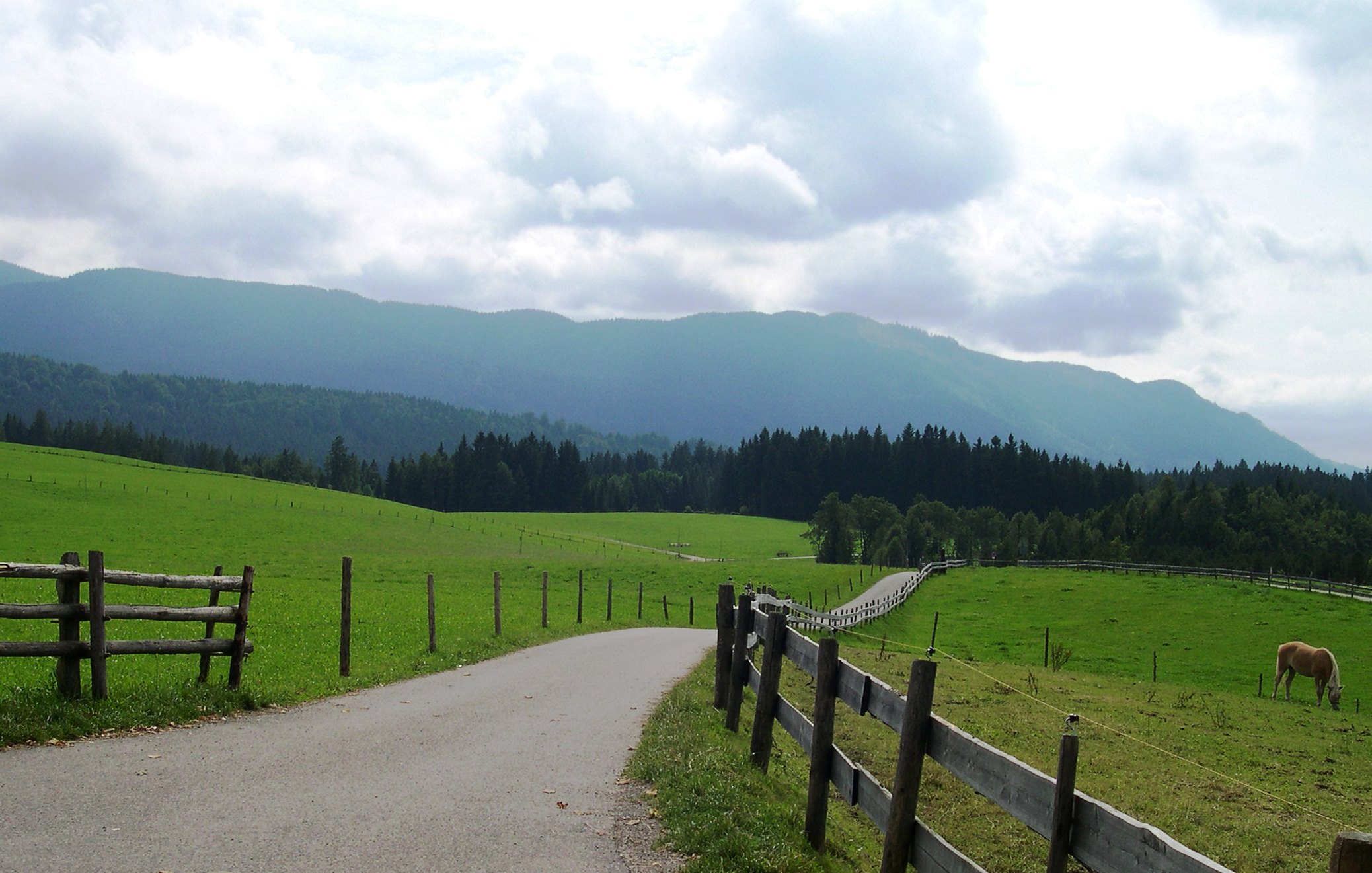
The road to Wieskirche, a place of pilgrimage near Steingaden, Germany, August 2005
“The road that is built in hope is more pleasant to the traveler than the road built in despair, even though they both lead to the same destination.” — Marian Zimmer Bradley
I love the book Life of Pi, especially the ending where Pi asks the skeptics a valid but often overlooked question: which is the better story?
There are those who see optimism as just another form of delusion; who feel that faith is nothing more than wishful thinking. I think most of us who have suffered in any way can understand and sympathize to some degree with the disillusionment of the cynics, but perhaps their pessimism is actually more defensive than the determined forward motion of the hopeful. Perhaps it is just as delusional to put one’s trust in what appears to be objective reason; after all, how many times has “established fact” been proven erroneous?
I’ve struggled with depression more often than I care to admit, and while pain can teach us much, I think it’s a tragedy to be permanently chained to it. Contrary to what some people may believe, optimists are sometimes the most realistic of all. It’s not that they are blind to the sorrows of life; it’s simply that they refuse to be defined by them. That’s why the song “The Impossible Dream,” said to be the favorite song of Robert Kennedy, is a favorite of countless other people as well. Don Quixote does not sing of happy endings and certain victory. He celebrates the refusal to surrender to sorrow and despair. “And the world will be better for this.”
Whatever sorrows and troubles you may face in life, I hope that you will always find your way back to the road built in hope, where traveling mercies abound.
Related Posts
This post was originally published seven years ago today. The original post, comments and photo are linked, along with two other related posts, below. These links to related posts, and their thumbnail photos, do not appear in the blog feed; they are only visible when viewing the individual posts by clicking on each one. I have no idea why, nor do I know how they choose the related posts. That’s just the way WordPress does things.
A kind of beauty
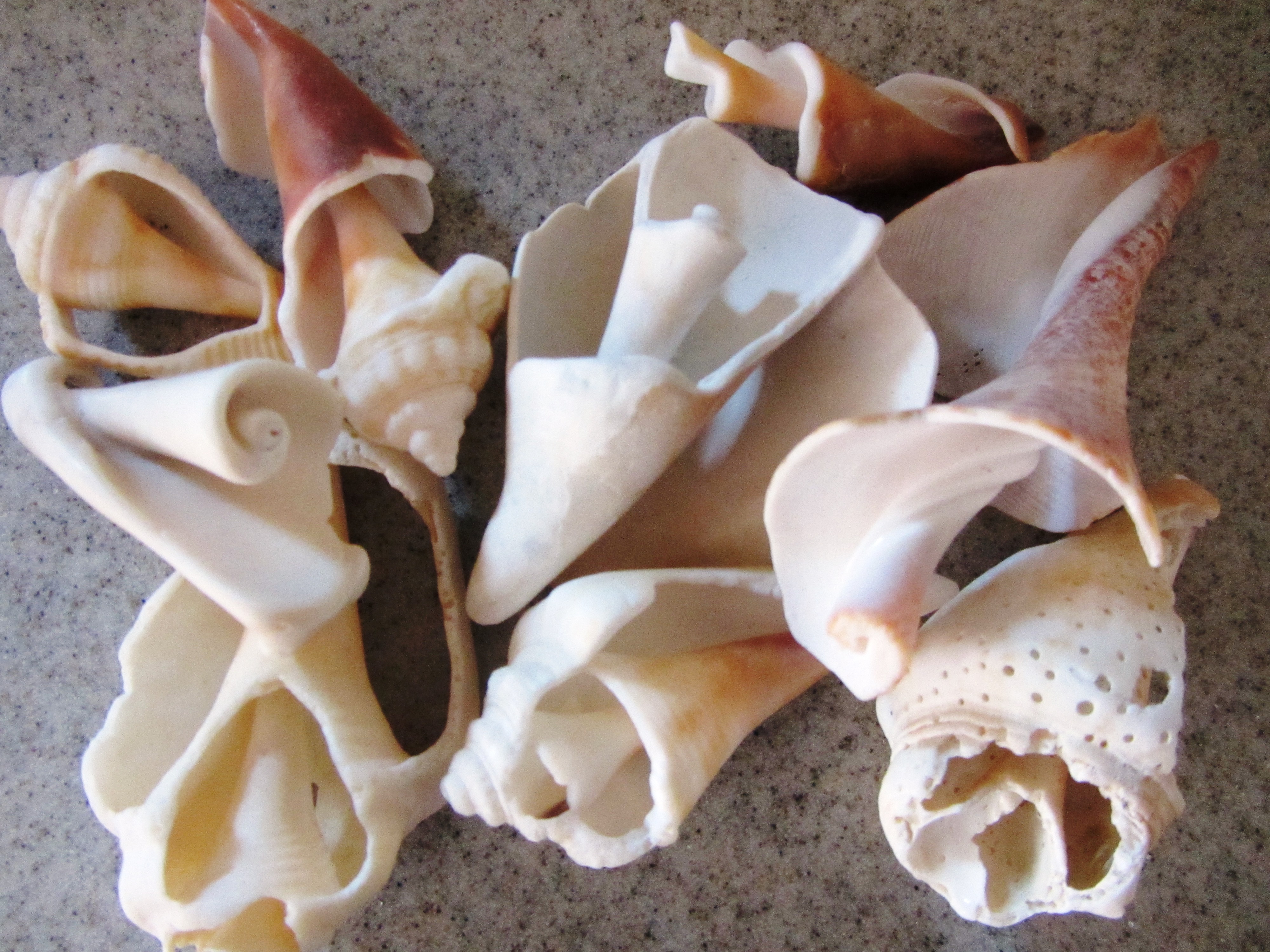
A few of the imperfectly beautiful shells I gathered in January 2013, Captiva Island Florida
“There is a kind of beauty in imperfection.” — Conrad Hall
During our brief getaway to Captiva Island in January, I spent blissful hours walking along the shore searching for seashells. Sanibel and Captiva are duly famous as a shell-gatherer’s dream. I had never seen so many shells washed ashore anywhere. Initially, I was searching primarily for the elusive perfect seashells, the kind you pay for in stores. Scavenging for these was a fun challenge, and I found them just often enough to keep me searching.
After awhile, though, I began to notice that the imperfect shells were beautiful, too, and far more unique. Each had its own details and characteristics. The rough pounding of the waves had lain them open, exposing the amazing inner structures that are concealed by the perfect surfaces of the undamaged shells. In many shells, the sand and sea had smoothed the damaged edges, creating a polished appearance that could have been an intentional work of art.
Months earlier, my friend Kathy had written to me about a trip to Sanibel, and how she had learned to see imperfection in a different way as she gathered shells. I now know exactly what she meant.
Our imperfections, as much as our virtues and strengths, make us who we are. Perhaps this is the lesson inherent in the beautiful verse in 2 Corinthians 12:9, where God tells Paul “My grace is sufficient for you, for my power is made perfect in weakness.” This does not mean that we should not work to improve our lives or ourselves. But even our less appealing traits can be smoothed and polished into a uniquely beautiful character.
We may be uncomfortable with our flaws, particularly those related to physical appearance, because we live in a world that projects mostly idealized images through advertisements and carefully edited media presentations. But each of us has something to offer the world that can come only from us, and our individual gifts are shaped by our struggles and imperfections. May we all value ourselves enough to see our own inadequacies as opportunities to grow, not barriers to hold us back.
This post was originally published seven years ago today. The original post, comments and photo are linked, along with two other related posts, below. These links to related posts, and their thumbnail photos, do not appear in the blog feed; they are only visible when viewing the individual posts by clicking on each one. I have no idea why, nor do I know how they choose the related posts. That’s just the way WordPress does things.
Start again

I saw this beautiful stained glass in a shop in Bar Harbor, Maine, June 2012
The birds they sang
at the break of day
Start again
I heard them say
I can’t recall a single time when hearing the birds singing did not lift my spirits. Sometimes they sound cheerful and perky, sometimes insistent, almost alarmed, but they never sound depressing. Birdsong goes perfectly with the other delights that often accompany it: soft breezes, sunshine, or the cool dusk falling as late afternoon becomes evening. Sometimes it’s the trill of a single bird against the quiet, other times it’s an amazingly loud chorus creating a wonderful din, but always they communicate to me the wonderful persistence that confirms my optimism is not unfounded. As much as any other animal, birds defeat despair. Listen for their singing and be blessed!
This post was originally published seven years ago today. The original post, comments and photo are linked, along with two other related posts, below. These links to related posts, and their thumbnail photos, do not appear in the blog feed; they are only visible when viewing the individual posts by clicking on each one. I have no idea why, nor do I know how they choose the related posts. That’s just the way WordPress does things.


