The power to speak
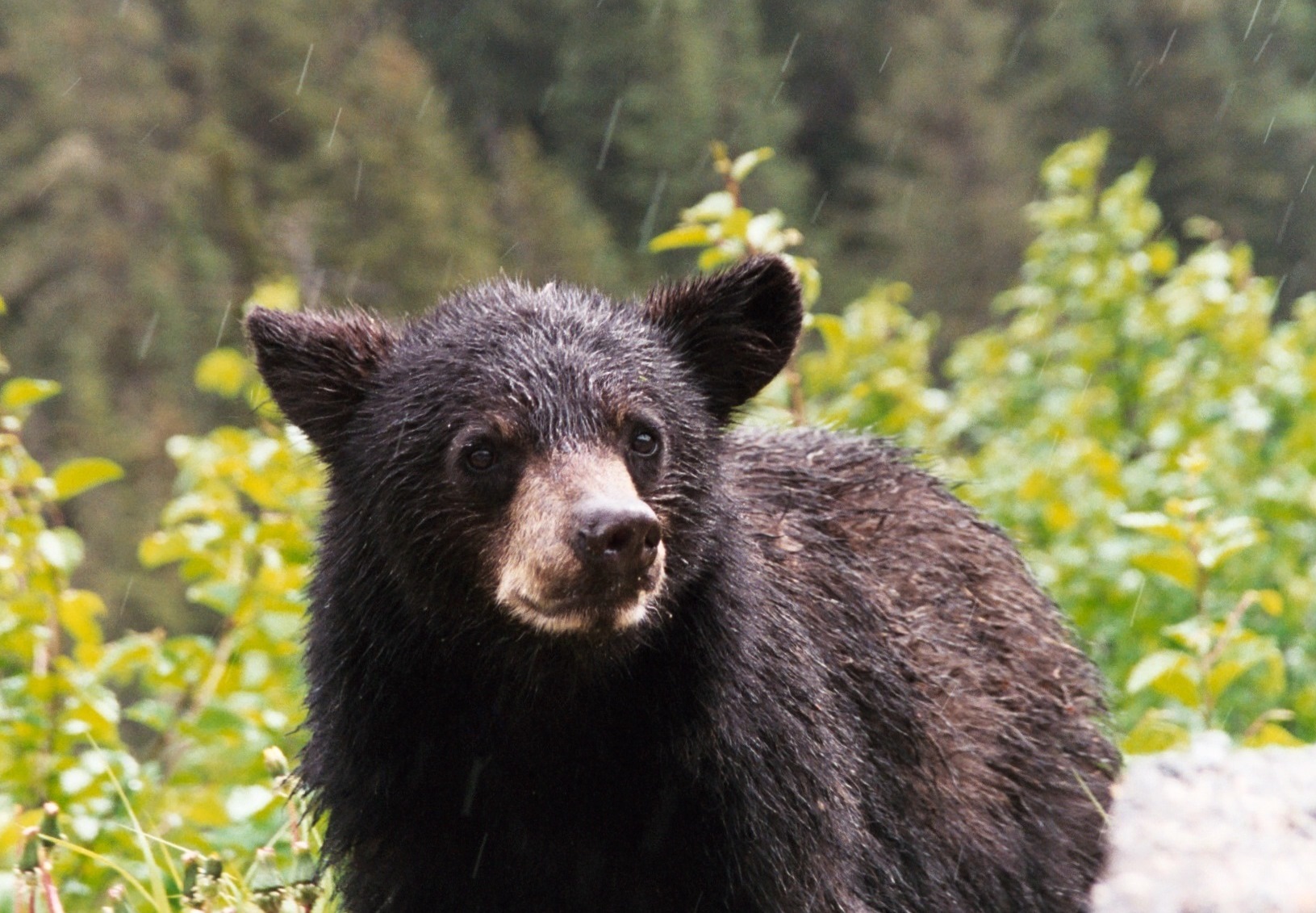
This cub was as curious about us as we were about him! Near Skagway, Alaska, June 2000
“An animal’s eyes have the power to speak a great language.” — Martin Buber
On a highway near Skagway, Alaska, we noticed a few people stopped alongside the road and quickly found what attracted their attention: a baby bear had ambled right up to the guard rail, looking at everyone with friendly curiosity. It was raining lightly as I took several photos of one of the cutest animals I had ever seen in the wild (and only later realized that this might have been fatal if an angry Mama Bear had come after me).
Anyone whose household includes an animal (or two or three or more) is well aware of their ability to communicate without words. Those who aren’t familiar with animals may think us overly sentimental, or accuse us of anthropomorphism when we insist our animals talk to us with their eyes and mannerisms. But to ascribe the ability to communicate to an animal is not to equate it with a human. Indeed, some animals may achieve a higher rate of successful communication with each other than their human counterparts achieve among their peers!
In any case, I fail to understand how anyone could look into an animal’s eyes and not see a form of intelligence behind them. From the sophisticated, almost disdainful glances of gorillas or lions at the zoo, to the watchful awareness of a rabbit or deer deciding exactly how close it will let me come before it flees, animals say many things with their eyes. Whether or not we interpret them correctly is a different matter.
I wish for you many delightful (and safe) encounters with animals of all kinds!
This post was originally published seven years ago today. The original post, comments and photo are linked, along with two other related posts, below. These links to related posts, and their thumbnail photos, do not appear in the blog feed; they are only visible when viewing the individual posts by clicking on each one. I have no idea why, nor do I know how they choose the related posts. That’s just the way WordPress does things.
Libraries will get you through

The public library of Rockland, Maine is one of many beautiful libraries that welcome you!
“Libraries will get you through times of no money better than money will get you through times of no libraries.” —Anne Herbert
Whenever I am feeling grouchy about paying taxes, I try to think of the wonderful public libraries that have given so much to our family over the years. I can think of few places that have enriched our lives on so many levels, at no direct cost. Even before I became a librarian I was bewildered that many people never walk into a library. It’s unquestionably one of the best bargains around.
The public libraries of today have much, much more to offer than traditional books. You can now look up all sorts of full text publications, 24/7 from the convenience of home, via research databases that formerly cost hundreds of dollars to access (and unlike a Google search, these databases are pre-screened or peer-reviewed for accuracy and quality). You can download in seconds the newest audio or e-book bestsellers to play on your iPod or MP3 player. You can even download free hit music, yours to keep permanently, via an online service called Freegal that is now available in many public libraries. You can check out DVDs of countless movies. If the titles of your choice in books, music or movies are not available, you can get on a waitlist for them. For all these services and more, we’ve never paid a cent outside of the taxes we pay whether or not we use the library.
Even if you’re not into books, music or movies, there are other great possibilities at public libraries. Some are now lending all sorts of non-literary things: hand tools, cake pans, knitting needles, telescopes, fishing poles, home energy meters and other items that can be more practical to share than to own. There are even libraries that host seed exchanges, where gardeners can “recycle” seeds from their gardens. You can apply for passports, get documents notarized, hear free concerts and take free classes. And some larger libraries now have machines that will download from your flash drive a manuscript you’ve written, and turn it into a book! (This particular service, of course, is not free.)
If you are a library fan, thanks for visiting my blog – you are among many like-minded people here! If you are not taking advantage of the immense wealth offered in your local library, I hope you will check it out (no pun intended) and find out how much fun you can have for free.
See also:
This post was originally published seven years ago today, but it is more relevant in the age of COVID-19 than ever before. I am so grateful to be streaming movies, books, and music at no cost from the seven public libraries where I keep active borrower accounts, giving me endless cost-free entertainment while we are all shut in. And I have many print books that are on indefinite loan from two different public libraries, as they too have closed their buildings but continue their work online, rolling forward the due dates on whatever I was lucky enough to have checked out when they closed temporarily. Libraries will get you through all sorts of difficulties, including those nobody could ever have predicted. As the post-COVID recession lingers, remember Hebert’s words!
The original post, comments and photo are linked, along with two other related posts, below. These links to related posts, and their thumbnail photos, do not appear in the blog feed; they are only visible when viewing the individual posts by clicking on each one. I have no idea why, nor do I know how they choose the related posts. That’s just the way WordPress does things.
Flowers have an expression
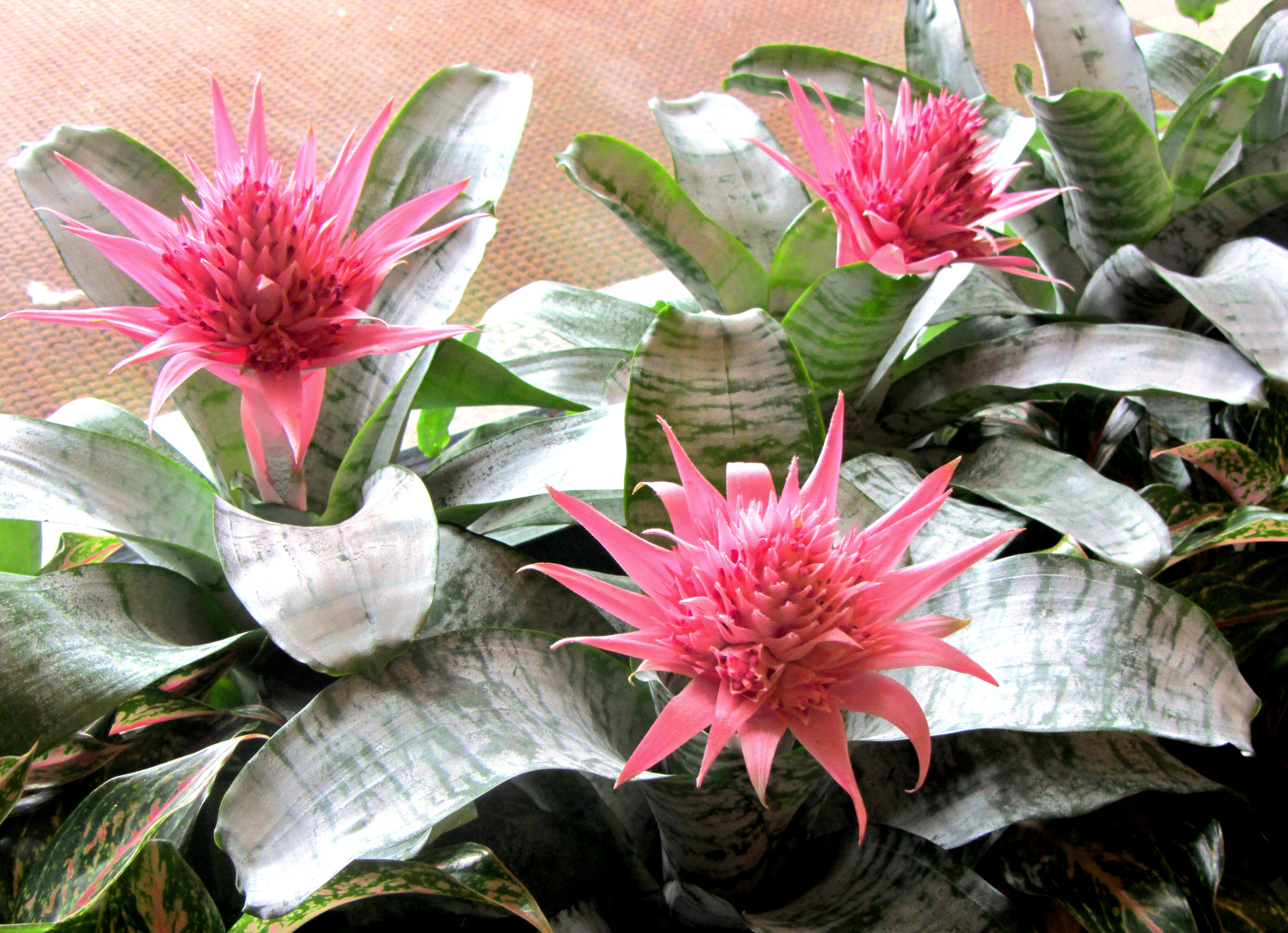
Bromileads (we think) bloom just inside the Sackler Gallery, Smithsonian Institution,
Washington DC March 2013
“Flowers have an expression of countenance as much as men or animals. Some seem to smile; some have a sad expression; some are pensive and diffident; others again are plain, honest and upright…” — Henry Ward Beecher
On a recent visit to the Sackler Gallery at the Smithsonian Institution, I was delighted to see the beautiful flowers pictured above, growing just inside the front window. Unlike most flowers at the Smithsonian, these did not have any labels that named or described them. I asked around, and staff were not certain either, but the general consensus was that they were some form of bromilead.
When I came home I did a bit of research and found out some fascinating facts about this particular family of flowers. They are incredibly diverse in appearance, ranging from the pineapple (surprised? I was) to Spanish moss (which is neither Spanish, nor moss) to brilliant varieties similar to the one pictured above. I thought of Beecher’s quote when I saw these flowers, which certainly have an expression unlike most others. How would you describe them? Words that come to mind for me are cheerful, serene, elegant, and vivacious. I hope they will brighten your day as they did mine!
This post was originally published seven years ago today. By the time I returned to the Sackler for a subsequent visit, the bromileads had been replaced with a different display, and I missed them. I’m glad I had my camera and got the photograph when I did.
The original post, comments and photo are linked, along with two other related posts, below. These links to related posts, and their thumbnail photos, do not appear in the blog feed; they are only visible when viewing the individual posts by clicking on each one. I have no idea why, nor do I know how they choose the related posts. That’s just the way WordPress does things.
Just enough intelligence

Niagara Falls, the USA and Canada, May 2009
“As a human being, one has been endowed with just enough intelligence to be able to see clearly how utterly inadequate that intelligence is when confronted with what exists.”
— Albert Einstein
Niagara Falls is one of those places that can’t be adequately described; one has to be there, hear the roar and feel the mist to fully appreciate the magnitude and power. This site is among several places that were much more impressive in real life than I had expected them to be. I first saw the falls in 1976, when my college roommate was Miss Kentucky, and was competing in the Miss USA pageant held nearby. As exciting as it was to be there for the live telecast, the most wonderful part of my trip was seeing the spectacular show nature stages at the falls 24 hours every day regardless of how many people are in attendance.
What’s even more amazing is how many places all over the world are equally remarkable. It took me awhile (and some advice from Jeff) to decide which photo would go with this quote, since I’ve snapped so many photos of wondrous sights that took my breath away. Einstein said it well; even the most intelligent among us is duly humble in the face of creation. I wish for you many chances to thrill to such abundant natural magnificence, and vivid memories to treasure with awe and gratitude.
This post was originally published seven years ago today. The original post, comments and photo are linked, along with two other related posts, below. These links to related posts, and their thumbnail photos, do not appear in the blog feed; they are only visible when viewing the individual posts by clicking on each one. I have no idea why, nor do I know how they choose the related posts. That’s just the way WordPress does things.
Like life

“Pink snow” surrounds our cherry blossom trees, covering the lawn and sidewalks, 2012
“Do not watch the petals fall from the rose with sadness; know that, like life, things sometimes must fade before they can bloom again.” — Author unknown
The cherry blossom trees of Washington DC are justly famous, but the ones I most enjoy are right outside the front door of our townhouse in Alexandria. Until we lived with them, I never realized how briefly the cherry blossoms are in bloom. We have less than a week to enjoy their beauty at peak bloom time when most of the petals are open. If it rains, the petals fall even more quickly, leaving the ground covered in what I call “pink snow.” The feather-light petals can be annoying as they stick to cars and windows, and get tracked into the house in clumps on the soles of our shoes. But they are also beautiful, carpeting the ground with a fluffy loveliness unlike any other.
Wednesday as I was admiring the amazing blossoms in DC, the petals were just beginning to fall. The past two days they’ve been fluttering through the air almost continually. I’ve been sweeping, vacuuming and cleaning up pink flower petals off my floors all day.
Though I feel a bit sad when the blooming period is over, I also rejoice in the unique reminder left behind by the petals. I take comfort in knowing the trees will bloom again next year. Meanwhile there will be other flowers to enjoy. It seems an apt metaphor for life; the glorious happy times that are over before we know it, leaving lovely memories that bless us even as they touch our hearts with sorrow. We wipe away the tears and look to the future, trusting that new blooms will spring up.
This post was originally published seven years ago today. Every year since, the cherry blossoms have bloomed and faded, with peak bloom time varying according to the weather. This year, peak bloom was about two weeks ago.
The original post, comments and photo are linked, along with two other related posts, below. These links to related posts, and their thumbnail photos, do not appear in the blog feed; they are only visible when viewing the individual posts by clicking on each one. I have no idea why, nor do I know how they choose the related posts. That’s just the way WordPress does things.
Our song
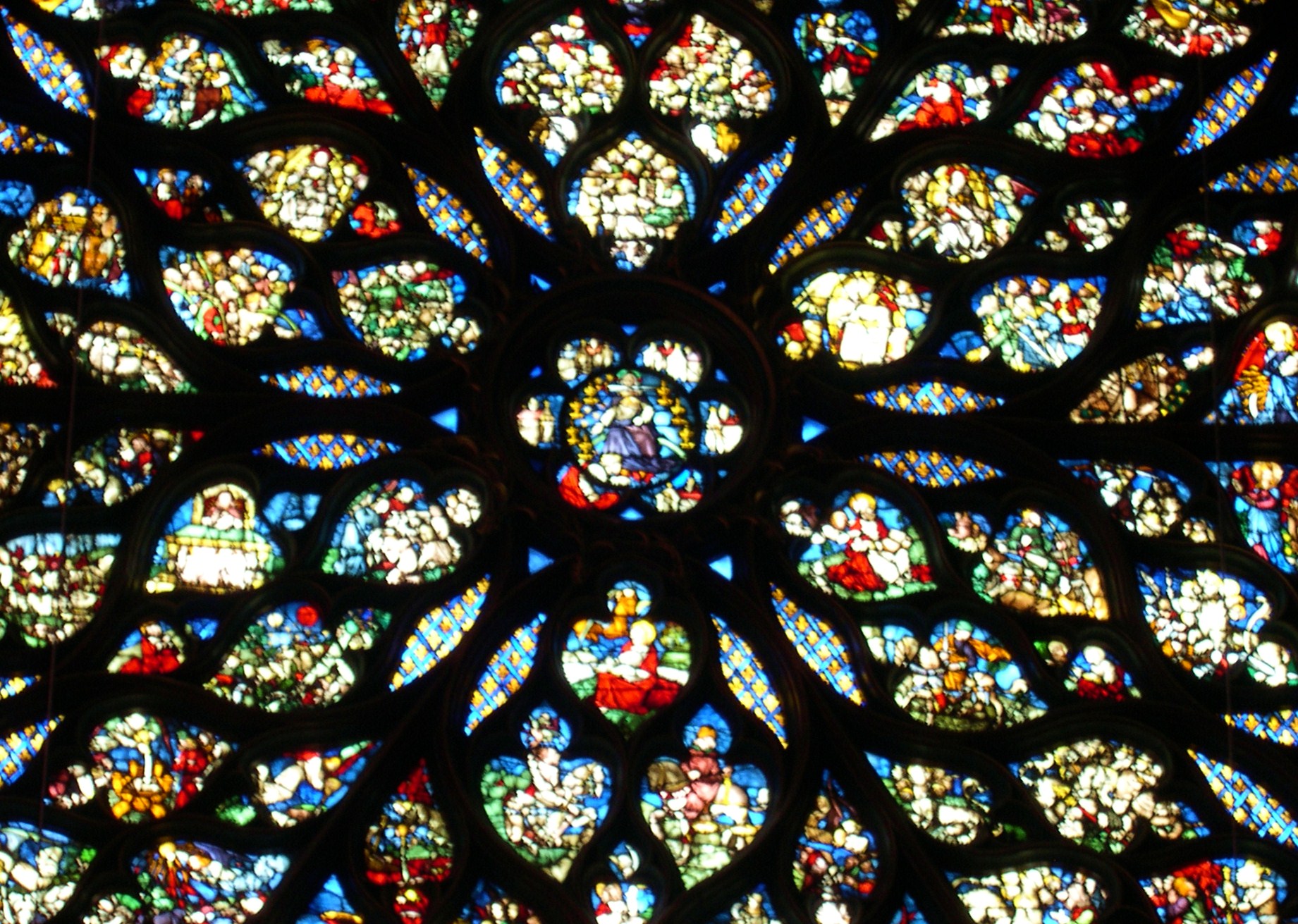
The rose window of Sainte-Chappelle, Paris, 2005
“Do not abandon yourselves to despair. We are the Easter people and hallelujah is our song.” — John Paul the Great
Though I have never been a Roman Catholic, I was drawn to the writings of John Paul II. His erudition and resolve impressed me, but I connected most with his steadfast devotion to the theme that came to define his papacy: “Fear not!”
Today is the most joyful holiday in the Christian calendar, the culmination of the story that begins with the incarnation of “God with us” that so many people celebrate at Christmas. Whether or not you observe Easter as a religious holiday, I wish for each of you who read this message the confident faith, enduring hope and unshakable joy I feel today. May we all live in recognition that “hallelujah is our song.”
Divine surprise
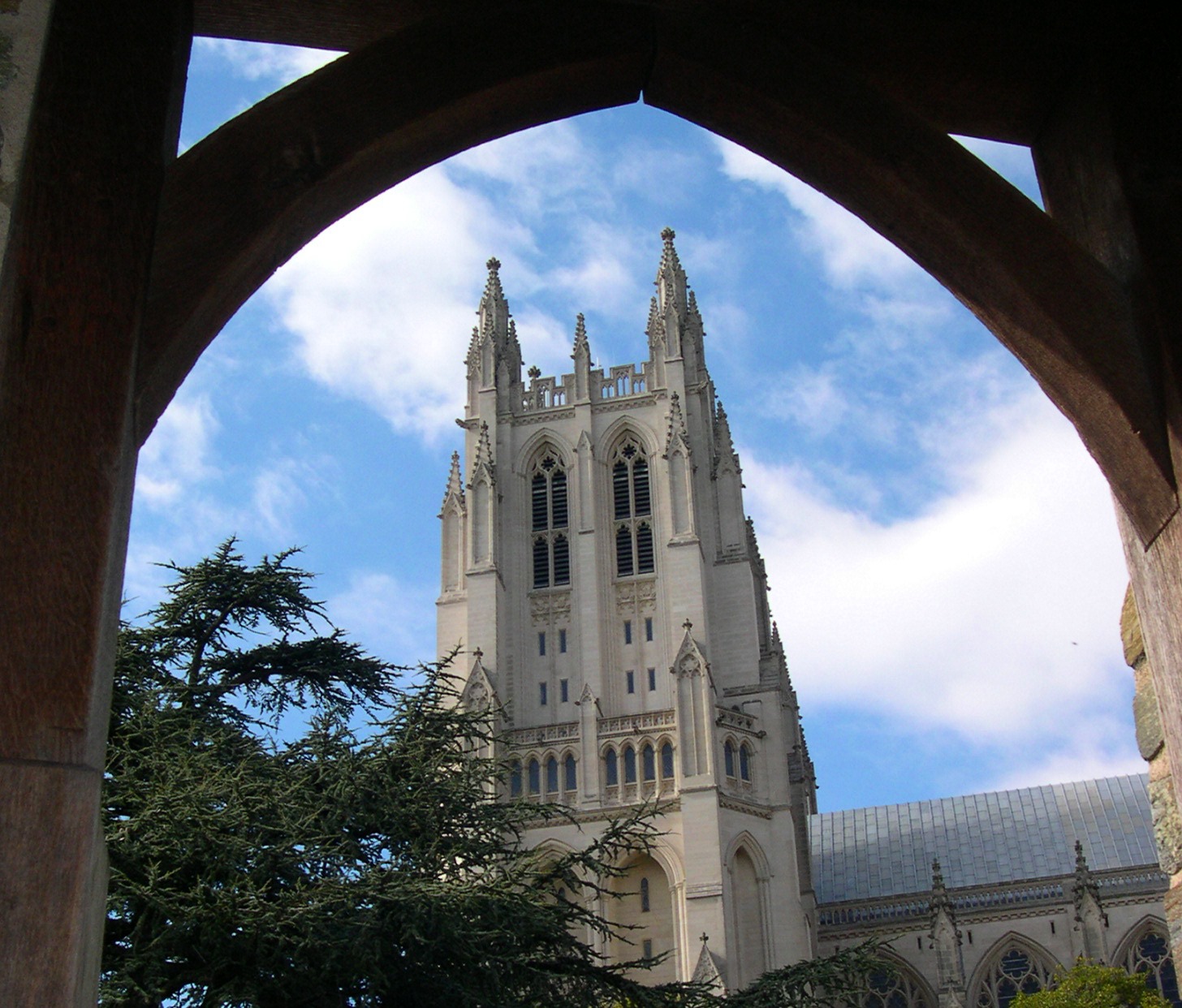
Washington National Cathedral, April 2005
“The story of Easter is the story of God’s wonderful window of divine surprise.”
— Carl Knudsen
It’s possible to hope with complete assurance for something, and still be delightfully surprised when you get more than you asked for. That’s how Christmas morning often felt to me in childhood– the anticipation, though great, never quite captured the magic of what we saw when we rushed downstairs before dawn. It’s also how I felt when our sons were born. No matter how much I imagined we would love them, it didn’t come close to the joy of actually holding them and seeing them face to face.
Thus it is that we can live a life of deep faith and steadfast trust, and still we cannot begin to imagine what lies ahead. As promised in I Corinthians 2:9, we wait in confident expectation for things we are now unable to fathom: for the miracle of divine surprise.
This post was first published on Saturday, the day before Easter Sunday, 2013. I read it again now, seven years and too many heartbreaks later, scarcely daring to hope for good news as the morbidity and mortality numbers continue to climb all over the world. Yet stubbornly, I still do hope– for what, I’m not exactly sure anymore. But that’s the whole point of surprise, isn’t it? Believing in the reality of what we wait and hope for, though it is beyond our ability to imagine.
Just three days

One of several remarkable sand sculptures adorning the beaches of Puerto Vallarta, Mexico, March 2004
“Earth’s saddest day and gladdest day were just three days apart!“– Susan Coolidge
The gospel story of Jesus and his victory over death was foreshadowed centuries earlier, and not only in the writing of the Old Testament prophets. In the book of Psalms we find this hopeful verse: “Weeping may endure for a night, but joy comes in the morning.” (Psalm 30:5 NKJV) What Christians think of as the Easter story is actually a promise worth celebrating every day: even the longest night will not last forever, and death does not have the final word.
An oft-quoted saying declares that the darkest hour is right before dawn, but I confess there have been times when I’ve reassured myself with that thought, only to find that I had not yet seen the darkest hour. Yet sometimes, just when we are ready to give up, we discover unspeakable joys in our future, much closer to us than we would have dared to dream. May the coming of spring awaken in your soul the courage to hope!
This post was originally published on Good Friday, 2013. The original post, comments and photo are linked, along with two other related posts, below. These links to related posts, and their thumbnail photos, do not appear in the blog feed; they are only visible when viewing the individual posts by clicking on each one. I have no idea why, nor do I know how they choose the related posts. That’s just the way WordPress does things.
In even the smallest matter

Detail of a bead art picture in Puerto Vallarta, Mexico 2004
“Be satisfied with success in even the smallest matter, and think that even such a result is no trifle.” — Marcus Aurelius
If you’ve ever been to Puerto Vallarta, Guadalajara or certain other well-known Mexican cities, you probably have seen the beautiful artwork created with tiny seed beads or yarn in the tradition of the Huichol people. With painstaking exactitude they create brilliantly colored items with complex designs that delight the eye and intrigue the mind. In many shops, tourists can watch the artists at work and marvel at the patience and care with which they produce unique treasures.
While I love the yarn paintings, I am most fascinated by the intricate beadwork. Those of us who have reached “a certain age” might find it difficult to even see the tiny beads, let alone place them one by one with delicate precision until a large work is finished. But the artists handle their miniscule materials with practiced expertise. They remain focused intently on their designs, apparently not distracted by the tourists streaming past to observe works in progress. The finished art collections display convincing evidence that cumulative tiny actions can achieve impressive results.
For the most part, our days are made up of small, seemingly insignificant actions that we scarcely note. With practiced habit we keep house, tend children or execute countless tasks that make up our paid or unpaid vocations. It can be easy to feel unimportant when most of what we do garners little notice or admiration, but we are building a lifetime of accomplishment, the ultimate results of which we likely will never see. As the words of Zechariah 4:10 ask, “Who dares despise the day of small things?”
This post was originally published seven years ago today. The original post, comments and photo are linked, along with two other related posts, below. These links to related posts, and their thumbnail photos, do not appear in the blog feed; they are only visible when viewing the individual posts by clicking on each one. I have no idea why, nor do I know how they choose the related posts. That’s just the way WordPress does things.
In the cherry blossom’s shade

The cherry blossoms decorate the tidal basin, sometime in the mid 1970’s
“In the cherry blossom’s shade there’s no such thing as a stranger.” — Kobayashi Issa
Have you ever noticed how often people share their excitement at a beautiful landmark or stunning view? Tourists who have never met offer to take photos for each other, handing expensive cameras to total strangers. Except, as Issa says, there’s no such thing as a stranger when you are enjoying natural beauty or fascinating sights.
I lost count of how many times I visited the Golden Gate Bridge while we lived in northern California, but almost every time I went there, I ended up taking photos for people. I always enjoyed snapping photos of visitors who were obviously having a great time and delighted by the view. And people have kindly offered to take photos for Jeff and me everywhere from Spain to Honduras to Canada and many points in between, giving us unique souvenirs to preserve cherished memories.
It’s easy to complain about tourists and crowds, but I love to see travelers discovering places that are familiar to me. And when I’m traveling, I appreciate the hospitality of locals who take pride in the beauty of their hometowns and countries. In such circumstances, one can almost believe that a peaceful world is not an impossible dream.
This post was originally published seven years ago today. The original post, comments and photo are linked, along with two other related posts, below. These links to related posts, and their thumbnail photos, do not appear in the blog feed; they are only visible when viewing the individual posts by clicking on each one. I have no idea why, nor do I know how they choose the related posts. That’s just the way WordPress does things.
Something is there

Cape Cod National Seashore near Provincetown, Massachusetts, May 2009
I go out
to the pale dunes, to look over
the empty spaces
of the wilderness.
For something is there,
something is there when nothing is there but itself,
that is not there when anything else is.
There are places where vast emptiness stretches so far as to suggest infinity. The more deserted the landscape, the more absent any sounds except those of nature, the more haunting are the memories of visits to these sites. It’s awe-inspiring and a little frightening to stand amid such magnificent isolation. The terrain may vary– I’ve felt such spells cast by locations as distant from one another as the Cape Cod seashore, the Florida Everglades, the mountains of Colorado or the southernmost point of the United States, on the island of Hawaii– but the somber allure is similar regardless of where these lands are located. We will do well to preserve such sanctuaries of peace, these parcels of holy ground where we find again a sense of humility and perspective so often lost in the busyness of human endeavors.
This post was originally published seven years ago today. The original post, comments and photo are linked, along with two other related posts, below. These links to related posts, and their thumbnail photos, do not appear in the blog feed; they are only visible when viewing the individual posts by clicking on each one. I have no idea why, nor do I know how they choose the related posts. That’s just the way WordPress does things.
After ecstasy

That’s Drew behind our clothesline in Huber Heights, Ohio, 1986
“After ecstasy, the laundry.” — Zen saying
Perhaps no quote can so succinctly capture the experience of parenthood, especially in its early stages. The unsurpassed joy of holding a newborn baby is quickly tempered by the grinding realities of sleep deprivation, miscellaneous messes to clean up and a never-ending pile of laundry to be done. Yet there is joy even in these daily chores, though it may not appear as such without the benefit of years of hindsight.
Most of life is routine, and for the majority of people, there is no small amount of drudgery involved. But without the stability of sameness, we would have no canvas against which to appreciate the moments of brilliant color and exhilaration that tend to stand out in the foreground of our memories. Decades later, when we look back on what made us happiest, chances are we will remember primarily the subtle beauty of our everyday lives. As you go through your day today, tomorrow, this week, I hope you will listen for the unique rhythms of your particular world, and hear the poetry of the commonplace.
This post was originally published seven years ago today. The original post, comments and photo are linked, along with two other related posts, below. These links to related posts, and their thumbnail photos, do not appear in the blog feed; they are only visible when viewing the individual posts by clicking on each one. I have no idea why, nor do I know how they choose the related posts. That’s just the way WordPress does things.
A thousand small ways

My neighbor’s miniature hyacinths add a spot of beauty to my walk, March 2013
“When we are willing to be open-minded, art and beauty come flooding into us in a thousand small ways.”— Julia Cameron
I tend to think of open-mindedness as a trait useful primarily to our rational minds, vital to the examination of ideas, cultures and opposing viewpoints. Yet there are many ways our minds can be open rather than closed. Often we are convinced that we know almost everything about a person, a place, an animal, or even an inanimate object such as a machine. We fail to notice the full picture because our familiarity tells us our full attention is no longer required. Without realizing it, we can close our minds to full awareness.
But living things change; places change; even objects such as computers and electronic devices are likely to have yet-unexplored possibilities. If we can learn to see the familiar as if it were new, our minds would open up to all that is fresh, unexplored, unknown and intriguing.
Whenever I find myself wishing for a new camera, or vacation destination, or new activity or connection, I ask myself: do I have room for something new right now, or do I still need to fully discover what I already have? It’s wonderful to explore and try new things. However, it’s possible to run so quickly from one new thing to another, that we never fully appreciate what we are already doing.
Most days, my walks (whether 2 miles or 5) are along the same roads with exactly the same paths I’ve traveled dozens of times before. It’s easy to pay almost no attention to what I pass, especially while listening to a book on tape. But sometimes– especially when I take my camera– I see things I haven’t noticed before. No two walks are ever exactly the same. I pass different people, see different dogs walking their owners, and chat with different children who stop to pet Pasha. The vegetation changes; new flowers bloom; homeowners decorate their lawns and porches with seasonal touches that add color. All these are examples of easily overlooked beauty that is ours for the taking.
I hope today you will open your eyes, mind and heart to discover those things that are so small or familiar we might miss them. Remember that no two days are exactly alike. What unique joys will be yours today, and today alone?
The original post, comments and photo are linked, along with two other related posts, below. These links to related posts, and their thumbnail photos, do not appear in the blog feed; they are only visible when viewing the individual posts by clicking on each one. I have no idea why, nor do I know how they choose the related posts. That’s just the way WordPress does things.
A light from the shadows
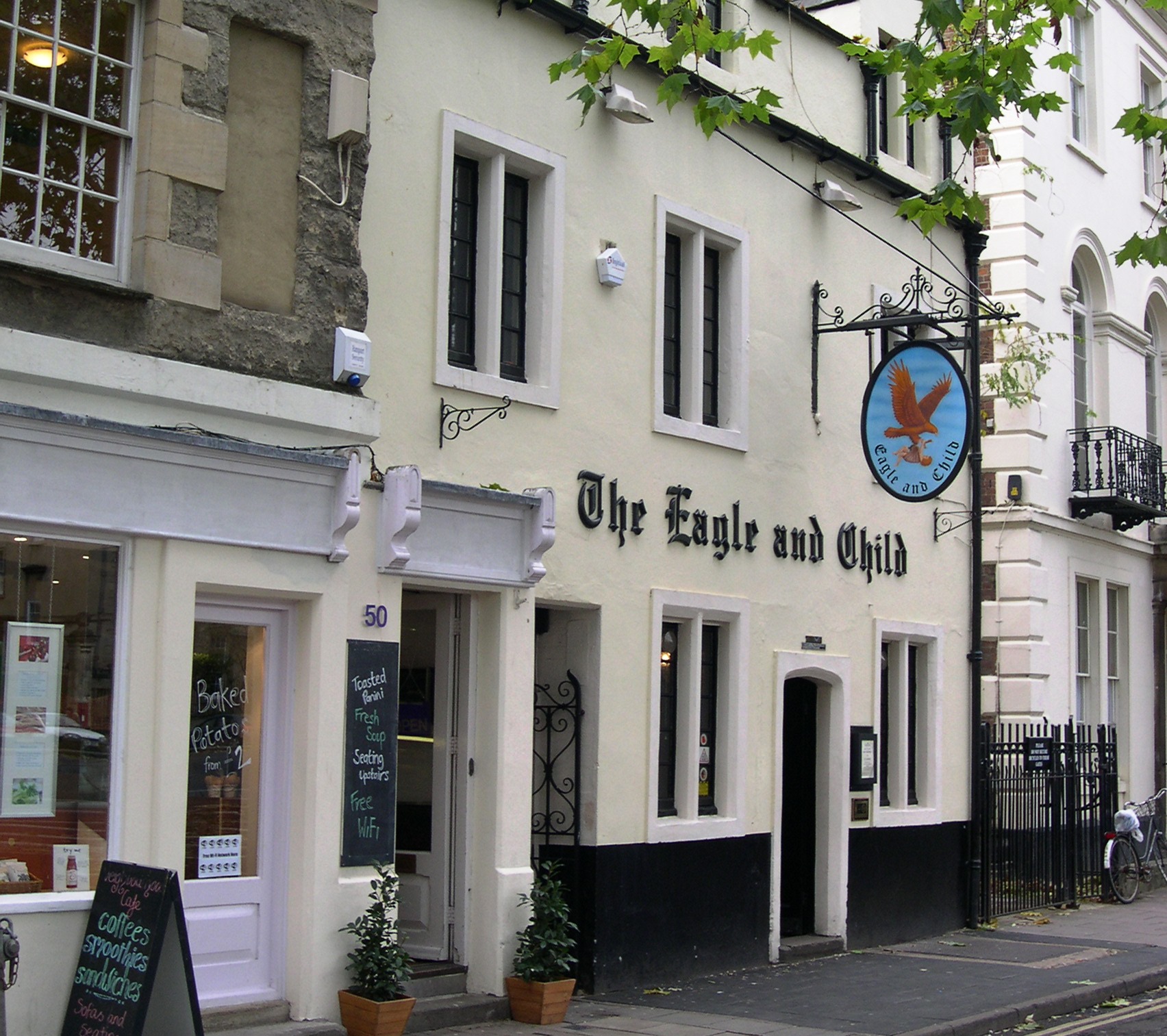
The Oxford pub where sparks were fanned into a flame that grows ever brighter
“From the ashes a fire shall be woken,
A light from the shadows shall spring…” — J.R.R. Tolkien
These lines are from a poem I have loved for many years. It appears in the first book of J.R.R. Tolkien’s classic Lord of the Rings, but its message has an enduring appeal whether or not one has read the story. The themes of hidden strength and eventual triumph are close to the heart of anyone who is surviving hardship while hoping for better times to come.
When I went to Oxford in December 2005, I went back to the Eagle and Child, the modest St. Giles pub I had first visited a few months earlier. I wanted to take some photographs (including the one above) of the place where Tolkien, C. S. Lewis and other writers met for years to discuss their writing. Tolkien and Lewis, the best known of the group referred to as “the Inklings,” would go on to achieve a degree of fame and popularity they probably never dreamed of during their early Oxford years.
C. S. Lewis is my favorite author. I have a hard time ever choosing a favorite of anything, and when discussing books and writers, the list of worthy contenders is long indeed. But Lewis has earned the superlative through his remarkable ability to distill profound ideas into simple, friendly language that intrigues as it instructs, and comforts as it challenges. His works have been a bright spot in my life for which I’ll always be thankful, and I find myself returning to them again and again.
Who are your favorite writers? Have you any books that are so loved as to seem almost like old friends? Any that shine a light into the dark nights of your life? I wish you many hours, days and years of the unique joy that is found in exploring real and imaginary worlds through books.
The original post, comments and photo are linked, along with two other related posts, below. These links to related posts, and their thumbnail photos, do not appear in the blog feed; they are only visible when viewing the individual posts by clicking on each one. I have no idea why, nor do I know how they choose the related posts. That’s just the way WordPress does things.
To all of you
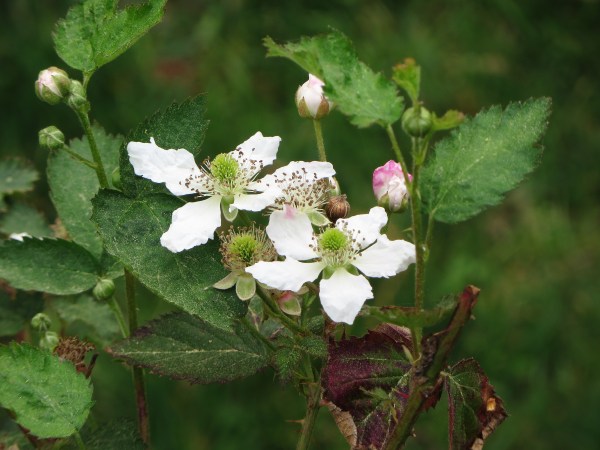
The blackberry bush at my York home is starting to bloom. March 2020
“I want to say to all of you that are reading this right now: You are not allowed to lose hope, because maybe a miracle will happen. DO NOT LOSE HOPE.” — Malka Chana Roth
We interrupt these re-runs to bring you a new real time post. I started this blog seven and a half years ago, because the world as I had always known it seemed to be coming apart around me, with Jeff’s terminal diagnosis and the repercussions it had on our comfortable life. Later, in the 20 month period during which I lost both my beloved parents and my husband, who had been my world for 38 years, the life I had known was irretrievably GONE. And more great losses were in store for me, as others disappeared from my life, seemingly unable to walk for very long with me through months and years of numbness and anger and sorrow that never seemed to end.
So for me, there is a curious parallel now in the events taking place in the world. I’m experiencing an odd sense of deja vu. Strangely, while everyone else is talking of feeling isolated, I am less isolated than I have been for the past five years. Suddenly my personal experiences are writ large across the entire world, as unprecedented catastrophe overtakes everyone. The isolation I have endured since Jeff’s death has become my ally in these present circumstances, for which I find myself strangely well prepared. I know how to live in hope, against all the odds.
Reading over the re-published posts from seven years ago, many have commented how unusually relevant they seem now. That’s maybe the best thing to come out of my years of sorrow and confusion, because there has never been a time when defeating despair is more important than it is now. I continue to re-publish these posts in an effort to shine whatever feeble light I can from my flickering candle, into the darkness that has engulfed us.
Cynics might point out that Malka Roth, who was a loving sibling to a child with severe disabilities, lost her own life to an act of violence and hatred that killed many others along with her. Her words have an innocence that makes me weep. I think of her kindred spirit, Anne Frank, who persisted in optimism despite being sequestered indefinitely, hiding for her life. These young women paid the ultimate price at the hands of cruel murderers. Were they wrong to live in faith that things would be better someday? I think not.
So along with Malka and Anne and countless other brave souls who endured the unthinkable, I say to you: do not lose hope. Stay well. Show kindness. Read, enjoy music, connect with loved ones, write journals and letters and poems. And do what my hero, Fred Rogers, told children to do after 9/11: look for the helpers. There are many on the front lines, doctors and first responders and grocery store clerks, showing up at personal risk to help us all get through this. And we will get through it. You are not allowed to lose hope.
This most amazing day
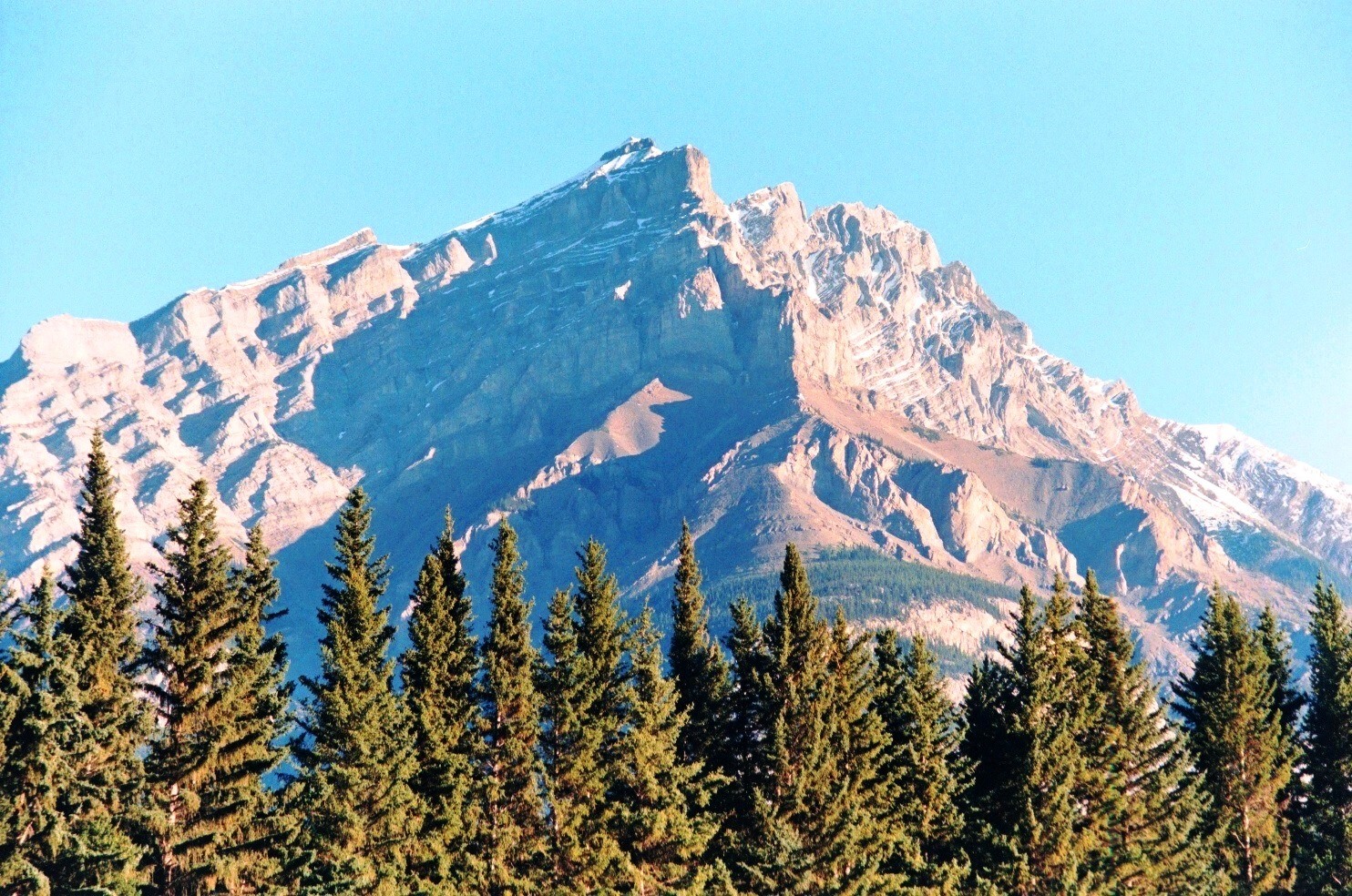
A most amazingly typical day in September 1999, Banff, Alberta, Canada
“I thank you God for this most amazing day, for the leaping greenly spirits of trees, and for the blue dream of sky and for everything which is natural, which is infinite, which is yes.” — E. E. Cummings
It’s a bit hard for me to imagine what it would be like living in a town such as Banff. One of the bloggers who visits regularly with us here lives very near Banff, and I wonder whether she ever gets used to the beauty of the Canadian Rockies. How does one manage to get any work done when it’s so beautiful outdoors? I remember feeling the same way the first time I stood atop the Malibu hill where Pepperdine University overlooks the Pacific Ocean. How on earth does anyone manage to graduate from a school where distracting magnificence lies outside every doorway?
I know how, of course. When we lived in Hawaii, some people on the mainland seemed to think we were on a 3-year extended vacation, with nothing to do but go to the beach every day. In reality we had to go to school, go to work, cook dinner and wash clothes, and do all the other chores of life, with relatively little time leftover to play.
Still, we tried to make as much time as possible to explore the islands and their varied landscapes that went far beyond gorgeous beaches. Whenever I would see one of the incredible rainbows that occur so frequently there, or string a lei from the fragrant plumeria that grew in abundance all around our home, I would remind myself to stop and savor the moments that would all too soon be unavailable on a daily basis.
Living in many different regions has taught me that no place is without beautiful features or interesting sights. But it’s easy to grow so accustomed to the familiar that we lose the wonder of it. Today, I hope you will take Cummings’ words with you and keep eyes open to “everything which is natural, which is infinite, which is yes.”
The original post, comments and photo are linked, along with two other related posts, below. These links to related posts, and their thumbnail photos, do not appear in the blog feed; they are only visible when viewing the individual posts by clicking on each one. I have no idea why, nor do I know how they choose the related posts. That’s just the way WordPress does things.
Poems by heart
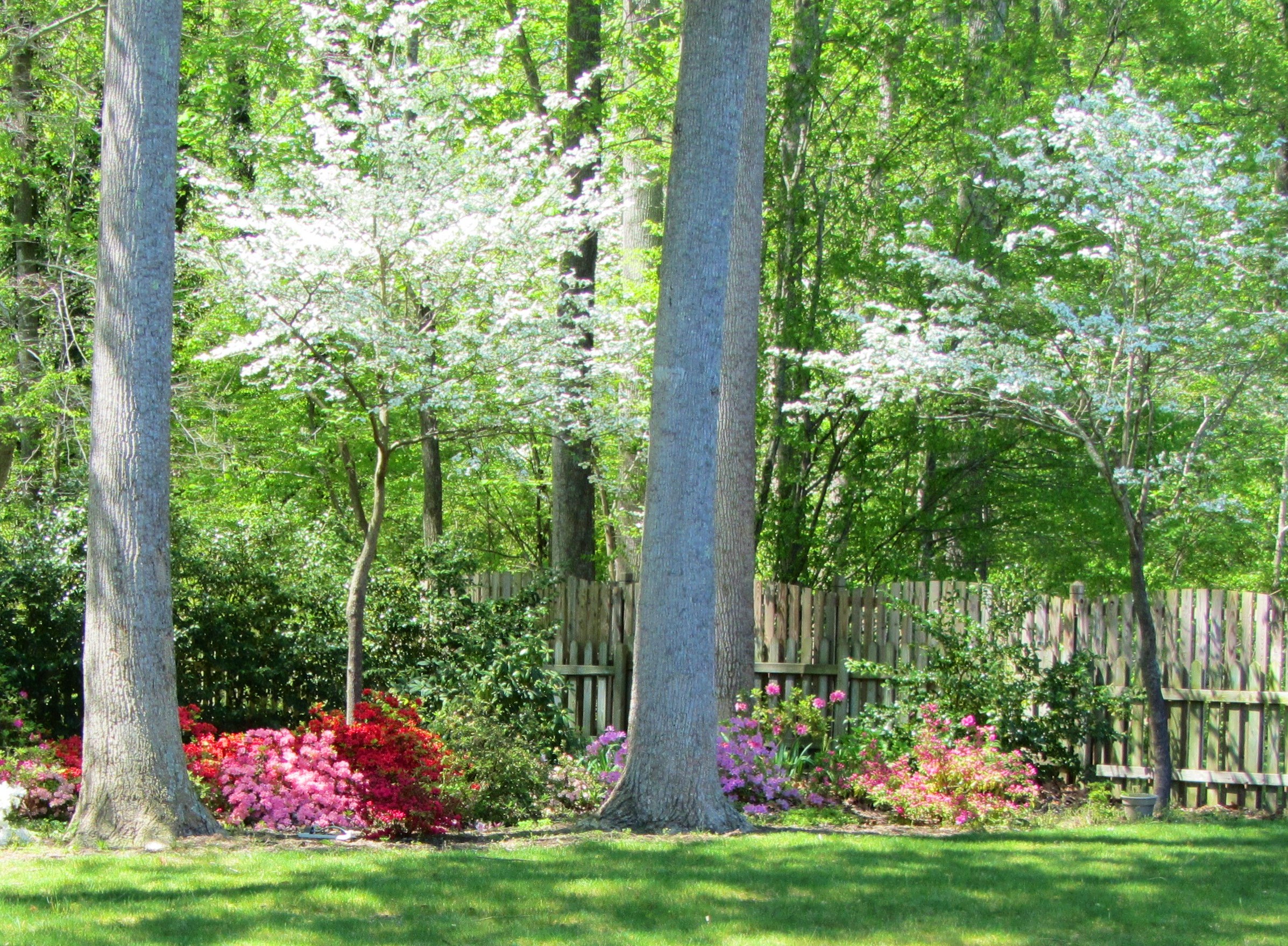
A corner of our York back yard on Easter 2012
“It is spring again. The earth is like a child that knows poems by heart.”
— Rainer Maria Rilke
I don’t consider myself a poet, but I do like to write poetry as well as read it. When writing poems I have to curtail the number of words I use so that every single one has an impact. Of course it’s a good idea to do this with all writing, but it’s especially important with poetry, wherein thoughts and emotions arrive in a reader’s mind in concentrated form leaving images that linger.
Rilke’s simile is an apt one, I think. Spring begins with a bare landscape and sparse visible assets. When it is ready, it bursts into blooms that decorate the landscape with vivid color, touching our spirits and renewing our hope. Spring knows its verses by heart, and speaks them (even sings them) to a delighted audience weary of winter and longing for youthful energy. May its winsome performance bring joy to your heart today!
The original post, comments and photo are linked, along with two other related posts, below. These links to related posts, and their thumbnail photos, do not appear in the blog feed; they are only visible when viewing the individual posts by clicking on each one. I have no idea why, nor do I know how they choose the related posts. That’s just the way WordPress does things.
A Little Nonsense

Pluto clowns with Matt at Walt Disney World in Florida, 2004
“A little nonsense now and then is relished by the wisest men.” — Joseph Addison
Happy April Fool’s Day! Laughter is one of the greatest gifts we can give ourselves or others. I hope you will indulge in some light-hearted fun today — look up a joke or two to share, sing silly songs, watch a funny movie with someone who needs to lighten up — but if you want to fool anyone, please keep your pranks kind and sensitive. And if anyone comes to you today with an unlikely tale of woe or unbelievable good news, think twice before you believe it! 🙂
Let’s share some humor with each other today. Do you have a link to a funny YouTube video, a favorite online joke or a hilarious photo? If so, please post it in the comments here and let’s laugh together. I wish you a day full of fun!
Here is one of my favorite “viral videos” – I hope you get a laugh or a smile out of it!
(It’s only 35 seconds long.)
The original post, comments and photo are linked, along with two other related posts, below. These links to related posts, and their thumbnail photos, do not appear in the blog feed; they are only visible when viewing the individual posts by clicking on each one. I have no idea why, nor do I know how they choose the related posts. That’s just the way WordPress does things.
Born on his father’s birthday

Eric and Dad at the old Atlanta airport, sometime in the mid 1970’s
“He was born on his father’s birthday, a gift that keeps on giving.”
— George F. Will, writing about his eldest son Jon
This month I pay tribute to the two men who, other than my husband, have had the most lasting influence in my life. My father was born in April, and his first child was a son born on his birthday. As George Will can attest, it’s a gift that keeps on giving.
Daddy had the good fortune to grow up right along with the aviation industry, first seeing a biplane during his childhood in the early 1930’s, learning to fly in the 1940’s, going on to train Air Force pilots to fly during the 1950’s, and eventually retiring as captain on a wide body airliner after over 30 years with Eastern Air Lines. I really can’t think of any other job I’d rather my father have had; there were no down sides to it that I could ever see (other than occasionally having him gone on holidays). I grew up listening to dinner table conversations about places he had been that day; New York or the Caribbean or the west coast. More than once, we dropped everything (including school) to take off for a quick getaway. The world always seemed small enough to be a friendly place and accessible enough to become familiar.
Although my sister, brothers and I are close in age, my older brother often took on himself the role of a second father to his younger sisters and brother. While this could be exasperating at times, it was also comforting. No one was surprised when he followed his father’s contrails into the sky, first as an F-100 pilot, then as an airline pilot for Northwest. As my father did, he gave me the opportunity to travel on passes (including the trip I wrote about here) but more importantly, brought back stories of his experiences that widened my world considerably.
I worked for USAir (formerly Piedmont) for five years, although I never served on a flight crew. The airport gates and tarmac were familiar to me, the airline lingo a vocabulary I learned from birth. I have watched the changes in the industry with interest and a bit of nostalgic sadness when I remember how special it used to be to fly. It’s now almost universal to talk of airlines, and flying itself, with contempt; to complain about the many irritations that have been an inevitable result of deregulation and the harsh reality of global terrorism.
As for me, I will never completely lose the sense of wonder I had as a very young child, looking down on fluffy white clouds lit up with brilliant sunlight, thinking to myself, “my Daddy works up here.” The next time you are on a flight, I hope you will be able to close your mind to the many irritations (crowded seats, full overhead bins, repetitious announcements and runway delays) and realize for a minute that you are able to do, often and without much thought, something your great-great-grandparents could scarcely have imagined. For me, flight is a gift, one that keeps on giving.
Seven years ago today it was Easter Sunday. Because my posts for Easter weekend were themed to coincide with that holiday, I am holding them for Easter weekend this year, and using the posts of those days, April 10-12, for this weekend. So this is the post originally published on April 12, 2013, and on April 12 of this year I’ll post the March 30, 2013 post. As usual, the original post and comments will be linked below under related posts.
Somewhere it hides
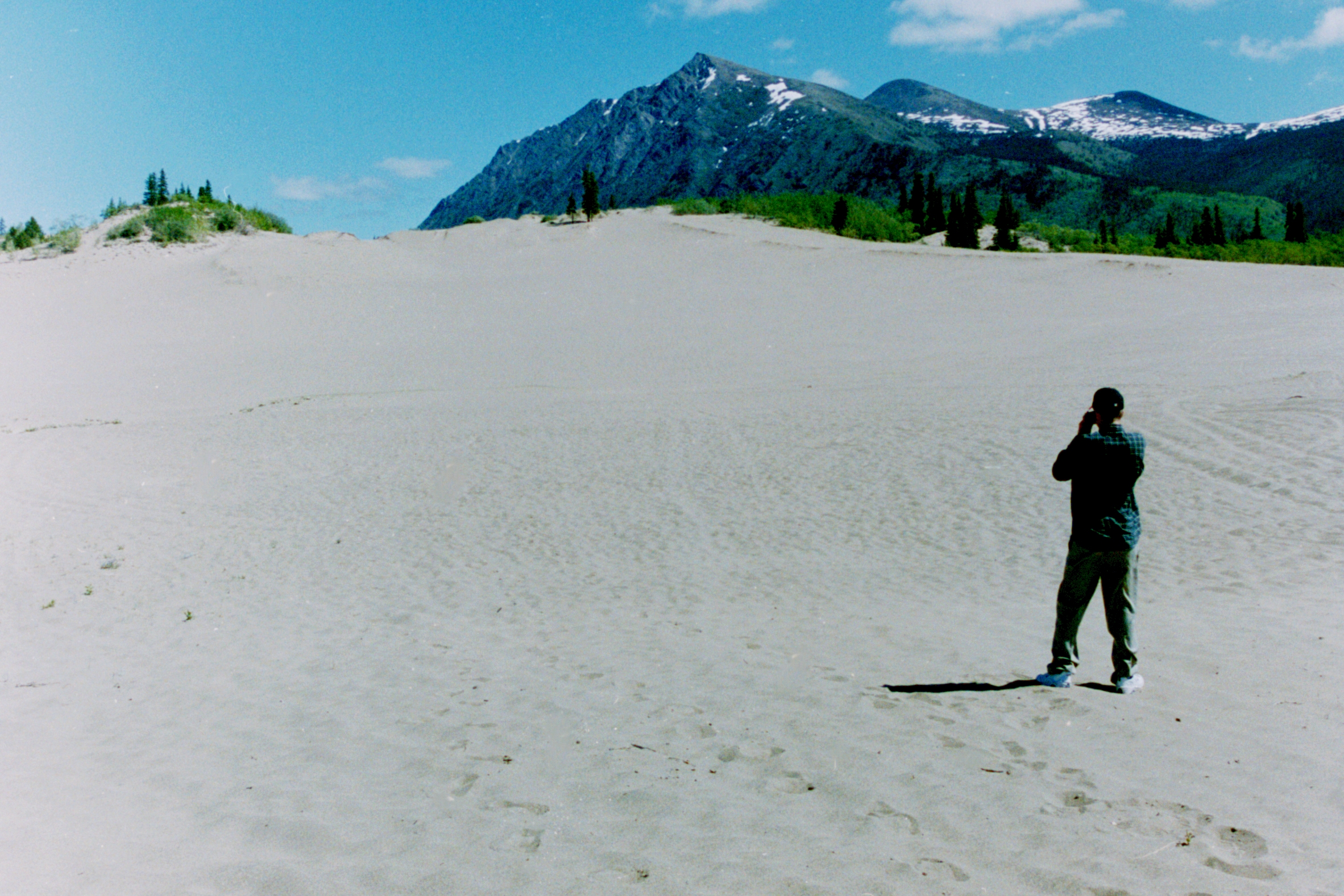
Drew photographs the eerily beautiful Carcross Desert, Yukon, Canada, June 2000
“What makes the desert beautiful is that somewhere it hides a well.”
— Antoine de Saint-Exupery
Tucked away in the chilly magnificence of the Yukon, there lies a true curiosity of nature: the Carcross Desert. At about one square mile, it is called the “world’s smallest desert” although it is actually a series of sand dunes left behind by a glacial lake. In this case, it could be said that it was the well that hid the desert!
It’s quite an experience to traverse the Alaska border where snow lies all around, into the Yukon where there is more of the same, only to come upon an expanse of warm, dry sand with scarcely any vegetation. It’s one of nature’s little surprises; a reminder that even the most forbidding of landscapes conceal delightful secrets. When you find yourself in the midst of a boring, unpleasent or difficult circumstance, remember that “somewhere it hides a well.”
Seven years ago today it was the day before Easter. Because my posts for Easter weekend were themed to coincide with that holiday, I am holding them for Easter weekend this year, and using the posts of those days, April 10-12, for yesterday, today and Sunday. So this is the post originally published on April 11, 2013, and on April 11 of this year I’ll post the March 30, 2013 post. As usual, the original post and comments will be linked below under related posts.
The familiar exotic
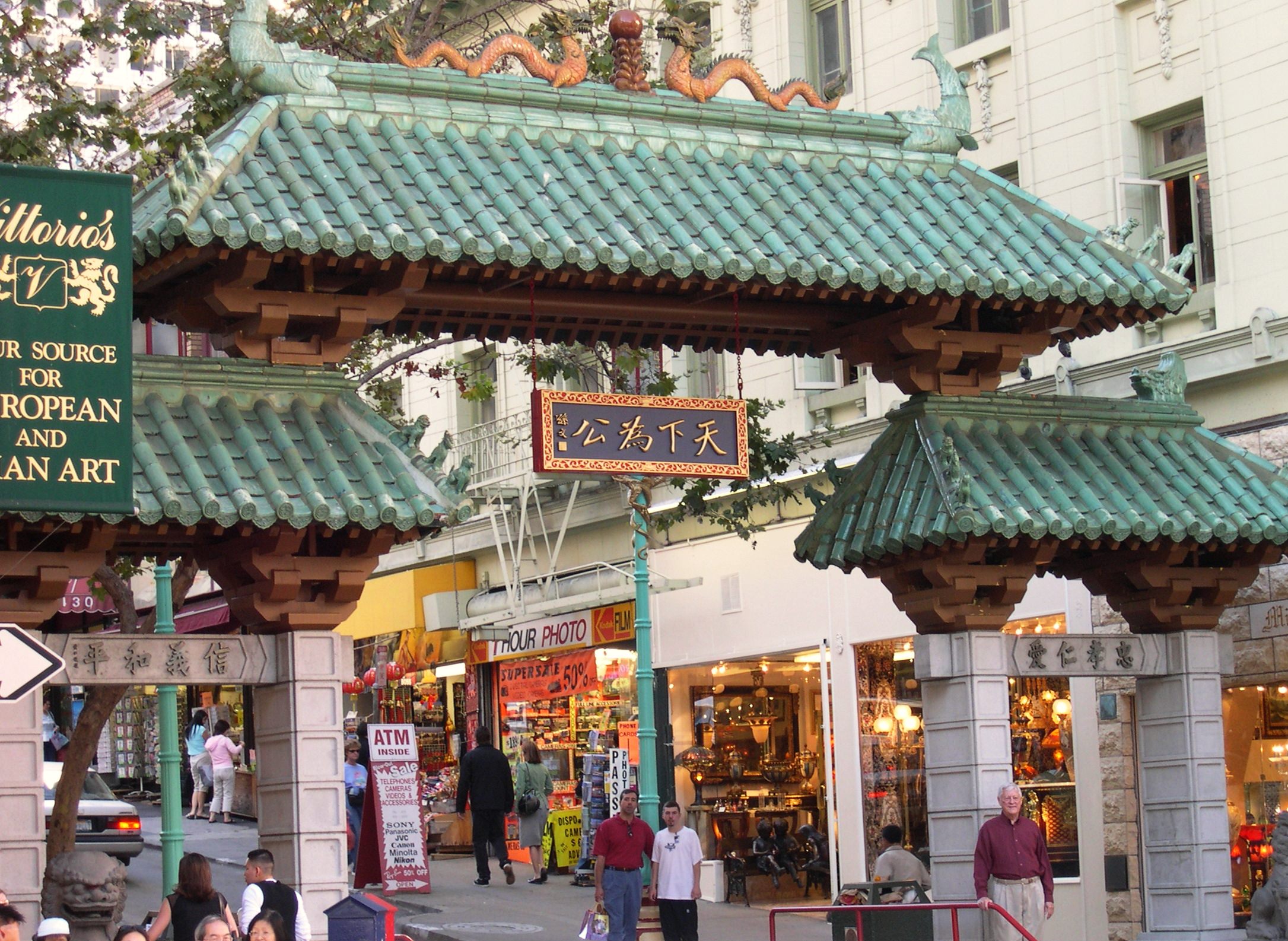
Exotic yet familiar: Jeff and Matt at the gate to Chinatown, San Francisco, 2003
“Make the familiar exotic; the exotic familiar.” — Bharati Mukherjee
I’m pretty good at making the exotic familiar, or at least trying. When Jeff and I travel, we tend to avoid the tourist routes and go to places where the locals are: public transportation, grocery stores, municipal libraries. The more intriguing a city is, the more I am determined to walk through it enough times to get a feel for the neighborhoods and the pulse of daily activity. It can be daunting at times, especially when one doesn’t know the language, but it’s also comforting to be where the people are, going about lives that are strikingly similar to our own despite the varied contexts.
I’m not quite as good at seeing the exotic in the familiar. Yet I know it’s there, hiding in plain sight. When Drew was in first grade, his teacher assigned the students to write to their grandmothers (and great-grandmothers, if they were lucky enough to have them) with questions about daily life when they were children. It was one of the most memorable school experiences I know of, because the letters we received in answer to Drew’s inquiries were fascinating to the point of seeming exotic.
These were women I thought I knew well, but I learned things about them I had never known. We also realized that their school experiences, so different from those of today’s children, were scarcely mentioned in the history texts. I came away with the understanding of how little of our past is ever documented, and how much it comes to life when told in everyday details that historians often leave out.
The popularity of scrapbooks, journals and blogs is adding exponentially to the everyday history that is being recorded, and I’m so glad! When I read posts from Bindu or Z or Sydney Fong, or look at the beautiful photos from Cindy Knoke, Michael Lai, or another Julia who loves to take photos, to name just a few of the many people all over the world whose work I enjoy, I feel a bit more familiar with the exotic. And I am inspired to discover the exotic in my own familiar life, things that are unique to my particular world that I am happy to share with others.
I invite you to join in the worldwide conversation by reading, commenting, or starting your own blog or online journal to introduce other people to your corner of the world. I think you’ll find, as I did, that the blogging community is a friendly and supportive group, where newcomers are always welcome. It’s a wonderful antidote to the news media stories about conflict, hostility and fear. There’s a lot of good news out here in the blogosphere – welcome to our world!
Seven years ago today it was Good Friday. Because my posts for Easter weekend were themed to coincide with that holiday, I am holding them for Easter weekend this year, and using the posts of those days, April 10-12, for today, tomorrow and Sunday. So this is the post originally published on April 10, 2013, and on April 10 of this year I’ll post the March 29, 2013 post. As usual, the original post and comments will be linked below under related posts.
The size of the fight

Pasha captures the ultimate rabbit, spring 2011
“It’s not the size of the dog in the fight, it’s the size of the fight in the dog.”
— Mark Twain
Our animal friends teach us many valuable lessons, but the trait I admire most in our little Schipperke, Pasha, is his fearless zest for life. He apparently has never encountered a situation in which caution trumps curiosity.
He finds humans and other dogs equally worthy of attention, but large dogs seem to hate him, though he never barks or threatens any animal or person when he is out walking. People who know a lot about dogs have told me larger dogs are likely provoked because he does not submit by looking away first as a little dog should. Instead he makes extended eye contact that many dogs (especially big dominant types) do not appreciate. Almost always, a big dog will end up growling and then lunging, needing to be restrained by his owner whenever Pasha approaches. I’ve learned to cross the street when I see a big dog in our path. It frightens me to see a large animal obviously upset at us, but Pasha never seems to care.
When we took him to our neighborhood Easter treat hunt for dogs in 2011, he was clearly happy to be there among other canines and one enormous creature the like of which he had never seen. He wasn’t fazed; he posed happily for his photos with the huge Easter Bunny before pouncing on the treats given out. I’ve heard a lot about how frightened some highly strung dogs can get when confronted with such costumed characters, who are there for the benefit of the humans seeking photo ops, not because the dogs like them. But Pasha showed no such fear, obviously assuming that something good was about to turn up.
He will be 16 years old next month and his body is wearing out rapidly. According to the vet, Pasha’s heart condition and lymphoma are indications that he won’t last too much longer. However, his spirit remains full of the lively joie de vivre that has brought laughter to our days and happiness to our home. He’s setting a pretty good example for his human family, one I hope we will have with us for as long as possible.
This post was originally published seven years ago today. Pasha died just a few months after this was written. Jeff’s weeks of hospitalization, during which I stayed at the hospital in Bethesda with Jeff, meant that Pasha was unable to take our treasured 2-mile daily walk. The lack of exercise took a fatal toll on him and his failing heart. But he was lively and quite active up until the last few days of his life. I still miss him every day.
The original post, comments and photo are linked, along with two other related posts, below. These links to related posts, and their thumbnail photos, do not appear in the blog feed; they are only visible when viewing the individual posts by clicking on each one. I have no idea why, nor do I know how they choose the related posts. That’s just the way WordPress does things.
Without rain
-

A rainy day in Venice, June 2008
“Rain is grace; rain is the sky condescending to the earth; without rain, there would be no life.” — John Updike

As I write this, it’s a rainy day outside with the chill of winter still hanging on. There is an atmosphere of quiet gloom. My moods are strongly influenced by the weather, so I really need to live in a predominantly sunny climate. Troubles seem a little lighter when the sun is shining.
Still, there’s something about the rain that connects to my deepest emotions and leaves me daydreaming through the melancholy. It’s nice occasionally to spend a cozy day indoors with a cup of tea and some extra time for reading or other indoor pursuits. While I much prefer sunshine, rain brings balance and nourishment for the earth and for me.
Here are three of my favorite songs about rain. I hope you can find today time to enjoy one or all of them.
Something is afoot
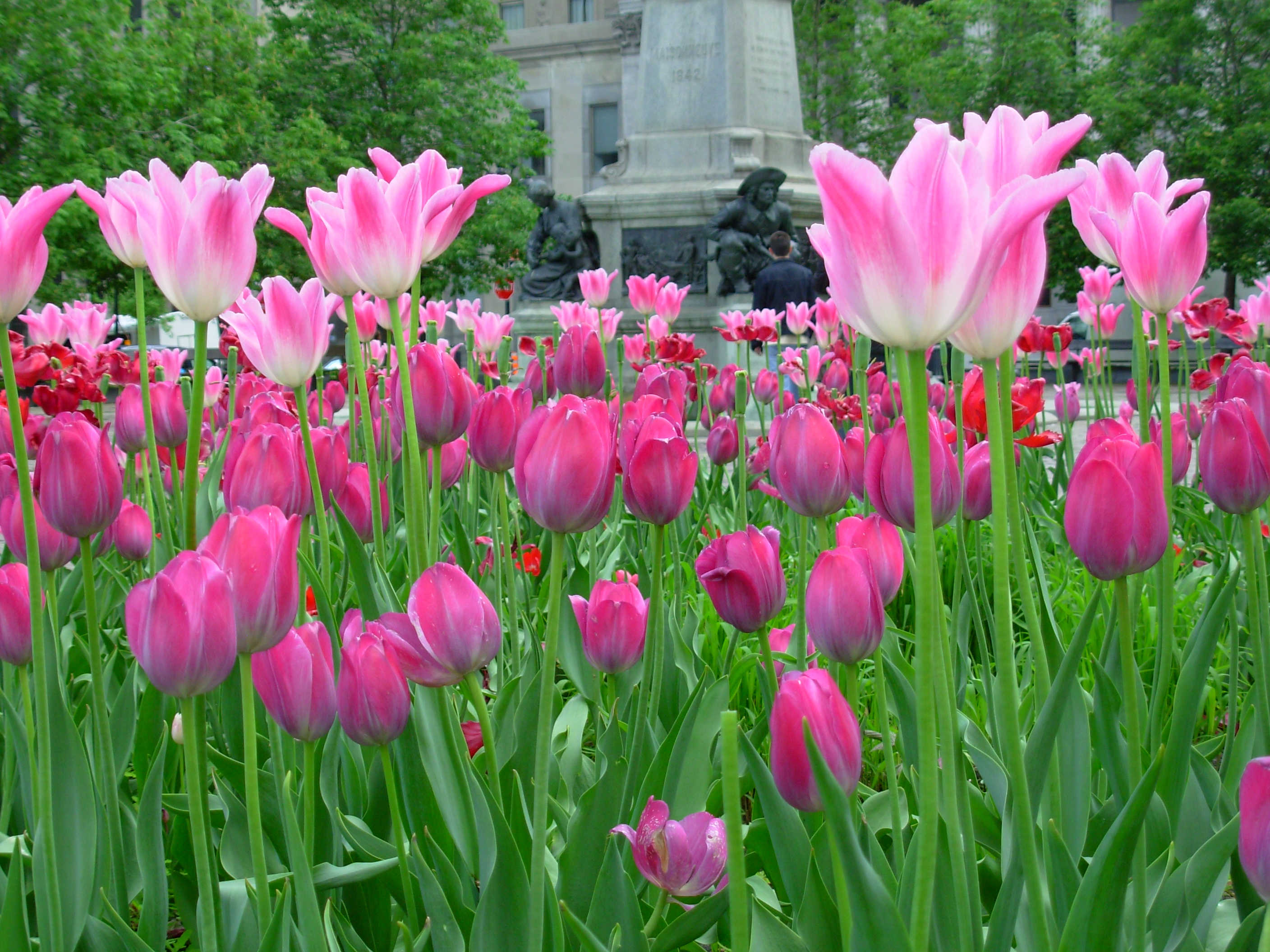
Tulips bloom at Place d’Armes, Montreal May 2009.
If Montreal can look like this in May, can spring be far off in April?
“It is a bright and chill early spring day. The air is crisp but the earth is insistent…The wind is stiff and needling. It still feels like winter, but spring itself is positive and determined. Something is afoot, and it is festive and uncontrollable and undeniable.”
— Julia Cameron
I’ve heard more than a little talk this year of firing Punxsutawney Phil; in fact, he has been indicted for “seasonal fraud” and one zealous Ohio attorney intends to seek the death penalty. Phil had better stay underground for awhile and keep PETA on autodial.
Although I’m not one to blame the poor ground hog — we all make mistakes, don’t we? — I share the impatience for spring that comes whenever March goes “out like a lion” rather than a lamb. But take heart! Spring is toying with us and will show up eventually. It will be all the more glorious for our long wait. Never mind that I can look out my window and see snow on the ground today, even though I’m in southeastern Virginia.
Maybe we can do as Peter Pan begs the audience to do when Tinkerbell needs a rescue. Let’s all repeat to ourselves: I believe in Spring! Think of tulips, think of daffodils, think of lawns that need mowing and weeds springing up everywhere. See — waiting isn’t all bad, is it? I wish you a day filled with sunshine, or at least the anticipation of it!
This post was originally published seven years ago today, so the weather on the day of this re-play may be much warmer than it was then. The original post, comments and photo are linked, along with two other related posts, below. These links to related posts, and their thumbnail photos, do not appear in the blog feed; they are only visible when viewing the individual posts by clicking on each one. I have no idea why, nor do I know how they choose the related posts. That’s just the way WordPress does things.
Diligence and labor
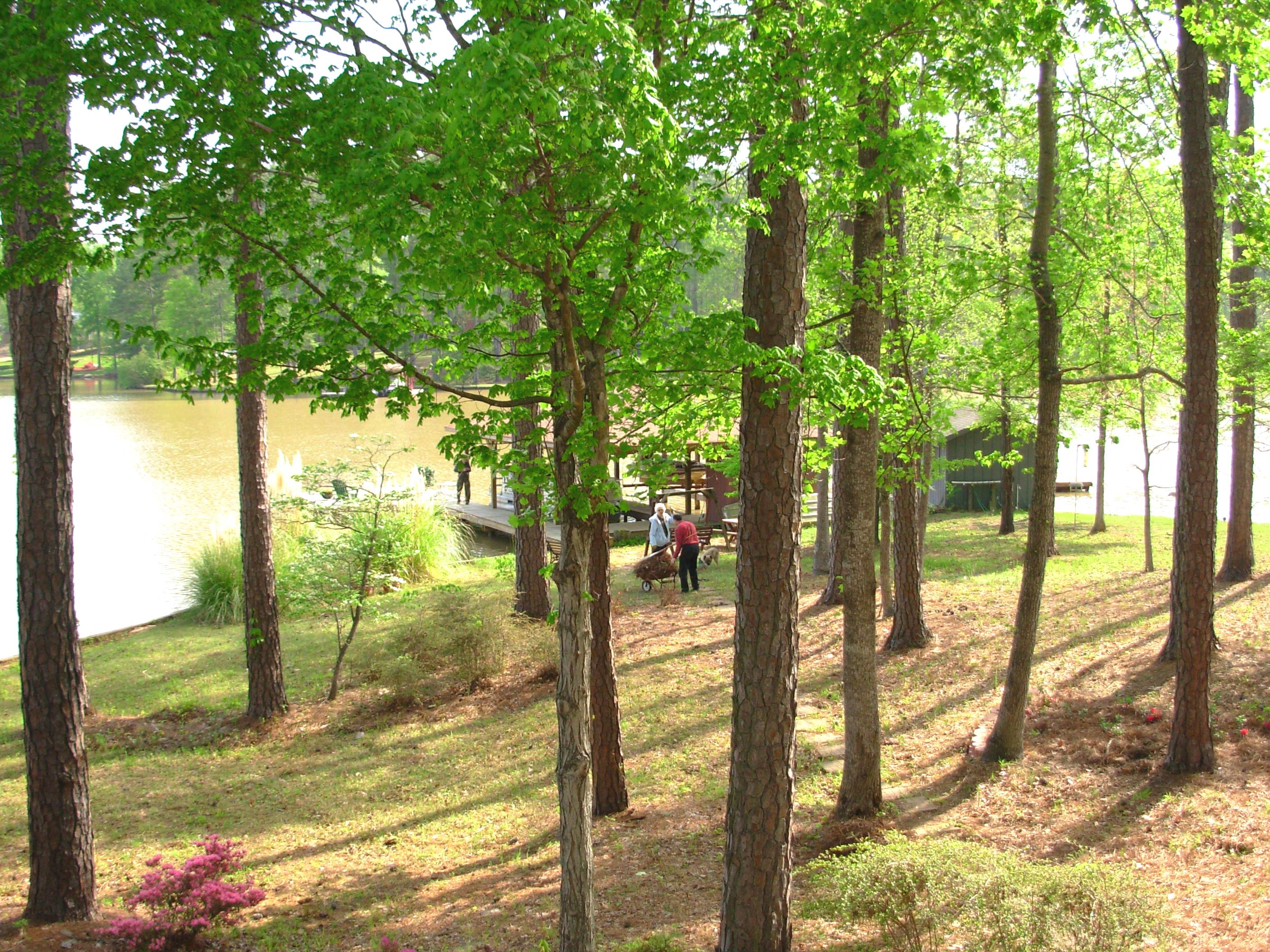
Jeff and Mom, working in the yard of my parents’ lakefront cabin, April 2007
“He who labors diligently need never despair; for all things are accomplished by diligence and labor.” — Menander
People often say that women marry their fathers, but in most ways I think I married my mother. My husband is so like her, especially when it comes to enjoying work. I like to joke that if there is not any work available to do, Jeff will make some to keep himself occupied. Until I met him I had never met anyone who stayed busier with various types of labor than my mother. I consider with awe all that each of them has been able to accomplish in life, and I’m grateful to be a primary beneficiary of their industrious personalities.
I don’t share this enthusiasm for work. I’m a lounger and a goof-off by nature. I could sit and chat over tea for hours, something that would drive my husband or my mother crazy. I must admit, though, that I almost always enjoy work once I get going. There is something about physical activity that is an antidote for my tendency to over-think everything. Perhaps this is why I love crafts, gardening (including the weeding) and walking. I even like to do the dishes. Maybe I’m more like Jeff and Mom than I think I am.
In any case, I have been grateful that Jeff has managed to keep up with his normal tasks at the clinic and here at home, despite the rigors of undergoing an aggressive chemotherapy regimen. I started to say I have been amazed, but in a sense I am not surprised at all. Everyone who knows Jeff well understands that he will work as long as he is able, and will draw strength from what he accomplishes. May we all be encouraged by the example of those who are happy to work diligently.
This post was originally published seven years ago today. The original post, comments and photo are linked, along with two other related posts, below. These links to related posts, and their thumbnail photos, do not appear in the blog feed; they are only visible when viewing the individual posts by clicking on each one. I have no idea why, nor do I know how they choose the related posts. That’s just the way WordPress does things.


 Defeat Despair