Yonder lies the way
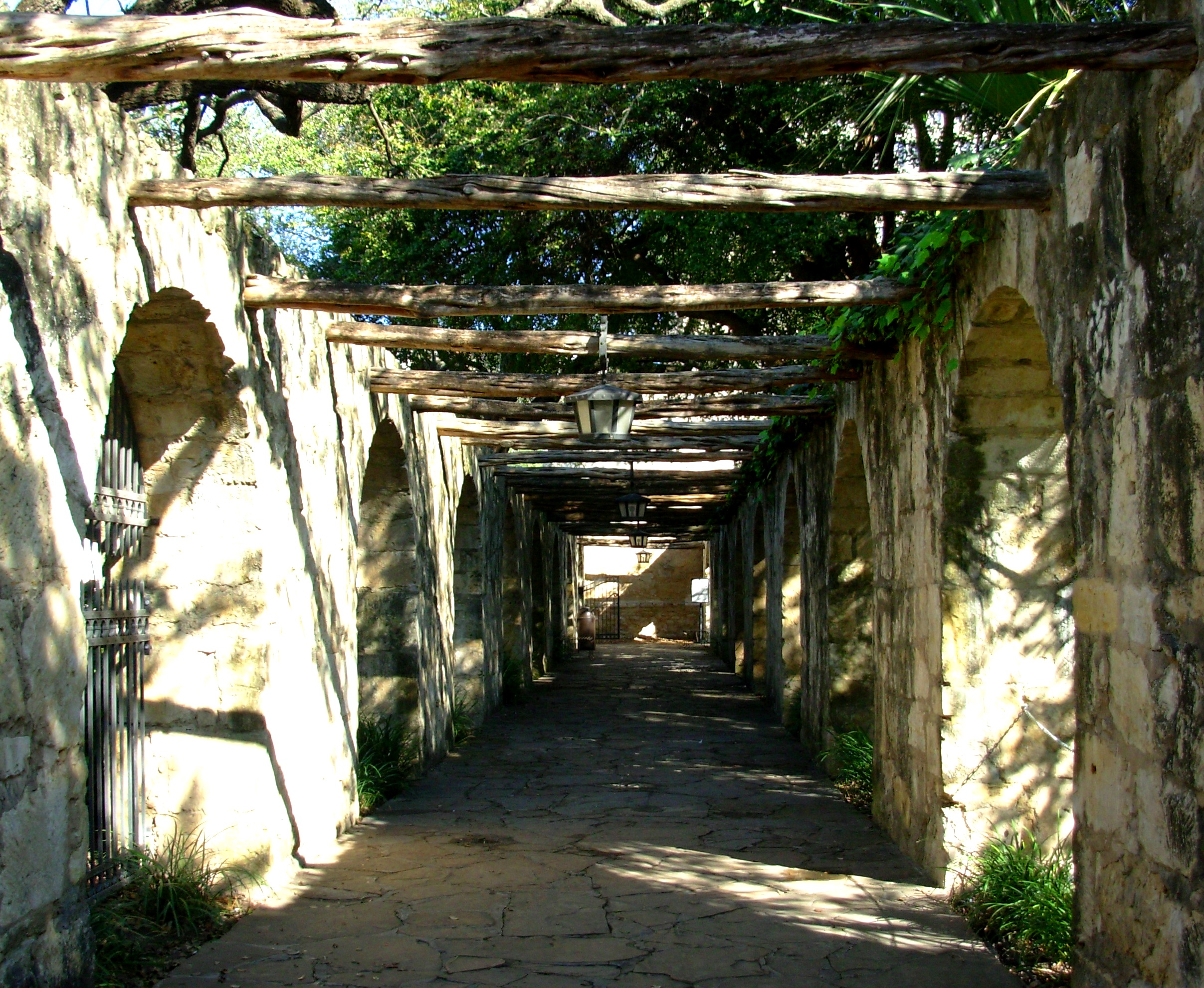
A walkway at the Alamo in San Antonio, Texas, January 2008
“The hour is ripe, and yonder lies the way.” — Virgil
In most ways I’m a cautious person. I tend to fall into what a friend once described as “paralysis by analysis,” so fearful of making a mistake that I think and re-think decisions far too long. This blog, however, was an exception that could best be described as an impulsive action.
The Saturday morning in November after we first learned that Jeff’s liver tumors were “probably metastatic cancer,” I lay in bed brooding over the many dismal situations facing people I knew personally. Some faced life-threatening illness; others had lost their jobs and gone months without finding employment; still others were grieving the loss of a loved one, and many were terribly worried over the outcome of the recent elections.
I realized every difficult situation I knew about firsthand was matched thousands or even millions of times over, all around the world. It was as if there was a whirlpool of despair threatening to pull large numbers of people under, drowning us in sorrow.
I knew next to nothing about blogging, had never used WordPress, and had often dismissed the idea of creating my own blog because there are so many out there already, publishing far more impressive content than I would be able to produce. I had never been able to come up with a theme that seemed to fill a gap in the blogosphere. But I also knew that I must find something to do that would distract me from the worry that would consume me if I allowed it to take over.
I had read of research indicating that looking at photographs was a highly therapeutic defense against depression. And I have always taken solace in reading the reassuring, inspiring or insightful words of others. I have a huge archive of photos I’ve been taking by the thousands for many years. I decided to publish a blog featuring one of my photos and a quote for each day, and share it online with whomever might find it interesting.
At breakfast I told Jeff I was going to create blog called “Defeat Despair.” Having listened to thousands of my ideas over the years, he merely smiled and encouraged me to try it, knowing full well how often my ideas evaporate into the busyness that makes up most of life. He and Matt went to the gym to exercise, as is their custom on Saturdays, and then out shopping for an hour or two. By the time they returned, I had written and scheduled three blog entries, learning WordPress as I went along.
Today is my 135th daily post, and I have enjoyed this journey more than I could have imagined. I feel so grateful to all of you reading these words: those whose wonderful blogs and photos give me inspiration and examples; those whose generous comments and caring thoughts and prayers have made each day easier to bear; those whose friendship I have treasured for years, and the new friends from all over the world whom I have never met face-to-face. I am thankful my Saturday morning impulse was not lost to the careful hesitation that has held me back so many times in the past.
If you have a goal or project you are putting off, something you know you should do but can’t find the initiative to take that first step, I hope you will be able to summon the confidence, energy and wisdom to head in the right direction. In the words of a heroic Tennessean who died at the Texas mission pictured above, “Be sure you are right. Then go ahead.” May your path be illuminated by eternal truths and made beautiful by the fellowship of kindred spirits who will walk beside you through whatever comes.
This post was originally published seven years ago today. The original post, comments and photo are linked, along with two other related posts, below. These links to related posts, and their thumbnail photos, do not appear in the blog feed; they are only visible when viewing the individual posts by clicking on each one. I have no idea why, nor do I know how they choose the related posts. That’s just the way WordPress does things.
Adjust the sails

Sailing by Manhattan, May 2007
“We cannot direct the wind, but we can adjust the sails.” — attributed to Dolly Parton
Thirty years ago Jeff and I went sailing on the Santa Monica Bay with my lifelong friend and her roommate. It was my first time to go sailing, and I remember being surprised at how much physical work was involved. I suppose I had the idea that one just sat in the boat and let the wind do all the work, but learning the various ways to adjust the sails gave me a new respect for those who have mastered this sport. It’s the sort of thing that could never be learned from simply reading a book; you have to get out there on the water, wrestling with the equipment in the face of real winds and currents.
Sometimes when I look back on my life, it seems to have consisted primarily of adjusting to unforeseen circumstances. Few of the people I know have ended up exactly where they had planned to be, and there’s no way to fully prepare for what the years will send your way. It takes a lot of mental, physical and spiritual stamina to get through the changing winds of even the most fortunate life. But we can’t expect to sit still in the boat and let the wind do whatever it wants with us. The sooner we learn to adjust our sails, the better equipped we will be to enjoy the trip and get where we need to go.
What are some ways we can adjust our sails so that the winds work for us, not against us?
This post was originally published seven years ago today. The original post, comments and photo are linked, along with two other related posts, below. These links to related posts, and their thumbnail photos, do not appear in the blog feed; they are only visible when viewing the individual posts by clicking on each one. I have no idea why, nor do I know how they choose the related posts. That’s just the way WordPress does things.
Aware of the treasure

Jeff, Matt and Pasha walk the fitness trail of our York neighborhood, August 2007
“Normal day, let me be aware of the treasure you are. Let me learn from you, love you, bless you before you depart. Let me not pass you by in quest of some rare and perfect tomorrow. Let me hold you while I may, for it may not always be so. One day I shall dig my nails into the earth, or bury my face in the pillow, or stretch myself taut, or raise my hands to the sky and want, more than all the world, your return.”
— Mary Jean Irion
Wherever you are right now, stop and listen; look around you. Whatever you see or hear — the voices of your loved ones, the bustle of your workplace, the quiet of your home after others have left, your well-tended garden and your beloved pets and handmade decorations — all the minutiae of your present surroundings will one day belong to a vanished past. The magazines and books lying around now, if they survive at all, will soon seem passé, then eventually become quaint collector’s items. The photographs on your walls will fade and appear dated, the hairstyles and clothes hinting of bygone eras.
If this sounds a bit depressing, it need not be. A long life is a mixed blessing in some respects, but most of us would prefer to live into old age, even knowing it will mean many goodbyes. Yet there’s something tricky about the reality of everyday life; it perpetuates an illusion of permanence that vanishes under the most cursory reflection, but keeps reappearing nonetheless, clouding our vision and sapping our sensitivity to wonder. Thus we fritter away the hours and days without taking much thought of how we fill them, believing an endless stream of sameness is sure to follow.
The changes may come gradually, or they may happen abruptly: a single phone call, an unexpected turn of events, a catastrophic diagnosis or a tragic accident. In any case, time passes more quickly than we are able to imagine. I don’t want to waste any time fretting over things that will not matter in the end. I want to savor life, spread joy, laugh often and show others I love them. I want to take it all in, while it is here and now, and face the future without regrets.
What are the treasures in your everyday life? What do you love best about now?
This post was originally published seven years ago today. Already, seven years later, much of the world I knew when I first wrote this has vanished irrevocably. The original post, comments and photo are linked, along with two other related posts, below. These links to related posts, and their thumbnail photos, do not appear in the blog feed; they are only visible when viewing the individual posts by clicking on each one. I have no idea why, nor do I know how they choose the related posts. That’s just the way WordPress does things.
The gladdest thing
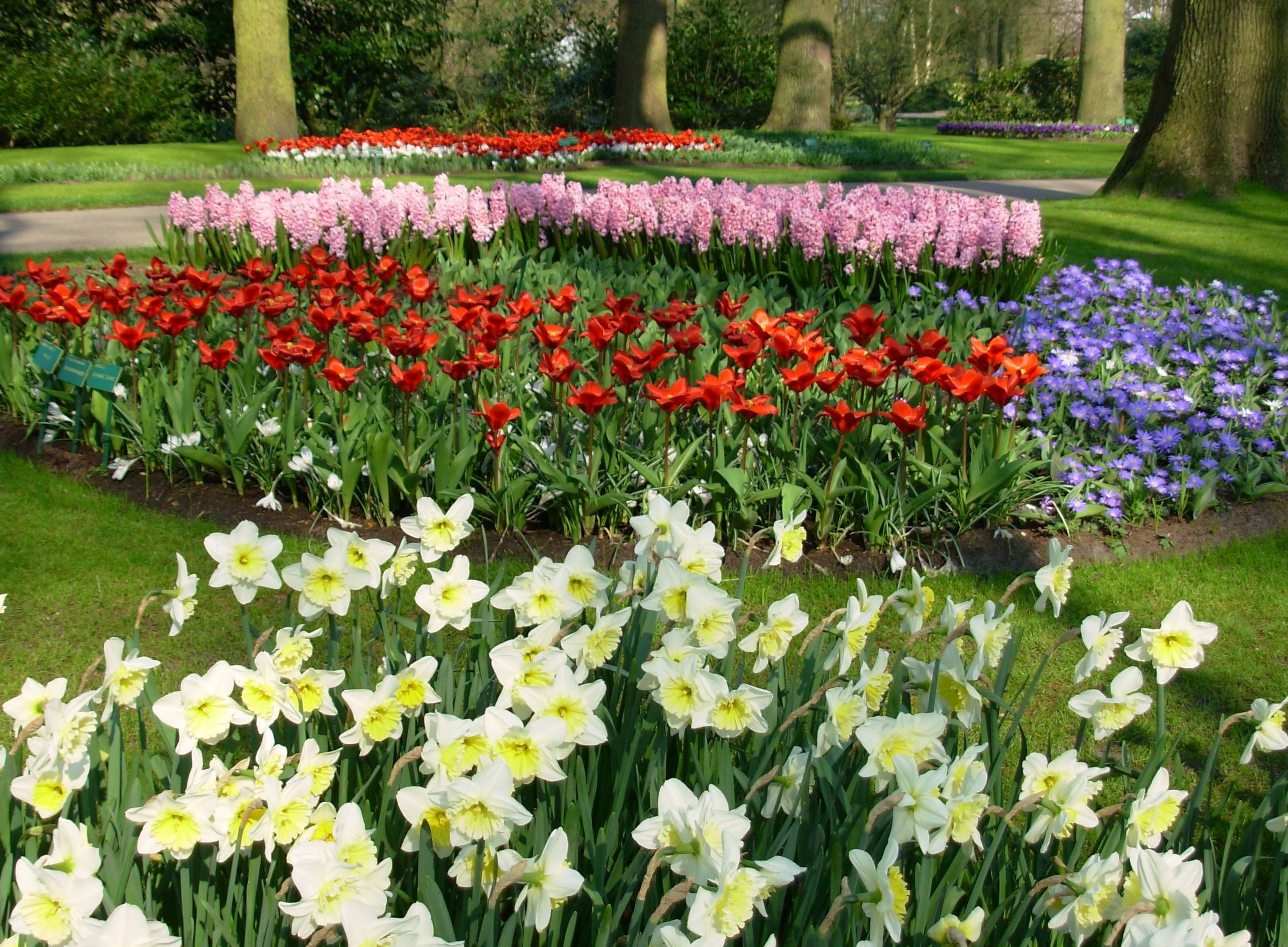
It’s Keukenhof again! Countless beautiful flowers in the Netherlands, March 2007
“I will be the gladdest thing under the sun!
I will touch a hundred flowers and not pick one.”
— Edna St. Vincent Millay
Millay was one of the first poets whose work I loved, and I learned this verse as a girl. I have said it silently to myself countless times over the years. It captures the joyful exuberance that I feel every spring. I hope you will feel some of this same gladness today!
More flowers to see here:
Celebrate daffodils with Wordsworth at gardeningnirvana
Let Bindu show you how beautiful pansies are
Enjoy lovely flower portraits by Photography Art Plus
This post was originally published seven years ago today. The original post, comments and photo are linked, along with two other related posts, below. These links to related posts, and their thumbnail photos, do not appear in the blog feed; they are only visible when viewing the individual posts by clicking on each one. I have no idea why, nor do I know how they choose the related posts. That’s just the way WordPress does things.
Stronger than a fortified city

Cherry blossoms frame the Jefferson Memorial at dawn on Easter, many years ago.
“Those bound in a fraternity of one mind stand stronger than a fortified city.”
— Antisthenes
Today is the first day of the 108th annual Cherry Blossom Festival in Washington DC, a commemoration of the friendship between the USA and Japan, symbolized by the 3000 trees given to us in 1912 by the Japanese people.
Each year at this time I think fondly of my dear friend Maggie and her parents, who shared a family tradition with me that introduced me to the beauty of the cherry trees. It was their custom to get up and out before daylight on Easter morning, first going to observe the changing of the guard at the Tomb of the Unknowns in Arlington National Cemetery. The cemetery opens much earlier on Easter, so it is possible to see the ceremony at sunrise. My friends felt it was most memorable to watch this solemn ritual at daybreak with few tourists present. Afterwards they would enjoy a leisurely stroll around the Tidal Basin underneath the blooming cherry trees, finishing their walk in time to attend church.
I took the photograph above on Easter morning sometime around 1978. Although I was even less of a morning person then than I am now, I had to agree with Maggie that sunrise is an ideal time to watch the changing of the guard, and circling the Tidal Basin as sunlight dawned on the blossoms was an experience I have always treasured.
The original cherry trees are now succumbing to age, but efforts have been underway to develop genetic replicas to replace them. Likewise my friend’s parents, who welcomed me into their home so many times and treated me as a “second daughter,” have now passed from this earthly life. Their legacy of friendship lives on in their children and the many people whose lives they touched. From them, I learned much about how to enjoy life, to treasure the simple gifts, to spread kindness and good will, and to “act justly, love mercy and walk humbly with God.”
The Cherry Blossom Festival honors a friendship that has endured over the years, even surviving hostility and the ravages of war. There is no more appropriate time to be mindful of our own friends, and give thanks for the lovely blossoms they have added to our lives.
This post was originally published seven years ago today. The original post, comments and photo are linked, along with two other related posts, below. These links to related posts, and their thumbnail photos, do not appear in the blog feed; they are only visible when viewing the individual posts by clicking on each one. I have no idea why, nor do I know how they choose the related posts. That’s just the way WordPress does things.
Not a harbor

Annisquam Lighthouse, Cape Ann, Gloucester, Massachusetts, September 2012
“The past is a lighthouse, not a harbor.” — origin unknown
Change can be difficult even for those of us who crave novelty. It’s especially frightening when we are brought face-to-face with our own mortality, or that of someone we love. If we have been blessed with happy memories to treasure, letting go can be almost unbearable to contemplate.
When unwanted change or loss is forced upon us, it helps if we take solace in our gratitude for what we’ve had in the past, and allow that foundation to give us strength to face whatever the future brings. The blessings of our life are a bright light shining to guide the uncertain way ahead and bathing us in glowing warmth.
On the other hand, if we have predominantly unhappy memories, it is all too tempting to withdraw into our pain and resentment. We may use our anguish as an excuse to harbor ourselves from further sorrow. Again, the lighthouse is a helpful metaphor. So many — maybe even most — of the great works of art and literature, as well as other forms of human progress, have come directly in response to suffering. Grief can be a helpful teacher no matter how unwanted the lessons.
When I look back on the painful aspects of my past, I know that I have learned at least as much from my difficulties as I have from my accomplishments and joys. The full spectrum of past experiences, from horrible to heavenly, have something helpful to contribute to my future. It may take years to fully realize the depth of life’s blessings, or to appreciate the wisdom that has come from sadness. But the lighthouse remains, beaming across the distance, even when the waves are too rough to allow me an uninterrupted view of its illumination.
This post was originally published seven years ago today. The original post, comments and photo are linked, along with two other related posts, below. These links to related posts, and their thumbnail photos, do not appear in the blog feed; they are only visible when viewing the individual posts by clicking on each one. I have no idea why, nor do I know how they choose the related posts. That’s just the way WordPress does things.
Represent civilization

Jeff spotted this baby bunny hiding between the begonias and bleeding hearts, June 2007
“Be careful how you behave towards wild things – remember that, to them, you represent civilization.” — Ashleigh Brilliant
One of my favorite memories about my husband’s late father is the way he loved wildlife. Many a summer’s evening I would be relaxing inside the Tennessee home where Jeff grew up, enjoying one of his mother’s books, and his dad would call to me from the porch, “Julia, come here for a minute!” I always loved hearing those words, because it usually meant at least one deer was outside, and sometimes more than one, although sometimes it would be a bird’s nest or a rabbit or a turtle or even a snake (but I’m not sure if that’s my memory or my imagination coming up with that one).
Jeff is a lot like his father in that respect. He can spot wildlife better than anyone I’ve ever known, often noticing a deer hidden in the nearby woods as he drives down the highway going just over the speed limit. I can hardly ever see what he points out, even when he slows the car to give me a better look. More than once, we’ve missed hitting a deer crossing the road because he spots it in time to brake.
But he’s also good at spotting the tiniest creatures while he’s out mowing or working in the yard. I don’t know how he does it, because sometimes it’s a baby turtle about the size of a quarter, or a bunny no bigger than my fist. Like his father, he will stop what he is doing to come call me, never telling me what surprise is outside, only asking me to come and see. I’ve learned to grab my camera on the way out. I can’t imagine having anyone else cut the grass for us, for fear they wouldn’t be so careful to avoid mowing over the critters and their babies.
As springtime arrives, I hope to see and enjoy the new life springing up all around us…and I’ll remember Ashleigh’s words!
This post was originally published seven years ago today. The original post, comments and photo are linked, along with two other related posts, below. These links to related posts, and their thumbnail photos, do not appear in the blog feed; they are only visible when viewing the individual posts by clicking on each one. I have no idea why, nor do I know how they choose the related posts. That’s just the way WordPress does things.
Memory is a child
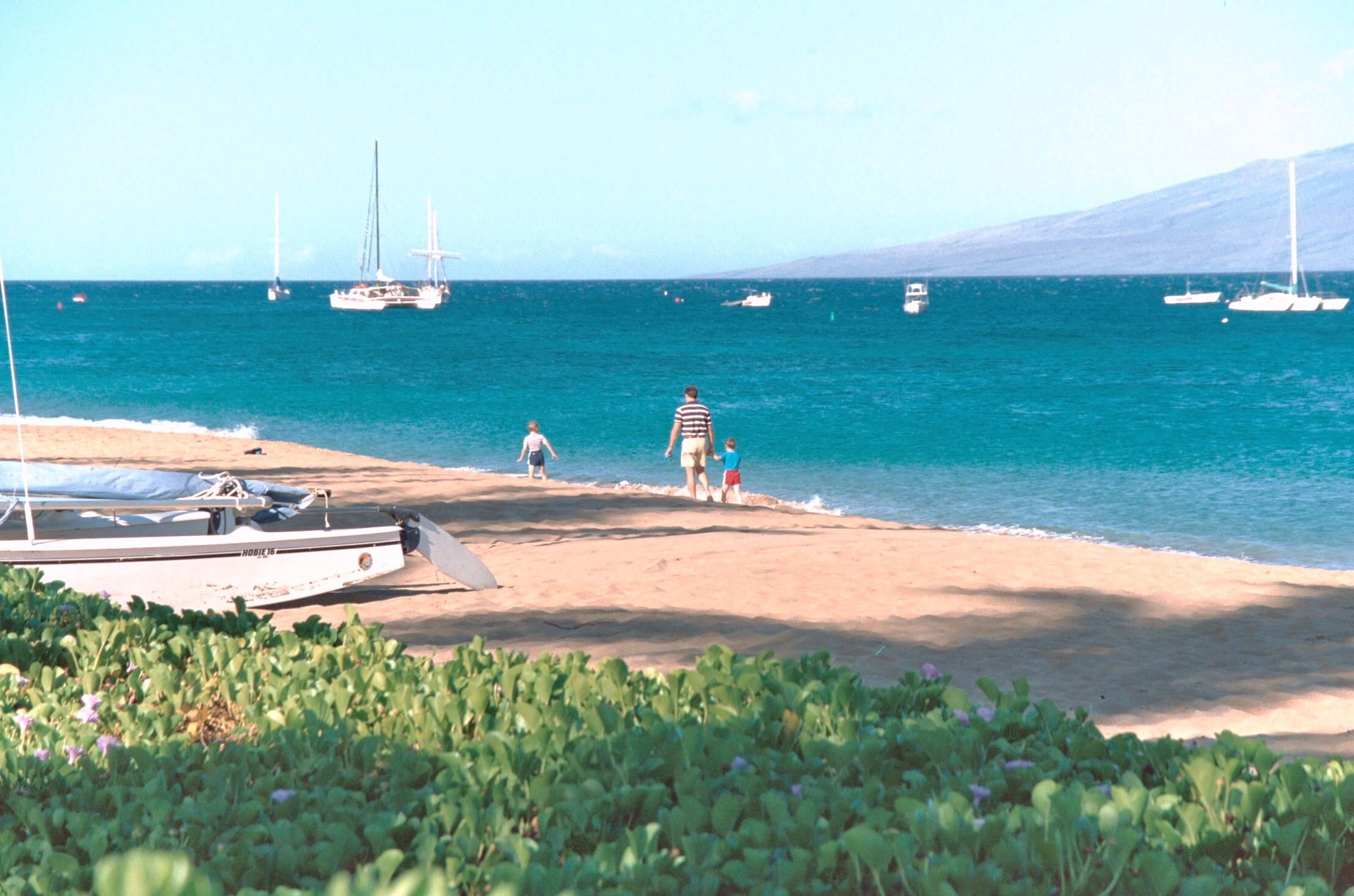
Jeff and our boys stroll along Ka’anapali Beach, Maui 1991
“Memory is a child walking along a seashore. You never can tell what small pebble it will pick up and store away among its treasured things.” — Pierce Harris
Memory is nothing if not selective in what it retains. Hence five people may truthfully give five different accounts of the same event. Yet some memories can be dormant rather than fully lost, called suddenly and vividly back to life by a scent, a song, or the sight of a vintage toy once loved but long forgotten, spotted years later in an antique shop. Memory, for most of us, is a giant archive with ponderous hidden power.
Whether or not we are aware of it, each of us is storing up these small pebbles against a day when we will need to retrieve and reflect on something beautiful in the midst of pain or sorrow. And we all toss, sometimes without much thought, dozens of pebbles into the minds of our loved ones and friends; a compliment, a treat, a small favor in a difficult hour, or a moment of light-hearted shared laughter. Some of these small bits of life will be forgotten almost immediately, but some will remain and be treasured.
Have you ever had a friend say “I will never forget how much I appreciated what you said to me then” or “I don’t know how I would have managed if you had not helped me?” Often when we are the recipients of such praise, we have no recall of the kindness so fondly recounted, and we may find that others have forgotten the compassionate words or actions they offered us in a time of trouble. Kind words and loving deeds may seem insignificant at the time, but the blessings they bestow often grow richer over the years, stored fondly away to be taken out and cherished when needed most.
This post was originally published seven years ago today. The original post, comments and photo are linked, along with two other related posts, below. These links to related posts, and their thumbnail photos, do not appear in the blog feed; they are only visible when viewing the individual posts by clicking on each one. I have no idea why, nor do I know how they choose the related posts. That’s just the way WordPress does things.
Imagination will take you
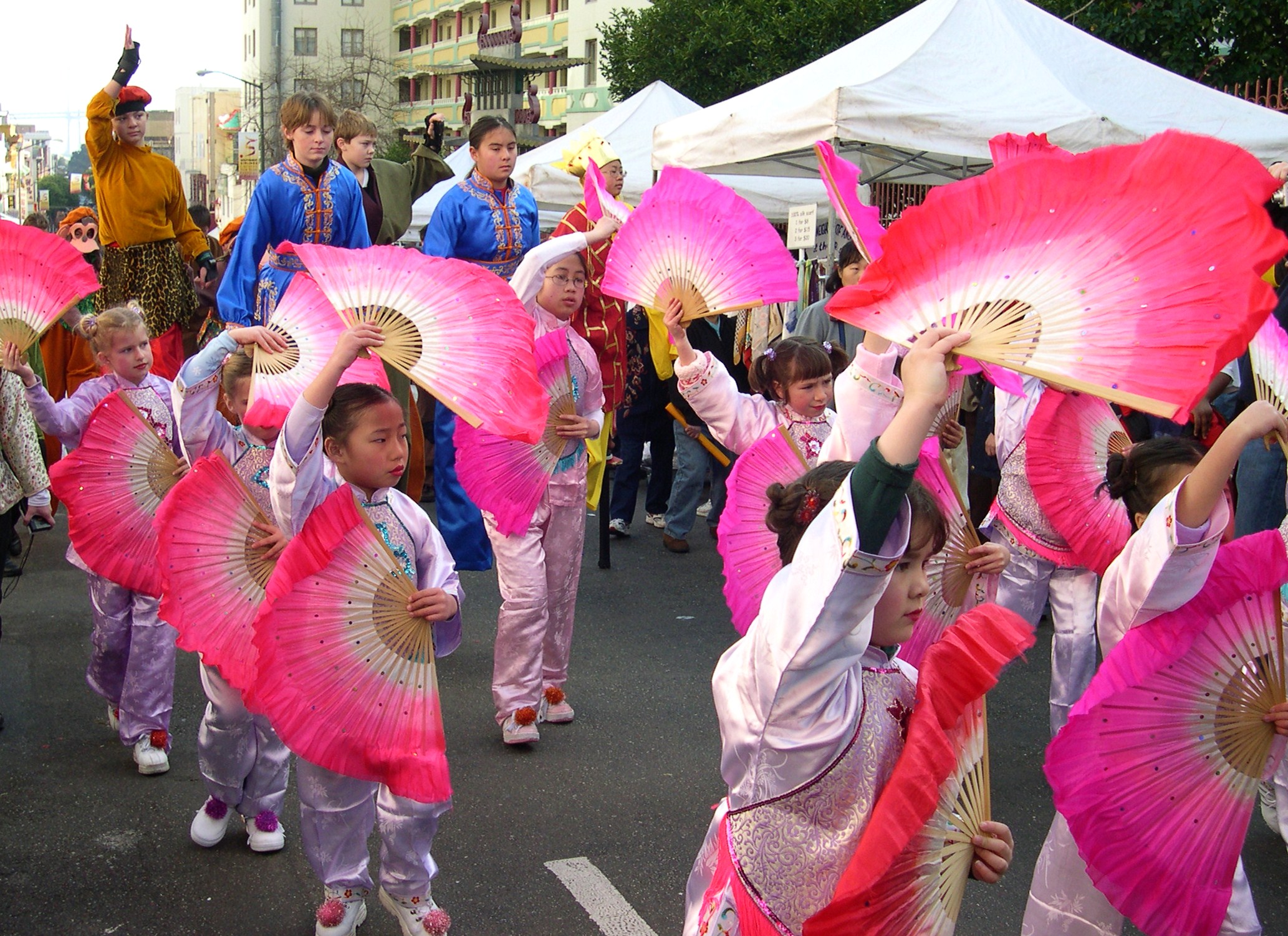
Fan dancers and stilt walkers celebrate Chinese New Year in San Francisco, 2004
“Logic will get you from A to B. Imagination will take you everywhere.”
– Albert Einstein
Logic is important and even indispensable, but imagination is what gives life its brightest colors. Often we equate imagination with fantasy and escapism, although its most common and useful purpose is to add flair to everyday life. Think of your happiest moments, and you’ll likely find that imagination plays a role in that joy. Anticipation, memory, humor, enjoyment, creativity and understanding all require at least a little imagination. Today, I hope we can allow our imagination to transform our attitudes and enliven our activities.
This post was originally published seven years ago today. The original post, comments and photo are linked, along with two other related posts, below. These links to related posts, and their thumbnail photos, do not appear in the blog feed; they are only visible when viewing the individual posts by clicking on each one. I have no idea why, nor do I know how they choose the related posts. That’s just the way WordPress does things.
Always a frontier

The American West, somewhere between California and Wyoming, 2004
“Where there is an open mind there will always be a frontier.” — Charles F. Kettering
I admire the courage of those who venture into new territory. From the explorers of ancient times up through the astronauts of today, we have always needed trailblazers who are willing to lead the way into an unknown future. So much that we take for granted was made possible by those who have gone ahead of us and created paths.
There are all kinds of pioneers. When our younger son was five years old, special education was relatively new, and normally it was confined to self-contained classrooms in specific schools. Our son began kindergarten at his home school as one of the first students with significant disabilities ever to go there. In his way, he too was a pioneer, as were the school administrators who encouraged us to let Matt try “regular” kindergarten, and the faculty who welcomed him and facilitated his learning with creative adaptations in his areas of disability. Today, inclusion is the norm, backed by extensive research that establishes it as a sound educational practice that benefits all school populations. But just a couple of decades ago, it was new and untried, and there were many who feared it.
Whether your frontiers are headline-grabbing ventures, voyages of exploration, or just a quiet determination to find a better way to approach a persistent problem, I wish you the joy of discovery.
Click here for another blogger’s story about some pioneers in her family.
This post was originally published seven years ago today. The original post, comments and photo are linked, along with two other related posts, below. These links to related posts, and their thumbnail photos, do not appear in the blog feed; they are only visible when viewing the individual posts by clicking on each one. I have no idea why, nor do I know how they choose the related posts. That’s just the way WordPress does things.
The thief of joy

The old and new bridges at Penobscot Narrows, Maine, 2012
“Comparison is the thief of joy.” – Teddy Roosevelt
Which bridge do you like best? Perhaps you favor the sleek, clean lines of the new bridge, and find the older one unattractive. Or maybe you like the ornate and romantic construction of the older bridge, alongside which the new one looks bare and cold. Regardless of your taste, you might find that one bridge suffers in comparison with the other, even though each is beautiful in its own way.
When I read the quote from Roosevelt about comparison, it had the ring of truth to me. How many times have you known someone– maybe it was even you– who was satisfied with her paycheck until she found out a co-worker made more? Or who loved his car, until the new model came out? Do you know tech-loving people who are overjoyed with their new computers…until an even faster, bigger, better one becomes available? Ever toured a fabulous home that made yours seem tiny and shabby in comparison?
During the years Jeff was in school, we had very little money. I didn’t really mind that, unless…I WENT SHOPPING! Going into the stores filled with endless clothes and gorgeous linens and housewares, I was keenly aware of how tiny and drab our apartment was. But when I was home, I was happy. We had each other, our books, and our own cozy little place, and that was more than enough for me.
Wouldn’t life be happier if we could quit comparing everything from appearances to paychecks to homes to cars to academic prowess? How much better to enjoy our differences and appreciate the things we have! Today, I hope you will take note of the unique places, people and experiences that make up your life. You are the only one who has that exact combination of assets. Guard your joy! Don’t let it be stolen by useless comparison.
I was inspired by Michael Lai’s wonderful tour of bridges from all over the world.
This post was first published seven years ago today. The original post and photo are linked, along with two other related posts, below.
How happily we listen
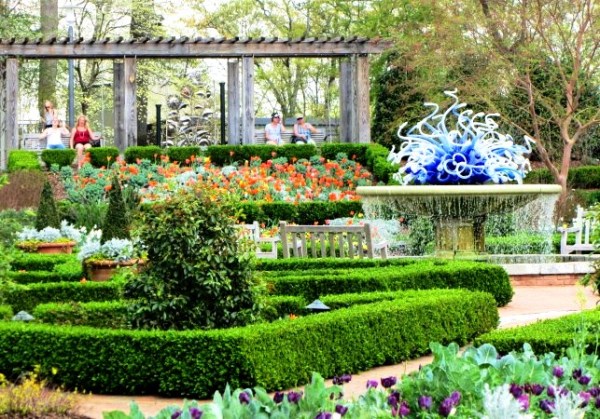
Atlanta Botanical Garden, March 2012
“What can Spring say that other Springs have not already told us? And yet each year, how happily we listen!” — Joan Walsh Anglund
Familiar yet always new, springtime lures us outdoors with warming sunshine, budding trees and bright blooms. Whether your March weather has been more like a lion or a lamb thus far, I hope you will soon experience the mood-lifting promise of a mild, sunny day — the sort of day when almost anything seems possible.
This post was first published seven years ago today. The original post and photo are linked, along with two other related posts, below.
One of the great helps

According to Winnie the Pooh, “Nobody can be uncheered with a balloon.”
“One of the great helps to success is to be cheerful; to go to work with a full sense of life; to be determined to put hindrances out of the way; to prevail over them and to get the mastery. Above all things else, be cheerful; there is no beatitude for the despairing.”
— Amelia Barr
When I think of my favorite people, a great many of them can be described by the word “cheerful.” Chances are, you number at least a few cheerful people among your favorites, too. There’s nothing more encouraging than a person who is able to keep a sincere smile in the most dull or difficult circumstances. This is quite a different trait from giddy silliness or forced optimism (both of which are helpful at times). The cheerful people I know do not seem clueless or in denial; rather, they seem to possess a deep awareness that gloom solves no problems. They know that smiles are free, needed and contagious.
Barr has a good description of cheer in the phrase “work with a full sense of life.” When I am most despondent, I am usually mired in immediate circumstances, over-focused on difficulty and oblivious to how much control I can exercise over my own sadness. As Barr implies, work is a great remedy to this sort of counterproductive rumination. Today, I plan to keep my hands busy and my mind focused on the satisfaction of tasks accomplished, realizing that even if I do not see instant results, there is meaning and blessing in my diligent efforts. I’m sending you a smile– take it and pass it along– and be of good cheer!
This post was first published seven years ago today. The original post and photo are linked, along with two other related posts, below.
The quiet voice

An afternoon in Mykonos, Greece, May 2008
“Courage doesn’t always roar. Sometimes courage is the quiet voice at the end of the day, saying, ‘I will try again tomorrow.'” — Mary Ann Radmacher
Enthusiasm and motivation are wonderful, but can backfire on us if we rush in with good intentions and expect too much of ourselves when tackling a new project or difficult resolution. Forward motion is not always possible, and even when it does take place, it often is not apparent. At such times, it is vitally important that we remain patient with our own efforts. I hope today will be a wonderfully productive day for you, the sort of day when you knock out several bothersome things on your “to-do” list, or reach significant milestones en route to a larger goal. But if the day doesn’t go that way, I hope you will take a deep breath, honor your own efforts, and realize that Scarlett O’Hara was right about one thing: tomorrow is another day.
This post was first published seven years ago today. The original post and photo are linked, along with two other related posts, below.
Simple, natural, plain
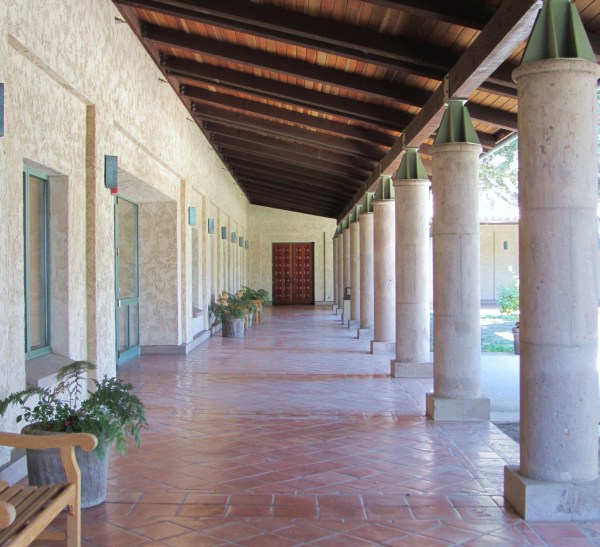
This covered passage at the Reagan Library in Simi Valley, CA, is a refreshing encounter with simplicity. Looking at this 2011 photo, I can almost feel the soft breeze of Southern California.
“Enjoy the simple, the natural and the plain. Along with that comes the ability to do things spontaneously and have them work.” — Benjamin Hoff
I love decoration. From Baroque music to Victorian architecture to everyday frills and fancies, I am drawn to intricate patterns and abundant color. I have to admit, though, that there is something very restful and soothing about simple design. Our lives are so complex as to be overwhelming at times, and a clean, simple construction is a sensory antidote to the continual bombardment of stimuli. Perhaps Hoff is onto something when he says our spontaneous thinking will be more effective when cleared of unnecessary distractions.
There are all kinds of ways to choose simplicity. Instead of a packaged processed snack, try a piece of fruit, a boiled egg or a handful of nuts. Drink chilled, purified water, and relish the way it quenches your thirst. Try packing up some of your best-loved trinkets for a time; you’ll enjoy the cleared space, and when you get them out again, you will see them with fresh eyes. Choose a worry-free hairdo or sensible, comfortable shoes. Leave some wall space free of pictures. Listen to music produced by a single instrument, such as a piano, flute or harp. Or sit outside and listen to the song of birds.
Today, I hope you will be calmed and refreshed by an encounter with something simple, natural, and plain.
This post was first published seven years ago today. The original post and photo are linked, along with two other related posts, below.
Gather and transform
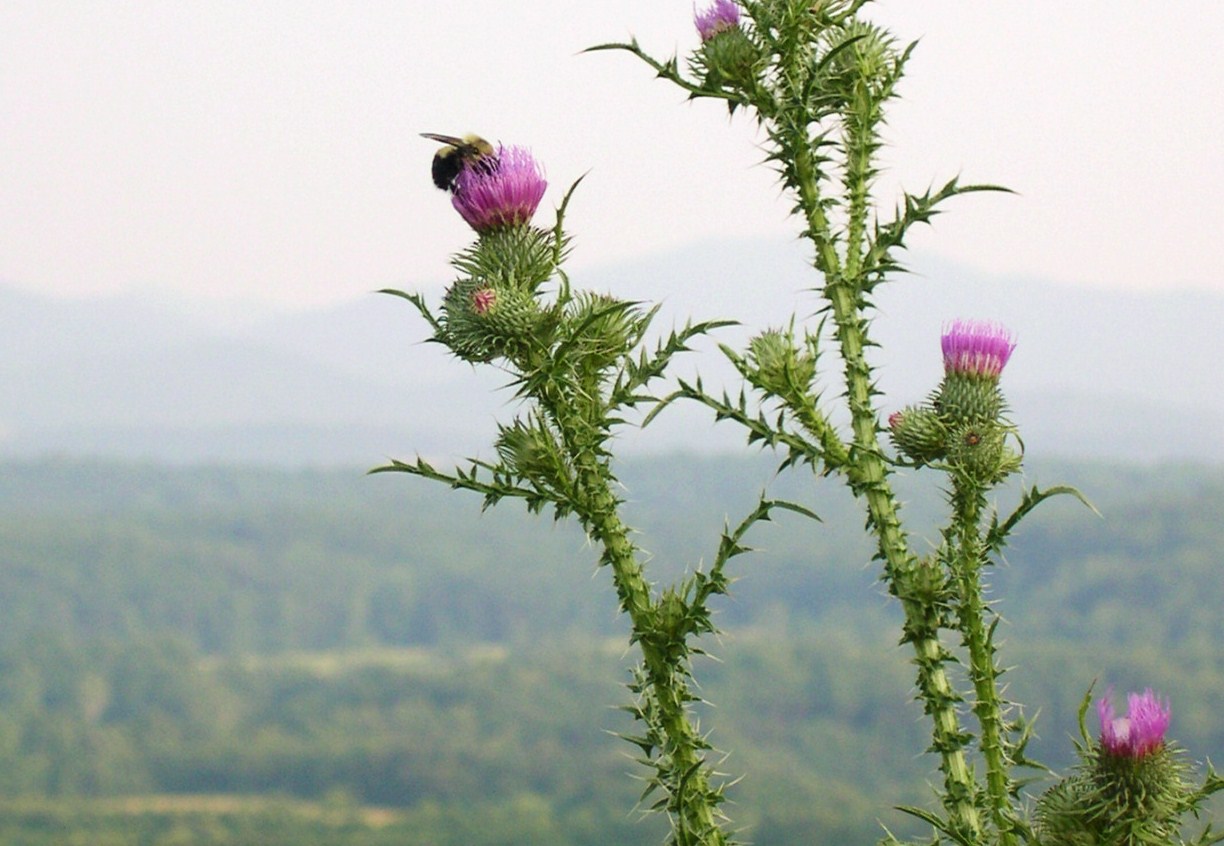
I photographed this bee near the Blue Ridge Parkway in Virginia, 2005
“The men of experiment are like the ant, they only collect and use; the reasoners resemble spiders, who make cobwebs out of their own substance. But the bee takes a middle course: it gathers its material from the flowers of the garden and of the field, but transforms and digests it by a power of its own.” — Francis Bacon
I had to think about this quote for awhile to understand its full implications, but I concluded that Bacon had drawn an interesting parallel to human tendencies. Some of us prefer action to thought, staying busy at various tasks with little introspection. Others of us enjoy thinking more than we enjoy doing, and turn inward more than we reach outward.
Maybe the ideal balance lies somewhere in between. If we consider the wisdom and accomplishments of others as inspiration and guidance, then complement our learning with our own unique set of experiences and perspectives, we can create new gifts to the world that can come only from us. If we strive to think neither too little nor too much of ourselves, to cultivate humility without timidity and confidence without arrogance, we will be free to make the best use of our talents; to gather from the abundance around us and transform what we have been given into our own singular contribution.
This post was first published seven years ago today. The original post, comments and photo are linked, along with two other related posts, below.
It’s helpful to remember
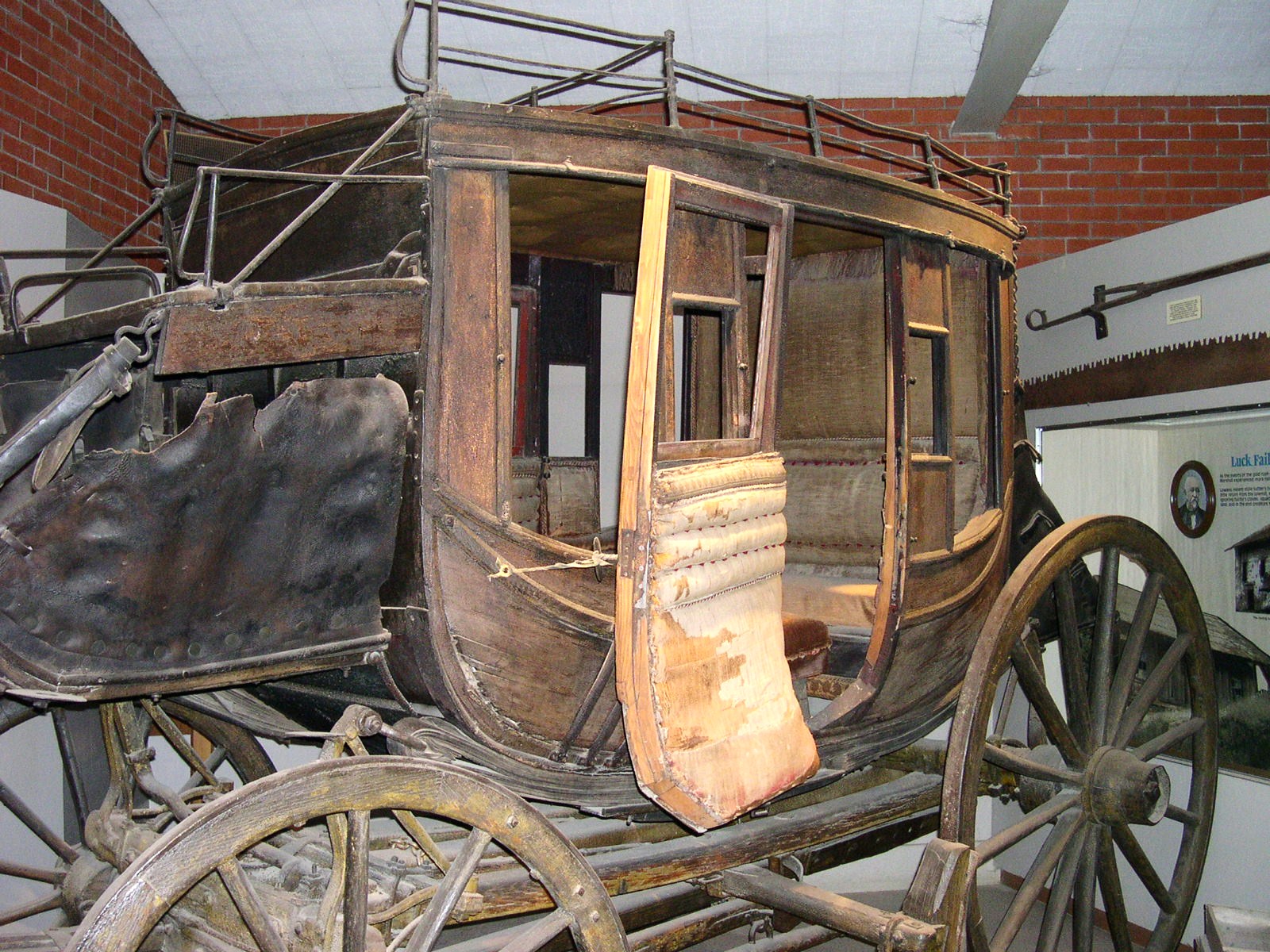
A genuine stagecoach on display at Marshall Gold Discovery SHP in Coloma, California 2004
“In times like these, it is helpful to remember that there have always been times like these.” — Paul Harvey
Today’s post is dedicated to all of us who are FED UP with:
1. traffic, gas prices and ridiculous parking costs;
2. the hassles of air travel;
3. public bus or rail system problems; or
4. all of the above.
Lest our blessings become curses to us, I hope we can get some perspective by reflecting that it could be worse, and in fact, it almost always was. I’m not just referring to the days some of us can remember all too well, when cars did not have air conditioning and the interstate highway system was far from complete. You don’t have to go back in time very far to read some really harrowing details about travel that have been left out of our overly-romantic movies of the past.
Just for fun, read this article from the California Department of Parks and Recreation. It gives an interesting and fairly detailed description of what stagecoach travel was like. We rode in a stagecoach briefly in Placerville, California, formerly known as “Hangtown.” I don’t think the account given above is exaggerated; if anything, it probably doesn’t begin to capture what it was like to endure such discomfort for days on end. Maybe it will help if we think of this next time we’re stuck in traffic.
This post was originally published seven years ago today. The original post, comments and photo are linked, along with two other related posts, below.
Happily ever after

Just another day at Cinderella’s castle, Disneyland in Anaheim California, 2003
“It is only possible to live happily ever after on a day-to-day basis.”
— Margaret Bonanno
Did you ever wonder why the fairy tales end when the happiness starts? When the character slays the dragon or the enemy, saving the loved one or rescuing the world at large, the story usually ends (or at least stops for awhile until the sequel appears with a new problem at hand). The details of living happily ever after are never given, and if they were, we would probably be bored. In other words, living happily does not usually entail nonstop excitement. I think that’s one reason for learning to savor the details we might normally miss in the rush of life. When it comes to what we pay attention to, the squeaky wheel may command more than its fair share of our focus. How much happier to notice the wheels that spin quietly, smoothly, efficiently — functioning so well we take them for granted.
This post was originally published seven years ago today. The original post, comments and photo are linked, along with two other related posts, below.
New possibilities

Jeff frolics with our sons in Maui, Hawaii, 1991
“Play energizes us and enlivens us. It eases our burdens. It renews our natural sense of optimism and opens us up to new possibilities.” — Stuart Brown, MD
If you have a favorite hobby, sport or other recreational activity, why not schedule some time for play this week? On the other hand, if you don’t play very often, or if you tend to default to the TV or newspaper whenever you have a few minutes, think about exploring something more creative and engaging. If you have children or grandchildren, it might be fun to play along with them at Legos, puzzles, board games or other diversions they love. As the weather warms up, move outdoors for more active games, or check with your local Parks and Recreation department for their class offerings. Whatever our preferences and abilities, let’s all make time for play. It’s not just for kids.
This post was originally published seven years ago today. The original post, comments and photo are linked, along with two other related posts, below. These links to related posts, and their thumbnail photos, do not appear in the blog feed; they are only visible when viewing the individual posts by clicking on each one. I have no idea why, nor do I know how they choose the related posts. That’s just the way WordPress does things.
Every single day

Sunset in the lovely little town of Dexter, Maine, June 2012
“There’s a sunrise and a sunset every single day, and they’re absolutely free. Don’t miss so many of them.” — Jo Walton
Have you ever been outside just as the sun was rising or setting, and thought to yourself that you should make it a point enjoy sunrise, or sunset, more often? So have I. But I still end up missing most of them, especially in the wintertime. The good news is that the days are getting longer, and we’ll all have more chances to be outside for the morning and/or evening shows that come for free to the whole world every day. (Note to myself: as soon as it warms up a bit, be sure to schedule at least some daily walks to coincide with either sunrise or sunset.)
And if you happen to catch a good photo of a sunrise or sunset that you’d like to share, post a link in the comments if it’s available for viewing on your blog. If you don’t have a blog, send me the photo via email as an attached file to defeatdespair (at) verizon.net, and I’ll share it with readers in a future post! Be sure to let me know something about the location.
Added notes:
Please check the comments for some wonderful links to sunrise/sunset photos! Also, I’ll post below any photos emailed to me today:
Eric sent these photos along with the following comments:
“one of the first winter sunrises we experienced, as we began to settle in the mountains near Ellijay, GA. The date of this photo is 12-02-2006.”
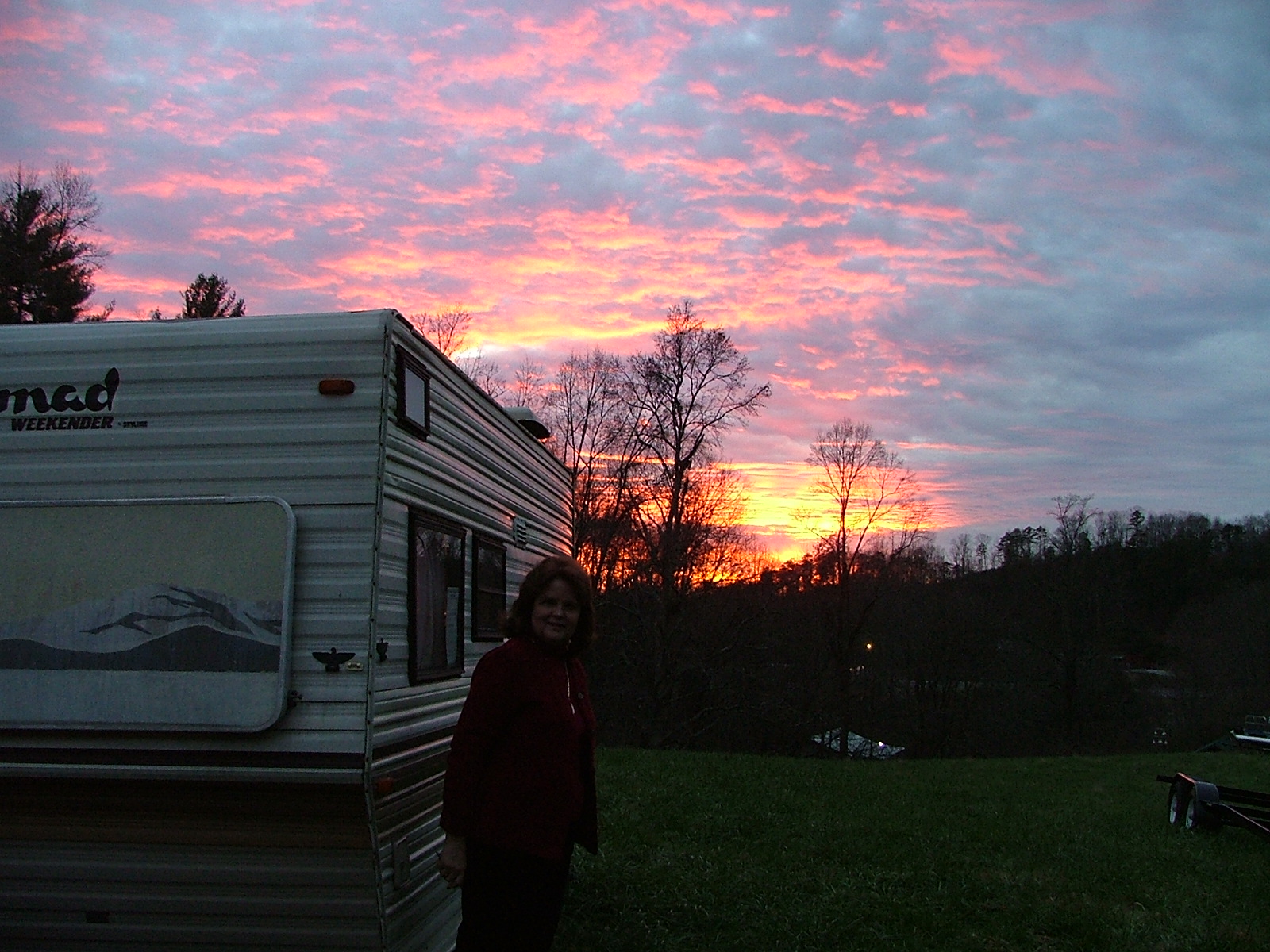
Beautiful colors! Thanks Eric. Here’s the other photo Eric sent:
“I snapped this with a cheap camera, as I drove “home” from salmon fishing, in June. It is taken facing west, with Turnagain Arm (just southeast of Anchorage) on the left. the interesting fact is that the local time of this photo is almost 11:00 p.m.”
Thanks, Eric – now I know why they say “midnight sun!”

And Sheila sent in this gorgeous photo with the following caption:
“Bill snapped this early one morning on the beach in front of our house. It is one of our favorites. Enjoy!”
Wow, Sheila…it must be wonderful to have a sight like this so close by!

This post was originally published seven years ago today. The original post, comments and photo are linked, along with two other related posts, below.
Teach your moods
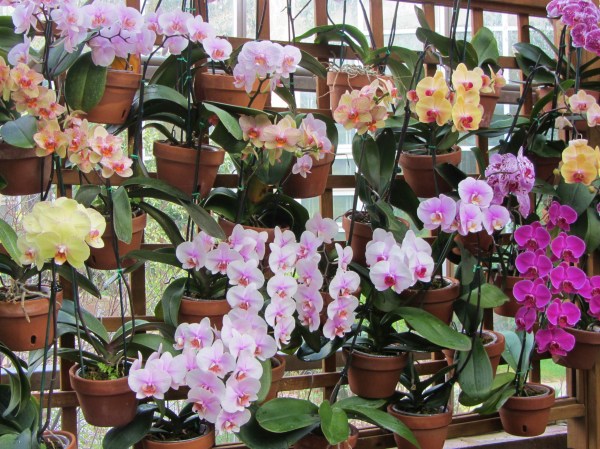
Orchids bloom beautifully at the Atlanta Botanical Garden, March 2012
“Now Faith, in the sense in which I am here using the word, is the art of holding on to things your reason has once accepted, in spite of your changing moods. For moods will change, whatever view your reason takes…This rebellion of your moods against your real self is going to come anyway. That is why Faith is such a necessary virtue: unless you teach your moods “where they get off,” you can never be either a sound Christian or even a sound atheist, but just a creature dithering to and fro, with its beliefs really dependent on the weather and the state of its digestion. Consequently one must train the habit of Faith.” — C. S. Lewis
The exquisite blooms pictured above are made possible by a carefully controlled environment, and skilled horticulturists who gently train them to grow along much stronger stakes fastened to the stems. As wondrous as nature can be when left undisturbed, there is a place for the patient cultivation, informed by science, that enables us to enjoy flowers from other climates and regions that we may be unable to visit on our own.
This is a parallel to what I now seek to do with my mind, heart and imagination in an emotional climate that is currently rife with potentially destructive storms and intolerable extremes of temperature. I try not to be unforgiving of my own moods, especially under the circumstances. But from a strictly practical point of view, if I am to survive and be helpful to others, I absolutely must learn to teach my moods “where they get off,” to quote Lewis. You, dear readers, are helping me to do just that, with your supportive comments, kind thoughts and faithful prayers for us. May your kindness return to you in beautiful blooms from new and unexpected directions.
This post was originally published seven years ago today. The original post and photo are linked, along with two other related posts, below.
When March is scarcely here
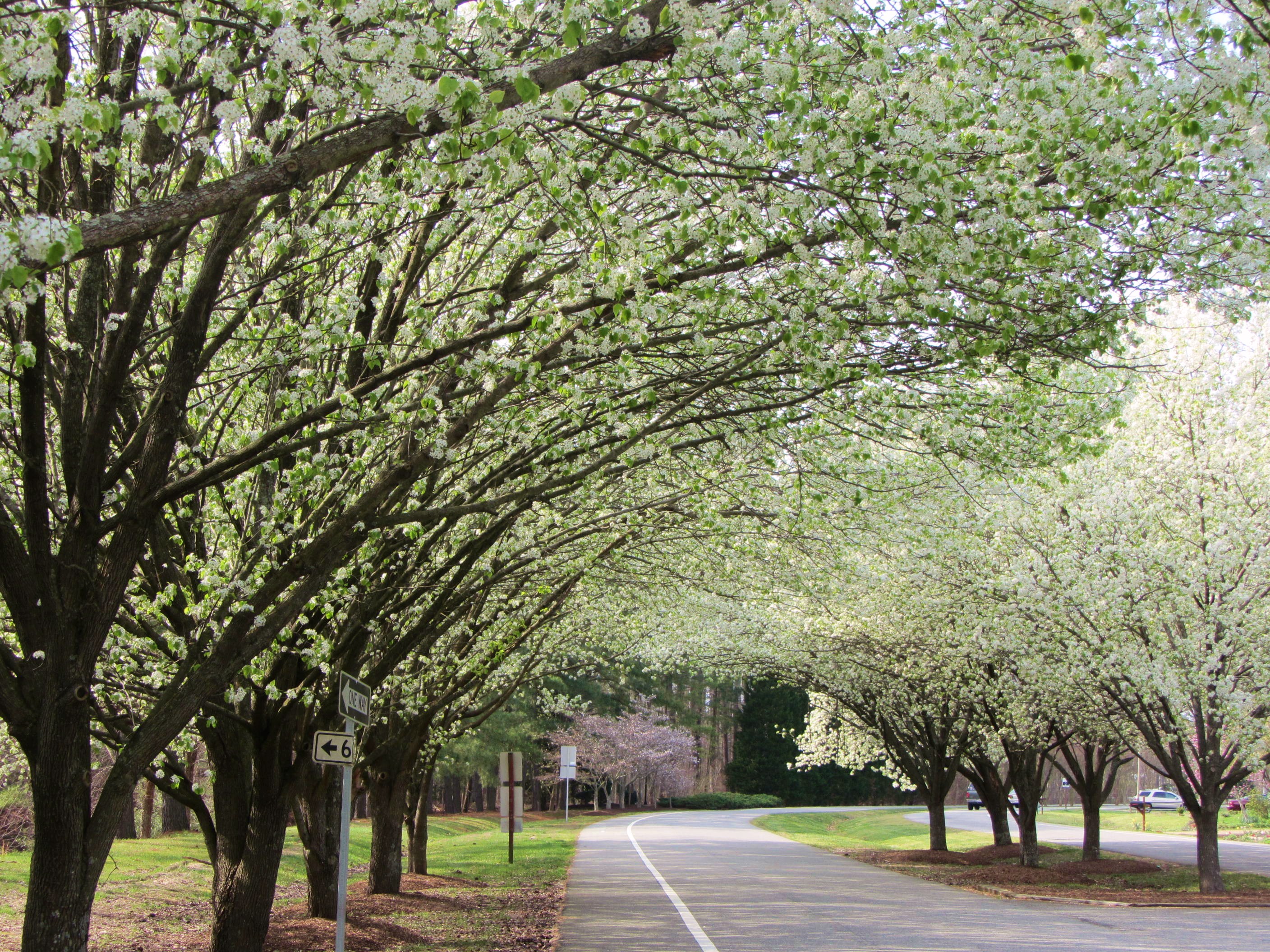
These trees flower gloriously, although briefly, every year – here it was March 2012
“A light exists in spring
Not present on the year
At any other period —
When March is scarcely here.”
— Emily Dickinson
Along with a recent post about walking, I included a photograph of some trees in my neighborhood. The photo above pictures those same trees during the all-too-brief period of their flowering, usually in early to mid March. Perhaps it’s our eagerness for spring that bathes March with such beautiful light, or maybe the lengthening days allow us more chance to revel in its nascent beauty. In any case, I hope this month will bring you many opportunities to enjoy a beautiful March. If you post (or find) any other lovely celebrations of springtime, feel free to share links to them in the comments.
This post was originally published seven years ago today. The original post and photo are linked, along with two other related posts, below.
The garden of your mind

One of many beautiful Canadian gardens — this one is in Banff, 1999
“You can grow ideas in the garden of your mind.” — Fred Rogers
As springtime approaches, there’s no better time to tend to the garden of your mind. Let’s make our minds into beautiful gardens to enjoy every day! We can cultivate the soil by feeding it healthy images and words. We can watch out for, and rid ourselves of, the pests or weeds that so easily take over. The best part is that every one of us will have something unique; no two will be alike, and we will have so much fun sharing all the different flowers that will bloom in one another’s mental gardens.
Here’s a lovely auto-tune from the folks at PBS. It always makes me smile and feel happy inside. I hope you like it as much as I do!
This post was originally published seven years ago today. The original post and photo are linked, along with two other related posts, below. As a personal aside– of all the 1100+ posts on this blog, this is one of my top ten favorites, all because of that wonderful autotune song which I still enjoy everytime I hear it. Mr. Rogers lives on!
Try adding some bright
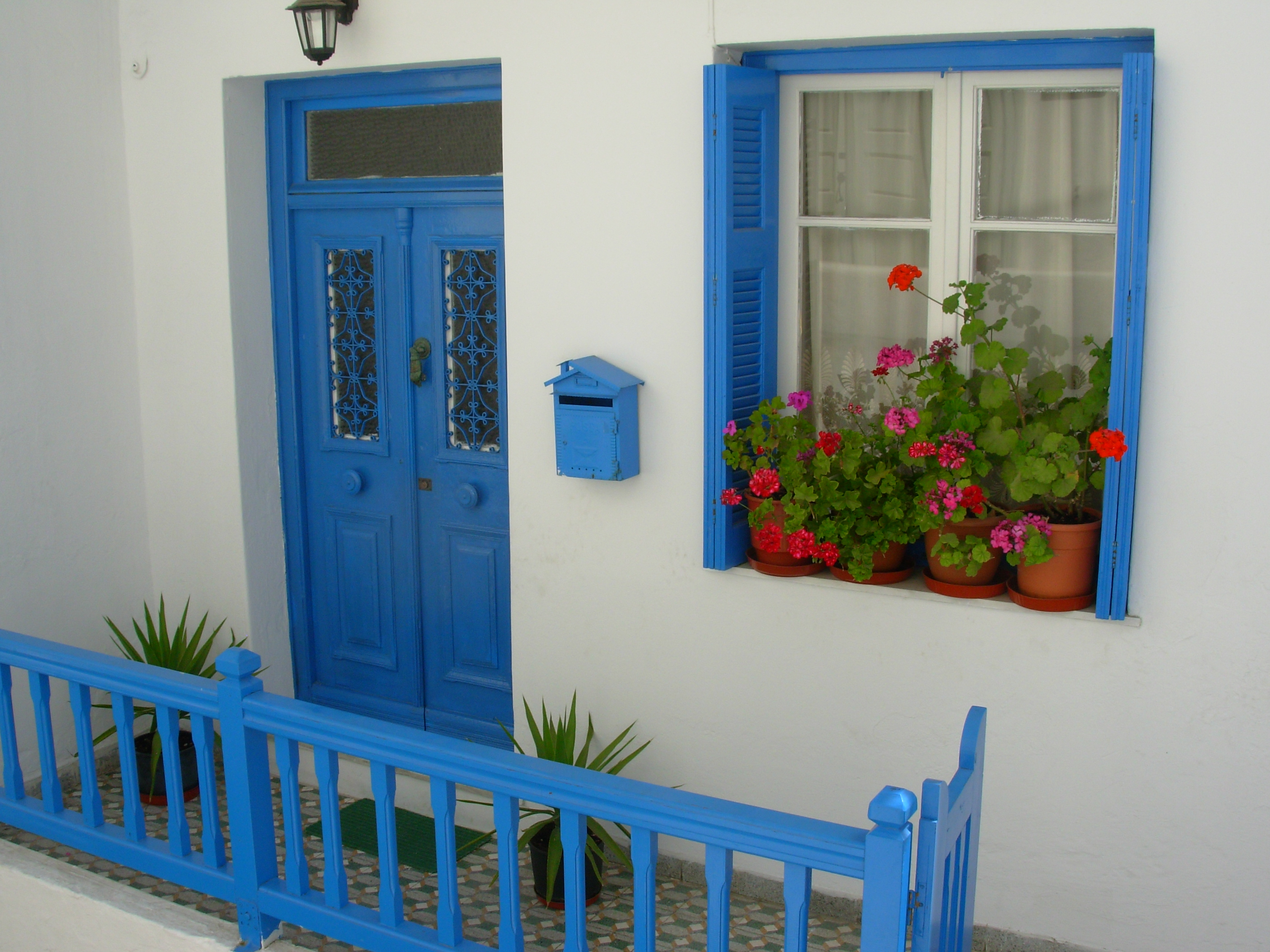
I love the brightly-colored homes of Mykonos, Greece! 2008
“Your attitude is like a box of crayons that color your world. Constantly color your picture gray, and your picture will always be bleak. Try adding some bright colors…” — Allen Klein
I appreciate people who take the time to add color to everyday life. Some people plant bright annuals that bloom in spring and summer, others use cheery linens or dishes, still others wear vivid clothing and accessories. I find that colors really do lift my mood, so I try to take my eyes and thoughts to sunny places, even when the day is gray and dull. Whether you add color in outward ways, or simply embrace and appreciate the colors others add to your life, I hope today will be a bright one for you.
This post was originally published seven years ago today. The original post and photo are linked, along with two other related posts, below.
Too big to pass
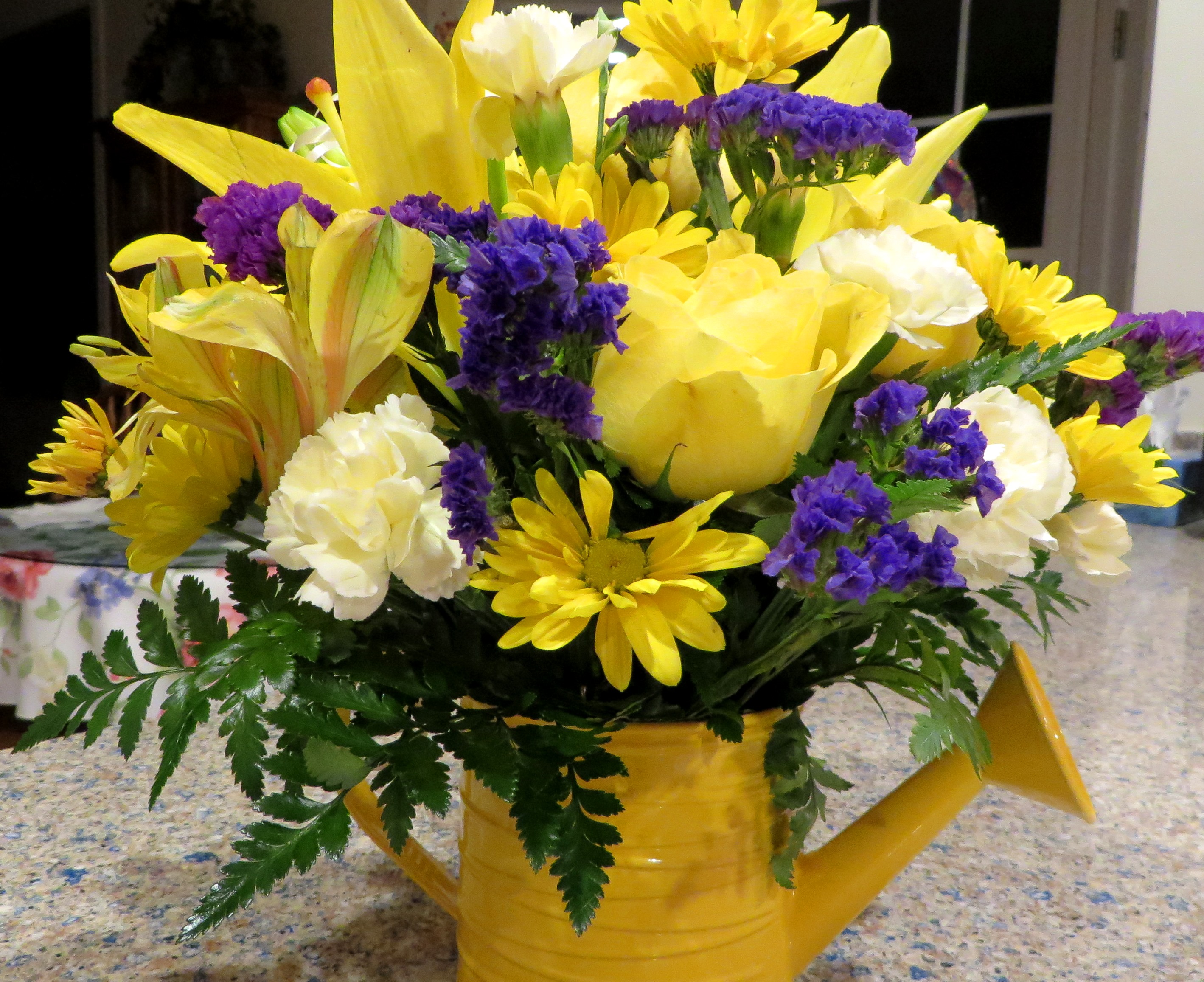
A thoughtful friend sent these flowers on New Year’s Eve, 2015.
She knew this season was a difficult one for us, so she sent bright flowers to cheer us.
“Trouble is a sieve through which we sift our acquaintances. Those too big to pass through are our friends.” — Arlene Francis
There are all kinds of reasons why trouble tends to isolate us from others. Many long to reach out to people in difficulty, but find it emotionally taxing to be present during the trials of others. We may be too sensitive, haunted by sadness after spending time with those who are less fortunate. Or maybe we have more than enough problems of our own, and thus feel overwhelmed in the face of suffering or crisis in others’ lives.
Often, too, the experience of trouble can change us, making us less reliable, less agreeable or harder to tolerate, thus driving away former or potential friends. I speak from experience here. I feel as if the past three years have left me ill-equipped to have much to give to anyone, even in my immediate family. A significant percentage of the time, I feel exhausted, irritable and negative. Other times I long to retreat to a quiet room and just be by myself with a book or some music. While this solitude is essential and beneficial in reasonable doses, it’s not a recipe for making or keeping friends.
Fortunately, I am blessed to know many who understand these facets of struggle. Most of you who have been here with me, through all of the ups and downs of the past three (or thirty!) years, have been through various seasons of loss yourselves. You know, seemingly by instinct, what to do; how to remain loyal and supportive even when doing most of the “give” in the give-and-take that constitutes friendship.
To all of you, my heartfelt thanks. Whether your bouquets have been composed of literal flowers (such as pictured above) or of loving thoughts, prayers, cards and other tokens of support and affection, please know that your presence and kindness make a crucial difference in helping me get through each day, and week, and month.
If you are facing any sort of trouble right now, I wish for you some golden people who are too full of love to pass through that sieve. “Big” is not a description most of us would choose for ourselves, but in the sense that Francis intends in the quote for today, I hope we all experience the joy of knowing– and being– people who are too big to pass through the net of circumstance that separates true friends from acquaintances.
This post was originally published four years ago today, because seven years ago, there was no February 29. As an aside– the four years that came after I wrote these words in 2016 proved beyond my worst imagination how true the theme of this post really is, and how few remain after the sifting of sorrow upon sorrow.
The original post and photo are linked, along with two other related posts, below.


 Defeat Despair