Tea will

My kind of store! In Bar Harbor, Maine 2012
“If you are cold, tea will warm you;
if you are too heated, it will cool you;
If you are depressed, it will cheer you;
If you are excited, it will calm you.”
― William Ewart Gladstone
My day would not be complete without tea. For those of us who grew up in the South, iced tea was part of everyday life, but I did not start drinking hot tea regularly until about 14 years ago. I got really hooked on it when my British pen pal made me several cups one chilly, wet afternoon in 2001 after we’d been exploring Waltham Abbey and got chilled to the bone. Since then, my tea consumption has steadily increased, partly because I keep reading how healthy it is, and partly because my aging brain really adores the caffeine, but mostly because I simply love it.
I know green tea is supposedly more nutritious, but I prefer the taste of black tea, in all its magnificent flavors and variations. So I solve that problem by mixing green tea with black (steeping the black tea in boiling-hot water, as my British friend taught me, and then adding the green tea to steep after the water has cooled slightly). If I’m in a hurry or lazy, I’ll just mix the two loose teas together or use one teabag of each. And if I’m going to be home all day, I’ll fix two small pots, one of each, and just pour some of each into my huge tea mug, enjoying it throughout the day.
To tell the truth, tea is almost like a hobby for me, as well as my drink of preference. My favorite thing is to share a cup (or many cups) of tea with a friend, along with some good conversation. Wish we could share a cup right now! But as an alternative, leave me a mailing address in the comments (I’ll edit out your info before posting, and I won’t sell it – I promise!) and I’ll send you a tea bag from my embarrassingly large collection. Or just take a few minutes to sit down now with a nice cup, while you relax with the paper, a magazine or your favorite blogs. It’s a great way to make any day a little bit brighter!
p.s. if you request a teabag, let me know what kinds you like — herbal, decaf, fruit-flavored, Earl Gray, etc.
Read more about the health benefits of tea here
This post was originally published seven years ago today, but the offer of a free tea bag is still good. The original post and photo are linked, along with two other related posts, below.
Give thanks
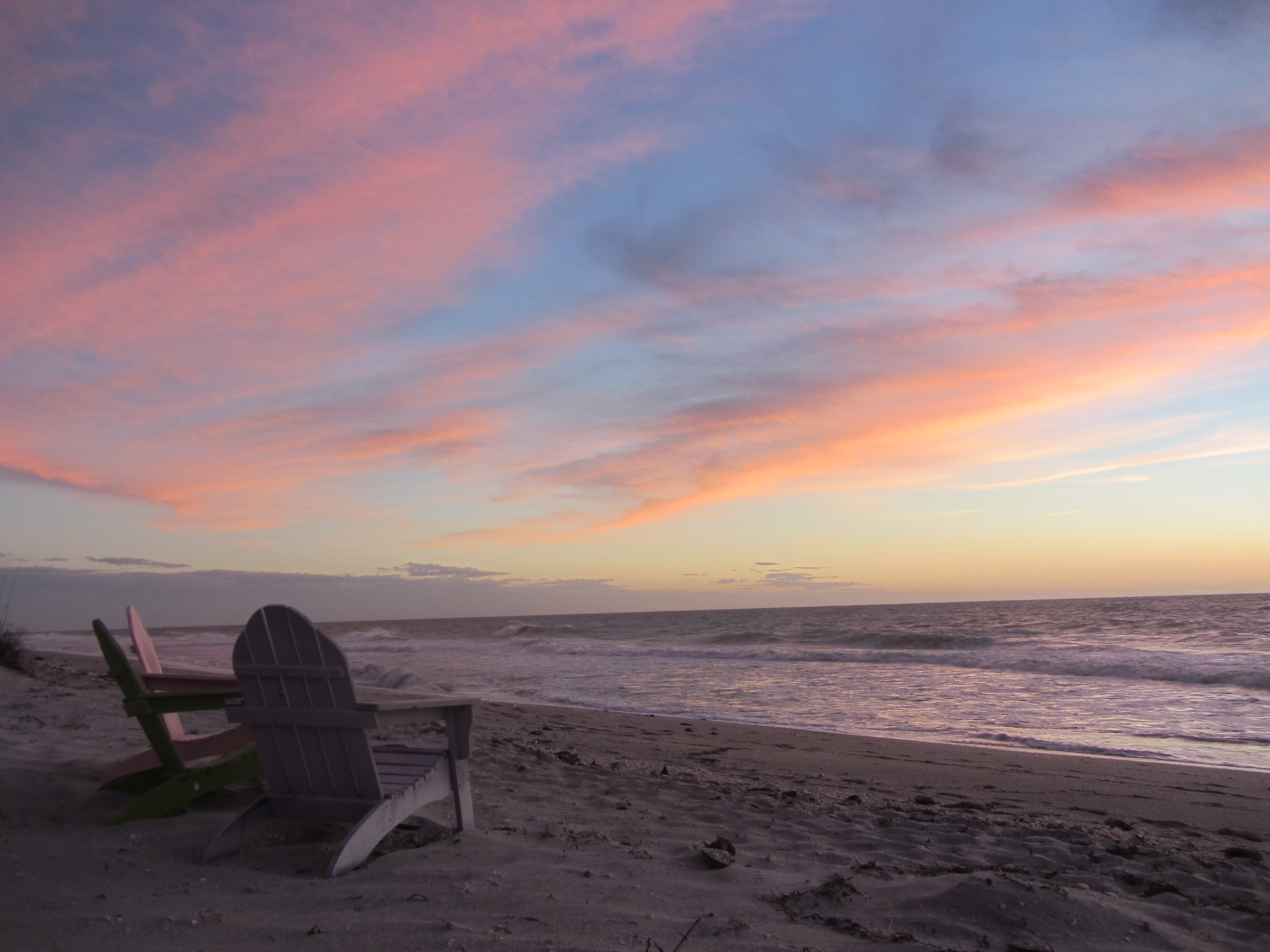
A Captiva sunset, January 2013 — no digital alteration; it really is this beautiful.
“When you rise in the morning, give thanks for the light, for your life, for your strength. Give thanks for your food and for the joy of living. If you see no reason to give thanks, the fault lies in yourself.” — Tecumseh
Long before we had any idea Jeff was sick, we planned a quick January getaway to Captiva Island, Florida. I had never been there, and always wanted to go. When we began to re-structure our lives in the wake of Jeff’s diagnosis and the intensive treatments planned for the coming year, he wisely refused to cancel the trip, insisting that he wanted to go unless he was absolutely unable. So his chemotherapy schedule was altered to allow us this respite.
What a blessing! Our three days in Captiva underscored the immutable truth of Tecumseh’s words; there are always reasons to give thanks. Even when we know this truth in our minds, it can be difficult to feel it in our hearts during times of great pain. But like all truth, it is eternal and remains despite our temporary inability to grasp it…so even when we do not feel it, we can have faith that it’s still there, waiting for our awareness to return.
Related Posts:
Gratitude Made Easy (from The Presents of Presence)
When each day is a blessing (from Sydney Fong)
Unknown blessings (one of my posts)
…and read about the 365 Grateful Project here.
This post was originally published seven years ago today. The original post and photo are linked, along with two other related posts, below.
Welcomed and recorded

Our Robins prepare for spring, 2005
“Each thought that is welcomed and recorded is a nest egg, by the side of which more will be laid” — Henry David Thoreau
For me, writing is an effective way to train my thinking. I find that most people give more thought to what they write than to what they say, and this may be why some are more fond of talking than of writing. Others are naturally silent, neither speaking nor writing much other than what is necessary to get through the day. But either way, Thoreau’s analogy is an apt description of what happens when we take the time to record the best of our thoughts.
A number of authors have advised keeping a gratitude journal, wherein one records specific items that inspire feelings of thankfulness each day. I have done this at times, and do find that it is helpful, particularly during stress or grief. No matter how bad things get, we can always list reasons to be grateful. These notes might mention anything from a sunny day, to a reliable appliance, to a loving and supportive friend who visits in person or by email. It’s especially helpful to note what one tends to take for granted, such as electricity or hot and cold running water; conveniences we don’t notice until a power failure takes them away temporarily.
In recording happy details, we capture and preserve fleeting glimpses of the everyday joys that enrich our lives. Years later, reading back over gratitude journals, I discover forgotten blessings and moments of grace that would have been lost to me if I had not recorded them.
Even if you do not usually write much, try keeping a record of welcome thoughts. As Thoreau suggests, one thought will lead to another, and in time will produce beautiful songs and the freedom to take wing and fly.
This post was originally published seven years ago today. You can view the original with comments here.
Within our reach

Light shines into a dark corridor in Castillo San Cristóbal, San Juan, Puerto Rico 2010
“The gloom of the world is but a shadow. Behind it, yet within our reach, is joy.
Take joy!” — Attributed to Fra Giovanni Giocondo
This blog gives me an excuse to spend time reading from the wealth of inspiring, encouraging and remarkable writings that have accumulated over centuries. Much of what I read — probably most of it — was written by people who faced situations as dark or even darker than what we are facing now, yet refused to stop believing that joy is not only possible, but readily available to those willing to seek it out. The darkness is real, the troubles painful…but truth lives, beauty shines, and so much that is good is still with us. Wherever you are today, whatever difficulties you may be facing, I pray that you will be encouraged by these words to see your own future with hope, and take joy!
This post was originally published seven years ago today. You can view the original with comments here.
The last refuge
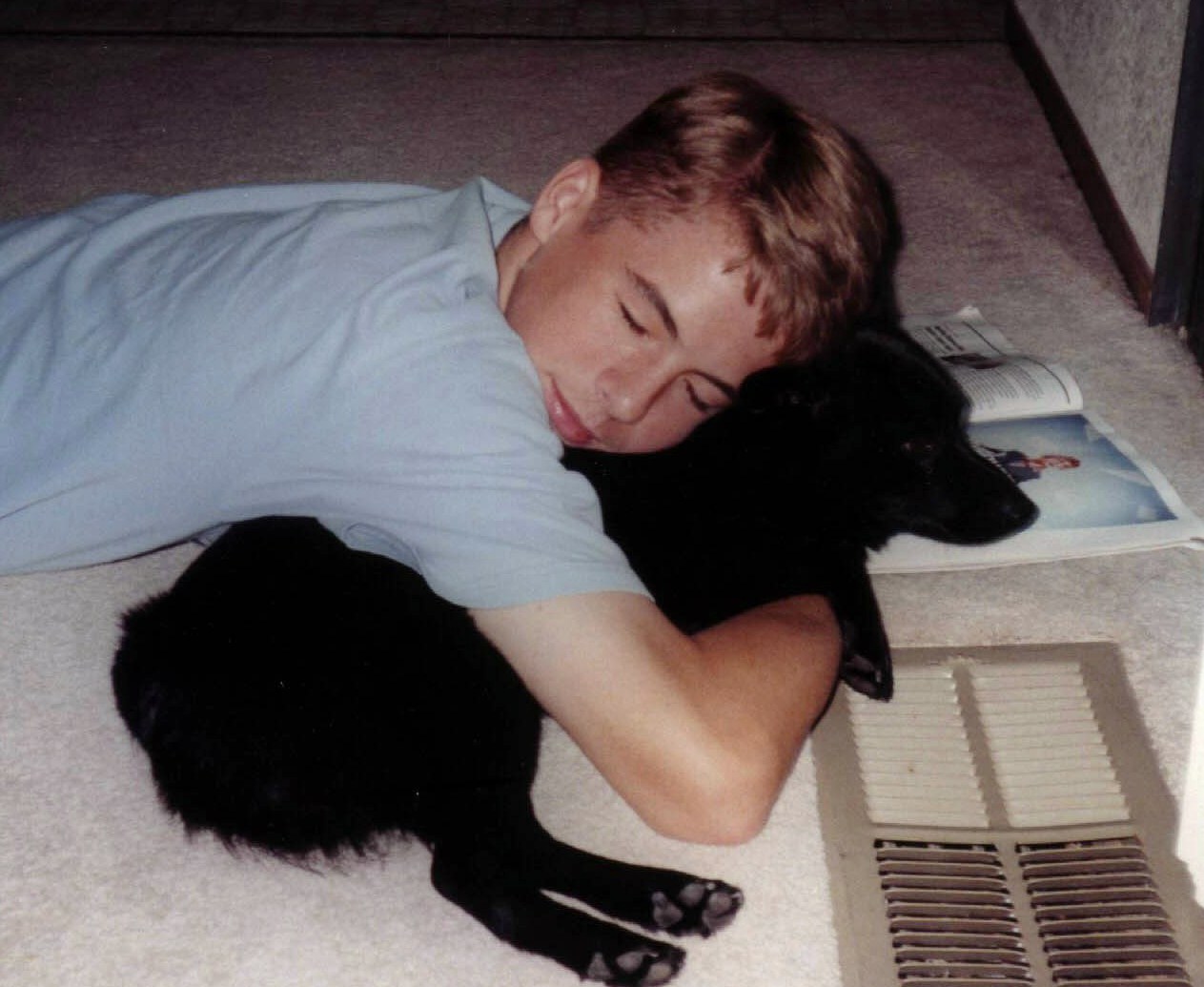
I caught our son dozing with his canine companion, sometime around 2001
“I adore simple pleasures. They are the last refuge of the complex.” — Oscar Wilde
I know very few people who do not lead complex lives, and most of us yearn for simplicity. Yet the complexity is also a blessing; a rich fabric woven with countless threads that add color, durability or utility. Thus I have mixed emotions about clearing distractions from my life; I can’t really say that I would be better off without the many people, interests and responsibilities that fill my days.
Perhaps the answer lies somewhere between simplicity and complexity. If we keep places of retreat in our lives, corners where we can find quiet and serenity, we will be better equipped to navigate the more difficult terrain where we encounter challenges that reward us with different gifts. Today, I wish for you a retreat to — or discovery of — a safe, warm refuge of calm amid the inevitable busyness of life.
This post was originally published seven years ago today. You can view the original with comments here.
The unceasing effort

Oleanders accent architectural beauty in Athens, Greece 2008
“Art is the unceasing effort to compete with the beauty of flowers– and never succeeding.” — Gian Carlo Menotti
Humans can create stunning works of art, but the best of these only imitate, echo, enhance or complement the beauty found in nature. Art is usually made, at least in part, from materials found in the natural world, and is most appealingly displayed in combination with nature — paintings hung in elegant wooden frames, sculptures adorning colorful gardens, buildings surrounded by landscaped grounds. Whenever you find yourself admiring the work of a painter, sculptor or architect, note how the beauty is accentuated by the inclusion of something that cannot be made with human hands. How blessed we are, to be surrounded by many forms of mastery!
This post was originally published seven years ago today. You can view the original with comments here.
The safekeeping of enchantment

Just one of the many enchanting cottages of the Martha’s Vineyard
Camp Meeting Association, photographed in September 2012
“I have always felt charged with the safekeeping of all unexpected items of worldly or unworldly enchantment, as though I might be held personally responsible if even a small one were to be lost.” — E. B. White
The unforgettable writer who gave us Stuart Little, Charlotte’s Web and The Trumpet of the Swan certainly fulfilled his sense of responsibility for preserving enchantment. Those of us who loved his stories can honor his legacy by handing it down to our own children, nieces, nephews or neighbors.
But what, exactly, is enchantment? Perhaps it is the state of being attentive to, and fascinated by, the countless delights that surround us, and being readily drawn into the realm of imagination where almost anything can happen. Today may be an ordinary day in your life, but you can travel to enchanted places in your imagination, guided by books, blogs, photographs, poetry or just an engaging conversation with someone you love.
Today, I wish you enchantment.
This post was originally published seven years ago today. You can view the original with comments here.
Patience and faith
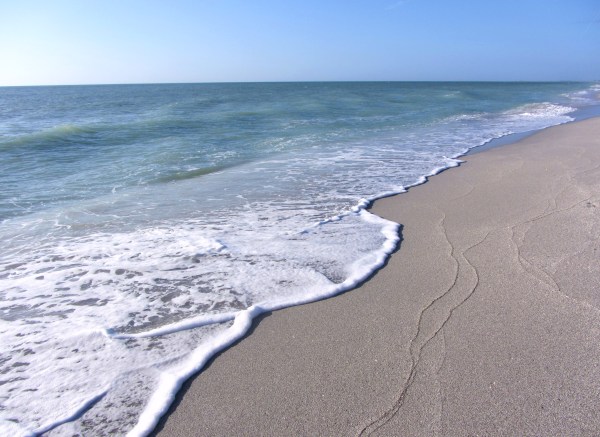
A beach on Captiva Island, Florida, January 2013.
Anne Lindbergh loved Captiva, and wrote Gift from the Sea there.
“The sea does not reward those who are too anxious, too greedy, or too impatient…
Patience, patience, patience, is what the sea teaches. Patience and faith.”
— Anne Morrow Lindbergh
Few women of any generation could claim a life as full of adventure, triumph and tragedy as Anne Morrow Lindbergh. Yet her concerns were similar to those we often face today: how to find stillness within the chaos of balancing impossibly complex demands, and how to endure unbearable sorrow amid great blessings. Her classic work Gift from the Sea has inspired millions, and seems only to grow more relevant as time passes. If you can put your hands on a copy, I highly recommend you enjoy this wise and calming work. But in the meantime, visit the sea — if not in person, then go there via the many blog posts, photographs and words so readily available online — and meditate on its timeless lessons, conveyed with patient repetition in wave after wave of unceasing beauty and rhythmic motion.
For some stunningly beautiful photographs of the ocean as seen from Antarctica,
see this post from Cindy Knoke!
This post was originally published seven years ago today. You can view the original with comments here.
Travel the back roads

This charming street on Cape Cod, Massachusetts, which I photographed in 2009, is just one example of many attractive small towns throughout America and the world.
“To read the papers and to listen to the news… one would think the country is in terrible trouble. You do not get that impression when you travel the back roads and the small towns do care about their country and wish it well.” — Charles Kuralt
Recently I’ve had to sharply curtail my exposure to news reporting in both online and print versions (I haven’t watched TV for years). With all our current challenges, I simply could not afford to add discouragement to my life. “If it bleeds, it leads,” the saying goes, and the advent of 24/7 news stations has only made this worse as production teams scramble to find titillating sound bites, worrisome speculation, or outright gossip to fill their airwaves and bring in viewers.
Since I travel a good bit, I cannot help noticing that what I see and hear is in marked contrast to the supposedly accurate press I read. Wherever I go, most of the people I meet are courteous, friendly or at least benign. Increasingly diverse populations live together, for the most part, in cooperation and peace. Attractive, well kept homes and appealing towns adorn almost every place I visit, and I return from my travels feeling encouraged about the state of my country and the world. Yes, there are many bad or disappointing experiences, but there are still far more blessings, if we seek and notice them. I often wonder whether people who lived even a century ago would think us mad to be unhappy with such abundance and opportunity.
Next time you find yourself feeling low, try unplugging from the constant barrage of largely irrelevant news hype that creates so much noise in our world and inside our heads. Get out, reach out and find out how much there is to celebrate.
This post was originally published seven years ago today. You can view the original with comments here.
There will be times
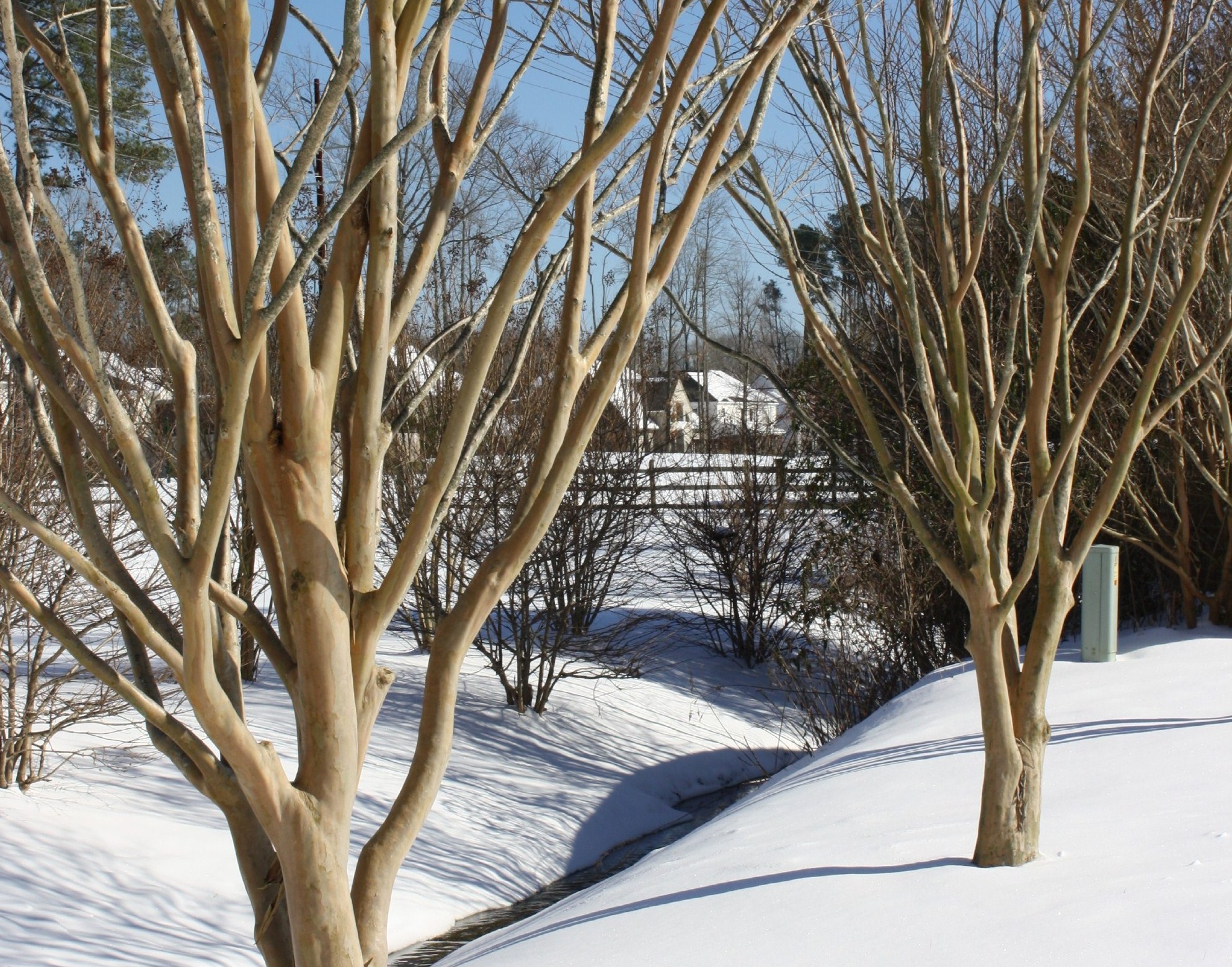
A few months after I photographed these bare trees, they were covered with beautiful blooms.
“Let us learn to appreciate there will be times when the trees will be bare, and look forward to the time when we may pick the fruit.” — Anton Chekhov
Even when the trees appear to be bare, there is a lot happening underground. A gardener once explained to me that fall is the best time to transplant most shrubs and trees, because the root system will develop most during the winter, before the demands of blooms and fruit take over. Growth is not always visible to us.
I think there’s a life lesson for people here, too. It’s easy to get impatient during times when progress is not apparent. But unseen changes are always happening. Our task is to nourish and cultivate our minds, hearts and bodies so that the inevitable changes are taking us in the right direction. If we can manage to stay focused on what is good, just, positive and hopeful, we will grow stronger even if we don’t feel or see that growth for a very long time.
This post was originally published seven years ago today. You can view the original with comments here.
How we remember

My sister and I reading, sometime around 1960
“How we remember, what we remember and why we remember form the most personal map of our individuality.” — Christina Baldwin
Among the countless ways my sister has blessed my life, one comes to mind often: she read to me and taught me to read. Over fifty years later, I have wonderful memories of the hours we spent with books. Little wonder that she grew up to be an elementary school teacher, and I became a librarian.
Almost all of us deal with a mixed bag of memories, pleasant or painful, happy or horrible. One of the most nurturing gifts we can give ourselves is the recognition of what has gone right in our lives. By choosing to spend our mental energy on gratitude for the good times, rather than re-hashing and resenting old grievances, we lay the foundation for living mindfully with today’s blessings foremost in our thoughts.
This does not imply denial of the truth. Indeed, we may need to work through our negative memories with the help of a trustworthy counselor, pastor or friend. But all of us who are here today, reading this message, are alive because there have been people who cared for us and helped us survive and grow. Today I invite you to celebrate a beautiful memory with a few minutes of reflection, thanks or sharing.
Happy 60th birthday to my beloved sister!
This post was originally published seven years ago today. You can view the original with comments here.
Related Posts:
Strength that will endure

I snapped this photo somewhere between Skagway, Alaska and the Yukon, in June 2000
“Those who contemplate the beauty of the earth find reserves of strength that will endure as long as life lasts.” — Rachel Carson
The deep connection most of us feel to the earth’s grandeur is awe-inspiring yet reassuring, an interesting combination of emotions that cannot adequately be described. However, poets and writers have attempted for centuries to capture the mystery of what we experience when we encounter the wonders of nature in its infinite forms and endless variety. I hope today you will tap into the deep reserves of strength available to each of us when we take a few minutes to appreciate our world.
For more beautiful photos of nature, see these sites:
http://ladybudd.com/lets-dialogue/
https://cindyknoke.com/2019/12/03/sequoia-in-the-fall/
http://playamart.wordpress.com/2013/01/13/2012-best-of-nature/
And many others! Happy exploring!
This post was originally published seven years ago today. You can view the original with comments here.
Firesides on winter evenings

Mom and Dad’s favorite room on a typical winter’s night in 2006
“The smell of that buttered toast simply talked to Toad, and with no uncertain voice; talked of warm kitchens, of breakfasts on bright frosty mornings, of cozy parlor firesides on winter evenings, when one’s ramble was over and slippered feet were propped on the fender; of the purring of contented cats, and the twitter of sleepy canaries.”
— Kenneth Grahame in The Wind in the Willows
Each year the seasons seem to pass more quickly, so I’m amazed that winter is already drawing to a close. As eager as I always am for spring, I can’t let the season pass without at least one tribute to the cozy, dreamy appeal of a big, crackling fire. Perhaps my warmest childhood memories are similar to the comforting thoughts evoked by Toad’s buttered toast; my parents, brothers, sister and I spent many happy evenings together by the fireplace, sometimes accompanied by friends, enjoying laughter and lively conversation.
This winter was not typical for us, with the crisis of Jeff’s diagnosis and treatment. Among other festivities that fell by the wayside, I cancelled two trips I had planned to see my parents during the holiday season. I missed the chance to sit by the roaring fires that Mama and Daddy still enjoy. For many years Jeff and I have lived mostly in homes that are newer and supposedly more energy-efficient, with gas fireplaces that are pleasant, but nothing like a real wood fire in an open hearth. I fondly hope that next winter will bring us the opportunity to be together at my parents’ hearth, but until then, I am happy for the memories that warm my thoughts on cold evenings.
If you are lucky enough to have a wood-burning fireplace, or a gas or electric one, make time to enjoy at least a few more fireside evenings before spring arrives. Curl up with a good book or new magazine, and a cup of hot cocoa, tea or coffee, and bask in the glow.
Read about another blogger’s family memories here!
This post was originally published seven years ago today. You can view the original with comments here.
Open every door

A garden doorway beckons in Mykonos, Greece 2008
“Not knowing when the Dawn may come I open every Door…” — Emily Dickinson
When our eight-week-old Schipperke came to live with us nearly 16 years ago, I read everything I could find on the breed. More than one source remarked “this dog does not like closed doors.” Apparently the Schipperke has insatiable curiosity, a vigilant nature, and a great desire to be with people, so he much prefers to have run of the house…something most guidebooks advised against!
There is something appealing about these traits, though, and perhaps we humans should be fond of open doors as well. Literally and figuratively, an open door can lead to new friends, a peaceful garden retreat or a pleasant room and warm hospitality. As Dickinson notes in her poem, we don’t know when or where the light may break through in our lives, so avoiding despair will usually require being open to undiscovered possibilities.
This post was originally published seven years ago today. You can view the original with comments here.
The fullness of peace
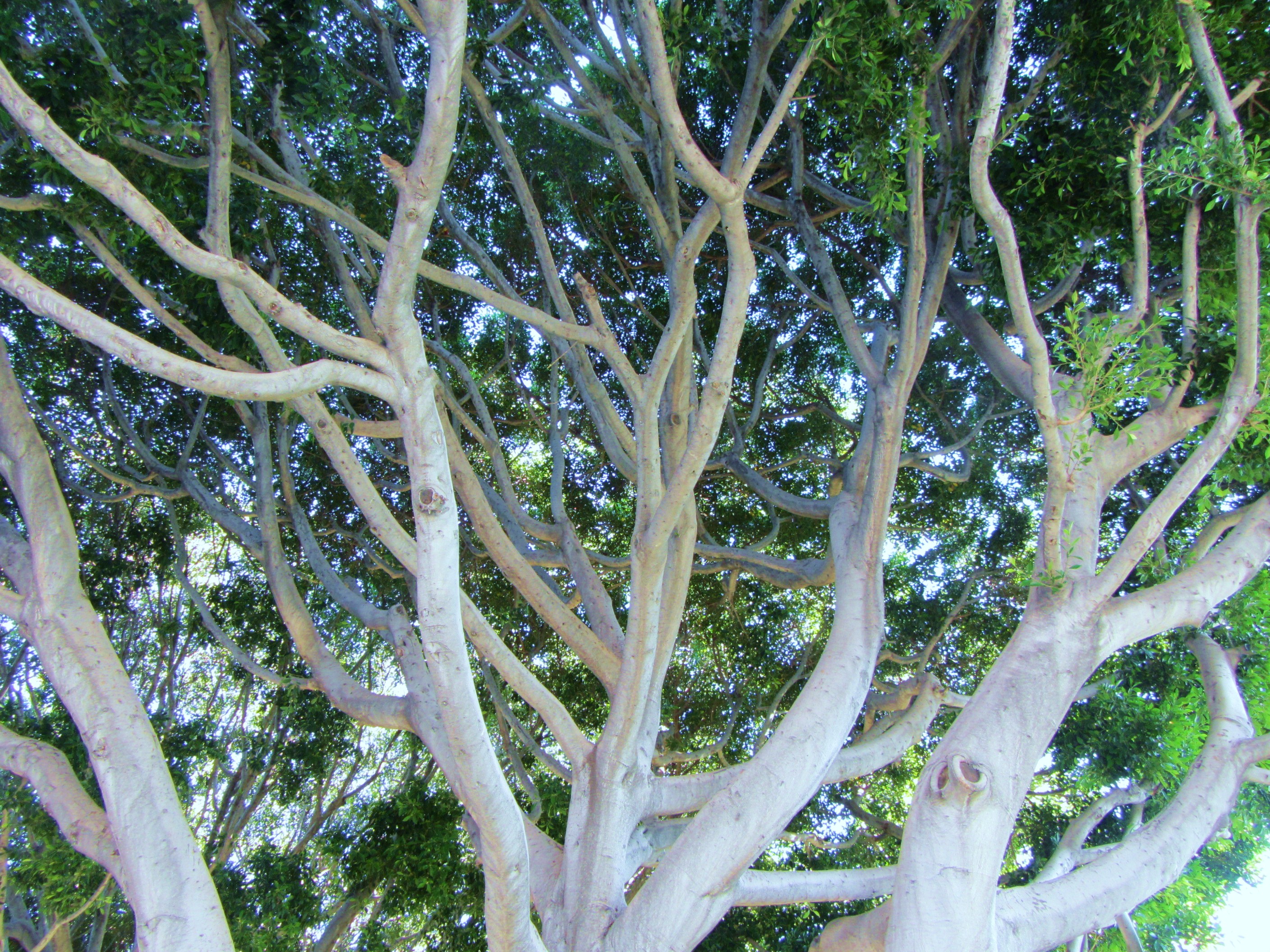
A tree that caught my eye while I was walking in Culver City, California 2011
“Not for me is the love that knows no restraint…Send me the love that is cool and pure like Your rain, which blesses the thirsty earth and fills the homely earthen jars. Send me the love that would soak down into the center of being, and from there would spread like the unseen sap through the branching tree of life, giving birth to fruits and flowers. Send me the love that keeps the heart still with the fullness of peace.” —Rabindranath Tagore
Almost 20 years ago, I made Jeff a valentine that had this passage from Tagore on the front. It seemed the perfect tribute for my steadfast and taciturn husband. “Stable” and “reliable” and “disciplined” are not the first words that come to mind when one thinks of romance, but Jeff’s love has given me a constancy and balance that I lacked before I met him. Now I pray daily for a miracle of healing that will enable us to grow old together.
On this Valentine’s Day, I wish contentment and happiness for those who are single. For those who are married to someone you love, treasure this gift and realize how much we all tend to take it for granted.
This post was originally published seven years ago today. You can view the original with comments here.
Simply unbelievable

Daffodils at Keukenof, Netherlands, March 2007
“…if you have eyes you will be able to see that the whole existence is joyful. Everything is simply happy…Look at the flowers – for no reason. It is simply unbelievable how happy flowers are.” — Osho
I disagree sharply with many of the teachings attributed to Osho, but I have to agree with him about the flowers. The daffodil, my favorite flower, seems particularly joyful to me. Perhaps it’s just that the blooms arrive very early, when we need them most. In less than a month, we’ll be seeing the first of them in bloom – something to look forward to amid the chilly gloom of a February day!
This post was originally published seven years ago today. You can view the original with comments here.
Added to the inner freedom

Inside the Metropolitan Museum of Art, New York City, May 2007
“No great work has ever been based on hatred and contempt. On the contrary, there is not a single true work of art that has not in the end added to the inner freedom of each person who has known and loved it.” — Albert Camus
Van Gogh’s swirling clouds, Rembrandt’s pensive faces, Pissarro’s evocative street scenes, the exultant triumph of the Winged Victory of Samothrace; these and countless other works of art I have loved since childhood. They have added immensely to my life, although not in any way that could ever be defined or quantified. I think Camus has come close when he refers to the inner freedom we feel when we enjoy a work of art, especially one that takes us to another time, place, or dimension.
If you do not live close enough to an art museum or local gallery to spend a few hours browsing, perhaps you can check out an oversize volume of reproduced artwork at your local library. Or visit one of the countless online museums that make it easy to view art via your computer. As with so many other non-urgent but vitally important pursuits, it may seem impossible amid the rush of modern life. But if you can manage it, I think you will find that time spent getting to know great works of art will yield intangible dividends that enrich your life and free your mind from petty annoyances.
What are some of your favorite works? Which artists do you most enjoy? Feel free to post links to the works you recommend, so others may enjoy them. Meanwhile, take a few minutes to ponder this musical tribute to a brilliant artist who eventually lost his life to the despair that paradoxically drove him to produce so many masterpieces not fully appreciated until long after his death. (Be sure to see the dedication at the end of this video.)
This post was originally published seven years ago today. You can view the original with comments here.
Life of ceaseless variety
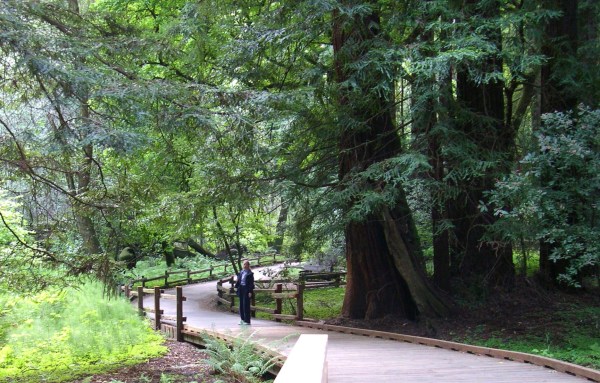
Jeff took this photo of me in 2003, on one of my many visits to Muir Woods
“A forest is like the ocean, monotonous only to the ignorant. It is a life of ceaseless variety.” — Benjamin Disraeli
The giant redwoods first come to mind when someone mentions Muir Woods, but the park is actually teeming with diverse life forms, flora and fauna. Much of it is hidden from sight, or seen only on close inspection, and some (such as the clustering ladybugs) are seasonal visitors.
But I confess, for all the fascinating natural wonders available to see and read about in the park, I most often found my thoughts turning inward during my visits there, in the sort of involuntary meditative state that such arboreal cathedrals induce. The deep layers of life I saw as I walked along were a natural complement to the complex, sometimes cacophonic forest of my own thoughts, lulling me into a paradoxical calm. In such places, it is almost impossible not to put one’s own life into perspective amid trees that have been standing for many centuries, some for even a thousand years.
This post was originally published seven years ago today. You can view the original with comments here.
Good thoughts
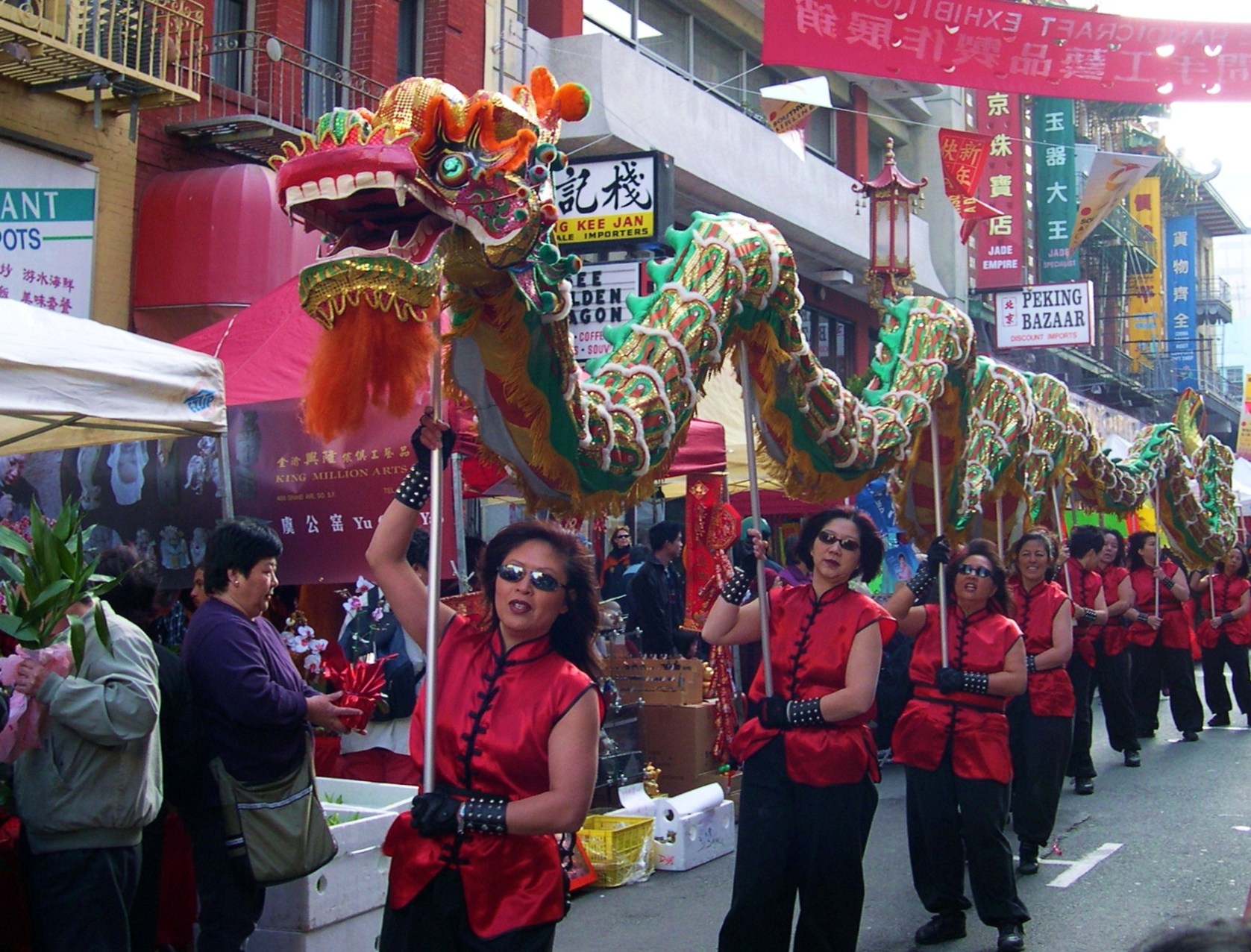
The Chinese New Year dragon in Chinatown, San Francisco 2004
“The more man meditates upon good thoughts, the better will be his world and the world at large.” — attributed to Confucius
In honor of Chinese New Year, I thought it would be appropriate today to feature this quote from one of the most famous philosophers of all time. This blog was started to help me stay focused on all that is good, and it has made my world better to read through so many inspiring authors’ work in search of quotes to include here. I hope that, in some small way, this has also made the world at large a bit brighter for those who stop by. Thanks so much to everyone for the visits, comments, good wishes and prayers that have made the past few months easier to bear. I hope you will continue to visit us here. 新年快乐 – Happy New Year!!
This post was originally published seven years ago today. You can view the original with comments here.
A book of holy teaching

A baby Robin that has just left the nest, photographed on our front lawn in 2005
“If thy heart were right, then every creature would be a mirror of life and a book of holy teaching. There is no creature so small and abject, but it reflects the goodness of God.” — Thomas à Kempis
Our backyard borders on a wooded lot that is part of the property, protected wetlands that cannot be disturbed or cleared. We are lucky enough to have a variety of creatures who frequent the area, probably for the protective shelter of the vegetation and the creek that provides water most of the year. I have come to think of them as friends and enjoy watching them season after season.
Most people see the ubiquitous Robins as more pesky than precious, but I may love them best of all because they build their nests in our shrubs, low enough that I can watch as the eggs become hatchlings and then fledglings. Often I experience the tense anticipation of watching them leave the nest and fly for the first time. The bird pictured above, however, was the subject of no small anxiety on my part because I felt responsible for it. I had come around with my camera when it was the only one of four fledglings left in the nest, and it became so frightened it jumped out of the nest, but was unable to fly, its fluttering wings barely breaking its fall to the grass.
I was overcome by worried guilt about having chased the bird from the nest before it was ready. I hung around in the area watching it from a short distance, whispering prayers that the tiny bird would be protected. I was prepared to scare away any cats or dogs or other threats, but instead I saw a fascinating drama unfold. As always when I approach a populated nest with my camera, a great noise had erupted from two birds I assumed were the parents. The brightly colored male bird hopped along closely beside the tiny young one, as the grayish female bird kept up what I fancied was a continual stream of nagging directions.
Gradually, but without interruption, the male bird led the baby in short hops and very brief flights for a relatively long distance, all the way from the front of our house, across the back yard and into the wooded lot, where I finally abandoned my long watch. The last I saw of them, the male bird continued hopping alongside the younger one in a clearing, as if giving flight lessons.
When I read this quote from Thomas à Kempis, I thought of the many “critters” I have been watching all these years, especially the young who seem so tiny and vulnerable in a world that is often cruel. The continual presence of these animals reassures me that God does keep a close eye on creation, and we have much to learn from their ability to survive and thrive.
This post was originally published seven years ago today. You can view the original with comments here.
Pleasure eternally new
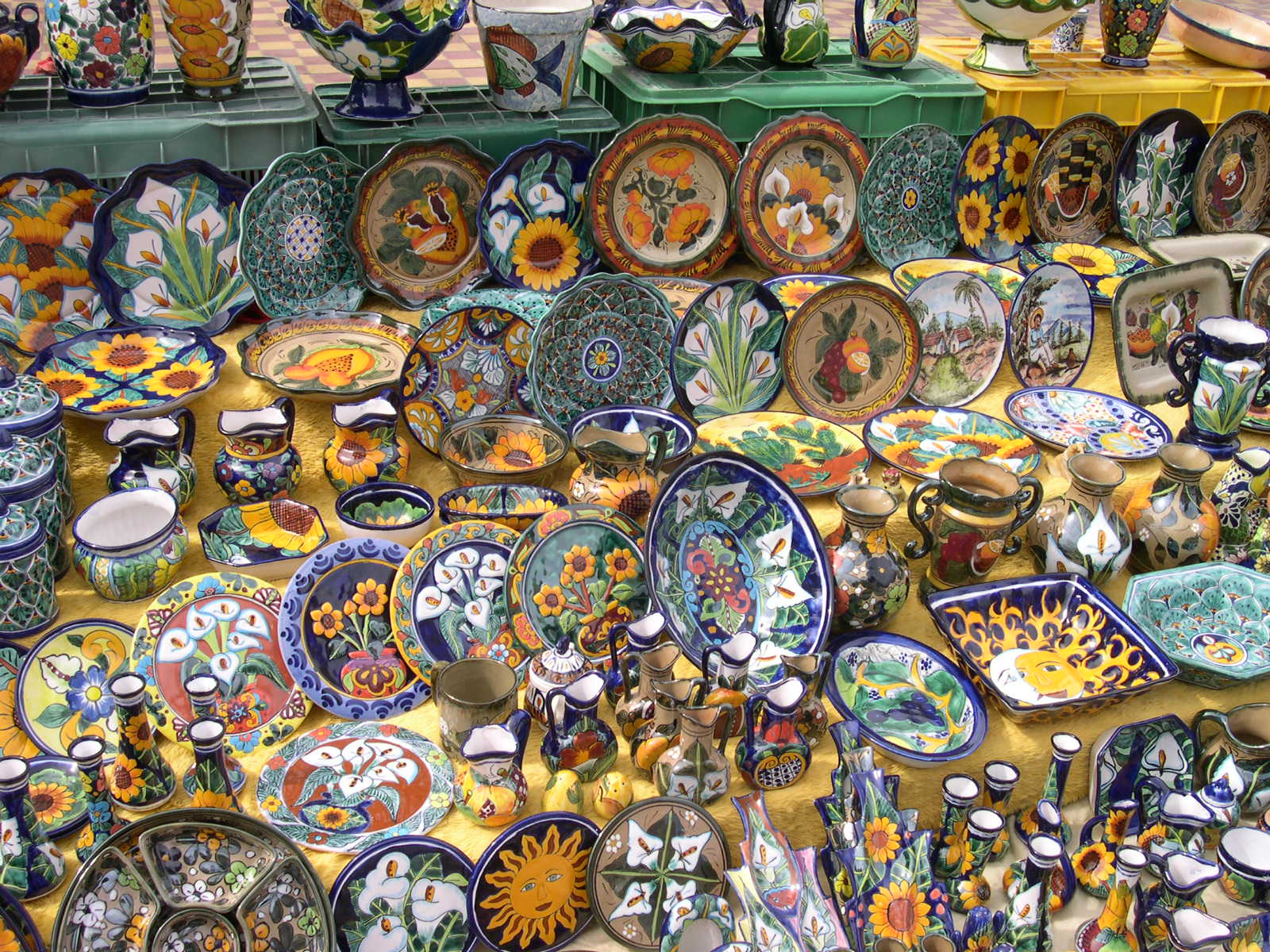
Pottery on display in an outdoor market, Concordia, Mexico 2004
“There’s a joy without canker or cark,
There’s a pleasure eternally new,
‘Tis to gloat on the glaze and the mark
Of china that’s ancient and blue…”
— Andrew Lang
Although a man wrote these words, most of the people I know who would really understand them are women. I’ve found that I am among a large number of people who admire china and pottery. I would gladly fill my cupboards with glorious varieties of dishes in beautiful patterns, if I had the unlimited space and money to do so. As it is, I admire and often photograph beautiful displays of china or pottery in shops and markets wherever I go. On reflection, that’s really better than owning it anyway; no need to wash, dust or worry about breakage. Hats off to the skilled artists who brighten our everyday lives with useful art! (A confession: I had to look up the definition of the word “cark.”)
This post was originally published seven years ago today. You can view the original with comments here.
An impression of beauty and delight
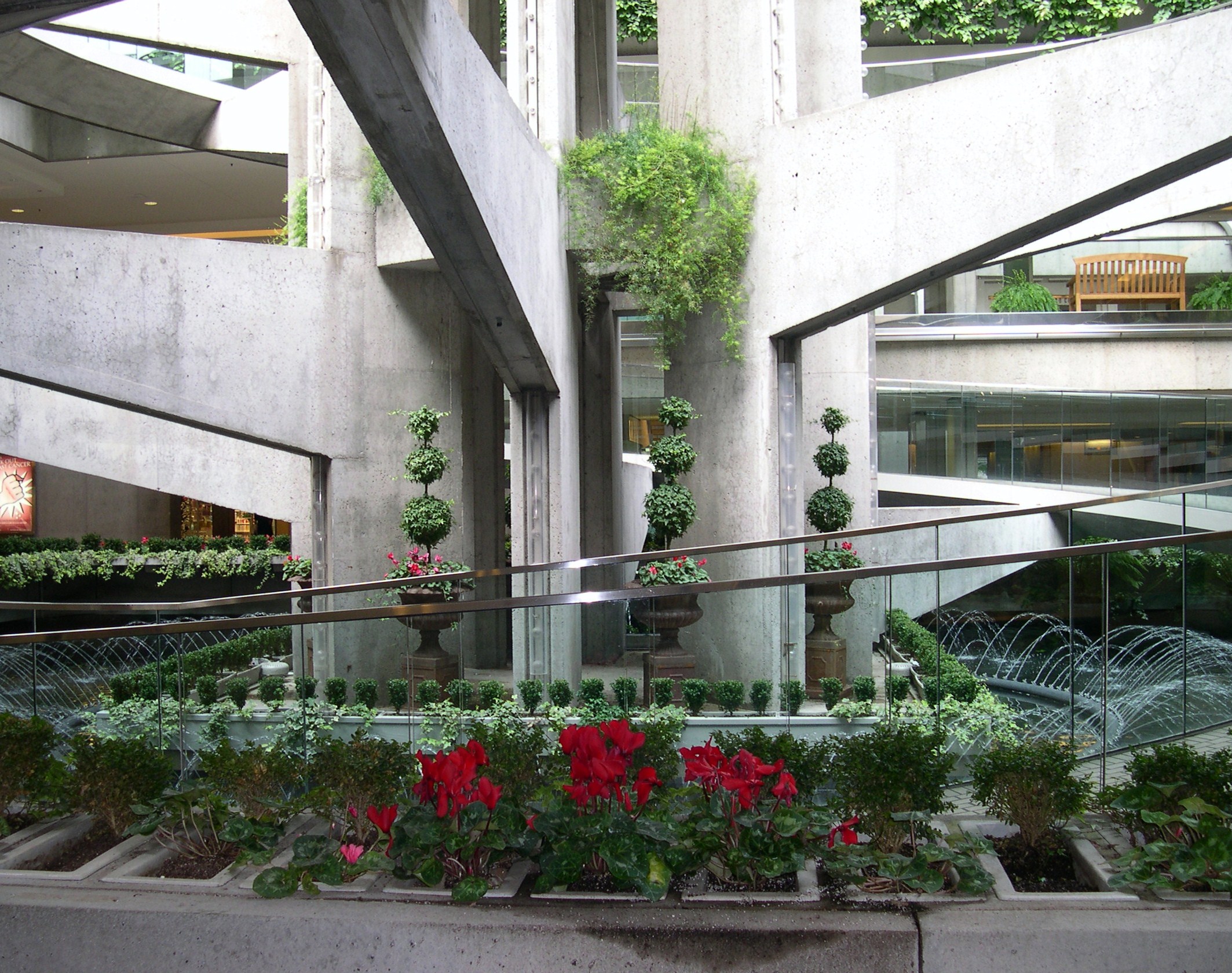
A garden adorns the stark concrete of a spiral walkway in the Embarcadero Center,
San Francisco, January 2004
“There is no spot of ground, however arid, bare or ugly, that cannot be tamed into such a state as may give an impression of beauty and delight.” — Gertrude Jekyll
Among the things I love best about San Francisco are the unique garden spots tucked away seemingly throughout the city. Though they lack the appealing open landscapes of more rural areas, urban settings have an allure quite different from the charms of the countryside. Some cities are uglier and more damaged than others, but almost all of them have hidden jewels of rooftop gardens, small but well planned parks, and tiny splashes of color provided by enterprising city dwellers who understand how to transform a nondescript space into an oasis of visual delight. I can easily spend hours on a sunny day wandering around downtown areas with my camera, in search of such discoveries. Wherever you are today, I wish for you the surprise of a refreshing encounter with unexpected beauty.
This post was originally published seven years ago today. You can view the original with comments here.
The one who thinks differently

A segment of the Berlin Wall on display at the Reagan Library in Simi Valley, California, 2004
“Freedom only for the supporters of the government, only for the members of one party – however numerous they may be – is no freedom at all. Freedom is always and exclusively freedom for the one who thinks differently. Not because of any fanatical concept of “justice” but because all that is instructive, wholesome and purifying in political freedom depends on this essential characteristic, and its effectiveness vanishes when ‘freedom’ becomes a special privilege.” — Rosa Luxemburg
It is more than a little ironic that this quote from a German Marxist (who died in 1919) would seem such appropriate words for this photograph of a section of the Berlin Wall, one of the most prominent symbols of oppression of our generation. On this day 109 years ago, eight years before Rosa Luxemburg died, a person was born who would change the course of world history in his single-minded determination to defeat despair. His name was Ronald Reagan, and even those who opposed his politics generally agree that his unflinching resolve helped to bring down the Berlin Wall.
The plaque at the base of this segment of the wall reads: “An authentic section of the Berlin Wall, donated in April 1990 by the Berlin Wall Commemorative Group to President Reagan for his unwavering dedication to humanitarianism and freedom over communism throughout his presidency. This segment measures 3.5 feet by 10 feet, and weighs approximately 6000 pounds.”
Universal freedom sounds good in abstract terms, but is exceedingly difficult in practice. It can be crushed outright by obvious tyrants, but more often it is negotiated away, little by little, as oppression creeps in to silence unpopular viewpoints and controversial debates. Yet heroes throughout history have shown us that even those who are denied physical or political freedom can remain free in spirit, indomitable in the face of intimidation or imprisonment.
This post was originally published seven years ago today. You can view the original with comments here.
Skillfully combined

The Golden Gate Bridge, seen through the fog from Marin Headlands, July 2003
“Small things grow mighty, if they are skillfully combined. Blades of grass will make a rope to bind a raging elephant.” — Hitopadesha
These words of wisdom echo a theme found repeatedly in various works, from Aesop’s fables to the Bible. Perhaps there is no greater physical symbol of the strength of unity than the breathtaking Golden Gate Bridge. It is considered one of the great marvels of modern engineering, thought by many to be impossible until it was successfully built. Here is a brief quote about its construction: “Each of the main cables contains 27,572 galvanized wires which are bundled into 61 strands that contain 454 wires each. The combined weight of the main cables, vertical suspender cables and accessories is 24,500 tons.” (Find this quote, and much more, at this site.) Skillfully combined, these wires have produced an amazing, practical and beautiful adornment to a fabulous landscape, one of the most photographed places in the world.
After the immediate shock of my husband’s devastating diagnosis, I began to research and read as much as I could about how to reverse the grim prognosis. One theme began to emerge from all sources: survival for any length of time will depend on a multidisciplinary approach. In practical terms, this means we need a team of doctors, each with a different area of expertise, all working together to most effectively fight the spread of disease throughout the body. In the background, of course, we marshal our own team of loving supporters and faithful prayer partners who help us to endure and hopefully prevail for as long as possible. We are already reaping the benefits from the strength of unified purpose.
The same is true for almost any human endeavor. We all need each other. We have the blessing and responsibility to work, reason and live together in peace, despite our differences. While we will never agree on everything, to the extent that we are able to achieve unity of purpose, we will be strong enough to endure almost any hardship.
This post was originally published seven years ago today. You can view the original with comments here.
On these walks
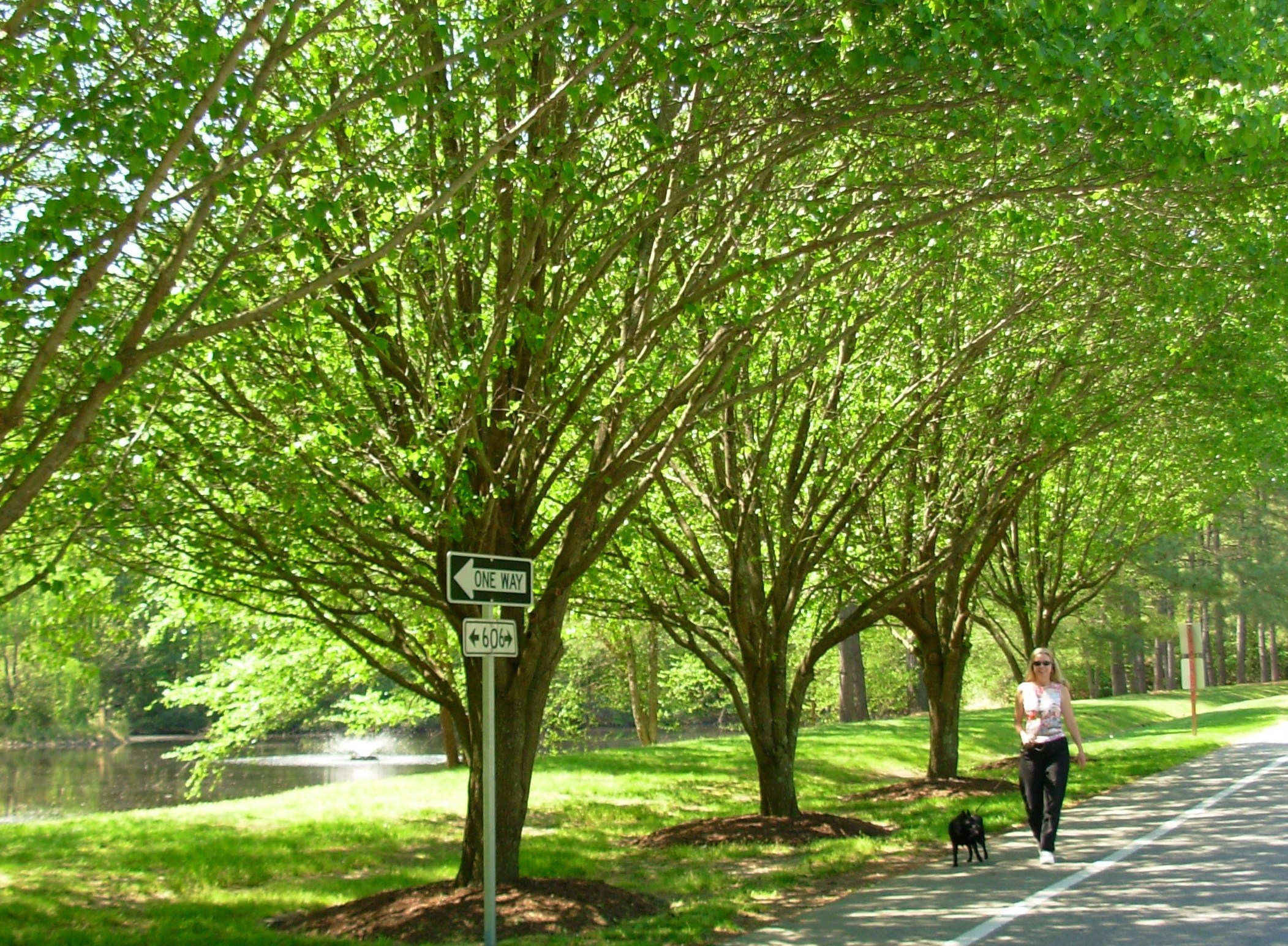
Jeff snapped this photo of me walking Pasha in our neighborhood, April 2009
“It is on these walks that my best ideas come to me. It is while walking that difficult clarity emerges. It is while walking that I experience a sense of well-being and connection, and it is in walking that I live most prayerfully.” — Julia Cameron
For several years now, I’ve been walking anywhere from two to five miles per day in pretty much all types of weather. I cannot say enough about the positive changes this has made in my life. My weight, my moods and my ability to stay free of minor illness have all improved.
More importantly, walking has become a vital part of my inner life. While walking, I listen to favorite music or an interesting unabridged audiobook as I take in the beautiful changes of the seasons. On my walks, I have come to know many of my neighbors (and their dogs) and have admired the gardening and decorating talents that enhance my enjoyment of being outdoors.
Even in a more urban setting, the advantages of walking are many. I can stroll to the post office, the grocery store or a number of shops and restaurants, saving gas and getting exercise. The landscaping is maintained to be attractive in each season, and the sidewalks, streetlights and constant presence of people make it easy to walk safely to almost any place I need to go.
I originally began walking when our dog, then 11 years old, began to show signs of failing health. When I saw the remarkable change walking two miles per day made in his energy level and stamina, I was convinced I needed to increase my walking habit for my own health. Now I cannot imagine life without this daily break. It’s the only form of exercise I can stand to keep up for very long.
It does require time — anywhere from 45 minutes to almost two hours, depending on how fast and far I go — but I find that it is time well spent. If you are not already doing so, try taking a walk some sunny day. You might find that you like it as much as I do.
This post was originally published seven years ago today. You can view the original with comments here.


 Defeat Despair